This site is supported by our readers. We may earn a commission, at no cost to you, if you purchase through links.

Few reptiles have sparked as much obsession among collectors as the banana ball python—a morph that hit the market in the early 2000s for prices that would make your jaw drop, then became one of the most traded morphs in the hobby within a decade.
What drives that kind of demand isn’t a mystery alone; it’s a combination of genetics that actually makes sense, coloration that changes dramatically from hatchling to adult, and a temperament that forgives beginner mistakes more readily than most species.
The banana gene is codominant, it throws sex‑ratio surprises depending on which line you work with, and its freckles keep intensifying for years after hatching—details that matter whether you’re buying your first snake or adding a proven breeder to your collection.
Table Of Contents
- Key Takeaways
- What is a Banana Ball Python?
- Banana Ball Python Appearance
- Banana Ball Python Genetics
- Banana Ball Python Care
- Feeding, Health, and Cost
- Frequently Asked Questions (FAQs)
- What is a banana ball python morph?
- What is a banana ball python?
- Where can I buy banana ball pythons?
- Do ball pythons eat bananas?
- Are banana ball pythons rare?
- What makes a banana morph ball in python?
- What is the difference between banana pastel and banana ball python?
- Are banana ball pythons endangered?
- Is banana ball python rare?
- Are banana ball pythons friendly?
- Conclusion
Key Takeaways
- The banana gene is codominant, meaning one copy visibly changes the snake’s appearance, and certain "male maker" lines skew offspring sex ratios to roughly 95% male — something most other morphs simply don’t do.
- Freckles aren’t a flaw; they’re a built-in maturity indicator that keeps intensifying for years, making freckling density one of the most reliable ways to gauge a banana’s age and genetic expression at a glance.
- Enclosure conditions — specifically temperature gradients (88–92 °F basking, 75–80 °F cool side) and humidity held at 50–60% — are the root cause of most health problems, so dialing those in early prevents the majority of issues you’ll face.
- Banana ball pythons are widely available at $150–$300 for hatchlings and are genuinely forgiving for beginners, but the 20–30 year lifespan means this is a long‑term husbandry commitment that needs planned veterinary care and consistent maintenance logs from day one.
What is a Banana Ball Python?
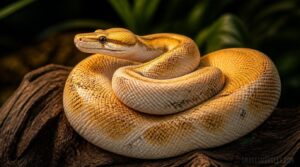
The banana ball python is one of those morphs that earns its name the moment you see it — warm yellow patches, creamy base, and a scattering of dark freckles that only get more interesting with age.
Those freckles are completely normal — find out what else to expect in this banana ball python care guide.
It carries a co-dominant gene with a genuinely unusual twist: sex‑linked inheritance that still surprises experienced breeders.
Here’s what you need to know about this morph, from its biology to what it actually takes to keep one long‑term.
Morph Meaning
In the reptile hobby, "morph" means a selectively bred color or pattern variant. Think of it like a genetic shorthand — one word that tells you exactly what’s different about that animal.
For the banana ball python, that difference is a codominant banana gene driving vivid yellow phenotypic expression through a single inherited allele.
In computer graphics, a morph denotes a smooth gradual transition between images.
Scientific Classification
The banana ball python belongs to the species Python regius, a member of the Pythonidae family. Here’s its full taxonomic rank:
- Domain – Eukarya
- Kingdom – Animalia
- Phylum – Chordata
- Class – Reptilia
- Order – Squamata
Native to West and Central Africa, it’s listed as Least Concern on the IUCN Red List.
Temperament and Handling
Ball pythons are widely regarded as one of the more manageable snake species for routine handling, and banana individuals often reinforce that reputation. They often stay relatively calm when approached with steady, unhurried movements, though hatchlings can be noticeably skittish and need weeks of short, consistent sessions before they fully settle.
Stress signals to watch include sudden freezing, tight coiling, and tail whipping. If you see those, pause immediately and return the snake to its enclosure. Support the body using both hands along the midline, and never grab the tail — that’s the fastest way to trigger a defensive response from an otherwise cooperative animal.
Feeding days complicate things slightly. Hunger influences temperament, so handling right before or after meals often produces more reactive behavior. Sticking to a routine on non-feeding days keeps interactions predictable. Over time, most adults become noticeably more tolerant, often settling into extended handling with minimal fuss.
Beginner Suitability
That settled temperament makes the banana ball python a strong first reptile for most beginners. Consistent, short handling sessions build trust quickly, and mistakes — like grabbing too fast or handling post-feeding — are easy to correct once you understand the signals.
Routine matters more than technique here. Get that right, and this color morph rewards you with a genuinely cooperative snake.
Long-Term Commitment
Owning one of these snakes means signing on for 20 to 30 years of consistent care. That’s not an exaggeration — it’s the reality of reptile husbandry.
A banana ball python isn’t a pet—it’s a 30-year commitment
| Year Range | Priority Focus |
|---|---|
| Years 1–5 | Enclosure setup, feeding rhythm |
| Years 6–15 | Health monitoring, vet checkups |
| Years 16–30 | Aging care, budget adjustments |
Maintenance logs and veterinary planning aren’t optional extras — they’re your baseline.
Tracking substrate swaps and humidity trends alongside vet visits gets much easier when you reference a solid naturalistic reptile environment setup guide tailored to your species.
Banana Ball Python Appearance
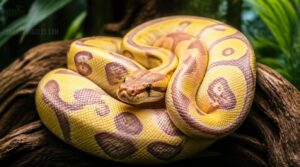
The banana ball python’s look is one of the most distinctive in the hobby — warm, vivid, and remarkably consistent across individuals. A few key visual traits define the morph, and knowing them helps you identify a quality animal at a glance. Here’s what to look for.
Yellow and Cream Coloring
The color that defines the banana ball python comes down to two things: vibrant yellow hues and soft, contrasting cream. That warm lemon-to-gold base tone isn’t subtle — it draws the eye. Here’s how that color morph variation commonly breaks down across individual snakes:
- Bright yellow coloration spans from neon lemon in juveniles to warm gold in mature adults.
- Creamy dorsal stripes form a pale ivory band along the spine, becoming broader and more defined with age.
- Yellow splotches appear irregularly across the flanks rather than in uniform blocks.
- Ventral mosaic patterns show lighter cream-to-pale-yellow scales beneath, distinctly softer than the dorsal field.
- Combo color dominance shifts the balance — some banana morph combinations lean heavily cream, producing an almost champagne appearance.
That creamy contrast isn’t a flaw or a fade. It’s baked into the color morph variation itself, and it’s what makes each banana ball python feel genuinely one of a kind.
Freckles With Age
As a banana ball python ages, its freckles tell the story. Small dark brown or black spots emerge early and multiply steadily — like a banana left on the counter too long. Super-bananas are the exception, retaining minimal freckling even at full maturity, which makes them visually distinct from standard banana morphs.
| Life Stage | Freckling Level |
|---|---|
| Hatchling | Few or no spots |
| Juvenile (6–12 months) | Light freckling begins |
| Sub-adult (1–2 years) | Spots increase noticeably |
| Adult (3+ years) | Dense dark freckling |
| Super-banana adult | Minimal spots retained |
Phenotype expression through spot density is one of the clearest visual maturity indicators in color morph genetics — and reliable enough that experienced keepers use freckling for basic morph documentation at a glance.
Hatchling Versus Adult Colors
Hatchlings arrive vivid — bright lemon and orange tones dominate, especially near the head, where pronounced orange saturation peaks early. Thinner dermal layers mean less pigment deposition, so the overall look is lighter and softer than what you’ll see at maturity.
As banana ball pythons grow, ontogenetic color shifts deepen the yellows and sharpen contrast between saddles and surrounding scales.
Belly Pattern Details
The belly tells a story most keepers overlook. A pale cream to yellow base runs the length of the ventral surface, with midline spotting patterns of dark speckles scattered along the center. Ventral freckle density increases with age. Five key belly markers to track:
- Midline dark speckles
- Lateral crescent markings near ventrolateral seams
- Glossy, smooth scale texture
- Subtle cream-to-yellow shading gradients
- Clustered freckle blotches
Popular Banana Combos
Pairing the banana gene with other morphs is where things get genuinely exciting. Banana Enchi deepens the yellow saturation noticeably, while Banana Pied breaks the pattern into bold white islands.
Banana Clown tightens and brightens banding dramatically.
For rarer shelf appeal, Banana Pastel Yellow Belly and Banana Super Stripe push contrast and linearity to striking extremes.
Banana Ball Python Genetics
The banana gene is one of the more fascinating — and occasionally unpredictable — pieces of genetics in the ball python hobby.
It behaves co-dominantly, influences offspring sex ratios in ways most other morphs don’t, and stacks cleanly into designer combinations that can seriously shift a clutch’s value.
Here’s what you actually need to understand about how it works.
This spider ball python care and genetics guide breaks down the wobble controversy alongside practical husbandry tips for owners considering the morph.
Even species that avoid water entirely can still swim if they fall in, which is why understanding whether all snakes can swim matters more than most owners realize.
Co-Dominant Banana Gene
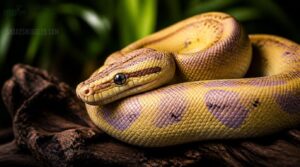
The banana gene is a codominant trait, meaning one copy visibly alters the snake’s appearance rather than hiding silently.
It reshapes melanin distribution across the scales, reducing dark contrast and amplifying yellow saturation.
Heterozygous animals express a clear banana morph phenotype, and when bred to a non-banana partner, roughly 50% of offspring inherit it — predictable Mendelian ratios you can actually plan around.
Super Banana Morph
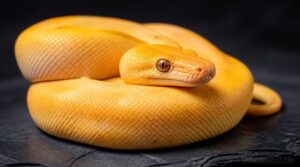
When two banana parents pair up, 25% of offspring hit the super banana morph — two copies of the banana gene stacked together. The result is unmistakable: vivid golden ground color, reduced dark patterning, and a cleaner contrast than single-copy animals.
Super bananas also show minimal freckling. This is in reality the Coral Glow phenotype, first documented by NERD in 2002.
Serious breeders track lineage carefully to plan these pairings deliberately.
Male Maker Lines
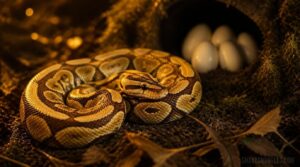
The banana gene’s sex-linked behavior means certain male maker lines produce roughly 95% male offspring — a documented sex bias that breeders exploit deliberately. Selecting a proven sire requires reviewing lineage records, prior clutch ratios, and phenotype stability across successive seasons.
Consistent banana expression across multiple pairings confirms a male’s genetic reliability before committing him to your core breeding program.
Female Maker Lines
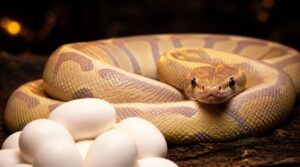
Female banana carriers don’t produce the same sex bias you see in male maker lines — their clutches run close to a 50/50 split. What matters instead is lineage stability: consistent banana expression across multiple clutches, strong hatch rates above 85%, and calm dam temperament.
That predictability translates directly into economic reliability for your program.
Breeding Outcome Ratios
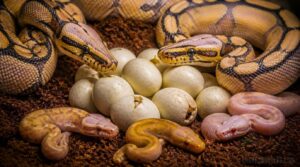
Once you understand maker lines, the numbers start telling a clear story.
Banana-to-banana pairings yield roughly 25% super-bananas and 50% single-gene bananas per clutch. Crossing banana to non-banana halves that—expect about 50% banana offspring.
Clutches usually run 4–12 eggs, so track every outcome. Deviations happen; modifier genes shift ratios.
Consistent records across multiple clutches correct for that drift.
Banana Ball Python Care
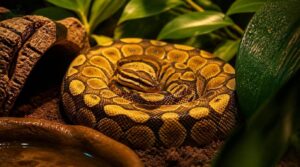
Getting the care right for a banana ball python isn’t complicated, but the details matter. Your setup — enclosure size, temperatures, humidity, substrate, and hides — forms the foundation everything else builds on. Here’s what you need to cover before bringing one home.
If you’re curious how genetics shape this color and pattern, this enchi ball python morph guide breaks down the traits that give banana balls their distinctive glow.
Enclosure Size
Size matters more than you’d think. Males are smaller snakes — a 3 × 2 × 2 ft enclosure comfortably covers them. Females need a 4 × 2 × 2 ft minimum, given their considerably larger frames.
Either way, any adult needs at least a 40-gallon footprint.
PVC enclosures retain humidity better than glass tanks, which lose moisture quickly and complicate ventilation control.
Temperature Gradient
Getting the temperature gradient right is one of those things that separates a thriving snake from a stressed one. Your banana ball python can’t regulate its own body heat — it relies entirely on moving between zones you’ve created.
Three zones, three purposes:
- Basking hide: 88–92 °F (31–33 °C) — aids digestion post-feeding
- Warm side: 80–85 °F (27–29 °C) — active thermoregulation zone
- Cool side: 75–80 °F (24–27 °C) — recovery and rest
Use a thermostat with a digital probe to lock in your basking spot safely. An infrared thermometer lets you spot-check temperatures across four to six points, catching uneven gradients before they cause problems. Abrupt drops between zones stress the animal; aim for a smooth, gradual decline instead. Temperature fluctuations at night shouldn’t fall below 72 °F — that’s your hard floor.
Humidity and Shedding
Humidity works quietly in the background — until shedding goes wrong. Keep ambient levels at 50–60% normally, nudging them to 70–80% during shedding when your banana’s eyes cloud over and scales dull.
Watch for those signs: milky eyes, drier-looking skin, reduced activity. That’s your cue to mist more and check your water dish.
Safe Substrate Choices
What you put on the floor of your enclosure matters more than most keepers realize. Cypress mulch and coconut coir are both solid choices — they hold moisture without becoming waterlogged, support natural burrowing, and are easy to spot‑clean.
Avoid pine or cedar entirely. Kiln‑dried substrates reduce microbial load.
Refresh completely when odor lingers.
Hides and Water Dish
A banana ball python without proper hides is a stressed snake — it’s that simple.
Here’s what your enclosure setup needs:
- Two snug hides — one warm, one cool
- Hide diameter of 6–8 inches for adults
- Water dish on the cool side, 1–2 inches deep
- Weekly dish cleaning with mild soap and hot water
Feeding, Health, and Cost
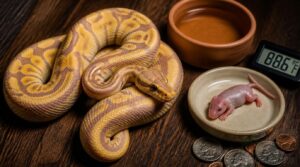
Keeping a banana ball python healthy comes down to three things: what you feed it, how you recognize problems early, and what it actually costs to do this right. None of it is complicated, but the details matter more than most new keepers expect. Here’s what you need to know across each of those areas.
Rodent Feeding Schedule
Feeding your banana ball python correctly comes down to prey size and timing. Offer hatchlings a pinkie rat every 5–7 days, juveniles every 7–10 days, and adults a properly sized frozen-thawed feeder every 10–14 days.
| Life Stage | Feeding Frequency |
|---|---|
| Hatchling | Every 5–7 days |
| Juvenile | Every 7–10 days |
| Adult | Every 10–14 days |
| Senior | Every 14+ days |
Always feed in the evening to align with their nocturnal feeding routine, remove uneaten prey within 24 hours, and monitor portion size — if food is consistently refused, reassess size before assuming illness.
Seasonal Food Refusal
Even a well-timed feeding schedule can hit a wall when the seasons shift. Temperature scent shifts alter how prey smells inside the enclosure, and cooler ambient rooms slow digestion enough that your python simply isn’t hungry on schedule.
Three common seasonal triggers to watch:
- Light cycle changes disrupt circadian rhythm, pushing peak appetite outside your usual feeding window.
- Humidity drops cause hydration stress — you’ll notice reduced tongue flicking and less exploratory behavior before a refusal.
- Household disruption from seasonal activity increases enclosure stress, keeping your snake hidden and unreceptive.
Adjust your basking zone, mist more consistently, and don’t immediately assume a prey size mismatch is illness.
Common Health Problems
Most health problems in banana ball pythons trace back to enclosure conditions.
Respiratory infections show up as wheezing, open-mouth breathing, or bubbles at the nostrils — usually triggered by low temperatures or dry air.
If your snake also seems lethargic or has stopped eating, it’s worth checking whether illness is the cause, since our guide on common reasons snakes refuse food covers respiratory issues as one possible trigger.
Scale rot starts as darkened belly patches from prolonged dampness.
Snake mites appear as tiny moving specks, causing restless rubbing.
Dysecdysis — incomplete shedding — signals humidity is too low.
When to Call a Vet
Knowing when a problem is beyond home fixes is where experience really counts.
Open-mouth breathing, wheezing, or audible clicking need same-day veterinary attention — don’t wait to see if it resolves. The same goes for retained shed on the eyes, neurological signs like head tremors or inability to right itself, and any suspected toxin exposure. Those aren’t "monitor it" situations.
Price and Availability
Most banana ball pythons sell for $150–$300 as hatchlings, though premium individuals or proven breeders can reach $800.
Designer combos like Banana Clown push past $4,000.
Regional breeder access matters — U.S. buyers have far more options than European hobbyists facing import permits.
Factor in $25–$60 shipping, and always buy from breeders offering feeding records and health guarantees.
Frequently Asked Questions (FAQs)
What is a banana ball python morph?
A color morph is a selectively bred genetic variant that shifts base coloration and pattern. The banana gene is codominant — one copy produces vivid yellow hues; two copies intensify that into a striking super form.
What is a banana ball python?
A color morph of Python regius, it expresses a mutated banana gene that shifts base pigmentation toward vivid yellow and cream, distinguishing it visually from wild-type ball pythons through softer contrast and freckling.
Where can I buy banana ball pythons?
Your best options are MorphMarket, breeder sites like Imperial Reptiles, local reptile expos, or regional exotic pet stores. Each offers different trade-offs between price, live-arrival guarantees, and the ability to inspect the animal beforehand.
Do ball pythons eat bananas?
No, ball pythons are strict carnivores. Their natural hunting instincts are wired for rodent prey only. Fruit offers zero animal-based nutrition and poses serious digestive risks. Stick to appropriately sized frozen-thawed mice or rats.
Are banana ball pythons rare?
No, they’re not rare. Banana ball pythons are widely available from breeders and reptile expos at $150–$250, making them one of the more accessible morphs in today’s pet trade market.
What makes a banana morph ball in python?
Bright banana brilliance starts with a single codominant allele. One copy reshapes color expression visibly; two copies intensify it into the super banana phenotype — dramatically lighter, with minimal freckling.
What is the difference between banana pastel and banana ball python?
A banana pastel combines both the banana allele and pastel gene, producing softer, more uniform yellows with reduced dark freckling. Pure banana shows bolder contrast and more defined blotches.
Are banana ball pythons endangered?
No, they’re not. The banana morph is captive-bred only — it doesn’t exist in the wild. The base species, Python regius, holds a Near Threatened IUCN status, not endangered.
Is banana ball python rare?
No, it’s not rare. Standard banana morphs are widely available from breeders across North America and Europe. Expect to pay $150–$ Super bananas and designer combos like Banana Clown are harder to find.
Are banana ball pythons friendly?
Yes, they’re genuinely calm snakes. With regular, consistent handling, most settle into a relaxed routine quickly. Respect feeding and shedding cycles, move slowly, and they rarely give you any trouble.
Conclusion
Funny how a snake that "just sits in a box" commands years of research into codominant genetics, precise temperature gradients, and breeding math most hobbyists skip entirely.
The banana ball python earns that attention honestly—its freckles keep shifting, its genetics keep surprising, and its temperament keeps forgiving the mistakes you’ll inevitably make early on.
Give it proper heat, a consistent feeding schedule, and a hide it can fully disappear into. It’ll handle the rest.
- https://a-z-animals.com/animals/banana-ball-python
- https://www.nwreptiles.com/ball-python-genetic-behaviors-and-morph-breeding-oddities
- https://worldofballpythons.com/en/morphs/banana-ball
- https://www.wilbanksreptiles.com/collections/ball-pythons-for-sale/banana
- https://reptilesmagazine.com/ball-python-morph-history