This site is supported by our readers. We may earn a commission, at no cost to you, if you purchase through links.

Walk into any reptile expo and you’ll see hundreds of ball pythons, each pattern screaming for attention. Picking your first one feels impossible until you know which morphs forgive rookie mistakes and which ones punish them.
The best beginner ball python morph isn’t the flashiest snake on the table; it’s the one with hardy genetics, a calm temperament, and a price that leaves room in your budget for proper heating and humidity. Some popular morphs, like Spider, carry a neurological defect called wobble that no breeder can cure.
Here’s how to choose a snake that thrives under your care from day one.
Table Of Contents
- Key Takeaways
- Best Beginner Ball Python Morphs Ranked
- What Makes a Morph Beginner-Friendly
- Ball Python Morph Genetics and Health Risks
- Morph Prices, Availability, and Breeder Quality
- Care Requirements for Your First Ball Python
- Frequently Asked Questions (FAQs)
- What are the healthiest ball python morphs for beginners?
- Which ball python morphs to avoid?
- What is the most sought-after ball python morph?
- What is the basic ball python morph?
- How to breed ball python morphs?
- What makes a good ball python morph?
- Is a ball python a morph?
- Which ball python morph is most popular?
- What is a visual guide to ball python morphs?
- How do ball pythons morph?
- Conclusion
Key Takeaways
- Pastel, Mojave, Banana, Albino, and Leopard are the top beginner morphs, chosen for hardy genetics, calm temperaments, and no special health risks.
- Avoid Spider and similar wobble-linked morphs entirely, since wobble syndrome is an incurable neurological defect that can appear by 6–12 months even in healthy-looking parents’ offspring.
- Prices range from $60–$180 for starter morphs like Pastel and Mojave to $250–$800 for Banana and Leopard, and a breeder’s transparent lineage records and feeding history matter more than a low price tag.
- Care outweighs morph choice: maintain a warm side of 88–92°F and cool side of 78–80°F, keep humidity steady (higher during sheds), and remember your snake may live 30+ years, so buy with patience, not impulse.
Best Beginner Ball Python Morphs Ranked
Not every morph is created equal when you’re just starting out. These five picks are chosen for calm temperaments, predictable genetics, and beginner-friendly care. Let’s rank them so you can find your perfect match.
For a deeper dive into why these lines are so famously docile, check out our guide to boa constrictor morphs with the best temperament.
Pastel—Best Overall
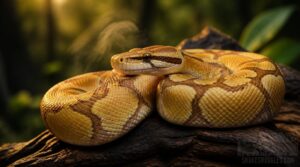
A Pastel’s warm, golden coloration makes it the top pick among beginner-friendly morphs, and honestly, it’s hard to argue. These snakes are hardy, carry gentle temperaments, and thrive on a reliable feeding schedule.
- Lighter, buttery base color that pops in daylight
- Calm nature, ideal for regular handling
- No unique health risks
- Expect a 6-12 month wait from reputable breeders
Mojave—Best Subtle Pattern
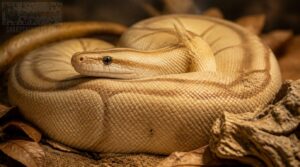
The Mojave pairs beautifully alongside Pastel but takes things in a quieter direction. Its soft, muted patterning looks almost watercolor-painted, with faded saddles and bands blending into a creamy base rather than standing out sharply.
If you’re weighing whether a Mojave fits your collection, our ball python morph market guide breaks down pricing and breeder red flags worth knowing first.
It’s a co-dominant morph with genuinely gentle temperaments and no unusual health risks, so it’s solidly among beginner-friendly morphs. Use a neutral substrate and moderate lighting to showcase that understated look.
Banana—Best Vibrant Color
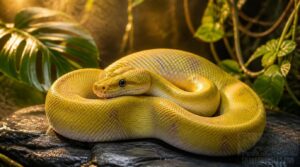
Where the Mojave whispers, the Banana practically sings. This morph’s lemon-yellow glow, often strongest in homozygous animals, makes it a standout among beginner-friendly morphs.
You’ll want moderate temps (80–85°F), steady humidity, and limited UV exposure to lock in that vibrant color. Banana ball pythons carry gentle temperaments, too. Just verify lineage to avoid wobble-linked backgrounds.
Albino—Best High-Contrast Look
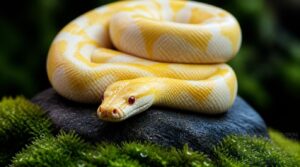
If Banana sings, Albino performs a full duet. That pale yellow-and-white body against red eyes creates the sharpest contrast you’ll find in beginner-friendly morphs. Albino ball pythons lack melanin, so dark markings pop dramatically. Keep lighting indirect, handle gently, and verify lineage for clean genetic traits. Compared with other ball python morphs and their color variations, this one’s a showstopper.
Leopard—Best Dark Pattern
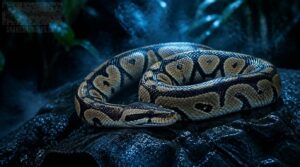
The Leopard is your pick if you want a ball python that looks like midnight in motion. Its dark pattern comes from tight black edging along a high-contrast dorsal stripe, and it deepens beautifully with age. Keep humidity right, because dry conditions darken it further.
If you’re curious about how morphs like the Leopard are created, this guide to reptile genetics for beginners breaks it all down in plain terms.
Temperament? Classic python: calm, curious, forgiving. Among beginner-friendly morphs, this one’s a stunner.
What Makes a Morph Beginner-Friendly
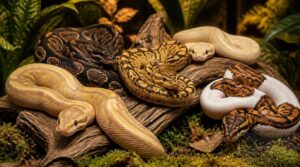
The best beginner morphs share a few traits that make your first year smoother. You want a snake that’s hardy, calm, and predictable, not one that keeps you guessing.
Look for these three markers:
- Stable feeding response — a good beginner morph takes mice reliably, even during the stressful first weeks home.
- Even temperament — calm morphs tolerate routine handling and post-feed checks without turning every interaction into a wrestling match.
- Clean, high-contrast patterning — crisp markings make it easy to spot shedding issues, check eye caps, and track growth against a predictable size-to-age curve.
Morphs like these stay forgiving even if your temperature gradient drifts a degree or your humidity dips for a day. That flexibility buys you time to learn while your snake thrives, not just survives.
Ball Python Morph Genetics and Health Risks
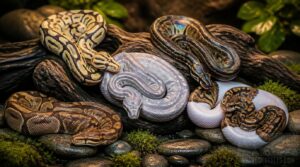
Here’s the part of morph shopping nobody puts on the sales flyer: genetics matter. Some morphs carry health problems you’ll want to spot before you buy, not after. Let’s cover wobble-linked morphs and how to check a snake’s genetic history so you bring home a healthy animal.
If you’re eyeing an Enchi morph, our Enchi ball python guide breaks down what makes this gene a safe, healthy pick.
Avoid Wobble-Linked Morphs
Here’s the thing: some stunning morphs come with a hidden catch called wobble syndrome. Spider, and similar pattern-linked genetic traits, cause head tilting and corkscrewing movement, often showing up by 6–12 months. It’s neurological, incurable, and stressful for your ball python. Skip these morphs entirely.
Stunning Spider-linked morphs hide wobble syndrome—an incurable neurological condition—so skip them entirely
Stick with beginner-friendly morphs like Pastel or Mojave for reliable health and temperament.
Check Genetic History
Here’s a stat that’ll stop you mid-scroll: some morphs carry a wobble gene that shows up in roughly half their offspring, even when parents look perfectly healthy. That’s why your genetic lineage matters more than any pretty photo.
Demand pedigrees going back three generations, ask about allele combinations, and consider genetic testing before you commit. A breeder hiding paperwork? Walk away, friend.
Morph Prices, Availability, and Breeder Quality
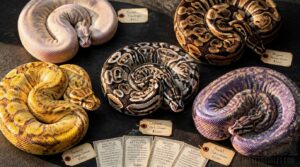
Ever wonder why the same Pastel can cost $70 at one table and $180 at the next? Morph prices swing hard. Starter morphs like Pastel and Mojave run $60–$180, mid-tier Banana and Leopard hit $250–$800, and exclusive combos can sail past $1,200. Availability peaks in spring and early summer, when breeder inventory floods the market. Buy direct from a breeder and you’ll usually pay less, though you might wait longer than you’d like.
Here’s the deal: breeder quality matters more than a bargain tag. Look for transparent genetic history, shared feeding records, and real after-sale support. A new breeder’s introductory price can be a steal if their paperwork checks out. Cheap snakes with no lineage docs? That’s how you buy a headache.
Care Requirements for Your First Ball Python
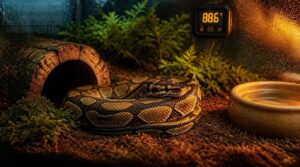
Here’s the secret: your snake’s care matters more than its morph. The prettiest Pastel won’t thrive in a bad setup.
Start with temperature gradients. Give your ball python a warm side around 88–92°F and a cool side near 78–80°F, so it can thermoregulate like it would in the wild. Drop temps slightly at night, but keep that warm zone species-typical.
Humidity is your second job. Aim for adequate moisture year-round, and bump it up during sheds with a humid hide or damp substrate patch. Retained eye caps happen when humidity crashes at the worst moment.
Feed appropriately sized frozen/thawed rodents based on body condition, keep fresh water available, and spot-clean waste promptly. Handle lightly, especially after meals or mid-shed. Master this routine and even the fanciest morphs will flourish.
Frequently Asked Questions (FAQs)
What are the healthiest ball python morphs for beginners?
What are the healthiest ball python morphs for beginners? Pastel, Mojave, and Banana top the list, offering stable health and temperament. Honestly, breeder quality matters more than morph. Check lineage, verify feeding responses, and avoid wobble-linked genetics.
Which ball python morphs to avoid?
Which ball python morphs to avoid? Skip spider morphs and woma-linked lines, since wobble syndrome impairs feeding and balance. Also avoid scaleless morphs, undocumented combos, and unverified paradox morphs lacking pedigree and health guarantees.
What is the most sought-after ball python morph?
What’s the most sought-after ball python morph? Right now, the Banana morph tops market demand, thanks to those bright yellow-orange tones. But Pastel remains the beginner-friendly champion, pairing steady morph popularity with predictable prices and easy availability.
What is the basic ball python morph?
The basic morph is the normal, or wild-type, ball python: brown and black blotches with a tan belly. Every flashy variety, from Pastel to Albino, branches from this baseline through basic genetics, making it your reference point.
How to breed ball python morphs?
How do you breed ball python morphs? Picture pairing a Pastel with a Mojave: you track genetic inheritance, keep incubation at 88°F, and hatch stunning combos. Master basic genetics, plan your breeding strategy, and record every clutch.
What makes a good ball python morph?
Look for vibrant patterns, a docile nature, and a strong feeding response. Beginnerfriendly morphs like Pastel and Mojave pair striking looks with solid health, easy handling tolerance, and simple enclosure setup needs.
Is a ball python a morph?
Is a ball python a morph? Nope. Think of it like vanilla ice cream before the toppings: the base species is the canvas. Morphs, from dominant morphs to recessive traits, are the paint. Most ball pythons are wild-type, and breeders stack morph combinations later.
Which ball python morph is most popular?
If you’re asking which ball python morphs top the popularity charts, Banana wins. Its bright yellow and lavender tones, easy genetics compatibility, and wallet-friendly price ranges make it a favorite, though Pastel runs a close second.
What is a visual guide to ball python morphs?
A visual guide catalogs each morph’s visual appearance through photos and descriptions. You’ll compare color patterns and pattern variation across Albinos, Piebalds, and Mystics, then explore designer combinations before choosing your snake.
How do ball pythons morph?
Picture a painter’s palette: every ball python carries genetic mutations that remix its colors. Recessive genes need two copies, while codominant traits show with one, so pattern inheritance and selective breeding projects create stunning phenotypic expression.
Conclusion
Here’s a number that surprises most new keepers: ball pythons regularly live 30 years in captivity, and some have topped 40. That’s not a pet, that’s a roommate for decades.
So choose your best beginner ball python morph with patience, not impulse. A hardy Pastel or Mojave from a reputable breeder beats a flashy wobble-carrying Spider every time. Pick genetics you can trust, nail the husbandry, and your first snake becomes a lifelong companion.