This site is supported by our readers. We may earn a commission, at no cost to you, if you purchase through links.
Ask three boa keepers what species they own, and you’ll likely get three different answers—even if the snakes look nearly identical. That’s because "boa constrictor" gets tossed around as a catch-all term, when it actually covers several distinct boa constrictor species spread across two continents, from Argentine grasslands to Mexican dry forests.
Size alone tells part of the story: some top out around 5 feet, others stretch past 12. Add in color, temperament, and climate needs, and misidentifying your snake becomes a real problem for its care.
Sorting out who’s who starts with understanding what actually separates these species—and why it matters more than you’d think.
Table Of Contents
- Key Takeaways
- Boa Constrictor Species Classification Guide
- Boa Constrictor: True Red-Tailed Boas
- Boa Imperator: Common Pet Boas
- Boa Sigma: Mexican West Coast Boas
- Comparing Boa Species Before Ownership
- Frequently Asked Questions (FAQs)
- Are boa constrictors native to Brazil?
- Are boa constrictors arboreal?
- Are boa constrictors venomous?
- Are Boas powerful constrictors?
- How many species of boa constrictors are there?
- What are the two types of boas?
- What is the friendliest boa species?
- What species is a boa constrictor?
- How many Boa constrictor species are there?
- What is the friendliest species of boa?
- Conclusion
Key Takeaways
- "Boa constrictor" actually covers three distinct species—Boa constrictor, Boa imperator, and the newly recognized Boa sigma—and mixing them up can lead to serious care mistakes.
- Size varies dramatically by species: true red-tailed boas can hit 10-13 feet, imperators stay a more manageable 4.5-7 feet, and the Boa sigma is smaller still at 4-6 feet.
- Habitat of origin dictates care needs, so rainforest-native red-tails want higher humidity, while dry-forest Boa sigma needs a much drier setup to avoid respiratory issues.
- Before buying, check for genetic testing and lineage documentation, since morph labels and hybrid breeding can blur species lines and even trigger legal trade complications under CITES rules.
Boa Constrictor Species Classification Guide
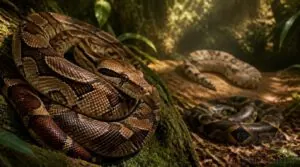
Boa constrictor" gets tossed around loosely, covering everything from a 6-foot pet snake to a 12-foot wild giant. Turns out the genus is more complicated than most people realize, with real taxonomic lines separating the species. Here’s what actually sets them apart, starting with the genus itself.
For a closer look at how size, pattern, and habitat separate these subspecies, this detailed boa constrictor species comparison breaks down the differences clearly.
Boa Genus Overview
Picture a heavy-bodied constrictor built for ambush, not speed—that’s the boa genus fundamentally. These nonvenomous Boidae members span the Americas, from rainforest to dry coast, ranging under 2 meters to over 4. Genetic testing keeps reshaping taxonomy here.
Most give birth to live young, a trait called ovoviviparity, tracing back through some genuinely ancient evolutionary origins. In captivity, their lifespan can exceed 30 years, offering insights into their long-term survival potential.
Species Vs Subspecies
So what actually separates a species from a subspecies? Reproductive isolation is the real dividing line—species can’t interbreed successfully, subspecies can. Boa taxonomy leans on morphological variation and genetic testing to draw these boundaries, though hybrid zones muddy things. That reproductive isolation debate, paired with slow taxonomic consensus, explains why boa classification keeps shifting under researchers’ feet.
Common Naming Confusion
That reproductive-isolation debate is messy enough, but common names make boa taxonomy even trickier. Regional naming differences mean the same snake gets different labels across South America, Mexico, and Europe.
Add trade name conflicts, hybrid label ambiguity, and morph misidentification risks, and snake identification gets murky fast—which matters for legal naming compliance when buying or selling.
Boa Constrictor: True Red-Tailed Boas
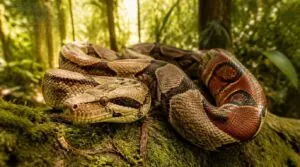
When people picture a "real" boa constrictor, this is usually who they mean. True red-tails carry a certain reputation, and it’s earned. Here’s what actually sets them apart, from where they roam to why some populations need our attention.
South American Range
True red-tailed boas call South America home, from Venezuelan rainforest to Argentine scrub. The moisture-blocking Andes shape everything, stretching roughly 7,500 km and splitting the continent into wildly different hydrological regimes.
- Amazon basin rainforest
- Dry Argentine grasslands
- Elevation gradients up to 4,000m
That range explains why locality matters so much in boa identification.
Size and Build
When you get down to it, red-tailed boas are big snakes—10 to 13 feet, 15 to 50 pounds, with thick, muscular builds built for constriction.
| Trait | Range | Note |
|---|---|---|
| Length | 10–13 ft | Males slightly longer |
| Weight | 15–50 lbs | Varies by locality |
| Girth | Thick midsection | Tapers toward tail |
Growth’s fastest early on, then slows with maturity.
Most of that early surge happens within the first year, so tracking a dwarf boa constrictor’s full size growth timeline helps set realistic expectations as things level off.
Tail Color and Saddles
Where the tail earns its name: colors run pale buff to deep red, often deepening with maturity from a lighter juvenile tail hue. Dark saddles march down the back, edges slightly crenulated, sometimes merging into bands.
Warmer climates boost color saturation, while regional tail variation and captive boa morphs can exaggerate contrast well beyond wild RedTail Boa Constrictor norms.
Notable Localities
Picture South America’s rainforests as boa real estate, each pocket producing its own local flavor. The Tumbes Peru boa and Peruvian long-tail boa stand out, along with the Bolivian silver back.
- Tumbes Peru boa
- Peruvian long-tail boa
- Bolivian silver back
Compare that to island specialists like the St Lucia boa or Pearl Island boa, geography shaping every scale.
Conservation Considerations
Wild boa numbers are dropping, and that’s not a scare tactic, it’s just habitat math. Argentine populations face CITES Appendix I restrictions, while broader conservation status hinges on forest corridors, genetic diversity monitoring, and community involvement programs.
Wild boa numbers are falling, and it’s simple habitat math, not scare tactics
| Threat | Response | Outcome |
|---|---|---|
| Habitat loss | Corridor protection | Stable gene flow |
| Poaching | Trade enforcement | Fewer losses |
| Climate shifts | Monitoring | Adaptive management |
Boa Imperator: Common Pet Boas
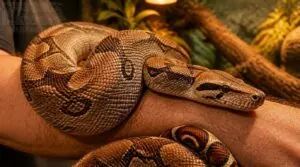
If you’ve ever met a pet boa, odds are it was actually a Boa imperator. This is the species that built the reptile hobby, and for good reason. Here’s what makes them the go-to choice, from where they roam to how they handle being held.
Mexico to Colombia Range
Boa imperator claims real estate from Mexico down through Colombia, a corridor packed with locality variation. Dry forests, humid jungles, foothills—same species, different look.
- Color/pattern shifts by region
- Elevations up to 1,500 meters
- Scale margins differ locally
- Habitat fragmentation pressures prey
- Genetic studies confirm distinctiveness
Climate microhabitats shape breeding and shedding cycles, while conservation corridors help populations disperse safely between fragmented forest patches.
Smaller Adult Size
Here’s the good news for anyone tight on space: Boa imperator runs smaller than its South American cousin, usually 4.5 to 7 feet as an adult. That means real enclosure space savings and easier handling day to day.
Growth slows noticeably after 2–3 years—a growth rate slowdown that also eases metabolic needs adjustment, since smaller bodies simply need less food.
Popular Captive Morphs
That smaller size hasn’t hurt demand—if anything, it’s fueled decades of morph genetics experimentation. Breeding programs have produced Albino, Pastel, and Coral Glow lines, each shifting color and pattern without touching species identity.
Combinations like Banana Pied stack multiple genes for unique looks. Market demand stays strong for striking color variations, making Boa imperator the go-to canvas for collectors chasing new morph combinations.
Temperament and Handling
Genetics aside, temperament’s what really wins hearts. This species tends toward curious, calm energy—gentle handling techniques matter more than muscle here.
Watch for stiffened posture or tight coils; these are handling stress signals worth respecting.
- Move slow
- Support fully
- Skip the head
- Keep sessions short
- Stay consistent
That consistent handling routine builds real trust over time.
Beginner Care Fit
That trust you’ve built through gentle handling practices carries right into daily care, and this is where imperator boas really shine for beginners.
First enclosure setup stays simple: solid temperature gradient basics (75–88°F), moderate humidity (40-60%), UVB lighting. Weekly feeding schedule, once they’re past juvenile growth spurts. Manageable adult size means fewer surprises—just consistent humidity management and routine checks.
Boa Sigma: Mexican West Coast Boas
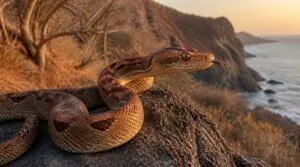
Now here’s the newest member of the boa family, and it’s one you probably haven’t heard much about. Boa sigma was only recently split off as its own species, so a lot of what makes it distinct is still coming into focus. Let’s look at what actually sets this Pacific Coast native apart.
Pacific Coast Dry Forests
Picture cracked earth, thorny scrub, and trees that drop their leaves for months straight — that’s home for Boa sigma. Mexico’s Pacific dry forests run through pronounced wet-and-dry seasons, with nearly all rain packed into a short window. Fire ecology patterns and habitat fragmentation from farming both shape this landscape, and this boa constrictor species has adapted right alongside it.
Distinct Regional Adaptations
Survival here rewards adaptability. Climate size variation shows up across boa populations generally, and jaw strength shifts with regional prey too. Shedding rates speed up in dry zones, tail saddles fit into scrub, and disease resistance differs region to region — much like patterns seen in longicauda, occidentalis, ortonii, and nebulosa boas.
- Body size tracks climate
- Jaw strength tracks prey
- Faster sheds in dry zones
- Camouflage saddles match terrain
Lower Humidity Needs
Ditch the misting bottle for this species. Boa sigma wants a dry microclimate, roughly 40-60% humidity, not the swampy setup common with other boa constrictor subspecies. Good ventilation and dry substrate (cypress, not soil) keep things stable.
Steady humidity control aids shedding and wards off respiratory infections — the real threat with damp enclosures. Simple, dry, boring even. Sigma boas thank you for it.
Identification Challenges
Since Boa sigma is so new to genetic classification, even seasoned keepers mix it up with imperator. Pattern variation analysis gets tricky fast, and cryptic coloration cases don’t help.
Juveniles muddy things further through juvenile mimicry issues, while captive hybrid feature blending and regional morph mimicry from nearby ranges make quick field IDs a gamble at best.
Captive Availability
Good luck finding one at your local expo. Boa sigma barely exists in Breeder Networks yet, so most "sigma" listings are misidentified imperator.
Import Regulations from Mexico are strict, and legit bloodlines rarely enter the pet trade.
If you want a real one, expect a wait, expect Quarantine Periods, and skip anyone pricing "morphs" they can’t prove.
Comparing Boa Species Before Ownership
So you’ve met the three species, now comes the part that actually matters before you bring one home. Picking a boa isn’t just about which one looks coolest in a photo, it’s about size, care, and legal fine print lining up with your real life. Here’s what to weigh before you commit.
Adult Size Differences
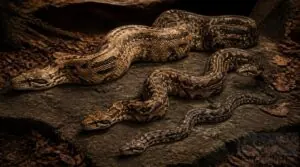
Size is your biggest clue. True boa constrictor species stretch 10–14 feet, imperator tops out around 6–8 feet, and boa sigma stays smaller still, roughly 4–6 feet.
Females outweigh males noticeably—sexual dimorphism at work.
Regional variation matters too (occidentalis runs bulkier), and enclosure size requirements should always match your snake’s actual species, not wishful thinking.
Pattern and Color Clues
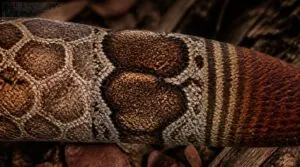
Can you tell a boa’s species just by its saddles? Mostly, yes. Look for saddle shape variations—rounded versus elongated—plus color intensity gradients from tan to bronze.
- Hexagonal blotches (imperator)
- Bold contrasting saddles (constrictor)
- Locality-based tail banding
Morph genetics muddy things further; hybrids merge patterns unpredictably. Species classification isn’t foolproof, but pattern reading helps.
Habitat-Based Care Needs

Patterns tell you species, but geography tells you care. Boa constrictor hails from rainforest, so it wants higher humidity and a broad temperature gradient (75–88°F). Boa imperator tolerates varied habitats, more forgiving on enclosure size.
Boa sigma craves dry, arid setups—less moisture, drier substrate choice. Match your enclosure to origin, not just looks.
Hybrids and Morph Labels
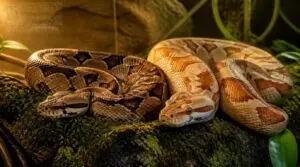
Once you match habitat to husbandry, the next wrinkle is genetics. Captive breeding blurs species lines fast—interbreeding creates hybrids with blended saddle patterns and unpredictable color pattern blending.
Morph labels like albino-motley sound official, but they’re often just breeder-coined descriptors, not confirmed genetic divergence. Ask about genetic testing verification and lineage records before buying; reputable sellers document parentage instead of relying on catchy names.
Legal Trade Rules

Paperwork matters as much as parentage. CITES regulations govern cross-border trade, and Argentine boas sit on CITES Appendix I, meaning stricter permits.
Before buying or shipping:
- Confirm export documentation standards are met
- Check EU import requirements apply
- Verify the CITES permit process was followed
- Understand trade violation penalties risk seizure
Sloppy paperwork threatens wildlife conservation and pet trade regulations alike—don’t skip it.
Frequently Asked Questions (FAQs)
Are boa constrictors native to Brazil?
Yes, genuinely native, not just an introduced wanderer. Native range Brazil spans Amazonia to Atlantic forest fringes, home to distinct Brazilian subspecies like B. c. constrictor and B. c. amarali across varied South American habitats.
Are boa constrictors arboreal?
Somewhat. Juveniles climb often, using branch grip mechanics and coiling for arboreal feeding techniques, while adults show ground preference, only ascending rainforest canopy occasionally—so vertical habitat requirements matter more for young boas than grown ones.
Are boa constrictors venomous?
No, and that’s the venom myth debunked for good—no glands, no fangs built for injecting anything nasty. Constriction over venom is their whole strategy. A bite might sting, but it’s just muscle and pressure, not chemistry.
Are Boas powerful constrictors?
Absolutely, and it’s not brute force alone. Constriction strength comes from muscle power wrapped in progressive loops, tightening with each breath the prey takes, cutting circulation fast — a mechanical strategy that scales pressure to prey size without wasting energy.
How many species of boa constrictors are there?
Three, thanks to recent taxonomic revisions: Boa constrictor, Boa imperator, and Boa sigma. Genetic testing keeps reshuffling old subspecies lines, so don’t be surprised if that number shifts again down the road.
What are the two types of boas?
Think of family trees with two very different branches: true boas and sand boas. True boas give live birth across the Americas; sand boas are stout desert burrowers, adapted to arid Northern Hemisphere habitats entirely.
What is the friendliest boa species?
Honestly, the Kenyan sand boa takes the crown. Its gentle temperament, low energy, and compact 12–20 inch size make it ideal for easy handling and beginner friendly pet ownership—herpetologists often recommend it for stress-free, hands-on care.
What species is a boa constrictor?
Taxonomically, it’s the nominate species in genus Boa—Boa constrictor proper, not a subspecies. Genetic testing methods and taxonomic revisions reshaped species delimitation here, splitting former subspecies like imperator into full species, distinct from CITES-protected relatives.
How many Boa constrictor species are there?
Right now, herpetology research backs three species: Boa constrictor, Boa imperator, and Boa sigma. That’s a shift from the old historical monotypic view—molecular species delimitation, not guesswork, drove this current species consensus among taxonomists.
What is the friendliest species of boa?
Boa imperator usually wins for gentle temperament, especially captive-bred lines. Dumeril’s boas and Kenyan sand boas rank close behind, staying docile with regular, gentle handling frequency—proof that captive breeding shapes calmness more than species alone.
Conclusion
What’s really in a name? For your snake, everything. Getting the boa constrictor species right isn’t pedantic box-checking—it’s the difference between a thriving animal and one fighting its enclosure every day.
A red-tail needs room to grow past nine feet; an imperator won’t. Sigma boas want dry air, not a rainforest setup. Learn the traits, trust the details, and your boa will tell you, quietly, that you got it right.