This site is supported by our readers. We may earn a commission, at no cost to you, if you purchase through links.
Your ball python is breathing with its mouth open, and its belly looks red. That’s sepsis, and you have hours, not days.
Snakes can’t cough. Mucus pools in the airway, bacteria multiply, and a harmless bubble at the nostril becomes sepsis in snakes before most owners notice the wheeze. Reptiles hide illness until it’s progressed, which makes every early sign count.
Effective snake bacterial infection treatment starts with spotting those signs, getting a culture-guided diagnosis, and fixing the husbandry flaw that let the infection take hold. Here’s how you catch it, treat it, and keep it from coming back.
Table Of Contents
- Key Takeaways
- Recognize Snake Infection Symptoms and Emergency Signs
- Get a Veterinary Diagnosis Before Treatment
- Snake Bacterial Infection Treatment With Veterinary Guidance
- Support Your Snake’s Recovery at Home
- Prevent Reinfection Through Better Snake Husbandry
- Frequently Asked Questions (FAQs)
- What antibiotics are safe for snakes?
- What are the signs of sepsis in snakes?
- Will a snakes respiratory infection go away on its own?
- What are the symptoms of a snake infection on the skin?
- How do you treat infectious stomatitis in snakes?
- How do you treat a snake with antibiotics?
- How do you treat a snake septicemia?
- Are antibiotics effective in preventing a snake bite?
- How do you treat a snake parasite?
- What is bacterial skin infection in snakes?
- Conclusion
Key Takeaways
- Open-mouth breathing, a red belly, or bubbles at the nostrils mean your snake needs a reptile vet right away, because snakes can’t cough and these infections can turn into sepsis within hours.
- Don’t treat your snake yourself, since a vet’s culture and sensitivity test is what identifies the right antibiotic, and you need to finish every dose exactly as prescribed.
- Your snake can’t fight infection without the right heat, so keep species-specific temperature and humidity gradients steady while it recovers, and expect treatment to take several weeks.
- Reinfection is prevented by fixing the husbandry problem behind it: disinfect the enclosure weekly, keep substrate dry, change water daily, quarantine new snakes, and keep up your vet checkups.
Recognize Snake Infection Symptoms and Emergency Signs
Your snake can’t tell you it’s sick, so you have to read the signs yourself. Bacterial infections move fast, and catching them early can save your pet’s life. Here are the five warning signs to check, starting with breathing and ending with true emergencies.
Because subtle shifts in posture, hunger, and shedding often show up before obvious symptoms, it helps to learn how to read your snake’s health and behavior before trouble starts.
Your snake can’t tell you it’s sick, so you must read the signs, because catching a bacterial infection early can save its life
Breathing And Nasal Changes

Bubbles at the nostrils are your first red flag. Watch for nasal discharge, clear at first, then thick and mucopurulent as bacteria take hold. Crusted nares follow fast.
Listen closely. Raspy breathing, wheezing, clicking, or gurgling means mucus is choking the airways. Your snake can’t cough it out. Because snakes lack a diaphragm, they can’t cough, so mucus and fluid build up in the lungs and raise the risk of respiratory distress.
Open-mouth breathing, head raised, neck stretched? That’s distress. Call your vet today.
Skin And Scale Lesions
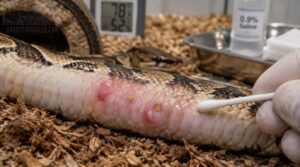
Check the belly next. Skin discoloration is your early clue: pink, red, or dark patches on ventral scales, especially where damp substrate touches.
Blisters mean trouble. Left alone, they turn pustular, then become ulcerative bacterial dermatitis with foul odor. Skin lesions and abscesses need your vet, and deep rot may require necrotic tissue debridement. Dry substrate is scale rot prevention.
Mouth Infection Signs
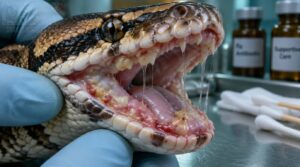
Now look at the mouth. Gently check the gum line for cheesy yellow or grey caseous exudate. That’s classic stomatitis.
Watch for swollen gums, red tissue, and stringy saliva. Mucopurulent discharge from the mouth or nose means oral infections are spreading. Don’t wait.
Bubbling saliva, loose teeth, or lopsided jaw swelling signal deeper trouble. Call your vet today.
Appetite And Behavior Changes

Mouth pain often shows up at the food bowl first. A snake that rubs its nose on the enclosure or refuses meals for more than two feeding cycles needs attention.
Catching these warning signs early matters, and a guide on how to prevent common snake health issues can help you tackle problems like poor humidity or temperature before they cause real trouble.
Watch for:
- Lethargy and loss of appetite
- Respiratory symptoms like wheezing
- Open-mouth breathing
- Weight dropping over 10%
Your vet will guide nutritional support during illness. Don’t force-feed.
Emergency Warning Signs
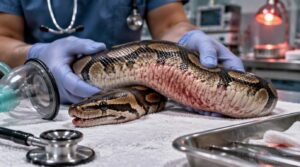
How do you know it’s an emergency? Combine the signs. Open mouth breathing with a red belly means sepsis. Drive to an emergency exotics vet now, not tomorrow.
| Sign | Meaning |
|---|---|
| Open mouth breathing, red belly | Sepsis |
| Petechiae, plastron redness | Clotting failure |
| Neurological signs | Brain involvement |
| Paralysis or seizures | Organ failure |
Neurological decline means a grave prognosis. Move fast, stay calm.
Get a Veterinary Diagnosis Before Treatment
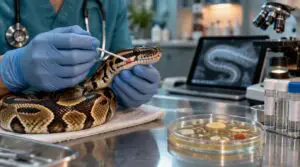
Guesswork kills snakes.
Veterinary diagnosis comes first, every time. A reptile vet will take a full husbandry history, examine your snake head to tail, and run a CBC, serum chemistry, and radiographs to see how far the infection has spread.
Next comes the bacterial culture. Your vet swabs the lesion after an alcohol prep, or takes a sterile tissue sample, so environmental germs don’t muddy the result. Respiratory cases may need oral, nasal, or lung samples. Blood cultures help when septicemia is suspected.
Pair that with culture and sensitivity testing. It shows which bacteria matter and which drugs they’ll resist, so targeted antibiotic therapy replaces broad-spectrum shots in the dark.
Ask your vet about zoonotic risks, and wash your hands.
Snake Bacterial Infection Treatment With Veterinary Guidance

Once your vet confirms a bacterial infection, treatment starts fast, and it works best when you follow the plan exactly.
Three pillars of care will carry your snake from sick to stable: culture-guided antibiotics, careful wound care, and strong supportive care.
Here’s what each one asks of you, so you’re ready before the first dose.
Culture-Guided Antibiotics and Drug Resistance
Guessing wastes time your snake doesn’t have. Culturebased antibiotic selection starts with a swab, and bacterial culture sensitivity results show what actually works. Your vet may also need an early empirical drug while results are returning.
- Antibiotic resistance in reptiles is real
- Targeted antibiotic therapy beats broad guesses
- Antimicrobial stewardship protects future options
- Finish every dose
- Never reuse leftover medication
Wound Care and Topical Treatments
Your ball python’s belly scales are blistered, brown, and weeping. Don’t grab the Neosporin. Follow your vet’s wound management protocols: saline rinse, thin layer of silver sulfadiazine cream, hydrocolloid gel dressing for deeper sores. Keeping a reptile wound care first aid kit stocked with sterile saline and gauze makes those daily checks and rinses much easier.
Mouth rot needs oral debridement for stomatitis. Dead tissue needing removal means surgical debridement. Skip harsh scrubbing. Check daily. Act fast. Delay costs scales, tissue, lives.
Supportive Care and Hospitalization
Antibiotics alone won’t save a weak snake. Supportive care does the heavy lifting alongside systemic antibiotic therapy. Your vet will likely hospitalize your snake and:
- Rehydrate slowly with fluid therapy.
- Warm your snake gradually.
- Start feeding after rehydration.
- Keep temperature gradient maintenance steady.
- Enforce strict enclosure hygiene.
Reduce stress too, with quiet hideouts and minimal handling. Don’t skip any step.
Support Your Snake’s Recovery at Home
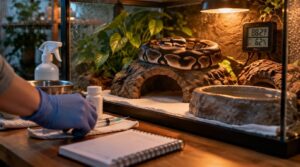
Your vet’s treatment plan only works if your home setup backs it up. Two things decide how well your snake recovers once it leaves the clinic: the right enclosure conditions and your own consistent follow-through. Here’s what you need to get right, step by step.
Species-Specific Temperature and Humidity
Your snake can’t fight infection without heat. Cold slows its immune system, and no antibiotic fixes that. Pairing an under-tank heater with thermostat holds the warm side at a steady temperature and prevents dangerous overheating on the enclosure floor.
Use species-specific temperature gradients. Ball pythons need 88-92°F warm, 76-80°F cool, with 60-70% humidity. Corn snakes need 80-85°F warm, 70-75°F cool. Boas need 80-85°F by day.
Keep humidity control below 85. Maintain the gradient, never one flat temperature. Prioritize enclosure hygiene.
Medication, Monitoring, and Veterinary Follow-Ups
Heat sets the stage. Medication finishes the job.
Give every dose exactly as prescribed. Enrofloxacin often runs every 48 hours, so set alarms. Log date, time, dose, and reaction.
Monitoring matters daily. Look for less swelling, less discharge, and better appetite within 72 hours. No change? Call your vet. Culture and sensitivity may need repeating.
Keep all your Veterinary Follow-Ups.
Prevent Reinfection Through Better Snake Husbandry
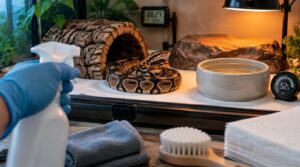
Treating the infection is only half the job. If the environment stays the same, the bacteria come back, and a second round hits a weaker snake.
Start with weekly enclosure disinfection. Remove everything, scrub with chlorhexidine or F10 SC at the right dilution, rinse well, and let every surface dry fully. Swap in fresh paper towels or reptile carpet. Toss porous wood and natural decor, because you can’t truly sanitize them.
Change water daily. Keep species-specific temperature gradients steady and check humidity with a hygrometer. Cracked skin invites bacteria in.
Quarantine any new snake for 30 to 90 days. Wash your hands before and after every handling session.
Book annual veterinary exams, and check your snake weekly for early warning signs.
Frequently Asked Questions (FAQs)
What antibiotics are safe for snakes?
Ceftazidime at 20–40 mg/kg every 2–3 days is a snake favorite. Your vet picks it after culture and sensitivity for targeted antibiotic therapy. Avoid amoxicillin-clavulanate. Antibiotic stewardship and veterinary intervention protect snakes from bacterial infection.
What are the signs of sepsis in snakes?
Sepsis in snakes looks like sudden systemic illness. Watch for lethargy, refusing food, open-mouth breathing, and red or petechiated belly scales. Greenish mouth pus, bloody vomit, or loose stool? Go to a vet now.
Will a snakes respiratory infection go away on its own?
Treatment takes 3-4 weeks, so don’t wait. No, it won’t clear alone. Raspy breathing signals respiratory infection progression, and early symptoms become pneumonia. Environmental stress factors weaken defenses.
You need targeted antibiotic therapy now.
What are the symptoms of a snake infection on the skin?
Check your snake’s scales now. Skin discoloration like brown or off-white patches, plus blisters, crusty scales, or necrotic tissue, signals trouble. Lesion progression to ulcerative or necrotic dermatitis or a bacterial abscess needs a vet fast.
How do you treat infectious stomatitis in snakes?
Raise your snake’s temperature to 90-95°F first. Infectious Stomatitis, or Mouth Rot, needs a vet: culture the Caseous Exudate and Mucopurulent Discharge, then use targeted antibiotics. Antibiotic Stewardship matters, so you never guess doses yourself.
How do you treat a snake with antibiotics?
Treating blind is like swinging in the dark.
Your vet cultures the bacterial infection, then prescribes targeted antibiotic therapy. Exact antibiotic dosing, finished fully, beats antimicrobial resistance. That’s antibiotic stewardship. Never guess your snake’s dose.
How do you treat a snake septicemia?
Your ball python stops eating, gasps open-mouthed, and shows red belly scales. That’s septicemia in snakes.
Rush to a vet hospital now. Expect bacterial isolation, targeted antibiotic therapy, fluid therapy, and temperature regulation at 90-95°F.
Are antibiotics effective in preventing a snake bite?
A paper shield stops nothing. Antibiotics work the same way against bites. They can’t prevent bites or neutralize venom.
After a bite, wound management protocols and targeted antibiotic therapy come from your vet.
How do you treat a snake parasite?
You can’t treat this yourself. Get a fecal screening first, because the wrong drug harms your snake. Your vet prescribes the cure. You quarantine newcomers, freeze feeder rodents, replace soiled substrate, and scrub water bowls.
What is bacterial skin infection in snakes?
Think of your snake’s scales as armor with a crack in it. Bacteria enter, causing skin discoloration, lesions and abscesses.
A vet confirms it with Gram staining and bacterial isolation, then fixes your husbandry practices.
Conclusion
Would you rather spot a bubble at the nostril today or fight sepsis tomorrow? Choose today.
Snake bacterial infection treatment works when you move fast: recognize the signs, get a culture, follow the full antibiotic course, and keep supportive care steady. Don’t skip follow-ups. Don’t guess at doses. Don’t ignore the heat gradient.
Then fix the husbandry flaw that started this. Correct temperature and humidity protect your snake long after the medication ends. Stay vigilant.