This site is supported by our readers. We may earn a commission, at no cost to you, if you purchase through links.

Feeding a snake sounds simple until you’re standing in a pet store that’s out of stock, your ball python hasn’t eaten in two weeks, and the frozen rats in the back freezer look like they’ve been there since 2019. Consistent, quality prey is the quiet backbone of reptile health—and most keepers don’t think about it until something goes wrong.
A snake food delivery service changes that situation entirely. You get bulk feeders shipped directly to your door, flash-frozen at -40°F, vacuum-sealed, and cold-chain tracked from farm to freezer. No guessing. No last-minute drives across town.
The five options reviewed here cover everything from live organic mealworms to frozen large rat packs—so finding the right fit for your snake’s size and feeding schedule just got easier.
Table Of Contents
- Key Takeaways
- Top 5 Snake Food Delivery Items
- Best Delivery Service Features
- Quality and Safety Standards
- Choosing Snake Food Delivery
- Frequently Asked Questions (FAQs)
- How do I contact Reptile Food?
- Which food delivery service do you use?
- How do I order food from a food delivery service?
- What is the best food delivery service?
- What makes a good organic meal delivery service?
- How much does it cost to eat snake food?
- Is RodentPro legit?
- What is the best food for snakes?
- How much do feeder rats sell for?
- What is a good alternative to snake food?
- Conclusion
Key Takeaways
- Snake food delivery services ship flash-frozen, vacuum-sealed feeders directly to your door, eliminating the unreliable pet store supply chain that puts your reptile’s health at risk.
- Matching prey size to your snake’s widest girth point—targeting roughly 10% of body weight per meal—is the single most important feeding decision you’ll make as a keeper.
- Frozen feeders are safer than live prey for routine meals because they eliminate bite wounds and parasites, though scenting thawed prey can ease the transition for reluctant feeders.
- The best delivery services combine USDA-licensed sourcing, cold-chain shipping with dry ice, flexible subscription controls, and a 24-hour arrival guarantee to keep your feeding schedule consistent year-round.
If you’d rather source live mice for occasional feeding challenges, this guide to buying live mice for snakes breaks down how to weigh reptile shops against expo breeders.
Top 5 Snake Food Delivery Items
Finding the right feeder for your snake doesn’t have to feel like guesswork. Whether you’re feeding a hatchling ball python or a full-grown boa, the options below cover a solid range of sizes and types. Here are five snake food delivery items worth knowing about.
If you’re still working out portion sizes and schedules, this guide to boa constrictor feeders for juvenile snakes breaks down the decisions that matter most early on.
1. Bulk Live Organic Mealworms

Mealworms aren’t a staple feeder for most snakes, but they earn a spot here for keepers who also house reptiles, birds, or amphibians alongside their serpents. Predator Foods ships 1,250 live organic mealworms in breathable cloth bags, keeping larvae fresh and oxygenated in transit.
Gut-loading them before feeding boosts nutritional value fast. At roughly 0.75 inches average, these USA-grown Tenebrio molitor larvae also double as starter stock if you’re building your own breeding colony.
| Best For | Reptile, amphibian, bird, and chicken keepers who want a reliable bulk supply of organic feeder insects — or anyone looking to start their own mealworm breeding colony. |
|---|---|
| Feeder Type | Mealworms |
| Product State | Live |
| Quantity | 1,250 count |
| Reptile Compatible | Yes |
| USA Sourced | Yes |
| Storage Method | Refrigeration |
| Additional Features |
|
- USA-grown and certified organic, so you know exactly what you’re feeding your animals
- Breathable cloth bag packaging keeps the worms alive and oxygenated during shipping
- Can be refrigerated for weeks or gut-loaded to maximize nutritional value before feeding
- Live delivery is only guaranteed between 40–80°F, so extreme weather could be an issue
- Size can vary, with smaller individuals mixed in — not ideal if you need consistent sizing
- Some orders may include dry skins or come up slightly short on count
2. Frozen Pinkie Mice Snake Feeders
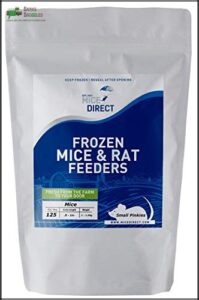
When hatchlings are too small for anything larger, frozen pinkie mice step in as the go-to prey. At 125 per order for $139.97, this bulk pack suits keepers running multiple juvenile snakes or a growing corn snake collection.
Each mouse is flash-frozen with dry ice, preserving nutrients and eliminating parasites before it ever reaches your freezer. Vacuum-sealed packaging keeps them separated — no wrestling with frozen clumps. Thaw in warm water for 30 minutes, and you’re ready to feed.
| Best For | Reptile keepers raising multiple juvenile snakes or hatchlings that need smaller prey, especially those who want to buy in bulk and minimize frequent reorders. |
|---|---|
| Feeder Type | Pinkie Mice |
| Product State | Frozen |
| Quantity | 125 count |
| Reptile Compatible | Yes |
| USA Sourced | Yes |
| Storage Method | Freezer |
| Additional Features |
|
- Bulk pack of 125 mice at $139.97 offers solid value for keepers feeding multiple snakes regularly
- Flash-frozen with dry ice and vacuum-sealed, so mice stay fresh and are easy to separate
- Humanely processed and fed a zoological-grade diet, making them a nutritious, high-quality feeder option
- Requires dedicated freezer space to store 125 mice upon arrival
- Packaging seams can occasionally fail, which may affect freshness or create a mess
- The upfront cost may feel steep if you’re only feeding one or two snakes
3. Live Organic Mealworms for Reptiles
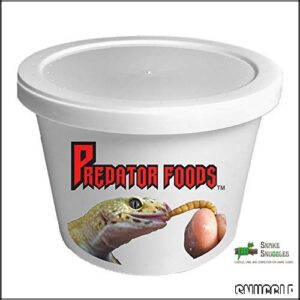
Not every feeder needs to come frozen. For smaller species — corn snake hatchlings, juvenile leopard geckos, young ball pythons — live organic mealworms offer something frozen prey can’t: movement that triggers natural hunting instincts.
Predator Foods’ mealworms are USA-grown and 12 ounces per order, arriving in breathable packaging that keeps them active on arrival. Gut-load them with leafy greens 24 hours before feeding, and you’re delivering a genuinely nutrient-dense meal. Store extras in the fridge to slow them down and extend shelf life.
For even more ways to maximize your reptile’s diet, reptile nutrition and care tips can help you fine-tune gut-loading routines and feeder insect choices.
| Best For | Reptile owners feeding smaller species like juvenile leopard geckos, corn snake hatchlings, or young ball pythons who want live prey that triggers natural hunting instincts. |
|---|---|
| Feeder Type | Mealworms |
| Product State | Live |
| Quantity | 12 oz |
| Reptile Compatible | Yes |
| USA Sourced | Yes |
| Storage Method | Refrigeration |
| Additional Features |
|
- USA-grown and arrive alive in breathable packaging that keeps them active and ready to feed
- Easy to store in the fridge to slow them down and extend freshness for weeks
- Nutrient-dense and gut-loadable, making them a genuinely healthy meal option for a wide range of reptiles, birds, and fish
- Live delivery isn’t guaranteed in extreme temperatures (above 80°F or below 40°F), which can be a problem depending on your climate
- Mealworms can turn into beetles over time if you’re not managing the colony closely
- Some buyers find the worms smaller than expected, so size consistency isn’t always reliable
4. Frozen Large Rat Feeder Pack
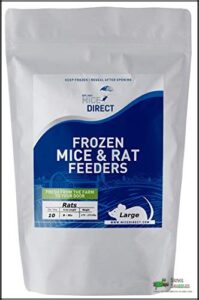
When your snake crosses that threshold into mid-size territory, mealworms simply won’t cut it anymore. That’s where the Frozen Large Rat Feeder Pack earns its place.
Each rat weighs 130 to 170 grams, making them ideal for constrictors under three feet. They’re flash-frozen, vacuum-sealed, and shipped with dry ice to arrive solidly frozen. Thaw one in the fridge for two to four hours — never refreeze what’s left. One prey item per session keeps digestion stress low.
| Best For | Snake and reptile owners who need a reliable, humane, and nutritious large feeder option delivered straight to their door. |
|---|---|
| Feeder Type | Large Rats |
| Product State | Frozen |
| Quantity | 10 per pack |
| Reptile Compatible | Yes |
| USA Sourced | Yes |
| Storage Method | Freezer |
| Additional Features |
|
- Humanely euthanized using CO2 and raised on zoological-grade feed, so you know exactly what your reptile is eating
- Farm-direct shipping with dry ice keeps rats solidly frozen on arrival, cutting out middlemen and reducing transit time
- Convenient 10-pack sizing with direct-to-consumer pricing that beats most local reptile shops
- Rats aren’t individually vacuum-sealed, so you’ll need to thaw and use larger batches at once rather than pulling single feeders as needed
- Requires someone home at delivery to get the package into the freezer right away — no leaving it on the porch
- Occasional shipping errors with quantity per package have been reported, so it’s worth double-checking your order on arrival
5. Frozen Small Rat Feeder Food
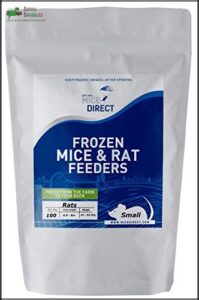
Young snakes need prey that matches their actual girth — not just their age. Frozen Small Rat Feeders (12–25 grams) hit that sweet spot perfectly for hatchlings and small corns.
Each feeder is CO2-euthanized, washed, vacuum-sealed, and batch-coded for traceability. Flash-freezing locks in about 20% crude protein and 66% moisture, which promotes steady growth without digestive stress.
Thaw one in warm water, offer it with tongs, and store any unused portions in the fridge — use within 48 hours.
| Best For | Reptile keepers with hatchlings or small snakes who want an affordable, humane, and convenient bulk feeder option delivered straight to their door. |
|---|---|
| Feeder Type | Rats |
| Product State | Frozen |
| Quantity | 100 per pack |
| Reptile Compatible | Yes |
| USA Sourced | Yes |
| Storage Method | Freezer |
| Additional Features |
|
- Bulk pack of 100 means fewer reorders and real cost savings over buying from a local pet store
- CO2-euthanized and flash-frozen for freshness, locking in solid nutritional value for healthy snake growth
- Farm-direct sourcing and dry ice shipping keeps transit time short and feeders arriving in great condition
- Size variation can run larger than expected, which may not suit very small or young snakes
- Must be frozen immediately on arrival — any delay risks spoilage and odor issues
- Thawing needs to be handled carefully, as mishandling can lead to leakage or unpleasant smells
Best Delivery Service Features

Ordering snake food online is only half the equation — how it gets to you matters just as much. The best delivery services back their products with features that make your life easier and keep your feeders arriving in perfect condition. Here’s what to look for before you commit to a subscription.
Reliable delivery is especially important when you’re managing a breeding season — if you’re also navigating post-breeding snake care and feeding schedules, the last thing you need is late or damaged feeders throwing off your routine.
Frozen Arrival Guarantee
A reliable guarantee is only as good as its conditions. To keep your frozen feeder rodents protected, you must sign for delivery on the first attempt — no signature voids coverage entirely.
Temperature thresholds also matter. If conditions are extreme, your frozen prey ships to a carrier pickup location instead. Retrieve it within two hours, document arrival condition with photos, and report any thaw issues within 24 hours. Using a photo evidence method helps provide visual proof of the delivery condition upon arrival.
Recurring Shipment Options
Consistency is what separates a well-fed snake from a stressed one. With subscription cadence options ranging from weekly to monthly, you can sync deliveries to your animal’s actual feeding rhythm rather than guessing.
Your account dashboard lets you edit frequencies, swap between frozen mice and frozen rats, and reserve inventory — so your reptile nutrition never hits a gap.
Bulk Order Savings
Buying frozen feeder rodents in volume isn’t just economical — it’s strategic. Tiered pricing models can cut your per-unit cost by 15 to 30 percent once you hit thresholds like 1,000 or 5,000 units.
That discount also locks in your price for up to 90 days, shielding your budget when supplier costs rise. Consolidated bulk shipments replace multiple smaller orders, trimming handling fees and packaging waste at once.
Easy Pause Controls
Life with reptiles doesn’t follow a neat calendar. When your snake enters brumation, pause controls let you suspend frozen feeder shipments for one to six months — no cancellations, no lost cart contents.
You can pause individual items like frozen mice or frozen rats without touching other reptile food lines. Billing stops immediately, reactivation is automatic, and a reminder arrives seven days before anything ships again.
Feeding Schedule Flexibility
Your snake doesn’t eat on your schedule — it eats on its own. That’s why customizing feeding windows from every 5 to 14 days keeps frozen mice and frozen rats arriving exactly when needed, not before.
Seasonal delivery shifts and growth cadence tools adjust automatically, so you’re never overstocked during brumation or scrambling after a growth spurt. Year-round availability means frozen feeders stay ready whenever your snake does.
Quality and Safety Standards
If you’re feeding your snake, quality isn’t just a nice-to-have — it’s the foundation everything else is built on. The best delivery services hold themselves to standards that protect both your animal and your peace of mind. Here’s what to look for across the five key areas that matter most.
USDA-licensed Feeder Breeding

Every feeder rodent you receive traces back to a USDA-licensed facility held to strict Animal Welfare Act standards. Inspectors verify three non-negotiables on-site:
- Adequate housing and biosecurity protocols
- Documented veterinary oversight records
- Full breeding traceability from colony to shipment
That accountability means your snake food arrives from a closed colony — not wild-caught — giving you real confidence in every feed.
Humane Processing Practices

Knowing your feeders come from a licensed facility is one thing — knowing they were handled with care right to the end matters just as much. Euthanasia follows CO2 displacement methods endorsed by the American Veterinary Medical Association, minimizing fear before processing begins.
Humane handling audits and welfare certification standards keep every step accountable, so you can feed your snake with a clear conscience.
Flash-frozen Prey Freshness
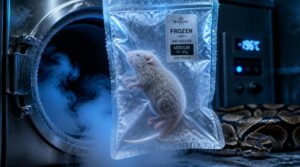
From humane processing, prey goes straight into flash freezing — dropping to around -40°F within minutes. That speed is the whole point:
- Small ice crystal formation keeps muscle fibers intact
- Nutrient retention levels remain close to fresh-state values
- Rapid freezing limits moisture loss during thawing
Your flash-frozen snake food supply arrives performing like it was caught yesterday.
Vacuum-sealed Packaging

Flash freezing locks in freshness — but only if the packaging holds. Vacuum-sealed freezer bags strip out ambient oxygen, shutting down lipid oxidation that turns fatty prey rancid. Films with oxygen barrier layers keep that near-zero oxygen environment stable for months.
Seal integrity testing catches microscopic leaks before your order ships, so your vacuum-packed frozen prey arrives exactly as protected as when it left.
Clean Cold-chain Shipping

Keeping flash frozen prey truly frozen across hundreds of miles takes more than a styrofoam box. Thick-walled coolers packed with dry ice, real-time temperature tracking, and tamper-evident seals work together to protect your order from warehouse to doorstep.
Redundant cooling systems and regulatory compliance audits back every shipment, so your frozen prey options arrive safe, intact, and ready to feed.
Choosing Snake Food Delivery
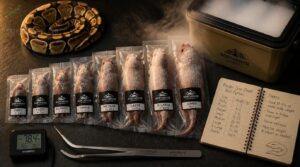
Picking the right snake food delivery service comes down to a few key decisions that can make or break your feeding routine. You’ll want to think through things like prey sizing, shipping schedules, and how much freezer space you’re actually working with. Here’s what to keep in mind before you commit to a service.
Match Prey to Snake Size
Getting prey size wrong is one of the most common mistakes new snake keepers make.
- Target 10% of body weight per meal
- Match prey diameter to your snake’s widest girth point
- Never exceed 1.5x the snake’s gape size
- Upsize prey gradually as your snake grows
Regurgitation signals a mismatch — drop down a size immediately and reassess.
Compare Frozen Versus Live
Which feeding method actually protects your snake better?
Frozen prey eliminates bite wounds and reduces parasite transfer risks by a lot. Live prey can stimulate hunting behavior stimulation, but requires constant supervision — one distracted moment risks injury.
Frozen prey eliminates bite wounds and parasites; live prey demands supervision no distraction can afford
Most keepers land on frozen for routine meals. When making the switch, scent the thawed feeder with live prey to ease acceptance. Safety and convenience usually win.
Check Shipping Timelines
Timing matters more than most keepers realize. Orders placed after the 8am EST Monday cutoff shift to the following week — which means a hungry snake waits longer than necessary.
Cross-country routes can stretch 3–5 transit days, and seasonal peaks add another day or two. For frozen feeder rodents, that cold chain window is tight. Always order early.
Review Refund Policies
Frozen feeder rodents are perishable — and most vendors won’t accept returns on them.
That said, reputable services usually offer replacements or refunds if your order arrives thawed, provided you submit a claim within 24 hours of delivery. Keep your order confirmation as proof of purchase. Refunds usually process within 5–14 business days, though store credit often clears faster.
Plan Freezer Storage
Your freezer is the last line of defense for every feeder rodent you stock.
- Set temp to -18°C for long-term frozen prey storage
- Zone your shelves — ready-use frozen mice up front, bulk frozen rats in back
- Label everything with prey type, size, and date
- Rotate FIFO — oldest frozen rodents get used first
- Log your stock weekly to track frozen prey options and reorder early
Frequently Asked Questions (FAQs)
How do I contact Reptile Food?
You might expect endless phone trees — instead, reaching Reptile Food is surprisingly direct. Call 1-775-359-1085 during weekday hours, email for a 24–48 hour reply, or check their social media for quick updates.
Which food delivery service do you use?
The service you choose depends on delivery speed and regional availability. For frozen rodents — mice, rats, and feeders — look for real-time tracking, saved payment options, and responsive support when orders arrive off-temperature.
How do I order food from a food delivery service?
Ironically, ordering food is the easy part. Create an account, enter your address, browse, and add items to your cart. Choose delivery, select a payment method, and track your order live.
What is the best food delivery service?
The best reptile food delivery service combines nutritional quality, reliable cold-chain shipping, and flexible subscription options. Look for USDA-licensed sources offering frozen rodents with a frozen arrival guarantee and responsive customer support.
What makes a good organic meal delivery service?
Over 60% of consumers prioritize traceable protein supply and sustainable packaging when choosing organic meal delivery. Strong services offer dietary customization, pesticide residue testing, and seasonal sourcing — keeping every delivery fresh and nutritionally complete.
How much does it cost to eat snake food?
Monthly feeding costs usually run $10–$60 for most snakes, with mice at $2–$6 each and rats reaching $ Larger species can push annual expenses toward $700, though bulk frozen prey cuts costs by up to 40%.
Is RodentPro legit?
Yes, RodentPro checks out. It holds a BBB profile, ships frozen feeder rodents with dry ice guarantees, and earns praise in reptile communities — though some users report occasional quality inconsistencies worth watching.
What is the best food for snakes?
Frozen mice and rats remain the go-to choice for most species. They offer reliable nutritional density without the risks live prey carries. Match the feeder animal’s width to your snake’s girth for safe, stress-free meals.
How much do feeder rats sell for?
Feeder rat prices vary by size and quantity. Pinkies run $25–$50 each, while large and jumbo rats reach $50–$ Buying in bulk bags of 25 or 50 cuts your per-unit cost a lot.
What is a good alternative to snake food?
What feeds a snake beyond the usual? Frozen feeder rodents stay reliable, but freeze-dried prey options, insect protein sources, fish, and reptile sausage nutrition round out a complete reptile food rotation as live prey alternatives.
Conclusion
Sure, keep making that midnight pet store run—dodging fluorescent lights, interrogating a teenager about frozen rat freshness, and hoping they’re not out of stock again.
Or, you could let a snake food delivery service do the heavy lifting. Flash-frozen, vacuum-sealed, cold-chain verified—your snake eats well, your freezer stays stocked, and that frantic drive disappears entirely. Consistent prey means consistent health.
You’ve done the research. Now make the choice your snake’s feeding schedule actually deserves.