This site is supported by our readers. We may earn a commission, at no cost to you, if you purchase through links.

Gripping a hooded cobra behind the jaw while its fangs press against a rubber membrane isn’t a job most people picture when they think about career paths, yet someone has to do it. That someone is a snake milker, and the paycheck attached to this work varies more than you’d expect.
Snake milker salary figures range from $33,000 for entry-level lab assistants to well over $130,000 for specialists in high-demand antivenom research. Location, employer type, and venom yield quality all shift the numbers substantially.
If you’re weighing this unusual career against the risk it carries, understanding exactly what drives that pay range matters before you ever pick up an extraction tool.
Table Of Contents
- Key Takeaways
- How Much Does a Snake Milker Make?
- What Affects a Snake Milker’s Salary?
- What Does a Snake Milker Do?
- Education and Training for Snake Milkers
- Snake Milker Jobs and Career Outlook
- Frequently Asked Questions (FAQs)
- How many snake milkers are in the US?
- What is the highest paid job at a zoo?
- What skills are needed to be a snake milker?
- How much do snake catchers get paid in the US?
- What does a snake milker extract from snakes?
- Are there any risks associated with snake milking?
- What kind of snakes do snake milkers typically handle?
- Are there any special certifications or training needed for snake milking?
- Is there potential for advancement in the field of snake milking?
- What are the potential long-term benefits of snake milking?
- Conclusion
Key Takeaways
- Snake milker pay ranges widely, from around $33,000 for entry-level lab assistants up to $80,000-$130,000+ for senior specialists in high-demand antivenom research.
- Your earnings depend heavily on experience, education (a biology degree plus certification), employer type, and location, with the Southeast US, California, and Arizona offering the most opportunities.
- The job blends dangerous, precise venom extraction work with daily animal care, lab processing, and strict safety protocols, since a single mistake can mean a lethal bite.
- Breaking into this small, competitive field (only 50-100 jobs nationwide) requires a relevant degree, 1,000+ hours of hands-on experience, venom handling courses, and state permits.
How Much Does a Snake Milker Make?

Snake milking pays differently depending on where you work, how much experience you carry, and what kind of venom you’re extracting. The numbers swing from modest hourly rates to salaries that rival a seasoned lab scientist’s. Here’s what you can actually expect to earn at each stage of the job.
Handling something as dangerous as bushmaster venom’s medical applications often demands specialized training, which can push a milker’s earning potential even higher.
Average Annual Salary
One number won’t tell you the whole story here. Snake milker salaries hover around $33,000 entry-level, though occupational salary benchmarking shows real variation by facility and funding source. Pay scale trends favor research-heavy employers, and regional wage comparisons matter too.
Research also shows that job postings often function as publicly advertised job attributes that reveal broader employer value beyond pay alone. Senior research specialists can reach $80,000, proving career stability in zoology grows with experience, not just tenure.
Typical Hourly Pay
Annual figures only tell half the story. Hourly, snake milkers often earn $18 to $28, with entry-level work around $18-22 and senior venom extraction specialists reaching $26-38 in high-demand labs.
Location variance matters, and shift differentials add $1-4 for nights or weekends. Private industry often beats public institutions, revealing a real industry pay gap.
Entry-Level Salary Range
So where does that leave someone fresh out of school? Starting pay for an entrylevel lab assistant usually runs $32,000-$42,000, with $33,000 common at teaching labs versus private venom producers.
| Employer Type | Starting Pay |
|---|---|
| Academic Lab | $32,000-$36,000 |
| Private Producer | $38,000-$42,000 |
| Biotech Startup | $34,000-$40,000 |
A bachelor’s degree in biology plus laboratory safety training pushes you toward the upper range, especially with geographic job flexibility.
Senior Specialist Earnings
That entry-level range is just the starting line. Stick with it long enough and you’re looking at senior research specialist pay near $80,000, sometimes $93,575 on average, with top earners in high-demand sectors clearing $130,000.
- Performance bonuses tied to yield
- Annual raises with tenure
- Freelance rates, $500-$900 daily
- Protocol development leadership roles
- Geographic concentration boosts demand
Salary Data Limitations
Take those numbers with a grain of salt. Few venom jobs get publicly posted, so private role opacity skews everything.
Public surveys rarely isolate this niche, and job title misclassification blends milkers into general zoology stats.
Add data reporting delays and shaky regional benchmarks, and figures like $33,000 entry-level or $80,000 senior pay become rough guides, not guarantees.
What Affects a Snake Milker’s Salary?

That salary range you just saw isn’t random luck or a fixed number tied to the job title. Several factors work together to push your paycheck higher or keep it modest, and knowing them puts you in the driver’s seat. Here’s what actually moves the needle on what you’ll earn.
Specialized expertise, like proper venomous reptile handling training, can also boost your earning potential in fields where safety-critical skills command a premium.
Experience and Seniority
Your paycheck grows the longer you stay in the tank room. Someone fresh out of training earns around $33,000, while a senior research specialist commanding protocol development and training responsibilities can clear $80,000.
Job demand favors those who log their 1,000 hours and build a spotless safety record. Career progression here rewards patience, not shortcuts.
Education and Certifications
Diplomas alone won’t cut it here. Employers favor a Bachelor’s degree in biology, backed by hands-on experience and a recognized venomous handling certification, while a Master of Science degree allows it for research leadership.
State Permits, ongoing Certification Programs, and involvement with the Society for the Study of Amphibians and Reptiles all signal credibility, and credibility, in this field, pays.
Employer Type
Who signs your paycheck matters as much as your skill set. Government research labs offer standardized scales and union protections, while private pharma pays per project with fewer benefits.
- University affiliated labs: grant supported stipends
- Nonprofit research orgs: mission driven benefits
- Veterinary clinics: lower wages, more training
Contract venom-extraction work trades stability for flexibility.
Geographic Location
Where you work matters as much as who you work for.
The Southeast United States, California, and Arizona dominate hiring, since native venomous species and research demand cluster there. High cost-of-living states often pay more, but not always enough to offset rent. Entry-level roles start near $33,000; senior research specialists in these hubs can reach $80,000.
Specialized Job Duties
Not every snake milker does the same job, and your specific duties shape your pay. Techs skilled in venom extraction methods and snake restraint techniques earn more than general handlers.
Add freeze-drying expertise, venom sample processing, or laboratory equipment maintenance, and you become indispensable. Employers pay premiums for handlers who read reptile behavior accurately and maintain perfect safety protocol compliance.
What Does a Snake Milker Do?
Salary numbers only tell part of the story, since the job itself asks a lot of you day to day. This isn’t a role where you clock in and just watch reptiles from behind glass. Here’s what actually fills your hours once you’re on the job.
Safe Venom Extraction

Because a single mistake can mean a lethal bite, safe venom extraction demands strict discipline. You’ll wear double gloves and a face shield, use non-perforating tools, and work inside a negative-pressure controlled area.
A single mistake can mean a lethal bite, so safe venom extraction demands strict discipline and zero room for error
Equipment gets sterilized between snakes, samples go into tamper-evident vials, and every extraction carries documented chain of custody, an occupational hazard you learn to respect, not fear.
Daily Snake Care

Extraction is only part of the job. Daily animal husbandry fills most of your hours: feeding schedule management, habitat cleaning, and health checks for mites or retained sheds.
You’ll monitor:
- Enclosure temperature gradients and humidity
- Appetite, weight, and shedding patterns
- Water dish cleanliness and substrate condition
Gentle handling techniques build trust, since reptile behavior shifts noticeably when a snake feels safe around you.
Venom Processing and Documentation
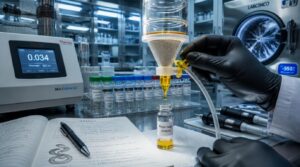
Once venom leaves the fangs, your job shifts from handler to lab technician. You’ll run venom filtration to strip particulates, then measure protein concentration through assay testing before freezedrying the venom for preservation.
| Step | Method | Purpose |
|---|---|---|
| Filtration | Particulate removal | Preserve activity |
| Assay | Protein concentration | Verify batch quality |
| Storage | Temperature monitoring | Prevent degradation |
Every aliquot gets logged, dated, and traced.
Laboratory Safety Protocols

Logging each aliquot means little without disciplined laboratory safety behind it. You’ll wear ANSI Z87.1 goggles, flame-resistant lab coats, and chemical-resistant gloves, working under certified fume hoods when handling volatile reagents.
Chemical storage follows strict segregation rules, corrosives separated from reactives. Emergency showers, eyewash stations, and posted response plans back up biosecurity protocols, keeping both you and the venom program compliant and protected.
Medical Research Support
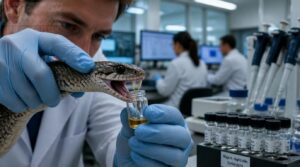
Your work doesn’t end at the tip of the fang. Venom extraction feeds antivenom production and medical research, but only through:
- Grant administration
- Data management
- Literature search support
- Statistical consulting
- Regulatory affairs
Researchers analyzing venom composition rely on your labeled samples and calibrated laboratory equipment. You’re one link in a chain, but a critical one.
Education and Training for Snake Milkers

Getting into this field isn’t as simple as showing up with a love for reptiles. You’ll need a specific mix of education, hands-on experience, and legal credentials before anyone hands you a venomous snake to work with. Here’s what that path actually looks like, step by step.
Relevant College Degrees
Which classroom path actually pays off? A bachelors degree in biology, zoology, or wildlife science builds your foundation, with chemistry and toxicology electives sharpening lab skills. Master’s or doctoral programs deepen expertise for leadership roles.
| Degree | Duration | Career Focus |
|---|---|---|
| Associate | 2 years | Lab technician entry |
| Bachelor’s | 4 years | Production, safety protocols |
| Doctoral | 3-5 years | Independent research |
Hands-on Reptile Experience
Textbooks won’t teach you how a cottonmouth reacts under your grip. That’s why states often require 1,000 hours of hands-on experience before certification.
Practical work you’ll need:
- Safe handling of venomous snake species
- Supervised feeding sessions
- Enclosure maintenance routines
- Behavioral observation logging
- Zoo technician experience
Reptile husbandry skills build gradually, through repetition and mentorship, not memorization.
Venom Handling Courses
A venom splash to the eye can end a career in seconds. That’s why Venom Handling Courses drill eyewear use, double-gloving, and spill containment before you touch a live snake.
You’ll train on real collection apparatus, practice sterile technique, and run emergency response drills. Programs combine Safety Protocols Training with Animal Welfare Practices, teaching stress reduction alongside Certification Exam Preparation, the credential biomedical research facilities expect before hiring.
State Permits and Licensing
Permits vary wildly by state, so a license approved in Texas won’t carry weight in Louisiana. Expect experience documentation, facility safety standards, liability insurance, and renewal paperwork tied to your snake count. State wildlife permits govern possession, not just breeding.
The Bureau of Labor Statistics classifies Snake Milkers under animal care roles, but serpentarium licensing rests entirely with individual states.
Advanced Training for Higher Pay
Want to jump from $33,000 to $80,000? Specialized training closes that gap.
- Certification through programs like the Rattlesnake Conservancy signals real proficiency
- Hands-on training with live extraction equipment cuts learning curves by weeks
- Mentorship programs pair you with senior milkers for guided growth
Recertification every two years keeps you competitive as job demand grows for senior research specialists.
Snake Milker Jobs and Career Outlook

Landing your first venom extraction job takes more than a diploma and a steady hand. You’ll need to know where these jobs actually exist, how competitive they are, and what your income might look like once you’re in the field. Here’s what to expect as you map out where this career can take you.
Common Employers
Hospital antivenom units and pharmaceutical research labs hire snake milkers directly, alongside university biology departments running venom studies. Government health agencies, private venom suppliers, and independent research institutions round out the field.
You’ll also find openings with wildlife rehabilitation centers and zoologists needing herpetologist expertise. Some technicians work as independent contractors, selling venom straight to labs once they’ve built a trusted reputation.
Best Employment Locations
Where you work shapes what you earn. The Southeast United States, California, and Arizona lead in native snake populations and lab density.
- Silicon Valley/Seattle: biotech clusters, top pay
- Texas: research hubs, no state income tax
- Florida: coastal collection sites, university ties
Metropolitan biomedical clusters and private contract labs in New York round out the strongest markets.
Job Availability and Competition
Landing in these hubs isn’t automatic. Openings stay scarce, and the applicant pool is small but fierce, with permits, facility inspections, and 4-12 week hiring timelines filtering out the unprepared.
Entry-level pay near $33,000 draws newcomers, while $80,000 senior roles pull veterans back into the ring. Regional demand shifts constantly, so timing matters as much as talent.
Career Advancement Opportunities
Surviving those hiring gauntlets pays off. Once you’re in, promotion pathways open fast: quarterly mentorship reviews, weekly internal postings, and lead-technician roles adding 5-15% pay.
Certifications open senior tiers, pushing you from $33,000 entry-level toward $80,000 senior research specialist territory.
Your transferable herpetology skills carry weight in cross-department rotations, QA, safety, research, building the resume sponsors advocate for.
Freelance Income and Stability
Plenty of milkers eventually go independent, offering contract venom-extraction services to labs that need coverage without a full-time hire. It’s not for the faint of heart.
You’ll need liability insurance, disciplined pipeline management, and real client retention strategies, since repeat clients often drive over 40% of freelance revenue.
Income diversification and recurring revenue models beat one-off gigs for steady cash flow.
Frequently Asked Questions (FAQs)
How many snake milkers are in the US?
Roughly 50 to 100 jobs exist nationwide, concentrated in serpentariums and research labs. There’s no dedicated BLS occupational category, so official employment statistics stay elusive, this remains a small, specialized field with steady but limited industry growth trends.
What is the highest paid job at a zoo?
Senior veterinary surgeons top zoo pay, sometimes exceeding $150,000 annually. Curators, directors, and research specialists commonly earn $70,000 to $150,000, far outpacing entry-level zoo technician wages and most snake milking salaries nationwide.
What skills are needed to be a snake milker?
You’ll need precision manual dexterity, calm demeanor under pressure, and solid biology know-how. Mastering venom extraction techniques, snake handling safety, and sterile laboratory conditions matters most, alongside sharp animal health monitoring instincts for venomous reptile handling.
How much do snake catchers get paid in the US?
Different snake, different pay." Catchers earn $87 to $75 hourly, with bonuses per capture. Compare that to a Snake Milker’s entry-level $33,000 or a senior research specialist’s $80,000, since venom extraction demands far more training and career progression.
What does a snake milker extract from snakes?
You’ll draw venom straight from the fangs, a mix of enzymes, peptides, and toxins like neurotoxins or metalloproteinases. This medical-grade fluid feeds antivenom production and toxin research, fueling pharmaceutical breakthroughs that save lives worldwide.
Are there any risks associated with snake milking?
One wrong move and a venomous snake ends your career, or your life. Real risks include fatal bites, venom exposure, allergic reactions, and animal stress. Occupational safety training, protective gear, and emergency medical response keep handlers alive.
What kind of snakes do snake milkers typically handle?
Your daily roster spans cobras for antivenom production, kraits for neurotoxin research, and rattlesnakes for regional supply. Sea snakes round things out with marine toxins, giving any serious serpentarium a diversified venom profile worth studying.
Are there any special certifications or training needed for snake milking?
Yes. Certification programs and hands-on training in venom extraction, snake restraint, and emergency response are essential, alongside a wildlife biology degree, state permits, and supervised serpentarium experience under a licensed herpetologist.
Many aspiring handlers start by volunteering at a local reptile center, and this step-by-step guide to becoming a snake milker explains how to turn that early experience into a real career.
Is there potential for advancement in the field of snake milking?
Funny how two techs starting at the same $33,000 entry-level salary can end up worlds apart.
Career ladder progression rewards certification, university herpetology training, and specialization, pushing dedicated technicians toward $80,000 senior research specialist roles or contract venom-extraction leadership.
What are the potential long-term benefits of snake milking?
Your work feeds real drug discovery pipelines, from antivenom development to cancer and clotting therapies. Beyond the science, you’ll gain career advancement, long-term job stability, and lasting recognition in global health and pharmaceutical research.
Conclusion
Every antivenom vial traces back to a steady hand and a calculated risk. That’s the reality behind any snake milker salary figure you’ll find.
Numbers on a page can’t capture the focus required when fangs hover inches from skin, but they confirm this: skilled extractors get paid for precision, not just courage.
Build your training, earn your certifications, and compensation follows. Some careers test your nerve. This one rewards it.