This site is supported by our readers. We may earn a commission, at no cost to you, if you purchase through links.
Your garden hose looks fine until it moves. That’s the moment most people learn the snakes are back.
So what temperature do snakes come out? Most species stir once the air holds around 60°F (15.5°C) day after day, and rattlesnakes wake right at that mark. One warm afternoon won’t do it. Snakes need steady warmth, plus soil that’s thawed enough to leave their winter dens.
Knowing the number helps you predict when they’ll show up near your porch, trail, or woodpile. Latitude, elevation, and even which way your hillside faces can shift the date by weeks. Here’s how to read all of it.
Table Of Contents
- Key Takeaways
- At What Temperature Do Snakes Come Out?
- What is The Best Temperature Range for Snake Activity?
- How Does Brumation Affect Spring Snake Emergence?
- How Do Seasons, Region, and Elevation Affect Snake Activity?
- Why Do Some Snakes Come Out in Cooler Weather?
- Frequently Asked Questions (FAQs)
- Do snakes come out in 50 degree weather?
- What is the best time of day to avoid snakes?
- How to tell if a snake is near you?
- What month do snakes go away?
- How to tell if a snake is near?
- What smell do snakes hate the most?
- At what temperature do snakes not come out?
- Are snakes out in 50 degree weather?
- How cold is too cold for a snake?
- What temperature are snakes most active at?
- Conclusion
Key Takeaways
- Most snakes start moving once daytime temperatures hold around 60°F (15.5°C) for days in a row, so one warm afternoon isn’t your cue.
- They’re most active between roughly 70 and 90°F, and they sluggishly bask below 60°F, so expect them at dawn and dusk in mild weather and at night when it’s hot.
- Your latitude, elevation, and sun-facing slopes can shift emergence by weeks, so check your local temperatures instead of trusting the calendar.
- Give basking spots like rock piles, woodpiles, and tall grass some space and look before you reach, since snakes use sun-warmed spots to heat up.
At What Temperature Do Snakes Come Out?
When do snakes finally show up? Once ambient temperature holds around 60°F (15.5°C) day after day, that’s your magic number. Snakes are cold-blooded, so their whole schedule depends on the weather outside. No warmth, no wandering.
If you’re curious exactly when they slow down in fall, this guide to the temperature at which snakes become inactive explains how the drop toward brumation unfolds.
Those temperature thresholds drive spring emergence. Most species start moving between 60 and 68°F, and rattlesnakes wake up right around 60°F too. Peak activity? That hits between 68 and 80°F. In temperate regions, snake activity is usually expected from April to October, with brumation below 60°F shutting them down during the colder months.
Expect some basking behavior first. Snakes crawl out on sunny days, soak up heat, then slink back near the den if it cools off. Seasonal emergence patterns shift with your climate, but the rule holds. Safety starts with knowing these simple, handy numbers. Watch the thermometer, and you’ll know when to watch your step!
What is The Best Temperature Range for Snake Activity?
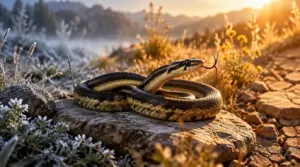
Snakes have a temperature sweet spot, and knowing it helps you predict when one might slither across your path. Think Goldilocks with scales, because too cold and too hot both shut down the fun. Let’s look at what happens at each extreme, then how the time of day changes the game!
Snakes are Goldilocks with scales, thriving only in a temperature sweet spot where too cold and too hot both shut them down
Cold-Weather Slowdowns and Heat Avoidance
The sweet spot for snakes? Roughly 70-90°F. Outside it, behavioral thermoregulation takes over, since snakes can’t generate body heat.
- Below 50°F, they turn sluggish and stay close to home.
- Below 40°F, feeding and travel nearly stop.
- Above 90°F, a heat stress response sends them hunting shade.
Deep cold triggers brumation, a kind of seasonal dormancy. That’s smart thermal regulation, really!
If your corn snake suddenly stops eating as temperatures drop, it may simply be brumating, though other common reasons a corn snake refuses food are worth ruling out first.
Daytime Versus Nighttime Activity
So when do they move? Ambient temperature dependence sets daily activity timing, not the clock.
Mild weather favors dawn and dusk activity, when crepuscular foraging beats midday extremes.
| Conditions | Activity |
|---|---|
| 70-80°F | Crepuscular windows |
| Above 90°F | Nocturnal |
| Below 60°F | Sluggish, midday basking |
Hot summer? Expect night movement, since roads and rocks keep their heat. Carry a flashlight, and watch every step!
How Does Brumation Affect Spring Snake Emergence?
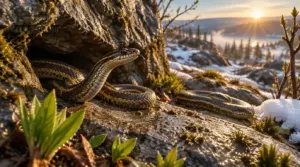
So what happens when winter ends? Snakes don’t just wake up and wander off. First, they have to finish brumation, the reptile version of hibernation. It runs from late October to March or April, and it slows a snake’s metabolism to a crawl.
Once temperatures climb back into the 60s, snakes emerge slowly, so when snakes hibernate and come out of brumation varies with local weather.
Here’s what spring emergence looks like, step by step:
- Soil warms, and the den’s stable temperature starts to climb.
- Days hit about 15°C (60°F) and stay there.
- Snakes creep toward the entrance, groggy and slow.
- They bask to restart thermal regulation.
- Mating season kicks in, and males get pushy.
Notice the pattern? Sustained warmth matters, not one sunny afternoon. Climate shifts emergence timing too, so a mild March can bring snakes out early. Watch den sites, because they’re busy now!
How Do Seasons, Region, and Elevation Affect Snake Activity?

Most snakes follow the thermometer, not the calendar. That’s why northern versus southern emergence can differ by two months! Here’s what shifts the timing:
- Latitude: southern snakes bask in February, northern ones wait until 60°F days arrive in April.
- Elevation: every 1,000 feet up, elevation delays snake activity by roughly a week.
- Slope: south-facing hillsides warm first, so snakes emerge there early.
- Daytime highs: snakes need 70-90°F for proper thermal regulation.
- Year-to-year weather: warm springs trigger earlier spring emergence.
Climate change adds phenological shifts, so snakes appear earlier than your grandparents’ records suggest. Don’t rely on the date. Check your local temperature, and watch sunny rock piles and trails each spring. Know your area’s rhythm, and you’ll stay safer outdoors.
Why Do Some Snakes Come Out in Cooler Weather?
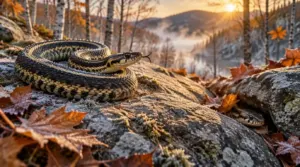
Think every snake waits for a heat wave? Nope, some of them are out there on chilly days, and knowing why helps you stay a step ahead. Below, we’ll look at two things that explain it: species-specific temperature preferences and how snakes use warm microclimates to beat the cold.
Species-Specific Temperature Preferences
Ever wonder why one snake loafs in sunshine while another hides? Species-specific temperature preferences explain it! Each snake’s thermal regulation reflects where it evolved.
| Habitat | Range | Behavior |
|---|---|---|
| Desert | 77-90°F | Bakes early |
| Forest | 78-86°F | Shaded pockets |
| Coastal | 82-88°F | Warm surfaces |
| High-altitude | 70-80°F | Cooler basking |
Check the local ambient temperature thresholds before heading out. Microhabitat selection means neighbors can disagree on "comfortable"!
Basking and Warm Microclimates
Snakes are solar-panel shoppers! Basking on sunwarmed rocks, they use microhabitat selection to ride a thermal gradient. Check these spots: Since rock piles are prime basking turf, a pair of snake gaiters for hiking adds easy lower-leg protection while you scout these spots.
- Flat stones
- Rock edges
- Crevice mouths
- Sunny logs
- Shaded retreats
Thermal niche partitioning means species share space by temperature, so expect different snakes at different spots. Give any basking snake plenty of space, and watch your step near rock piles.
Frequently Asked Questions (FAQs)
Do snakes come out in 50 degree weather?
Last April, a ranger photographed a garter snake sunning on a 50°F morning. Yes, some snakes do come out at 50 degrees! You’ll see basking on sunlit rocks, but expect slow, sluggish movement.
What is the best time of day to avoid snakes?
The sun is a snake’s alarm clock, so watch it! Time of day matters: crepuscular species roam at dawn and dusk, while morning basking peaks early.
Hot midday? Temperature-dependent activity drives them into cool shade.
How to tell if a snake is near you?
Look for slither tracks in dust or sand, shed skins, and dark droppings with a white tip. Check cool, shady thermal refuges like rocks and crawlspaces. Pets suddenly staring at one spot? Trust that. Stay calm, back away.
What month do snakes go away?
Most snakes vanish by October, when nights turn consistently cold. Northern snakes retreat earlier, southern and coastal ones linger into November or December. This fall retreat marks brumation’s onset in the seasonal dormancy cycle during cooler months.
How to tell if a snake is near?
Roughly 80% of snake sightings happen near cover, not open ground. Listen for rustling grass. Watch for slither trails in dirt. Fresh shed skin, musky odor, or a coiled body on a sunlit rock means it’s close, especially once ground temperature warms.
What smell do snakes hate the most?
Picture a snake flicking its tongue at a wall of clove and cinnamon oil. Eugenol overwhelms its Jacobson’s organ, so it turns away. Garlic, ammonia, and vinegar build scent barriers too, ones snakes would rather slither around.
At what temperature do snakes not come out?
Below roughly 60°F, snakes mostly stay hidden. Their bodies can’t warm or move well, hunting stops paying off, and they head for dens. Brumation lasts until sustained warmth returns, often 60 to 68°F daytime highs.
Are snakes out in 50 degree weather?
Nope, not really. At 50°F, most snakes stay tucked away, since thermoregulation barely allows movement. You might catch a cold-tolerant species briefly basking on sun-warmed rocks or in urban heat pockets, but real activity waits for warmer days.
How cold is too cold for a snake?
Cold enough to freeze your thermometer solid. Below 60°F, metabolic rate crashes fast. Near 32°F, brumation begins and freezing risk spikes. Hit thermal tolerance range limits without feeding or habitat microclimate selection, and snakes die.
What temperature are snakes most active at?
A rattlesnake given a thermostat picks about 86-89°F. That’s your snake’s sweet spot: 70-90°F ambient, where temperature-dependent activity peaks. Ectothermic animals need warmth to move, hunt, and digest, so basking in the sun keeps that metabolic rate humming without overheating.
Conclusion
Around 60°F (15.5°C) of steady warmth is a useful spring signal, but it’s not a switch every snake flips at once. Soil, shade, elevation, and species all shift the timing, while hot or chilly spells can change when snakes move during the day.
So, what temperature do snakes come out? Watch the pattern, not one sunny afternoon. Give woodpiles and tall grass a little space, look before you reach, and let the hose stay the only surprise in your yard.