This site is supported by our readers. We may earn a commission, at no cost to you, if you purchase through links.

Most first-time snake owners get the enclosure wrong—not because they didn’t research, but because the advice they found treated all snakes like the same animal.
A ball python slowly dying from low humidity and a corn snake baking under the wrong heat source share one thing in common: a setup built on guesswork.
The best environment for keeping pet snakes isn’t complicated, but it is specific.
Get the material, size, temperature gradient, and water access right for your species, and you’ll have a snake that eats reliably, sheds cleanly, and lives for decades.
Table Of Contents
Key Takeaways
- enclosure material, size, and humidity setup to your specific snake species — a ball python and a corn snake aren’t interchangeable, and treating them like they are is where most beginners go wrong.
- Temperature gradients aren’t optional: every enclosure needs a warm side (88–92°F for ball pythons), a cool side, and a thermostat on every heat source, no exceptions.
- Humidity swings cause the most common health problems — stuck sheds and respiratory infections — so measure consistently with a digital hygrometer and dial in the right range for your species before problems show up.
- Never use cedar or pine substrates, always quarantine new snakes for 60–90 days, and keep fresh water in a ceramic or stainless bowl on the cool side — small habits that protect your snake’s health long‑term.
Choosing The Ideal Snake Enclosure
The enclosure you choose shapes everything — your snake’s comfort, daily routine, and how easy it is to manage the setup long-term.
Getting the right fit from the start makes everything easier — check out ball python terrarium size and setup guides to avoid costly trial and error.
Not all enclosures are built the same, and the differences between them matter more than most beginners expect. Here are the main options worth knowing before you commit to one.
Glass Vs. Plastic Vs. Wooden Vivariums
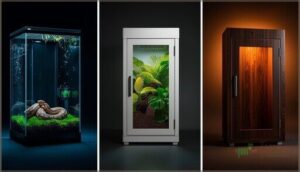
Each material shapes your enclosure’s performance in ways that matter daily. Glass offers crystal-clear visibility but loses heat fast, forcing higher-wattage heaters to maintain temperature gradients.
PVC retains heat up to 20% longer, resists humidity damage, and wipes clean in minutes.
Wooden vivariums insulate well but limit visibility.
Weight considerations matter too — PVC stays manageable; glass doesn’t.
PVC’s superior humidity retention benefits tropical snakes.
Sizing Based on Snake Species
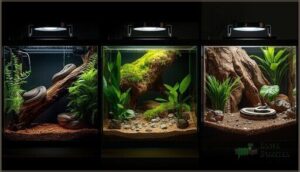
Size matters more than you’d think. A 4-foot corn snake needs at least 48×24×24 inches — that’s your minimum adult dimensions baseline. Ball pythons follow similar species‑specific needs: a 48×24‑inch footprint, minimum. Hognose snakes, being smaller, fit comfortably in 24×18×18 inches.
Always match enclosure size to adult length, not juvenile growth space. Getting terrarium size right from the start prevents costly upgrades later.
Corn snakes can live over 20 years as a long‑lived pet snake.
Secure Lids and Locking Mechanisms
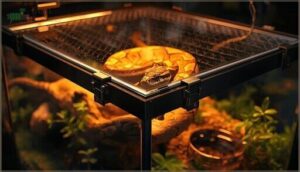
Once you’ve nailed sizing, security becomes your next non‑negotiable. Snakes are surprisingly strong — a determined ball python will test every weak point.
For glass tanks, Zilla screen clips and Exo Terra cover clips manage Screen Clip Types well, with one clip per corner for larger snakes.
Sliding Door Locks, Interlocking Handles, and Gap Prevention features — like no gaps exceeding ¼ inch — stop escapes before they happen.
Ventilation and Airflow Considerations
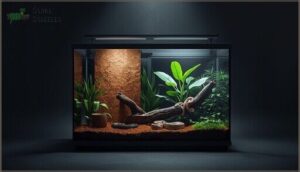
Good locks keep your snake in — good airflow keeps it healthy. Ventilation considerations shape every other environmental parameter in your enclosure design.
- Vent Placement Strategies: Lower cool-side vents draw fresh air in; higher warm-side vents push heat out.
- Mesh Screen Materials: Stainless steel resists humidity; aluminum stays lightweight in PVC builds.
- Airflow Rate Guidelines: Target 2–4 air changes per hour.
- Humidity Balance Methods: Position water bowls away from vents to localize moisture zones.
Proper airflow cuts respiratory infection risk substantially — that’s not a small detail in temperature control and humidity control planning.
Maintaining Proper Temperature Gradients

Temperature is the one thing can’t afford to get wrong. Snakes are ectotherms — they rely entirely on their environment to regulate body heat, which means your setup does the work their metabolism can’t.
Since heat also affects how bacteria spread, choosing the right materials matters — a snake tank cleaning schedule paired with stainless steel or ceramic accessories keeps biofilm from quietly taking hold.
what you need to know to get it right.
Creating Warm and Cool Zones
Think of your enclosure as two distinct worlds, and your snake moves between freely.
Place the warm hide directly over your heat source — that zone should hit 88–92°F for ball pythons.
The cool hide sits at the opposite end, maintaining 75–80°F.
Your gradient monitoring tools, like dual‑probe digital thermometers, confirm that a 10–20°F difference is holding steady all day.
Recommended Heat Sources (Heat Mats, Lamps)
- Heat Mat Placement Guidelines — Attach mats to the outside underside, covering no more than one-third of the floor.
- Ceramic Emitter Safety — Run 24/7 without light disruption; always use porcelain sockets.
- Halogen Bulb Benefits — Mimic natural sunlight with adjustable infrared-A output.
- Deep Heat Projector Use — Penetrates tissue for genuine warmth, not just surface heat.
- Radiant Panel Efficiency — Even downward heat with lower electricity draw than traditional lamps.
Thermostat and Temperature Monitoring
Every heat source needs a thermostat — no exceptions. On/off thermostats handle low-wattage heat mats adequately, but pulse or dimming types deliver precise temperature control for lamps and radiant panels.
Nail probe placement by securing it at the basking surface so the safety cutoff feature actually kicks in when needed. Add day‑night scheduling for automatic cooling, and verify your thermal gradient daily with infrared thermometers and independent digital probes.
Adjusting for Species-Specific Needs
No two snakes run on the same thermostat. Species‑specific needs shape every temperature gradient decision you make:
- Ball pythons need 88–92°F warm side, 75–80°F cool side
- Corn snakes peak at 85°F basking, dropping to 75°F at night
- Kingsnakes hold ambient 80–85°F with moderate humidity control
- Boa constrictors span 75–90°F, tolerating 68°F night drops
Match your enclosure design to the species — not the other way around.
Managing Humidity Levels Effectively

Humidity is one of those things that’s easy to overlook — until your snake has a rough shed or starts wheezing.
Getting it right isn’t complicated, but it does require knowing your species, having the right tools, and staying consistent.
Here’s what you need to cover.
Humidity Requirements by Species
Not all snakes share the same comfort zone. Ball Python Humidity sits between 60–80% during the day, spiking to 80–100% at night during shed cycles. Corn Snake Moisture stays steadier at 65–75%. Kingsnake Humidity Range runs 40–60%, while Garter Snake Levels hover around 35–60%. Boa Constrictor Humidity needs 55–75% daily, climbing higher during sheds.
| Species | Daily Humidity | Shed Cycle |
|---|---|---|
| Ball Python | 60–80% | 80–100% |
| Corn Snake | 65–75% | Higher end |
| Kingsnake | 40–60% | Nighttime spikes |
| Boa Constrictor | 55–75% | 75–85% |
Match your reptile habitat to these species-specific needs — humidity levels outside these ranges cause stuck sheds and respiratory trouble fast.
Tools for Measuring and Controlling Humidity
You can’t manage what you don’t measure. A digital hygrometer calibration check every few months keeps your readings honest — most reptile models hold within ±5%, but drift happens.
Pair that with thoughtful analog gauge placement away from water bowls.
Add a fogger humidity controller for automatic adjustments, a well-designed humidity hide with damp substrate, and consistent substrate moisture monitoring.
Together, these tools give you real environmental parameters, not guesswork.
Preventing Shedding and Respiratory Problems
Once you’ve got your hygrometers dialed in, the real goal is keeping humidity levels stable — not just measurable.
For most species, 50–70% prevents dry, stuck sheds. Push past 80% without solid ventilation management, and you’re inviting scale rot and respiratory infections.
Poor hydration monitoring compounds the problem quickly.
A consistent cleaning schedule, good enclosure design, and smart temperature gradients give your snake the stress reduction it needs to shed clean, every time.
Selecting Safe Substrates and Furnishings
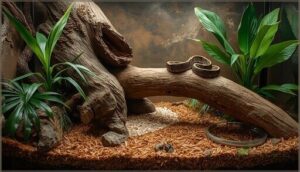
What lines the bottom of your snake’s enclosure matters more than most people expect.
The wrong substrate can cause respiratory issues, skin problems, or spike your humidity in all the wrong directions.
Here’s what actually works — and what to skip.
Best Substrate Types (Aspen, Cypress, Paper Towels)
Substrate choice quietly shapes your entire snake habitat. Aspen shavings — nearly 100% dust‑free — support Dust Control and natural Burrowing Behavior, holding tunnels at 2–3 inches deep without collapsing. Cypress mulch excels at Moisture Absorption, buffering humidity above 50% between misting sessions. Paper towels win for Hygiene Monitoring — waste is instantly visible, replaceable after every feeding.
- Aspen: Dust‑free, burrowing‑friendly, ideal for corn and king snakes
- Cypress mulch: Excellent Moisture Absorption, suits tropical enclosure design
- Paper towels: Best for quarantine setups and environmental control monitoring
Avoiding Harmful Materials
Not every material belongs in your snake’s home. Cedar Toxicity is non‑negotiable — phenolic compounds absorb through skin and lungs, quietly damaging the liver. Pine carries the same risk.
Cedar and pine are non-negotiable dangers — their toxic compounds silently damage your snake’s liver through skin and lungs
Screen Top Dehydration strips humidity faster than you’d expect, compounding respiratory stress.
Watch for Heavy Metal Exposure from galvanized hardware, Sharp Decoration Hazards from resin edges, and Cleaning Chemical Risks — bleach residue alone can trigger gastrointestinal problems.
Stick to proven substrate options and safe enclosure selection every time.
Creating Hiding Spots and Enrichment
Once the substrate is sorted, think about how your hiding spots actually lives. Hiding spots aren’t optional comfort features — they’re behavioral necessities.
Warm Hide Placement directly under heat sources aids digestion at 87–89°F, while Cool Hide Placement at 74–78°F helps regulate shedding cycles.
Natural Material Hides like cork bark or coconut shells add humidity and texture.
Climbing Structures, Novel Enrichment, and thoughtful Environmental Design keep snake behavior healthy and stress low.
Providing Clean Water and Hydration
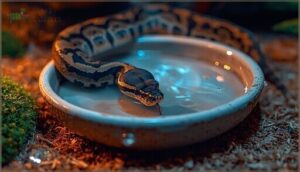
Water might seem like the simplest part of snake care, but it’s where a lot of owners quietly slip up. Getting it right comes down to a few specific habits worth knowing.
Here’s what actually matters regarding keeping your snake hydrated and healthy.
Water Bowl Placement and Maintenance
Where you place the water bowl matters more than most keepers realize.
Cool-side Bowl Positioning slows bacterial growth, while warm-side placement boosts humidity management by up to 20%.
Material Choice, ceramic or stainless steel beats plastic — both resist biofilm better.
Follow Spill Prevention for your species, keep depth under 4 inches for juveniles, and prioritize a heavy, stable bowl.
Stick to weekly deep-scrub Cleaning Frequency.
Importance of Fresh, Clean Water
Fresh, clean water isn’t optional — it’s foundational to pet snake health. Chlorine Removal matters because tap water irritates skin and damages respiratory tissue over time; use a water conditioner or let it sit 24 hours.
Mineral Balance helps kidney health and muscle function, while stagnant water invites bacterial growth fast.
Proper water access also aids shedding hydration and helps humidity control within your environmental parameters.
Monitoring for Signs of Dehydration
Catching dehydration early can mean the difference between a quick fix and a vet visit. During routine handling, run through these checks:
- Skin elasticity — pinch the side gently; healthy skin snaps back within a second.
- Eye appearance and scale condition — sunken eyes and dull, rough scales signal fluid loss.
- Behavioral signs and waste indicators — lethargy, appetite loss, and chalky urates confirm the problem.
Adjust humidity levels using hygrometers and refresh your water bowl immediately.
Tailoring Environments for Specific Snake Species

Not every snake needs the same setup, and that’s where things get interesting. A corn snake’s ideal home looks nothing like what a green tree python needs.
Here’s how to match your enclosure to your specific species.
Desert Vs. Tropical Vs. Temperate Setups
Think of your enclosure as a miniature biome — and the species sets the blueprint.
Desert snakes like rosy boas need temperature gradients reaching 90‑110°F, low humidity levels around 10‑30%, and dry substrate options like aspen or sand.
Tropical setups for ball pythons demand 50‑80% humidity levels and basking heat sources hitting 95°F.
Temperate species like corn snakes have a relaxed 60‑85°F range with seasonal cycling that does the job.
Microhabitat enrichment and habitat aesthetics follow the same logic — match the wild, not your preferences.
Special Lighting and UVB Needs
Most snakes don’t need UVB lighting — but "don’t need" and "don’t benefit" aren’t the same thing. UVB bulb types matter here: T5 HO fluorescent tubes, like the Arcadia 6% or Zoo Med Reptisun 5.0, deliver consistent UVB gradient placement across the enclosure.
Match Ferguson Zones to your species — Zone 1 or 2 suits most pet snakes.
Use a Solarmeter 6.5 for UVI measurement, and replace bulbs every 6–12 months.
Enclosure Adjustments for Popular Pet Snakes
Every species has its own rulebook — and ignoring it is where most setups go wrong.
- Ball python size demands a 6x2x2 foot enclosure for adult females, with deep substrate and tight humidity control around 60%
- Corn snake branches fit well in 4x2x2 foot builds, where hiding spots and temperature gradient matter most
- Kingsnake hide placement puts one hide at 88°F, another at 70-80°F
- Garter snake water areas and milk snake climbing structures each shape enclosure design and selection differently
Frequently Asked Questions (FAQs)
How often should I clean my snakes enclosure?
tight Spot Cleaning Frequency — remove waste daily, change water bowls every 24 hours, and disinfect accessories monthly.
Full Enclosure Sanitization every 4–6 weeks keeps your snake’s habitat clean and your reptile care routine manageable.
Can snakes cohabitate peacefully in the same tank?
Most can’t — cannibalism risk, stress indicators, and disease spread make cohabitation dangerous. Only a few species, like garter snakes, tolerate it. Species compatibility matters more than convenience.
What plants are safe for snake enclosures?
Five plants do all the heavy lifting in a snake enclosure.
Pothos benefits climbing enrichment, Boston fern hiding cover, Snake plant air filtration, Spider plant enrichment aesthetics, and Bromeliad hydration — all non‑toxic.
How do seasonal changes affect snake environments?
Seasonal changes shift temperature gradients and humidity levels year-round.
Winter heating impacts basking zones, summer ventilation needs spike, fall brumation prep requires photoperiod adjustments, and spring shedding cycles demand humidity boosts for snake health.
Should I quarantine a new snake before housing it?
Yes — always quarantine a new snake.
Isolation Room setup, Hygiene Protocols, and Health Screening isn’t optional.
A minimum 60–90-day Quarantine Duration protects your entire collection and helps long-term Snake Health and Animal Welfare.
Conclusion
Setting up the best environment for keeping pet snakes doesn’t demand flawlessness on day one—it demands attention over time. You’ll adjust temperatures, tweak humidity, swap substrates. That’s not failure; that’s how experienced keepers work.
Every snake tells you what it needs through its behavior, appetite, and shed quality. Learn to read those signals, and the enclosure practically fine‑tunes itself. Get the fundamentals right, stay observant, and your snake will thrive for years to come.