This site is supported by our readers. We may earn a commission, at no cost to you, if you purchase through links.

A snake that won’t eat, strikes without warning, or paces its enclosure isn’t being difficult—it’s telling you something is wrong.
In the wild, snakes spend the majority of their time concealed inside rock crevices, hollow logs, or underground burrows, and that seclusion isn’t passive comfort. It’s a biological necessity that regulates both stress hormones and body temperature simultaneously.
Strip away that cover in captivity, and the nervous system stays locked in a low-grade threat response, day after day. Understanding how hides reduce stress in pet snakes reframes the hide from a decorative accessory into the single most consequential item in the enclosure—and getting it right changes everything about how your snake eats, sheds, and behaves.
Table Of Contents
Key Takeaways
- A hide isn’t decorative—it’s the single item that keeps your snake’s nervous system out of a constant low-grade threat response, directly affecting how it eats, sheds, and tolerates handling.
- Without consistent access to cover, snakes develop measurable health consequences including immune suppression, appetite loss, and escalating aggression that compounds with every disturbance.
- Hide sizing matters more than most keepers realize—the interior should press gently against your snake’s body, because a snug fit signals safety in a way a roomy cave never can.
- Two hides at minimum, one on the warm side and one on the cool side, give your snake the ability to thermoregulate without ever having to choose between staying warm and staying exposed.
Adding a naturalistic snake hide that mimics real burrows and rock crevices takes this a step further, satisfying your snake’s instinct to find shelter that genuinely feels like home.
For classrooms managing several enclosures at once, grabbing a matching pair of black hide boxes makes setup quick and keeps every tank consistent.
Why Hides Reduce Stress in Pet Snakes
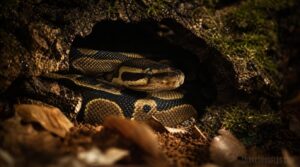
A hide isn’t just a decoration—it’s the single most important security feature in your snake’s enclosure. Without one, even a well-fed, healthy snake can spiral into chronic stress that affects everything from appetite to immune function. Here’s why cover matters so much, and how it works.
From basic cork tubes to elaborate rock caves, different types of snake hides serve the same core purpose: giving your snake a place to feel genuinely safe.
How Hides Mimic Wild Refuges
In the wild, snakes don’t rest in the open — they press into crevices, slip under logs, or coil deep inside burrows where full-body concealment is the norm. These refuges serve a precise biological function: limiting the snake’s visible profile, blocking predator sightlines, and providing a stable microclimate that open ground simply can’t offer.
Your snake’s hide replicates this exactly.
Placing hides within temperature gradients for thermoregulation helps snakes regulate their body heat.
The Link Between Cover and Calm
When a snake can retreat into cover, it stops scanning for threats — and that shift alone changes its entire physiological state.
Access to consistent cover interrupts the stress-response cycle by giving your snake a predictable safe zone it can return to, which promotes stable resting patterns, reduces defensive posturing, and lets it thermoregulate without remaining exposed.
Why Exposed Snakes Stay Stressed
An exposed snake doesn’t simply feel uncomfortable — its nervous system stays locked in a low-grade threat response.
Constant visual pressure from open sightlines, frequent handling, irregular lighting, and ambient scent from nearby pets all layer into a sustained stress state your snake can’t escape without proper hiding spots to withdraw into.
Recognizing Stress Signs Without a Hide
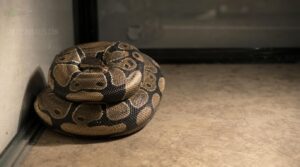
A snake without adequate hiding options will tell you it’s struggling — you just need to know what to look for. The signs aren’t subtle once you understand what chronic stress actually looks like in captive snakes. Here are the most reliable behavioral indicators that your snake isn’t feeling secure.
Unprovoked Striking and Escape Attempts
A snake without a hide isn’t just uncomfortable — it’s operating in a constant state of perceived threat. Cover deprivation triggers defensive behavior quickly, and what looks like unprovoked striking is rarely random.
Watch for these four warning signs:
- Rapid, repeated striking at hands or objects near the enclosure
- Boundary gap detection — persistent probing of lid seams or ventilation panels
- Escape route detection behavior — rushing toward edges or corners repeatedly
- Handling stress escalation — defensive posturing that intensifies with each interaction
When hiding spots are missing, your snake can’t retreat, so it strikes instead.
Adding a hide box gives your snake a safe retreat, which naturally reduces stress-driven strikes—snake pre-shed behavior and hiding instincts explain why this security matters most before a shed.
Reduced Feeding and Regurgitation
When your snake skips a meal, the problem often starts long before feeding time. A snake that can’t retreat into a hide remains in a heightened alert state, making appetite loss one of the earliest and most reliable stress indicators you’ll notice.
Regurgitation prevention depends heavily on post-feeding calm. Without a secure hide, your snake can’t maintain the undisturbed rest that digestive safety requires after a meal.
Rigid Immobility and Restless Pacing
Two distinct patterns often appear when a snake lacks adequate hides: rigid immobility and restless pacing.
- A frozen snake isn’t resting — it’s locked in a freeze stress response, too alert to thermoregulate normally
- Pacing reflects repeated, anxious enclosure-edge scanning rather than purposeful movement
- Both behaviors signal that stress management through hides has broken down
Without cover, neither pattern resolves on its own.
Choosing The Right Hide for Your Snake
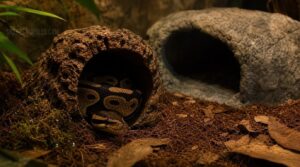
Not all hides are created equal, and the wrong one can undermine everything else you’ve done right. Your snake’s species, size, and natural habits should drive your choice — what works for a ball python won’t suit a green tree python. Here’s what to look for when selecting the best option.
Ground Hides for Ball Pythons
For ball pythons specifically, the hide you choose does more than offer shelter — it becomes the anchor of their entire sense of security.
Resin or ceramic hides are the most practical choice: they resist mold in high-humidity enclosures, clean easily, and won’t deteriorate the way cardboard or untreated wood can. Material durability directly affects how consistently you can maintain hygiene without disrupting your snake’s environment.
Sizing matters more than most keepers realize. The entrance should allow your ball python to pass through with mild resistance — snug, not tight. An interior that lets them coil completely, with a flat resting surface, encourages the natural hiding behavior that keeps chronic stress in check.
| Hide Feature | Why It Matters for Ball Pythons |
|---|---|
| Snug entrance width | Reinforces security and reduces perceived exposure |
| Smooth interior surface | Prevents skin irritation, especially during shedding |
| Non-porous material | Helps humidity control and resists mold growth |
| Warm-side placement | Facilitates digestion and feeding proximity after meals |
| Stable, weighted base | Prevents tipping during active nighttime movement |
Place at least one hide on the warm side of the enclosure, close to where you offer prey. Ball pythons, as ambush hunters, often won’t accept food unless cover is nearby — feeding proximity to a hide isn’t a preference, it’s a behavioral necessity. Clean hides weekly with a reptile-safe disinfectant, dry them fully, and inspect entrances for cracks where bacteria accumulate.
Elevated Hides for Arboreal Species
Arboreal species like green tree pythons and emerald tree boas don’t retreat to the ground — they seek refuge in the canopy. That’s why vertical hide design matters so much here. An elevated hide should offer a snug, cavity-like interior with accessible side entry points, positioned at height rather than mounted flat against the enclosure floor.
Interior cavity depth of 60–90 mm suits most small to medium arboreal species, while larger individuals need 120 mm or more to coil without crowding. The entrance should allow entry without forcing the snake to squeeze, reducing the physical friction that triggers stress responses.
Place one elevated hide on the warm side to support digestion and metabolic function, and a second on the cool side as a thermal retreat. This arrangement lets your snake thermoregulate without ever feeling exposed. Surfaces with natural grip — textured resin or cork-style finishes — encourage secure resting postures that mirror how these animals hold position in wild tree hollows.
Cork Bark, Logs, and Rock Slabs
The material you choose shapes how secure your snake actually feels inside its hide. Cork bark pieces are a top choice — their honeycomb cellular structure keeps them lightweight, and the naturally textured surface gives snakes confident grip while resisting rot in humid conditions. Logs add structural complexity, creating humidity pockets that support healthy shedding. Rock slabs, meanwhile, retain heat effectively, making them ideal basking platforms that double as stable hide foundations.
Each material brings something distinct to habitat enrichment:
- Cork bark tolerates humidity up to 70% without warping, making it durable across most species setups
- Smooth-barked logs reduce scale abrasion while encouraging natural foraging and climbing behaviors
- Rock slabs clean easily with mild disinfectants and resist long-term wear better than softer alternatives
Combining these materials promotes environmental consistency — a principle directly tied to lower stress and better welfare. When your snake’s enclosure mimics the sensory variety of its natural habitat, perceived threat levels drop, and that calm translates into steadier feeding, easier handling, and a healthier immune response over time.
Sizing The Hide Snugly
Size is the detail most keepers overlook. A hide that fits snugly around the body — roughly matching your snake’s curled length with just 10 to 20 percent extra room — signals safety in a way a roomy cave never can. Measure mid-body girth to confirm the interior walls press gently against your snake, whether you’re using coconut hides, resin caves, or cork bark pieces.
| Snake Size | Recommended Hide Width | Material Option |
|---|---|---|
| Hatchling | 2–3 inches interior | Coconut hide |
| Juvenile | Match mid-body girth | Resin cave |
| Adult | Girth + 10–20% clearance | Cork bark piece |
As your snake grows, swap hides gradually. Consistent snug sizing facilitates reptile stress reduction techniques by reducing vigilance, steadying appetite, and reinforcing the enclosure as a secure, predictable space.
Where to Place Hides in The Enclosure
Knowing which hide to buy is only half the job — where you put it matters just as much. Snakes don’t use hides randomly; they choose them based on temperature, light, and how secure a spot feels. Here are the key placement decisions that make the biggest difference.
Warm-side Hide for Digestion
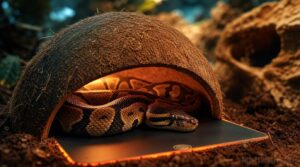
Place your warm-side hide directly on or beside the heat source to give your snake on-demand access to digestive heat.
After feeding, snakes naturally seek warmth to support metabolic activity — and a secure, enclosed retreat in that zone means they won’t have to choose between staying warm and staying exposed.
Coconut hides and cork-bark options work well here, holding heat comfortably while giving your snake a snug fit.
Cool-side Hide for Retreat
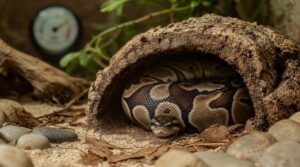
The cool side works as your snake’s true retreat zone — the place it goes not to digest, but to simply decompress.
Aim for 72 to 80°F inside, snug walls on multiple sides, and a single, concealed entry.
Cork or plastic both work well here, since neither traps heat or moisture.
Creating Privacy Zones With Barriers
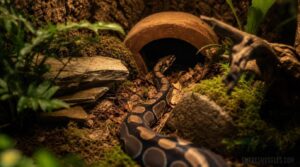
A hide works best when the snake doesn’t have to cross open ground to reach it. Barrier placement strategies — using cork panels, rock stacks, or dense décor — create screened corridors that let your snake move between warm and cool zones without full exposure.
Orient the hide entrance toward a wall or backdrop rather than the open enclosure center, so the snake commits to retreating rather than hesitating mid-path.
Substrate Depth for Burrowing Species
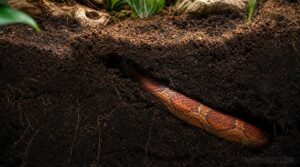
For burrowing species like king snakes and corn snakes, the substrate itself functions as the hide. Small fossorial snakes need four to six inches of fine, loamy substrate to fully submerge and form stable tunnels.
Deeper layers retain moisture, support healthy shedding, and allow snakes to self-regulate temperature by shifting vertically within the burrow without ever surfacing.
Health Risks of Skipping Proper Hides
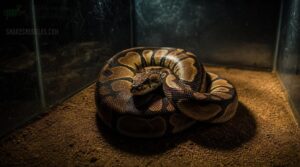
Skipping proper hides doesn’t just make your snake uncomfortable — it sets off a chain of real health problems that can shorten its life. Chronic stress quietly erodes the body from the inside out, affecting everything from immunity to appetite to temperament. Here’s what you’re actually risking when cover is missing from your snake’s enclosure.
Immune Suppression and Infections
A snake without a hide isn’t just anxious — it’s physically compromised. Chronic stress elevates glucocorticoids like corticosterone, which directly suppress immune function, leaving your snake less able to fight off the bacteria, parasites, and opportunistic pathogens it encounters daily.
A hideless snake isn’t just stressed — chronic glucocorticoid elevation quietly dismantles its immune defenses
Skin barrier failure, respiratory infections, and gut microbiome disruption all become more likely when that hormonal imbalance goes unaddressed.
Appetite Loss and Weight Decline
When cover disappears, appetite follows. A snake kept in an exposed enclosure stays in a heightened defensive state, and that persistent vigilance leaves little physiological room for normal feeding behavior.
It won’t hunt, it won’t accept prey, and over time, stored fat and muscle reserves quietly deplete.
Dehydration compounds the problem — snakes that eat less also absorb fewer fluids from prey tissues, and creased skin or delayed sheds often signal that decline is already underway.
Increased Aggression Over Time
Aggression that seems to appear from nowhere usually has a long paper trail. When your snake can’t retreat to a secure hide, chronic stress escalates gradually — each disturbance compounds the last.
- Repeated handling without retreat time teaches defensive striking as a coping strategy.
- Temperature instability heightens reactivity, making even routine enclosure access feel threatening.
- Post-feeding disturbances, when a hide isn’t accessible, condition the snake to associate your presence with discomfort.
Over time, animal welfare deteriorates measurably: stress biomarkers rise, behavioral adaptation shifts toward offense, and what started as avoidance hardens into reliable aggression.
Frequently Asked Questions (FAQs)
How many hides does one snake actually need?
Most keepers treat two hides as the baseline — one on the warm side, one on the cool side. Adding a third humid hide for shedding support is a practical, low-effort upgrade worth making.
Can hides help during shedding season?
Yes. A pre-shed retreat gives your snake a calm, sheltered space to rest undisturbed while the old skin loosens, supporting shedding microclimate stability and reducing the stress behaviors that often accompany this sensitive period.
Do hides affect a snakes socialization with owners?
Hides directly influence socialization with owners by giving your snake a reliable way to relieve their stress on its own terms, making handling tolerance gains and trust building speed noticeably faster over time.
Should hides be cleaned, and how often?
Clean hides whenever soiled, and do a full disinfection monthly. Scrub, rinse, disinfect with a reptile-safe solution, rinse again, and dry completely before returning them.
Can the wrong hide material cause harm?
Absolutely. Synthetic or treated materials can offgas chemicals when warmed, irritating your snake’s respiratory tract. Fabric hides trap moisture, inviting mold. Rusty metal leaves sharp flakes. Always choose natural, reptile-safe materials.
Conclusion
The smallest addition to your enclosure carries the greatest weight—a simple hollow object restores what chronic stress silently dismantles.
Understanding how hides reduce stress in pet snakes means recognizing that a snake you rarely see is, paradoxically, a snake that’s thriving.
Regular feeding, clean sheds, and calm handling all trace back to that one covered space.
Give your snake somewhere to disappear, and you’ll finally see who it really is.