This site is supported by our readers. We may earn a commission, at no cost to you, if you purchase through links.

Your new snake’s first instinct isn’t to explore—it’s to disappear. In the wild, snakes survive by staying hidden, and that wiring doesn’t switch off the moment they move into a glass enclosure. A snake without a proper hide is a snake under constant stress, which means poor feeding, failed sheds, and a nervous animal that never settles.
Snake hide boxes for first-time owners often feel like an afterthought, but they’re the single setup decision that shapes your snake’s entire quality of life. Get the size, material, and placement right, and you’ll have a calm, healthy animal within days.
Table Of Contents
- Key Takeaways
- Best Snake Hides for Beginners
- Why Your Snake Needs Hides
- Choose The Right Hide Size
- Use Warm and Cool Hides
- Add a Humid Hide Safely
- Pick Snake-Safe Hide Materials
- Avoid Dangerous Hide Materials
- Easy DIY Hide Box Ideas
- Clean and Replace Hides
- Introduce New Hides Calmly
- Frequently Asked Questions (FAQs)
- Are snakes good for first time pet owners?
- Do snakes prefer vertical or horizontal enclosures?
- How many hides does one enclosure need?
- Can hides be shared between multiple snakes?
- Should hides be elevated or kept on substrate?
- Do hides need ventilation holes or openings?
- How often should hide placement be rotated?
- Conclusion
Key Takeaways
- A snug hide — one where your snake can touch all four walls — drops stress fast and keeps feeding and shedding on track.
- Place two hides, one on the warm side and one on the cool side, so your snake can regulate its own body temperature without ever feeling exposed.
- Stick to HDPE, polypropylene, ABS plastic, or cork bark — and avoid cedar, pine, bare metal, and heat rocks, which can quietly harm your snake over time.
- When you add a new hide, pause handling for two weeks and keep familiar scents nearby so your snake settles in without setbacks.
Best Snake Hides for Beginners
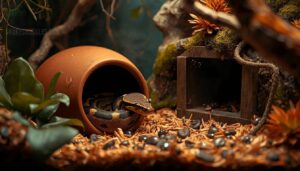
Picking your first snake hide doesn’t have to feel overwhelming. There are a few solid options that work well for beginners, each with its own strengths. Here’s what you should take into account.
To help narrow things down, I’ve rounded up nine beginner-friendly snake hides spanning different sizes, styles, and budgets so you can find the right fit for your snake.
Plastic Commercial Hides
Most first-time owners start with plastic commercial hides, and for good reason. These storebought hides are molded from HDPE or ABS plastic, giving you a durable, non-porous surface that wipes clean in seconds. That’s a win when cleaning efficiency matters.
- BPA-free and smooth-edged for skin safety
- Weighted bases prevent tipping
- Side-entry design reduces handling stress
Choosing non‑porous hides reduce bacterial buildup is advisable for hygiene.
Cork Bark Hides
Cork bark hides offer a natural alternative to plastic. Their cellular insulating structure helps maintain microclimates near your snake’s preferred temperature.
The rough surface gives snakes texture grip during shedding and movement. Cork is chemical-free and mold-resistant, making it safer in most setups.
You can trim or sand the entrance to fit your species perfectly.
Humid Hide Boxes
A humid hide box takes things a step further than cork. It holds moisture inside, creating a humid microclimate that promotes shedding. Line it with sphagnum moss — it retains moisture well without compressing quickly.
Check it weekly for mold. A digital hygrometer nearby helps you monitor levels without guessing.
DIY Container Hides
You don’t need to spend money to give your snake a great hiding spot. Food storage tubs work surprisingly well. Cut a small entrance — about 1.25 inches wide — add 4 to 6 vent holes, and line the inside with a thin silicone pad. It’s safe, affordable, and easy to clean.
- Smooth all edges before placing it inside
- Choose containers with no sharp interior corners
- Always use nontoxic, BPA-free plastic
Naturalistic Decor Hides
If aesthetics matter to you, naturalistic decor hides are worth a look. They mimic hollow log aesthetics and rock crevices, blending into your enclosure like natural reptile habitat décor. Cork bark options use bark texture mimicry to feel authentic while staying snake-safe.
| Feature | Benefit | Best For |
|---|---|---|
| Cork bark texture | Reduces snake stress | Calm, shy species |
| Moss camouflage benefits | Adds humidity control | Shedding support |
| Resin rock safety | Easy to wipe clean | Beginners |
Why Your Snake Needs Hides

A hide isn’t just decoration — it’s one of the most important things in your snake’s enclosure. Without one, even a healthy snake can become stressed, stop eating, or struggle through a bad shed. Here’s why hides matter so much for your snake’s wellbeing.
Stress Reduction
A snake that can’t hide is a snake under constant stress. When your snake lacks a retreat, you’ll notice coloration changes, increased pacing, and avoidance behavior — all signs of elevated cortisol.
Snake hide boxes limit visual stimuli and dampen household noise, giving your snake control over its environment. That security alone keeps stress levels low and behavior steady.
Safer Feeding Response
Hides do more than reduce stress — they make feeding safer too. A snake that feels secure is more likely to eat predictably and calmly. Stress-induced appetite loss is real, and a missing hide can trigger it fast.
Keep feedings in a dedicated feeding enclosure with minimal movement. Pair that with a stable temperature window, and you’ll see far fewer defensive strikes.
Better Shedding Support
Shedding problems in snakes often start with one overlooked detail: humidity control for reptiles matters more than most beginners expect. When your snake’s eyes turn cloudy and dull, that’s your cue — a shed is coming. Here’s what a proper snake hide box does for shedding:
- Raises localized humidity to 65–80 percent
- Softens old skin for a clean, single-piece shed
- Enhances skin elasticity through moisture synergy
Place damp sphagnum moss inside your hide and monitor with a hygrometer.
Natural Resting Behavior
Your snake isn’t just hiding — it’s resting. Inside a snake hide box, coiling postures and quiet wakefulness replace stress.
Snakes naturally use tight coils to conserve heat within a stable thermal niche.
A hide provides those same environmental cues — low light, familiar scent, snug walls — supporting healthy snake husbandry and genuine stress reduction.
Secure Retreat Space
Think of a hide as your snake’s version of a locked door. A good snake hide box encloses three sides with one small opening, mimicking natural crevices and cutting perceived threats fast.
Place it in a quiet enclosure zone, anchor it so it won’t tip, and keep edges smooth. That combination is reptile habitat safety done right.
Choose The Right Hide Size
Size is one of those things that’s easy to overlook — until your snake ignores the hide completely. A too-large hide won’t give your snake that snug, secure feeling it’s looking for, and a too-small one can cause stress. Here’s what to know before you pick one.
Snug Fit Matters
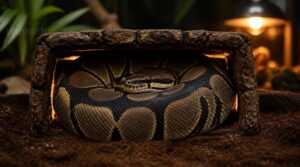
A snug snake hide box isn’t just comfortable — it’s functional. When your snake can touch all four interior walls at once, its baseline heart rate drops within 15 minutes.
A snug snake hide box isn’t decorative — when your snake touches all four walls, its stress drops within 15 minutes
That wall contact signals safety. It stabilizes feeding response, keeps shedding cycles predictable, and improves thermal microclimate efficiency by reducing air gaps.
Fit is everything in reptile enclosure safety.
Hatchling Hide Dimensions
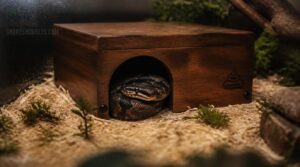
Getting hatchling hide dimensions right matters from day one. Your snake hide box should measure 5.5 to 6.5 inches long, 1.5 to 2.5 inches deep, and allow 35 to 70 cubic inches of interior volume. That snugness sensation keeps stress low.
Here’s what to check:
- Entrance width — 1.25 to 1.75 inches prevents head snagging
- Interior height — at least 2.5 inches for head clearance
- Wall contact — snake should touch all sides
- Opaque material — dark color encourages hiding behavior
Adult Hide Dimensions
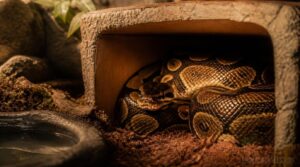
As your snake grows, hide dimensions need to scale with it. For a typical adult ball python, aim for 13 to 16 inches long by 6 to 8 inches wide. Your snake should touch three walls while coiled — that contact is what signals safety.
| Species | Recommended Length | Recommended Width |
|---|---|---|
| Adult Ball Python | 13–16 inches | 6–8 inches |
| Corn Snake | 16–20 inches | 8–10 inches |
| Small Boa | 13–16 inches | 8–10 inches |
Interior height should reach at least 4 to 6 inches. That prevents body-on-lid pressure when coiled. Always measure your snake’s girth first, then add 0.5 to 1 inch of clearance. A smooth interior finish reduces skin irritation during long resting periods.
Entrance Size Tips

The entrance is just as important as the interior fit. For hatchlings, aim for 1 to 1.5 inches wide. Adults usually need 2.5 to 3 inches.
Match the opening to your snake’s widest girth, then add slight clearance. Rounded or tapered edges prevent snag points and help your snake glide in and out without resistance or hesitation.
Species Size Differences

Not every snake grows at the same pace. Species size class matters more than age alone when choosing a snake hide box.
A ball python hits 4–5 feet; a corn snake stays under 3.
Juvenile growth spurts can happen fast, so recheck fit every few months. Match your hide’s size and design to your specific species, not just your snake’s current length.
Use Warm and Cool Hides

Your snake can’t set its own thermostat, so your setup has to do that job. Two hides — one warm, one cool — give it real control over its body temperature throughout the day. Here’s what you need to know to place them right.
Temperature Gradient Basics
Your enclosure needs two temperature zones — a warm side and a cool side. The difference between them should be roughly 10–15°F.
This thermal gradient lets your snake move between zones to regulate its own body temperature naturally.
Use a digital thermometer on each end to confirm the gradient is stable before placing any hides.
Warm-side Hide Placement
Place your warm-side hide directly over the heat mat, positioning it within the enclosure’s main heat footprint. Measure the hide floor temperature with a digital thermometer — it should stay within your species’ digestion range.
If it runs too hot, add a thin substrate layer underneath to buffer the heat without blocking the thermal gradient entirely.
Cool-side Hide Placement
The cool side of your enclosure is where your snake hide box should sit at floor level, pressed against the far wall from your heat source. This maximizes the thermal gradient across the enclosure.
Use a digital thermometer inside to confirm temperatures hit your species’ cool-range target. The snake should reach it without crossing open space.
Thermoregulation Benefits
A snake that can move between warm and cool zones is a snake that feels safe. That freedom is what good reptile husbandry gives them.
Warm retreats stabilize metabolic rates, while cool hides support post-meal cooling and digestion. Your snake’s temperature regulation happens naturally — no stress, no constant searching. That’s microclimate temperature control working exactly as it should.
Avoid Overheating Risks
Overheating can sneak up fast. Keep a 2–3°C gradient between your warm and cool hides, and use a thermostat with a cutoff set below 38°C. Run redundant thermometers in both zones to cross-check.
- Spot-check warm hide temps twice daily
- Watch for rapid breathing or lethargy — classic overheating signs
- Revert heat settings immediately if symptoms appear
Add a Humid Hide Safely

A humid hide is one of the simplest tools for helping your snake through a healthy shed. Setting one up the right way takes just a few small decisions. Here’s what you need to know to do it safely.
Shedding Support
When shedding time comes, your snake will instinctively retreat to its snake hide box for security. That’s the perfect moment for a humidity hide to do its job.
Keeping humidity levels between 50–60% inside the hide loosens skin naturally. Without that moisture, you risk incomplete sheds, retained eyecaps, and skin snagging — all signs of poor reptile health.
Sphagnum Moss Lining
Sphagnum moss is the go-to lining for a sphagnum moss hide. It holds up to 20 times its dry weight in water, releasing moisture slowly to stabilize humidity levels without soaking the interior.
Its mild acidity promotes microbiome balance, naturally discouraging mold. The fibrous, spongy texture cushions your snake and buffers humidity swings — a quiet win for long-term reptile health.
Moisture Without Dampness
The goal isn’t a wet hide — it’s a moist microclimate.
Squeeze the sphagnum moss until no water drips out, before placing it inside.
Managing condensation starts there. Use a hygrometer to keep humidity levels between 40–60%.
Good substrate wicking draws excess moisture downward, and light airflow prevents mold from settling in.
Cool-side Placement
Place your humid hide on the cool side of the enclosure, away from any heat source. This keeps the microclimate stable and comfortable.
Target 26–30°C on the cool end during the day, dropping to 22–25°C at night.
Tuck a microclimate sensor inside the snake hide box to track exact conditions and catch temperature spikes early.
Mold Prevention Tips
Mold thrives when moisture lingers, so check humidity daily with a digital hygrometer. Keep levels between 50–60% inside the hide.
Remove and rinse the hide weekly with mild detergent, then dry it fully. Nonporous plastic surfaces resist mold far better than porous materials.
If you spot any discoloration or musty smell, replace the hide immediately.
Pick Snake-Safe Hide Materials
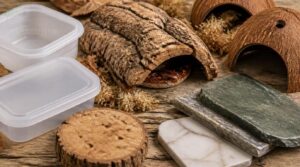
The hide material matters more than most beginners expect. Some common materials look fine but quietly release toxins that stress or harm your snake over time. Here are the safest options you can trust.
HDPE Plastic
HDPE plastic is one of the safest materials you can choose for a snake hide box. It’s non-toxic, holds up to regular disinfecting, and won’t leach harmful chemicals onto your snake.
Its chemical resistance makes it easy to clean without degrading over time. Look for hides labeled HDPE — they’re built to last.
Polypropylene Plastic
Polypropylene is another solid pick for a snake hide box. It’s lightweight, nontoxic, and absorbs almost no moisture — under 0.03% — so it stays dimensionally stable even in humid enclosures.
It also resists common household cleaners, making it genuinely easy to clean. Polypropylene boxes hold up well through repeated disinfecting without breaking down or leaching anything harmful onto your snake.
ABS Plastic
ABS plastic is a go-to material for commercial snake hide boxes — and for good reason. Its nonporous surface resists bacterial buildup, so cleaning takes seconds. ABS also withstands repeated disinfecting without degrading.
Three reasons ABS works well:
- Impact strength — it won’t crack if your snake pushes against it
- Thermal stability up to ~105°C
- Chemical resistance to common reptile-safe cleaners
Cork Bark
Cork bark is one of the most naturalistic snake hide box options available. It comes from Quercus suber — harvested without harming the tree. The suberin-rich cells make it naturally moisture-resistant, which helps stabilize humidity inside the hide. Its rough, textured surface gives your snake natural climbing grip too.
| Property | Benefit | Best For |
|---|---|---|
| Suberin moisture barrier | Stabilizes enclosure humidity | Humid-climate species |
| Textured surface | Natural grip and enrichment | Arboreal and semi-arboreal snakes |
| Thermal insulation | Buffers temperature fluctuations | All snake species |
Sealed PVC
Sealed PVC is a solid, no-fuss choice for a snake hide box.
It resists moisture, cleans easily with mild soap or 70% isopropyl alcohol, and won’t warp under typical vivarium heat.
Its low thermal conductivity keeps your snake from losing heat too fast.
Always choose phthalate-free PVC — and inspect seams regularly for cracks.
Avoid Dangerous Hide Materials
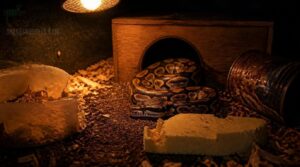
Not every material is safe to put near your snake, and some can cause serious harm fast. A few common items look fine on the surface but release toxins, cause burns, or create sharp edges that injure your snake over time. Here are the materials you need to avoid.
Cedar and Pine
Cedar and pine might seem like natural choices, but both are toxic to snakes. These woods release phenolic oils and natural resins that irritate a snake’s respiratory tract and skin. Cedar is especially dangerous — its aromatic scent signals active chemical leaching.
- Cedar oils cause respiratory distress
- Pine resins irritate skin and lungs
- Aromatic scent means toxins are still off-gassing
- Neither wood is safe, even sealed
Bare Metal Edges
Raw metal inside a hide is a real hazard. Bare metal edges can cut your snake’s delicate scales during entry and exit. Even smooth-looking metal can develop rust or corrosion, and those particles leach directly onto your snake’s skin.
Stick to plastic, cork, or sealed PVC — nothing with exposed metal anywhere inside.
Zinc or Copper
Metals like zinc and copper are just as risky as bare metal edges. Both leach toxic minerals into your snake’s environment through contact and moisture. Zinc disrupts copper absorption; copper itself causes direct tissue irritation.
- Never use galvanized hardware
- Avoid copper pipe fittings
- Skip zinc-coated screws or brackets
- Don’t repurpose old metal containers
- Check DIY snake hide boxes for metal parts
Unsafe Paints
Paint might seem harmless, but the wrong type can poison your snake. Lead and cadmium pigments release toxic particles through abrasion and moisture.
Solvents in oil-based paints off-gas volatile organic compounds that irritate a snake’s sensitive respiratory tract.
Stick to fully cured, water-based acrylics labeled reptile-safe.
Let any coated hide air out 24–72 hours before use.
Heat Rock Hides
Heat rock hides look natural, but they’re one of the biggest hazards in a reptile enclosure. Without thermostat control safety, surface temperatures can quietly spike and burn your snake before you notice.
- Burns happen fast with no thermostat
- Thermal gradient setup breaks down under hides
- Infrared temperature monitoring reveals dangerous hotspots
- Stress reduction fails when snakes avoid the area
Easy DIY Hide Box Ideas
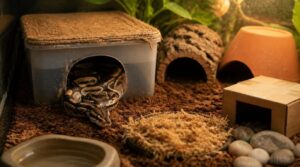
Building a hide at home doesn’t have to be complicated or expensive. You probably have everything you need already — or can grab it for a few dollars. Here are five easy DIY options worth trying.
Food Container Hides
A clean plastic food container makes a surprisingly solid DIY snake hide box.
Choose nontoxic plastics like HDPE or polypropylene — they resist moisture and won’t leach chemicals.
Cut a curved entrance, then sand the edges smooth to prevent scale injury.
Drill small ventilation holes, and use a non-slip pad underneath to stop tipping.
Paper-mâché Hides
Paper-mâché hides are a low-cost option worth trying.
- Mix flour and water into a non-toxic paste
- Layer thin strips over a tinfoil bowl mold
- Let each layer dry 6–12 hours before adding the next
- Seal the finished hide with a waterproof, water-based sealant
Replace it when soft spots or mold appear.
PVC Panel Hides
PVC panels make a surprisingly practical DIY hide. Many come with tongue-groove assembly, meaning no tools required. Edges are beveled for safety, so your snake won’t snag scales on entry.
| Feature | Benefit |
|---|---|
| Nonporous surface | Easy to wipe clean |
| Internal moisture inserts | Helps maintain humidity control |
| PVC durability | Resists mold and warping |
Upcycled Household Items
Your junk drawer might hold your next snake hide box. Wide-mouth glass jars work well — just remove the lid and sand any sharp rim.
Ceramic bowls retain heat efficiently on the warm side.
Cardboard boxes offer short-term insulation but replace them every 3–4 weeks.
Always confirm no toxic coatings exist on upcycled materials before placing them inside any enclosure.
Smooth Entrance Edges
Sharp edges on a DIY snake hide box are a real hazard. Sand all wooden entrances to a 400-grit finish and round entry lips using corner beads or dowels.
- Use a 3–6 mm radius on all entrance edges
- Bevel entry lips to prevent scale snagging
- Fill gaps with flexible silicone to minimize pinch points
- Apply a non-toxic sealant for a smooth material finish
Clean and Replace Hides
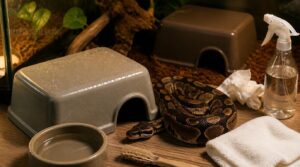
Keeping your snake’s hides clean isn’t complicated, but it does need to be consistent. Waste, bacteria, and moisture can build up faster than you’d expect. Here’s what to stay on top of — and when it’s time to swap a hide out entirely.
Weekly Basic Cleaning
Cleaning your snake’s hide once a week keeps pathogens from building up. Wipe every hide with a reptile-safe disinfectant, rinse thoroughly, and dry before returning it. This simple reptile enclosure cleaning schedule removes biofilm and organic buildup before it becomes a problem. Log each clean so you can spot wear early.
| Task | Frequency |
|---|---|
| Wipe all hides | Weekly |
| Rinse residue | Weekly |
| Log condition | Weekly |
Immediate Waste Removal
Waste doesn’t wait — and neither should you. The moment you spot droppings or soiled substrate inside a hide, remove it. Contaminated hides get sealed in labeled bags immediately.
- Sort waste within 2 hours to stop odor buildup
- Deploy a spill kit within 10 minutes of any liquid mess
- Move soiled hides to a dedicated disposal zone right away
Monthly Deep Sanitizing
Once a week keeps things tidy, but monthly deep sanitizing is what actually resets the hide.
Wear disposable gloves and move your snake to a secure temporary enclosure first. Open a window to clear chemical fumes. Wipe every surface with an EPA-registered disinfectant, then follow with a sanitizing spray. Let everything air dry completely before returning your snake.
Log the date, products used, and anything unusual you noticed.
Cracks and Rough Edges
A clean hide can still be dangerous if it has cracks or rough edges. Run your finger along every surface and around the entrance.
Crescent-shaped cracks near the opening signal stress fractures from a tight fit.
Rough edges or molding burrs can cause skin snagging during movement. If it snags your fingernail, replace it.
Mold Replacement Signs
Mold doesn’t always announce itself. Sometimes the first clue is a musty odor that lingers even after cleaning. Check for dark green, black, or gray patches on the hide’s surface.
If humidity stays consistently above 60 percent, mold may be hiding inside porous materials. Replace any hide showing these signs immediately — no second chances.
Introduce New Hides Calmly

Snakes don’t always warm up to new hides right away — and that’s completely normal. A few simple habits can make the adjustment much smoother for your snake. Here’s what to keep in mind as you introduce a new hide to the enclosure.
Keep Familiar Scents
Your snake builds an olfactory map of its enclosure — a mental scent guide it relies on daily.
When you introduce a new hide box, keep the substrate around it consistent. Wash your hands before handling to avoid scent contamination. Briefly rubbing the new hide against familiar decor helps the snake accept it faster, lowering stress noticeably.
Avoid Sudden Layout Changes
Rearranging your snake’s enclosure too quickly can unravel weeks of progress.
- Introduce one hide at a time
- Keep substrate depth and texture unchanged for 14 days minimum
- Maintain consistent hide placement for at least two weeks
- Match visual texture to existing hides
Allow a 24-hour acclimation period after each change before evaluating stress responses.
Watch Hiding Behavior
Your snake treats its hide like a safe house. Watch how it approaches a new snake hide box — pausing at the entrance, testing the opening, and only retreating once it feels secure.
That entrance evaluation pause is normal.
Snakes also return to familiar hides after feeding for post-feeding retreat, restoring calm through scent and tight walls.
Reduce Handling Temporarily
When you introduce a new snake hide box, pause handling for two weeks. This gives your snake time to settle, eat, and feel safe without added disruption.
Use this quiet window to monitor appetite, shed quality, and fecal consistency — your best baseline health indicators.
After the pause, reintroduce handling gradually, adding one to two minutes per session only if your snake stays calm.
Check Fit After Growth
Your snake won’t stay small forever. As it grows, check the hide fit every few months.
Look for these warning signs:
- Vertical clearance feels tight when it curls
- Entrance girth leaves skin marks or scales catching
- Interior width restricts side-to-side movement
- Resting posture looks cramped or unnatural inside
A snake hide box should always let your snake coil completely. Upgrade size, material, and design before stress shows.
Frequently Asked Questions (FAQs)
Are snakes good for first time pet owners?
Yes, snakes can be great beginner pets. They’re low-maintenance, quiet, and don’t need daily feeding. With the right reptile enclosure accessories and basic husbandry skills, most beginners manage them confidently.
Do snakes prefer vertical or horizontal enclosures?
Most terrestrial snakes, like ball pythons and corn snakes, prefer horizontal enclosures. Floor space accommodates rectilinear posture and natural movement. Arboreal species, like green tree pythons, use vertical climbing structures more heavily.
How many hides does one enclosure need?
Most snakes need at least two hides — one on the warm side, one on the cool side. This maintains the thermal gradient without forcing your snake to choose between safety and temperature.
Can hides be shared between multiple snakes?
No. Each snake needs its own hide. Shared hides cause stress, competition, and injury risk. The dominant snake claims the space, leaving the other unable to thermoregulate properly or feel secure.
Should hides be elevated or kept on substrate?
Both work, but it depends on your setup. Floor-level hides suit most terrestrial snakes and stay stable. Elevated hides help arboreal species and reduce moisture contact with damp substrate.
Do hides need ventilation holes or openings?
Yes, hides need ventilation. At least one small vent opening near the entrance allows fresh air in without creating drafts. This prevents stagnant air buildup and reduces mold risk inside the hide.
How often should hide placement be rotated?
Rotate hides every 2–4 weeks. During the first month, shift them every 1–2 weeks to aid acclimation. Always keep one familiar hide in place to preserve your snake’s sense of security.
Conclusion
A first-time owner once added two hides on day one—warm side, cool side, snug fit. Her ball python ate within 48 hours and never stress-wheezed once.
That’s not luck. That’s what the right setup does.
Snake hide boxes for first-time owners aren’t optional equipment—they’re the foundation everything else builds on.
Nail the size, the material, and the placement, and your snake won’t just survive its new home. It’ll actually settle into it.