This site is supported by our readers. We may earn a commission, at no cost to you, if you purchase through links.

How big a hognose snake gets depends almost entirely on which species you’re talking about. The western hognose, the one most commonly kept as a pet, tops out around 36 inches. The Malagasy giant hognose can reach six feet. Same common name, completely different animal.
Sex shifts the numbers too. Female westerns run nearly twice the length of males, so a 16-inch male and a 30-inch female can come from the same clutch.
Those ranges matter before you buy, because they shape every housing decision you’ll make for the next decade.
Table Of Contents
- Key Takeaways
- What “Hognose Snake” Includes
- Most Pet Hognoses Reach 14–36 Inches
- North American Hognose Size Chart
- Malagasy Hognose Size Chart
- South American Hognose Size Chart
- Male Versus Female Hognose Size
- Hognose Hatchling Size and Growth
- Hognose Weight and Visual Comparisons
- Measure Your Hognose and Plan Housing
- Frequently Asked Questions (FAQs)
- Are hognose snakes good pets?
- Does a hognose snake bite hurt?
- How big is a 1 year old hognose snake?
- Is it better to get a male or female hognose snake?
- How big is a full grown hognose snake?
- Do hognose snakes like to be handled?
- Can a hognose snake hurt you?
- How long do hognose snakes typically live in captivity?
- At what age are hognose snakes fully grown?
- How does size affect hognose snake enclosure requirements?
- Conclusion
Key Takeaways
- "Hognose snake" covers three completely different genera across three continents, so the species you’re dealing with matters far more than the common name — a western hognose tops out around 36 inches, while a Malagasy giant can hit 6 full feet.
- Sex creates a size gap that’s hard to ignore: female western hognoses reach 28–36 inches, while males from the same clutch often stop growing at 14–24 inches.
- What your snake eats, how warm its enclosure stays, and how consistently you feed it all shape how close it gets to its genetic size ceiling — husbandry isn’t just care, it’s a growth factor.
- Most hognoses reach their adult length by age two to three, males typically plateauing first, so tracking monthly measurements lets you plan the right enclosure before your snake outgrows the one it’s in.
What “Hognose Snake” Includes

Hognose snake" isn’t just one species — it’s a loose nickname shared by three separate genera across three different continents. Where your snake comes from shapes everything about its adult size, so the genus matters more than you might expect. Here’s a quick breakdown of the three main groups you’ll encounter.
Each genus also tends to bring its own behavioral quirks to the table, so learning about hognose snake personality traits by species can help you know what to expect long before your snake settles in.
Heterodon: North American Hognoses
North American hognoses belong to the genus Heterodon, which includes four recognized species. The eastern hognose snake can reach close to 40 inches, the western hognose usually stays between 12 and 24 inches, the southern tops out around 22 inches, and the Mexican falls somewhere between those two extremes. The southern hognose is also notable for its sharply upturned rostral scale, which distinguishes it from the eastern species and aids in digging out buried prey.
Sex and local habitat both shape where any individual lands within those ranges.
Leioheterodon: Malagasy Hognoses
While North American species stay relatively compact, Leioheterodon tells a different story. These three Madagascar-endemic snakes are mildly venomous rear-fanged species, meaning small glands at the back of the mouth deliver venom mainly to subdue lizards and small vertebrates.
Their habitats span dry woodlands to coastal scrub. The Malagasy giant hognose snake reaches up to 72 inches, dwarfing any Heterodon you’ll encounter.
Lystrophis: South American Hognoses
South America rounds out the picture. Lystrophis snakes reach 20–30 inches and weigh under one pound, sporting red, black, and white rings that mimic coral snakes across grasslands in Brazil, Paraguay, Uruguay, and Argentina.
- Length: 20–30 inches at maturity
- Weight: under one pound as adults
- Habitat: open grasslands across southern South America
- Pattern: tricolor rings mimicking coral snakes
Most Pet Hognoses Reach 14–36 Inches
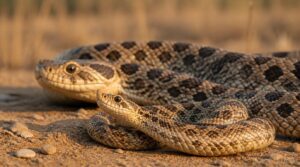
If someone asks how big a hognose snake gets, the honest answer is: it depends on the species and the sex. Most pet owners work with western hognoses, where males top out around 14–24 inches and females push closer to 28–36 inches. Here’s how the numbers break down across the species you’re most likely to encounter.
Typical Western Hognose Range
The western hognose snake usually measures 12 to 36 inches in total length, though most adults land comfortably under 30 inches.
Size varies quite a bit depending on where the snake lives. Individuals from warmer, southern parts of its range, which stretches from southern Canada through the central U.S. into northern Mexico, tend to grow faster and reach larger sizes, partly because prey is more available year-round.
Males: 14–24 Inches
Most male hognose snakes you’ll encounter stay within 14 to 24 inches in total length, roughly the span of a standard ruler to just under two placed end-to-end.
Growth moves quickly in the first two years, then slows considerably as sexual maturity approaches. Genetics, diet, and local temperature all play a clear role in how large a male ultimately gets.
Females: 28–36 Inches
Female hognose snakes run noticeably longer than their male counterparts, a difference called sexual dimorphism. Females: 28–36 inches is the standard range, with western hognose females often reaching the upper end.
Diet quality and husbandry conditions influence where your snake lands within that window. That extra length also means enclosure sizing deserves attention before she’s fully grown.
Species Changes The Answer
That 14–36 inch window only applies if you’re keeping a western or eastern hognose snake. Species changes the answer entirely, since geographic variation and taxonomic differences can shift expected adult size across the Heterodon, Leioheterodon, and Lystrophis groups.
- Western hognose: 14–36 inches
- Eastern hognose: up to 46 inches
- Southern hognose: 13–22 inches
- Mexican hognose: 20–30 inches
- Lystrophis species: 18–30 inches
Giants Can Reach Six Feet
The Malagasy giant hognose is the clear outlier here. In rare cases, individuals reach six feet in length, weighing 6 to 8 pounds, placing them in a different size category than any North American species.
Their bodies are thick and muscular, with a sturdy midsection that makes them look powerful. That’s roughly 18 inches beyond the typical Malagasy maximum.
North American Hognose Size Chart
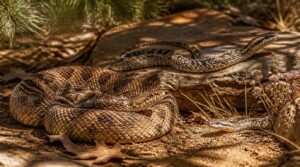
North America is home to five distinct hognose species, and their size ranges vary more than most people expect. Whether you’re keeping a southern hognose or tracking a wild eastern, knowing which species you’re dealing with changes everything. Here’s how each one measures up.
Plains: 15–25 Inches
Plains hognose snakes fall in the 15–25 inch range as adults. Females reach the upper end more reliably, while males tend to stay shorter. Diet quality and burrowing behavior in sandy, open habitat shape how close any individual gets to 25 inches. In captivity, steady feeding moves most snakes through this range within one to three years.
| Trait | Typical Range | Notes |
|---|---|---|
| Adult length | 15–25 inches | Size variation by sex |
| Female length | 20–25 inches | Upper range common |
| Male length | 15–20 inches | Rarely exceeds 20 inches |
| Hatchling length | 5–9 inches | Growth over 1–3 years |
| Record length | 39.6 inches | Unusually large specimen |
Eastern: Around 28 Inches
An eastern hognose snake averages about 28 inches as an adult. Females usually grow several inches longer than males. Fastest growth occurs in the first year, then slows near maturity.
| Measure | Typical size |
|---|---|
| Adult average | 28 inches |
| Hatchling | 6–8 inches |
| Female | Larger |
| Growth | Fast first year |
Forest, field, and wetland prey affect size. Plan housing for 30 inches.
Southern: 13–22 Inches
The southern hognose is compact even by Heterodon standards. Where the eastern averages around 28 inches, this species tops out at 22 inches, often settling much closer to 13. Males usually stay below 18 inches, while females approach the full adult range. Prey access and habitat quality both shape final adult size. Plan enclosure space for at least 22 inches.
| Measure | Male | Female |
|---|---|---|
| Typical range | 13–15 in | 18–22 in |
| Max recorded | ~18 in | 24 in |
| Hatchling | 5–7 in | 5–7 in |
Mexican: 20–30 Inches
Step up from the southern’s compact frame, and the Mexican hognose fills noticeably more space. Adults reach 20 to 30 inches, placing this species in the mid-range. Males usually stay between 20 and 26 inches, while females extend to a full 30. Habitat quality and feeding consistency in captive breeding settings both shape where an individual lands within that window.
| Measure | Male | Female |
|---|---|---|
| Typical range | 20–26 in | 26–30 in |
| Max recorded | ~26 in | ~30 in |
| Hatchling | 6–8 in | 6–8 in |
Gloyd’s: 15–20 Inches
Gloyd’s hognose, a plains hognose subspecies, occupies the smaller end of North American size ranges. Adults average 15 to 20 inches, shorter than the Mexican species you just read about. Diet quality, genetics, and captive husbandry all shape where individuals land. Females edge out males slightly, and hatchlings start at just 5 to 7 inches before growing steadily through their first year.
| Measure | Length |
|---|---|
| Male adult | 15–18 in |
| Female adult | 17–20 in |
| Hatchling | 5–7 in |
| Max recorded | ~20 in |
Malagasy Hognose Size Chart
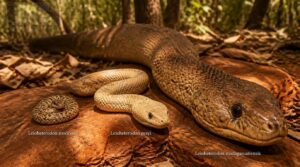
Madagascar’s three hognose species — speckled, blonde, and giant — cover a surprisingly wide size range, and knowing where each one lands helps you plan ahead.
The Leioheterodon genus includes everything from a compact 40-inch blonde hognose to a full 6-foot giant, so these aren’t all small snakes.
Here’s how the three species compare by length and weight.
Speckled: About 43 Inches
The speckled hognose (Leioheterodon maculatus) reaches about 43 inches fully grown, with a sturdy, round body that looks stockier than its length suggests. Adults weigh roughly 0.75 pounds. Across different habitats and diets, speckled individuals consistently hold this length, whether kept in captivity or living wild in Madagascar.
| Feature | Measurement | Notes |
|---|---|---|
| Adult length | ~43 inches | Fully grown |
| Adult weight | ~0.75 lbs | Typical range |
| Hatchling size | 5–9 inches | Genus average |
| Min. enclosure | 4 ft long | For adult housing |
| Body shape | Sturdy, round | Stout cross-section |
Diet quality and enclosure size both shape how efficiently your speckled reaches full length.
Blonde: Up to 40 Inches
At up to 40 inches, the blonde hognose (Leioheterodon modestus) is the smallest species in the Malagasy group. That’s roughly the length of a toddler, putting it well below the speckled’s 43 inches. Wild individuals in Madagascar carry solid body condition at this length. In captivity, most reach near-maximum size by age 2 to 4, weighing under 0.75 pounds.
| Feature | Measurement | Notes |
|---|---|---|
| Adult length | Up to 40 inches | Smallest Leioheterodon |
| Adult weight | Under 0.75 lbs | Full grown |
| Maturation age | 2–4 years | Captive average |
Giant: Up to 72 Inches
The Malagasy giant hognose tops out at 72 inches, far exceeding the western hognose’s 35-inch maximum. That’s six full feet of muscular, thick-bodied snake. Adults usually weigh between 2.5 and 4.5 pounds and need genuinely spacious enclosures to thrive.
| Feature | Measurement | Notes |
|---|---|---|
| Max length | 72 inches | Largest hognose |
| Adult weight | 2.5–4.5 lbs | Solid build |
| Hatchling size | 5–9 inches | Grows annually |
Largest Hognose Species
The Madagascar giant hognose holds an undisputed title: largest hognose species by any measure. Its maximum recorded size of 72 inches, roughly the height of a tall adult human, puts every other species well in the shade. The table below shows how the species size ranking looks across the group.
| Species | Max Length | Record Details |
|---|---|---|
| Madagascar giant | 72 inches | Largest hognose worldwide |
| Eastern hognose | 46 inches | Largest North American form |
| Speckled Malagasy | 43 inches | Mid-range Leioheterodon |
| Western hognose | 35 inches | Most common pet species |
Malagasy Adult Weight Ranges
Weight tells a different story than length alone. The Malagasy giant hognose can reach 4 pounds, making it the heaviest hognose by far. Smaller species, like the blonde and speckled, stay under 2.5 pounds. Diet and body condition affect where any individual lands within the range. Females tend to weigh more than males, sometimes by half a pound or more.
| Species | Adult Weight Range |
|---|---|
| Blonde Malagasy | 1.0–2.3 lbs |
| Speckled Malagasy | 1.0–2.0 lbs |
| Giant Malagasy | 2.5–4.0 lbs |
South American Hognose Size Chart
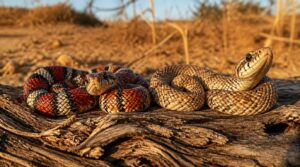
South American hognose snakes, belonging to the genus Lystrophis, are the smallest of the three hognose groups and tend to surprise people with just how compact they stay into adulthood.
Both the standard and tricolor varieties cap out well under a pound, with lengths that rarely push past 30 inches.
Here’s how the two species compare in size.
Lystrophis: 20–30 Inches
South American Lystrophis snakes have smooth, glossy scales and a 20 to 30 inch adult size range. Most individuals settle near 24 to 28 inches, growing steadily on small rodents and lizards.
| Size by Species | Range | Notes |
|---|---|---|
| Adult length | 20–30 in | Most near 24–28 in |
| Hatchling | Under 10 in | Grows each year |
| Adult weight | Up to 1 lb | Stout build |
Tricolor: 18–24 Inches
At 18 to 24 inches, the tricolor hognose snake is the smaller of the two Lystrophis species you’re likely to keep. Most reach full adult length within 3 to 5 years, and that pace ties directly to feeding consistency and enclosure temperature. Their vivid red, black, and yellow banding often gets them confused with coral snakes.
| Feature | Tricolor Hognose |
|---|---|
| Adult length | 18–24 inches |
| Growth period | 3–5 years |
| Body shape | Compact and stout |
Adults Weigh Under One Pound
Both Lystrophis species stay under one pound as adults, even when individuals approach 30 inches in length. That’s a genuinely lean frame for a snake of that length.
| Species | Adult Weight |
|---|---|
| South American hognose | Up to 1 lb |
| Tricolor hognose | Under 0.5 lb |
| Lystrophis average | ~0.75 lb |
Their lightweight snake builds support easy burrowing and quick, short bursts of movement.
Compact, Stout Body Shape
That lean weight makes more sense when you see how these snakes are actually built. Broad midsection, short trunk, wide relative to length, with a tail that tapers fast. That low-slung, squat frame keeps their center of gravity stable during coil defense displays.
| Body Feature | Function |
|---|---|
| Wide midsection | Pushes through dense ground cover |
| Short tapered tail | Helps coil stability |
Male Versus Female Hognose Size
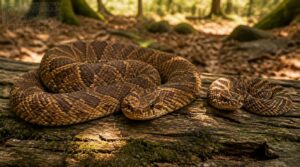
Sex is one of the biggest factors in how large your hognose will get — sometimes the difference is dramatic enough to make two snakes look like completely different species. Female hognoses consistently outgrow their male counterparts in both length and body mass, while males tend to stay noticeably compact throughout their lives.
Here’s a closer look at how that size gap plays out across the different traits that separate males from females.
Females Grow Longer
If you put a male and female hognose side by side, female length advantage is unmistakable. Females average 28 to 36 inches, while males cap out around 14 to 24. That gap holds across species:
- Western females: 28-36 inches
- Malagasy giant females: up to 60 inches
- South American females: 24-32 inches
Females reach maximum size between ages 3 and 5.
Females Have Stockier Bodies
Length isn’t the whole picture. Female hognoses carry wider hips and broader pelvic width, which gives their lower body a noticeably sturdier look. Fat distributes more around the hips and thighs, rounding out that stocky silhouette. Their limb muscles stay balanced and proportional, so the body reads as compact and solid rather than thick in any one spot.
Males Remain Noticeably Smaller
The male hognose is, simply put, the smaller half of the pair. Sexual size dimorphism is strong here: adult males average 14 to 24 inches, roughly 60 to 70 percent of female length.
- Slimmer midsections
- Earlier growth plateau
- Lighter overall body mass
- Slower annual length gains after juvenile stage
Male growth patterns stall sooner, producing a reliably smaller adult snake.
Southern Hognose Sex Differences
The southern hognose shows this pattern in a sharper way than most. Southern females reach 28 to 36 inches, while males usually measure 14 to 22 inches. Females also carry noticeably stockier bodies relative to their length, and their growth rate accelerates after maturity, pushing them well past male maximums.
Tail Shape Differences
Tail shape is one subtle clue of sex you can actually spot. Broader tail bases in females store fat and reproductive tissue, while male tails taper quickly to a slim tip.
Notice these differences:
- Females have a longer, more gradual taper
- Males show a short, slender tail
- Fat distribution is visible near the base in females
Hognose Hatchling Size and Growth
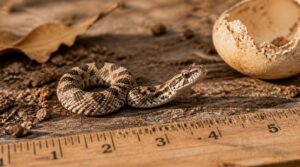
Hognose hatchlings are surprisingly tiny — most arrive at just 5 to 9 inches long, barely longer than your hand. How fast they grow from there depends on a few key factors that every keeper should know. Here’s what shapes their development from that first day out of the egg.
Hatchlings: 5–9 Inches
Hatchlings measure 5–9 Inches, tiny snakes with surprising confidence. A Western hognose snake fits across your palm, but Size needs attention.
| Stage | Size | Sign |
|---|---|---|
| New hatchling | 5–9 Inches | Bright, slender |
| First months | Growth | Sheds often |
For Hatchling enclosure setup, secure lids, hides, water, warmth. Record Hatchling feeding habits, Hatchling shedding frequency, Hatchling growth tracking each month, and gentle Hatchling handling tips.
Eastern Hatchlings: 6½–8 Inches
Eastern hognose snake hatchlings sit at the larger end of the hognose size range, measuring 6½ to 8 inches at birth. That’s roughly the length of a standard ink pen.
They’re born with a tan or gray ground color, dark dorsal blotches, and a slender build that lets them slip through leaf litter with ease.
First-year Growth Varies
By the end of year one, hognose sizes can surprise you. Some hatchlings reach only 12 inches, while others hit 16 inches or more. Western populations often grow fastest, with certain individuals reaching 18 inches.
Enclosure temperature plays a real role here. Warmer conditions push faster growth across Malagasy and South American species especially.
Feeding Affects Growth Rate
What you feed your hognose matters just as much as the enclosure’s heat level. Juveniles offered appropriately sized prey two to three times weekly show steadier growth than those fed irregularly.
Protein quality drives tissue development, and a consistent meal schedule stabilizes daily metabolism. Even small gaps in feeding frequency can widen size differences between hatchlings from the same clutch.
Growth Slows Near Maturity
Once feeding becomes routine, the pace you tracked so closely begins to ease. Around year two or three, most hognoses quietly reach their species-specific size ceiling. Hormonal shifts redirect energy toward maintenance rather than growth. Males usually plateau first, given their smaller adult dimensions. You can keep feeding consistently, but the rapid early gains simply won’t continue.
Hognose Weight and Visual Comparisons
Size alone only tells part of the story — weight and visual scale make hognose dimensions really click. A male western hognose next to a standard ruler, or a Madagascar giant stretched across a yoga mat, gives you something concrete to picture.
Here’s how the numbers look when you put them in everyday terms.
Males Resemble Standard Rulers
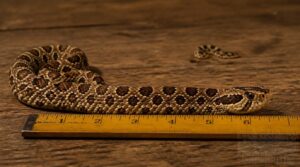
A standard ruler is 12 inches. Male hognose snakes land somewhere between one and two rulers, depending on species. Western males run 14 to 24 inches, Plains males 15 to 25, and southern males stay compact at 13 to 15 inches. A hognose snake hatchling starts at just 5 to 9 inches, and most males don’t stray far past that.
| Species | Male Length | Ruler Equivalent |
|---|---|---|
| Western hognose | 14–24 in | 1–2 rulers |
| Plains hognose | 15–25 in | 1–2 rulers |
| Southern hognose | 13–15 in | ~1 ruler |
| Mexican hognose | 20–30 in | 1.5–2.5 rulers |
| Gloyd’s hognose | 15–20 in | 1–1.5 rulers |
Females Approach Yardstick Length
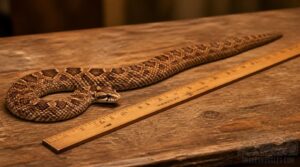
A yardstick is 36 inches. Western hognose females reach 28 to 36 inches, putting them right at that standard. Eastern hognose females go further still, reaching up to 46 inches. Southern hognose females top out at 18 to 22 inches. That size difference between sexes, often 4 to 12 inches, shapes how you plan her enclosure.
| Species | Female Length | Yardstick Equivalent |
|---|---|---|
| Western hognose | 28–36 in | ~1 yardstick |
| Eastern hognose | up to 46 in | ~1.3 yardsticks |
| Southern hognose | 18–22 in | ~0.6 yardstick |
| Mexican hognose | 20–30 in | ~0.8–1 yardstick |
| South American | 20–30 in | ~0.8–1 yardstick |
Giants Match Yoga Mat Length
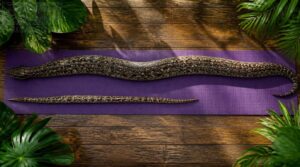
Picture a long yoga mat next to your snake. At 72 inches, the Malagasy giant hognose matches it exactly. No other species comes close.
| Species | Max Length | Yoga Mat Ratio |
|---|---|---|
| Malagasy giant | 72 in | 1.0 mat |
| Speckled hognose | 43 in | 0.6 mat |
| Blonde hognose | 40 in | 0.6 mat |
| Eastern hognose | 46 in | 0.6 mat |
| Western hognose | 35 in | 0.5 mat |
Typical Adults Weigh Under Pound

Most lightweight hognose species tip the scales at under a pound, even at full size. That size-weight mismatch is easy to miss, since a long snake doesn’t always mean a heavy one.
| Species | Typical Adult Weight |
|---|---|
| Western hognose snake | Under 1 lb |
| Eastern hognose snake | Under 1 lb |
| Southern hognose snake | Under 1 lb |
Giants Weigh About Four Pounds

Four-pound giants stand in a different weight class. The Malagasy giant hognose reaches 72 inches with a thick, stout frame. Females hit this weight standard; males stay shorter.
| Species | Length | Weight |
|---|---|---|
| Malagasy giant | 72 in | 4 lbs |
| Speckled hognose | 43 in | 0.75 lbs |
| Blonde hognose | 40 in | Species is not just a label — it is a size blueprint, spanning 24 inches to six feet |
Sex and Genetics
After species, sex shapes size more than most people expect. Female western hognoses average 28-36 inches, while males cap around 14-24 inches. That gap traces back to hormonal growth differences and chromosome-level gene expression.
Females invest energy in egg production, which drives larger body mass. Males stay compact. Genetic diversity within a population also widens the size range you’ll see.
Diet and Body Condition
Diet shapes how close your snake gets to its genetic size ceiling. Prey sized correctly means one to two times the snake’s widest point, adjusted as it grows.
Feed adults every 10-14 days, hatchlings every 5-7. Overfeeding causes obesity and fatty liver issues.
A well-conditioned snake shows no visible ribs or pelvic bones, and fresh water daily keeps digestion steady.
Temperature and Husbandry
What your snake eats matters, but the hognose snake enclosure environment shapes digestion too.
A temperature gradient runs from a basking spot of 88-92°F down to 78°F on the cool end. Nighttime temps shouldn’t fall below 70°F.
Substrate moisture balance using aspen or cypress keeps humidity steady at 40-60%, directly affecting how close your hognose snake reaches its full size.
Health During Development
A hognose snake’s health during its early months quietly sets the ceiling for how large it grows. Respiratory infections, signaled by nasal discharge or wheezing, slow development if left untreated.
Shedding every few weeks is normal for hatchlings — incomplete sheds often mean humidity has dropped below 40%.
Catching problems early keeps your snake’s growth on track.
Measure Your Hognose and Plan Housing
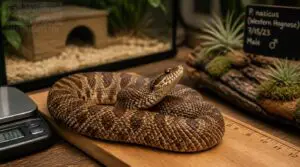
Knowing your hognose’s actual length and weight takes the guesswork out of housing decisions. A quick monthly routine — measuring, weighing, and logging growth — keeps you one step ahead of your snake’s needs. Here’s how to track your snake accurately and match its enclosure to its species and size.
Measure Relaxed Body Curves
Getting an accurate read starts with letting your hognose relax flat, belly down. Lay a flexible measuring tape along the natural body curve from head to tail tip.
- Mid-trunk contour mapping catches the widest points
- Segmental curvature trends reveal monthly growth changes
- Relaxed spine alignment keeps readings consistent
- Record each measurement in millimeters for precision
Weigh With Digital Scales
Once you have that length measurement, weight fills in the rest of the picture. A kitchen-grade digital scale, accurate to 0.1 grams, works well for most hognoses.
Tare the platform with a small clean container first, then gently settle your snake inside. Weigh before meals, not after. Calibrate monthly using certified weights to keep all your readings honest and consistent.
Record Monthly Growth Trends
Each month, log your hognose snake’s date, length, and weight in a dedicated spreadsheet.
Your growth rate calculation is simple: divide this month’s measurement by last month’s, then subtract one. A plateau in that number often signals your snake is nearing maturity.
Note feeding portions too, since feeding impact on size by species and sex becomes clearer over time.
Plan for Adult Dimensions
Once your monthly log shows a plateau in growth rate, that’s your cue to think ahead.
Western females reach 28–36 inches, while males top out near 24 inches, so enclosure needs differ noticeably by sex.
Malagasy giants can hit 72 inches at maturity, a very different planning target than the compact 13–22 inch southern hognose.
Size Enclosures by Species
Your snake’s size sets the enclosure baseline. Size by species:
- Western hognose (Heterodon nasicus): males fit a 36 x 18 x 18 reptile enclosure; females need a 40-gallon enclosure.
- Eastern hognose: 36 inches minimum.
- Southern hognose: 36 inches works.
- Mexican hognose: 40–48 inches.
- Malagasy giant: 60 inches or longer, with 6–8 inches of substrate.
Keep hides at multiple temperature gradient zones.
Frequently Asked Questions (FAQs)
Are hognose snakes good pets?
Think of them as the low-maintenance apartment pet of the reptile world. They tolerate regular handling well, eat pre-killed mice every 5–7 days, and live 10–15 years with consistent daily care and a clean enclosure.
Does a hognose snake bite hurt?
A hognose bite feels much like a bee sting, sharp for a moment, then mostly gone. Its mild rear-fanged venom targets amphibians, not humans, so pain usually fades within an hour and swelling stays local.
How big is a 1 year old hognose snake?
At one year old, a western hognose usually measures 14 to 24 inches, depending on sex. Males run smaller, females push longer. Feeding consistency during that first year makes a real difference.
Is it better to get a male or female hognose snake?
Neither is universally better. Males stay compact at 14–24 inches, making them easier to house. Females reach 28–36 inches and grow stockier. Your choice depends on space and handling goals.
How big is a full grown hognose snake?
Like a ruler that just keeps growing, most adult hognoses land somewhere between 14 and 36 inches in total length, though species, sex, and individual genetics each pull that number in a different direction.
Do hognose snakes like to be handled?
Most hognose snakes tolerate handling well once they’re used to you. Short, calm sessions a few times a week build trust. Watch for hissing or neck-flattening, both clear signs to stop.
Can a hognose snake hurt you?
Technically, yes, but barely. Hognose snakes produce mild toxic saliva, yet can’t inject it effectively into humans. Bites feel like a small pinprick and heal quickly without medical treatment.
How long do hognose snakes typically live in captivity?
Hognose snakes are small, yet they’re remarkably long-lived. In captivity, most live 12 to 18 years, with some reaching 20 or more under consistent, attentive care.
At what age are hognose snakes fully grown?
Most hognoses reach their adult length by age two to three. Females take longer, often continuing to grow past year two. Males usually plateau earlier, sometimes by 18 months.
How does size affect hognose snake enclosure requirements?
Enclosure length should match your snake’s body length, with width at half that. A 30-inch female needs roughly a 30×15-inch footprint, plus substrate depth for burrowing.
Conclusion
A female western hognose can weigh three times more than a male hatched from the very same clutch. That one fact explains why how big does a hognose snake get has no clean, single answer.
Species, sex, and husbandry each push the final number in a different direction. Measure your animal regularly, record the monthly growth trend, plan the enclosure for the full adult it will eventually become, and the rest takes care of itself.
- https://www.britannica.com/animal/hognose-snake
- https://reptifiles.com/heterodon-hognose-snake-care/hognose-snake-enclosure-size
- https://reptilinks.com/blogs/news/17-frequently-asked-questions-about-hognose-snake-care
- https://a-z-animals.com/blog/hognose-snake-size-comparison-just-how-big-do-they-get
- https://reptilesmagazine.com/western-hognose-snake-care-sheet