This site is supported by our readers. We may earn a commission, at no cost to you, if you purchase through links.

Most people’s fear of snakes comes from a list of maybe three species they’ve seen in movies. Meanwhile, the vast majority of the world’s 3,700+ snake species want nothing to do with you. The reputation snakes carry is wildly disproportionate to their actual behavior.
A corn snake doesn’t plot ambushes, and a ball python would rather curl into a tight ball than make eye contact with conflict. These examples illustrate how many snakes prioritize avoidance over aggression.
Whether you’re considering your first pet snake or just trying to identify the harmless visitor coiled near your garden hose, this non-aggressive snake species list covers 20 calm, safe picks—and what actually makes each one so easy to be around.
Table Of Contents
- Key Takeaways
- Best Non-Aggressive Pet Snakes
- Harmless Backyard Snake Species
- Larger Calm Snake Species
- Defensive but Rarely Aggressive Snakes
- Choosing a Gentle Snake
- Frequently Asked Questions (FAQs)
- Are there any non-venomous snakes that pose no threat?
- What snakes are non-aggressive?
- Which non-venomous pet snakes are beginner-friendly?
- What are some non venomous snakes?
- What snakes are not aggressive?
- What is the friendliest species of snake?
- Which snake is the calmest?
- What are the six types of snakes?
- What types of snakes are non venomous?
- Are non venomous snakes dangerous?
- Conclusion
Key Takeaways
- Most of the world’s 3,700+ snake species actively avoid humans, meaning the fear people carry is based on a tiny, unrepresentative sample of the whole group.
- Corn snakes and ball pythons are the friendliest starting points for new keepers — they’re calm, tolerate handling well, and don’t need expert-level care to stay healthy.
- Plenty of harmless snakes like garter snakes, rough green snakes, and Eastern ratsnake are already living in your backyard, quietly handling pest control for free.
- Dramatic behaviors like playing dead, puffing up, or releasing musk are defensive bluffs, not signs of aggression — understanding that makes coexisting with snakes a lot less stressful.
Best Non-Aggressive Pet Snakes
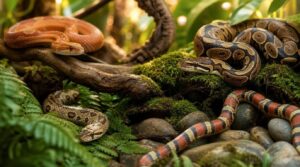
If you’re thinking about your first snake, a few species stand out as genuinely easygoing roommates. They tolerate handling well, stay manageable in size, and don’t require a biology degree to keep healthy.
Species like the children’s python are a great example—check out this children’s python size and care guide to see exactly why they’re such a popular starter choice.
Here are five of the best non-aggressive pet snakes worth considering.
Corn Snake
The corn snake might just be the perfect starter snake — calm, beautiful, and easy to read.
Native to southeastern woodlands and fields, this nonvenomous snake thrives where rodents are plentiful. Its range from Florida to New Jersey spans the southeastern United States.
It’s crepuscular by nature, most active at dawn and dusk. Color morphs make every individual uniquely stunning.
- Vivid orange-red saddles outlined in black
- Bold checkerboard belly pattern
- Snow, Okeetee, and lavender morph varieties
- Peaceful temperament, rarely defensive
Ball Python
If the corn snake won you over, the ball python might seal the deal. These nonvenomous snakes are famous for their gentle constrictor behavior—curling into a tight ball when nervous rather than striking. Nocturnal activity peaks after dark, making evening handling sessions feel almost ritualistic.
| Trait | Detail |
|---|---|
| Adult Size | 3–4 feet |
| Weight Management | 2–4 lbs (females) |
| Shedding Care | Needs 50–60% humidity |
| Incubation Temperature | 88–90°F for eggs |
| Royal Naming | Also called "royal python" |
Their reputation as harmless reptiles is well-earned—patient, predictable, and ideal for building reptile safety tips into your daily routine.
Rosy Boa
Meet the Rosy Boa — a tiny desert habitat specialist that barely tops 34 inches and never seems to have a bad day. This harmless reptile relies on burrowing behavior to stay hidden and cool, making it naturally calm around humans.
Its ovoviviparous reproduction means live babies, no eggs to stress over. With captive longevity reaching 30 years, you’re making a long-term friend.
Kenyan Sand Boa
The Kenyan Sand Boa, topping out around 32 inches, is a compact charmer known for its laid-back temperament. This nonvenomous reptile relies on burrowing substrate to stay hidden, surfacing primarily during crepuscular feeding hours.
Its nocturnal activity makes it low-maintenance for busy keepers. The species is ovoviviparous, giving birth to live young.
With proper temperature gradient care, these snakes can live up to 20 years.
California Kingsnake
The California Kingsnake genuinely earns its reputation as a nonvenomous reptile with remarkable adaptability. Its habitat flexibility spans diverse environments, from desert flats to suburban backyards across California and beyond.
This species boasts striking color morphs, ranging from bold banded patterns to smooth stripes, offering enthusiasts plenty of variety.
From fiery reds to muted pastels, milk snake color morphs and apartment-friendly care shows just how much variety collectors can find within a single species.
Key traits include natural venom resistance, a manageable size, and calm snake behavior. Additionally, its egg clutch sizes of 5–12 further contribute to its appeal as a keeper.
Harmless Backyard Snake Species
You don’t have to go far to find a harmless snake — chances are one already lives in your backyard. Most people walk right past them without a second thought, which is honestly a shame.
Here are five common backyard species worth knowing by name.
Garter Snake
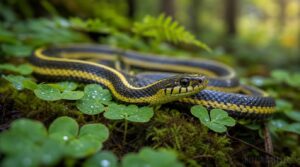
Chances are, a garter snake has already scouted your yard. These slender, non-venomous snake species thrive in wetlands, gardens, and grassy edges — classic habitat preferences of garter snakes. Their striped pattern diversity ranges from yellow to red to blue.
Diurnal activity patterns make them easy to spot. They give live birth, including social denning behavior, and quietly handle garden pest control for free.
Rough Green Snake
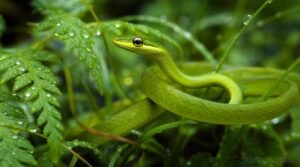
The rough green snake is basically your garden’s secret guardian. This slender nonvenomous reptile species spends most of its day in shrubs and low branches — a true arboreal specialist — blending perfectly through camouflage coloration against leaves.
Here’s why it’s a backyard gem:
- Pure insectivore diet — crickets, grasshoppers, caterpillars
- Natural pest control without chemicals
- Lays modest clutch size of 3–12 eggs
- Follows seasonal breeding in spring
- Never bites — just freezes or flees
Ribbon Snake
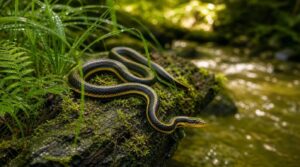
Think of the ribbon snake as your wetland’s built-in fish and frog monitor. This slender, nonvenomous reptile is a master of aquatic foraging, hunting tadpoles and small fish along stream edges with surprising speed.
Striped identification is easy — three bright stripes on dark brown. Its seasonal activity peaks in spring through fall, though conservation concerns grow as wetland habitats shrink.
Live birth sets it apart from egg-layers, a unique trait in its reproductive strategy.
Ringneck Snake
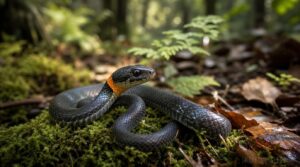
The ringneck snake is one of those backyard snakes most people walk right past without noticing. It thrives in moist habitats—leaf litter, rotting logs, and damp garden edges. Its nocturnal activity keeps it hidden, but flipping a rock might reveal its bold yellow or orange neck ring.
This tiny, non-poisonous snake exhibits a striking ventral color display. Its rear-fanged venom aids in gripping earthworms, a key part of its diet.
Reproduction occurs through egg deposition, with clutches laid under loose soil, further tying the species to its damp environments.
Eastern Ratsnake
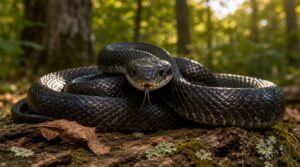
The Eastern Ratsnake is a natural garden helper, managing rodent control quietly and efficiently. Its habitat stretches from Georgia to Vermont, making it likely you’re already sharing space with one.
This rat snake exhibits an impressive climbing ability, navigating trees, barns, and rocky ledges with ease. Its nocturnal activity during summer keeps it mostly out of sight.
When spotted, identification is straightforward due to its glossy black scale pattern and white chin.
Larger Calm Snake Species
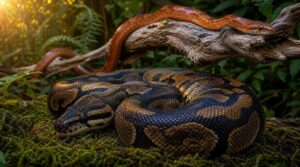
Big snakes get a bad reputation, but some of the largest species are genuinely laid-back once they’re comfortable with you.
Size doesn’t equal danger — it just means you’ll need a bit more space and patience.
Size doesn’t equal danger — it just means you’ll need a bit more space and patience
Here are five larger snakes known for their calm, predictable temperaments.
Boa Constrictor
Despite their intimidating size, boa constrictors are one of the calmest constrictor species you can keep. This non-venomous snake species tops many snake identification guides for good reason—adults typically reach 10–13 feet, yet their temperament remains surprisingly gentle with regular handling.
- Lifespan Expectancy: 20–30 years in captivity
- Feeding Schedule: Every 1–3 weeks for adults
- Habitat Preferences: Warm enclosures, 80–85°F on the warm side
Eastern Indigo Snake
If you thought the boa was impressive, meet North America’s longest native snake. The Eastern Indigo Snake stretches past eight feet yet stays remarkably calm.
This non-venomous snake species shines in any snake identification guide for its ophiophagous predation — it actually eats venomous snakes safely.
Seasonal migration patterns, gopher burrow dependence, and longleaf pine restoration all shape its survival. Captive breeding programs help protect this fascinating beneficial wildlife.
Bullsnake
Meet the bull snake — a prairie habitat heavyweight that earns its place on any nonpoisonous snakes list. Reaching up to seven feet, its burrowing adaptations let it raid rodent tunnels directly, making it a powerhouse for rodent control.
It lays clutch sizes of up to 20 eggs and practices seasonal brumation, showcasing unique survival strategies. These behaviors underscore its ecological role as a natural pest control agent.
By managing rodent populations, the bull snake facilitates human-snake coexistence, proving itself as beneficial wildlife in agricultural and natural landscapes alike.
Black Rat Snake
Bigger than the bullsnake’s prairie cousin, the Black Rat Snake thrives in woodlands and farmlands across eastern North America. This glossy, non-venomous snake species is a standout for identification — adults reach 3.5–6 feet in length, characterized by jet-black scales and a pale chin.
Here’s what makes it notable:
- Habitat Preferences — woodlands, farms, and suburban edges
- Rodent Control — hunts mice and rats relentlessly
- Climbing Ability — raids bird nests high in trees
- Brumation Behavior — dens communally through winter
- Egg Clutch Size — lays 10–20 eggs each spring
For wildlife safety, remember: it’s shy, not a threat.
Gopher Snake
The gopher snake is one of the most misunderstood non-venomous snake species, with a habitat spanning grasslands, deserts, and agricultural fields from Canada to Mexico. Its presence offers a free pest control service, underscoring its ecological value.
| Trait | Detail |
|---|---|
| Size | 4–7 feet |
| Reproductive Traits | 2–24 eggs per clutch |
| Seasonal Activity | Diurnal in cooler regions |
| Climbing Ability | Climbs, burrows, swims |
| Snake Identification | Bold dorsal blotches, keeled scales |
For human-snake coexistence and wildlife safety, remember: it hisses to scare, not harm.
Defensive but Rarely Aggressive Snakes
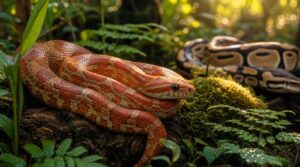
Some snakes have a flair for the dramatic without actually wanting to hurt you.
They’ve got a few tricks up their scales — playing dead, puffing up, releasing a funky smell — but biting is usually their last resort.
Five species that put on quite a show while staying surprisingly safe.
Eastern Hognose Snake
The Eastern Hognose Snake is honestly one of nature’s best actors. It thrives in sandy microhabitats—dry fields, pine woods, and open grasslands—where it employs rear fang mechanics to hunt amphibians, particularly toads, by deflating puffed-up prey.
This non-venomous snake species exemplifies human-snake coexistence, posing no threat to people. When threatened, it dramatically plays dead, showcasing its theatrical survival strategy.
For snake enthusiasts, its pure personality and unique behaviors make it a captivating subject, blending ecological importance with charismatic charm.
Milk Snake
The milk snake (Lampropeltis triangulum) is a true barnyard friend—nocturnal by habit, secretive by nature, and completely harmless to you. Its stunning color morphs make it a favorite among snake enthusiasts.
This species’ venom resistance allows it to prey on animals others cannot, such as venomous snakes. Clutch sizes vary widely across subspecies, and brumation sites are often shared communally.
Despite its bold, striking appearance, the milk snake remains non-venomous and poses no threat to humans. Its reputation stems from its bold-looking patterns, not danger.
Bullsnake Mimicry
The bull snake is a master of disguise — no venom needed. When threatened, it pulls off a convincing rattlesnake impression through four key behaviors:
- Head Flattening — reshapes its head to look triangular
- Tail Vibration — buzzes against dry leaves for rattle mimicry
- Pattern Resemblance — large dorsal blotches mimic rattlesnake diamonds
- Predator Bluffing — lunges without actually biting
It’s harmless, ingenious snake mimicry in action.
Garter Snake Musk
Don’t panic if a garter snake leaves you smelling like a gym locker — that’s just its defensive musk talking. As a non-venomous snake species, it rarely bites. Instead, it releases a chemical cocktail of acids and amines. Understanding musk frequency and warning behaviors makes human-snake coexistence much smoother.
The musk comprises sour acids and fishy amines, creating a potent odor that lingers for hours. To minimize discomfort, wash hands thoroughly after contact, and consider using gloves if handling the snake is necessary.
| Musk Factor | What Happens | Handling Precautions |
|---|---|---|
| Musk Composition | Sour acids + fishy amines | Wash hands thoroughly |
| Odor Persistence | Lingers hours on skin | Use gloves if needed |
| Warning Behaviors | Tail trembling before release | Stay calm, move slowly |
Coachwhip Escape Behavior
The coachwhip is nature’s speed demon—a non-venomous snake species that prefers sprinting over fighting. Using periscopic survey, it raises its head to scan for threats, then bolts across open terrain escape routes at nearly 7 mph. It may attempt a burrow retreat or brief tail vibration if cornered, but biting is a last resort.
Given its aversion to conflict, human-snake coexistence remains straightforward when the snake is granted adequate space.
Choosing a Gentle Snake
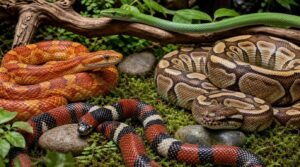
Picking the right snake comes down to more than just looks — temperament, size, and care needs all play a role. The good news is that several species check every box for beginners and experienced keepers alike.
Here’s what to look for when choosing your ideal calm companion.
Beginner-Friendly Temperaments
Corn snakes and ball pythons are genuinely forgiving — consistent Handling Frequency builds trust fast. Kenyan sand boas stay calm when Temperature Stability and Enclosure Enrichment are dialed in. A steady Feeding Routine keeps Stress Indicators low across all these non-venomous snake species, making human-snake coexistence feel natural from day one.
Safe Handling Tips
Good handling habits make all the difference. Always use both Support Hands to keep your snake steady — one under the mid-body, one near the tail.
A Quiet Environment reduces Stress Indicators fast.
Wash your hands before and after; Hand Hygiene matters more than most beginners expect.
Use Handling Tools like a snake hook to guide nervous snakes safely out.
Non-Venomous Identification
Knowing how to tell a non-venomous snake from a venomous one builds real confidence. Head Shape is a key starting point: a rounded head usually indicates safety. Next, observe Pupil Shape—round pupils serve as a reliable behavioral cue.
Color Mimicry can be misleading, so relying on visual patterns alone may lead to errors. A trusted field guide with detailed species identification resources is essential for achieving confident, accurate identification without hesitation.
Enclosure Comfort Needs
Once you’ve identified your snake, setting up the right home makes all the difference.
Temperature Gradient functions like a thermostat buffet: a warm side (88–92°F) and a cooler zone (78–82°F) enable natural thermal regulation.
Pair this with Humidity Regulation, Substrate Hygiene (using aspen or cypress), Hide Distribution, and Ventilation Management to ensure your snake remains calm and comfortable.
Stress Reduction Signs
Watch your snake — it’ll tell you when something’s off. A calm snake moves slowly, eats regularly, and explores without hiding constantly. Stress manifests quickly when the environment is unsuitable.
Stress shows up fast when the environment is wrong:
- Restless, erratic movement instead of calm exploration
- Refusal to eat paired with muscle tension and a rigid, coiled body
- Excessive hissing as defense or tail vibration defense behavior
Fix the trigger, and you’ll fix the snake.
Frequently Asked Questions (FAQs)
Are there any non-venomous snakes that pose no threat?
Many non-venomous snake species pose virtually no threat, and behavioral studies confirm their innate docility—most flee at the sight of humans.
Positive identification and basic wildlife safety tips make human-snake coexistence simple and stress-free.
What snakes are non-aggressive?
Most snakes would rather vanish than to fight.
Species like the corn snake, garter snake, milk snake, eastern hognose snake, and kingsnake all share one trait — a calm behavioral baseline that makes them safe, manageable companions.
Which non-venomous pet snakes are beginner-friendly?
Corn snakes, ball pythons, and kingsnakes top the beginner list. They’re calm, tolerate handling well, and have straightforward habitat requirements, feeding guidelines, and shedding care needs — making non-venomous snake species genuinely approachable for first-time keepers.
What are some non venomous snakes?
Non-venomous snake species vary widely—from the small Common Garter Snake to the striking Milk Snake and Corn Snake. The Common Kingsnake rounds out this diverse group.
Their diversity is shaped by unique habitat preferences and lifespan differences.
What snakes are not aggressive?
Most non-aggressive snakes simply prefer to flee. Species like corn snakes, ball pythons, and garter snakes exhibit low bite likelihood and passive foraging habits — traits that make peaceful coexistence between humans and snakes genuinely achievable.
What is the friendliest species of snake?
The corn snake wins this one, hands down. It’s calm, tolerant of handling, and rarely bites — a perfect mix of docile traits, interaction comfort, and behavioral plasticity.
These qualities make it an ideal choice for beginners, who genuinely appreciate its temperament and ease of care.
Which snake is the calmest?
Most comparative surveys point to the ball python. Its temperament testing shows consistent calm across life stages, and low handling frequency needs make it ideal for relaxed human-snake coexistence.
What are the six types of snakes?
Snakes come in six "ssss"-ential types based on Habitat Zones, Geographic Ranges, Size Variations, Reproductive Modes, and Dietary Preferences — from the Common Garter Snake to the Bull Snake, Ringneck Snake, and Smooth Green Snake.
What types of snakes are non venomous?
Many nonvenomous snake species — from the Eastern Garter Snake to the Ringneck Snake — rely on coloration patterns and predator avoidance rather than venom.
They thrive across habitats through varied feeding ecology and impressive lifespan variation.
Are non venomous snakes dangerous?
Most non-venomous snakes aren’t dangerous, but they’re not risk-free either. Bite Infections, Salmonella Risks, and Constriction Hazards are real — especially with larger species. Respect them, and coexistence stays safe.
Conclusion
Think of fear like a hand-me-down coat — it fits because someone else wore it first, not because it was made for you. Most snake anxiety works exactly the same way. This non-aggressive snake species list exists to help you swap that inherited unease for something better: actual knowledge.
Corn snakes, ball pythons, garter snakes — they were never the threat. Once you see them clearly, the coat stops fitting altogether.