This site is supported by our readers. We may earn a commission, at no cost to you, if you purchase through links.

A baby ball python that won’t eat sends new keepers into a spiral fast. You swap prey, adjust temperatures, Google everything at midnight. The frustration is real.
Here’s the thing: most feeding problems trace back to a handful of fixable mistakes. Ball pythons are predictable once you understand what they need and when they need it.
Once you nail the basics, a solid ball python feeding schedule and diet guide can help you stay consistent and avoid the most common slip-ups.
Getting baby ball python feeding right early sets the tone for years of smooth, stress-free results. Knowing the correct prey size, the right schedule, and how to safely prepare and offer food is what separates confident keepers from constantly second-guessing ones.
Table Of Contents
- Key Takeaways
- Choose The Right Prey for Baby Ball Pythons
- Follow a Baby Ball Python Feeding Schedule
- Prepare and Offer Frozen-Thawed Prey Safely
- Monitor Hunger, Growth, and Digestion
- Troubleshoot Feeding Refusal and Prevent Mistakes
- Frequently Asked Questions (FAQs)
- What is the recommended feeding schedule for baby ball pythons?
- How long after feeding a baby ball python can you handle it?
- What can I feed my baby ball python?
- Should I feed inside or outside the enclosure?
- Can I feed my ball python while its shedding?
- How long can a baby ball python safely fast?
- How many prey items should I offer per session?
- Should I use a separate feeding tub or container?
- Conclusion
Key Takeaways
- Match prey to your snake’s body girth and 10–15% of its weight, stepping up sizes gradually as it grows, since oversized prey causes regurgitation and undersized prey falls short nutritionally.
- Feeding frequency shifts with age and weight: hatchlings eat every 5–7 days, juveniles every 7–10 days, and heavier snakes stretch to every 10–21 days based on weekly weight checks.
- Frozen-thawed whole prey is the safest option—thaw it in the refrigerator or cold water, warm it to 100–110°F, verify with an infrared thermometer, and offer one item per session with tongs.
- Most feeding refusals trace back to fixable causes like wrong temperatures (warm side 88–92°F), recent handling within 24–48 hours, or shedding, so check those first and call a reptile vet if refusal lasts past three weeks.
Choose The Right Prey for Baby Ball Pythons
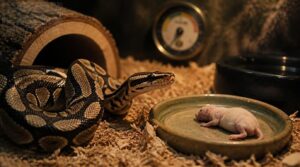
Choosing the right prey is one of the most important decisions you’ll make as a ball python owner. Get it wrong and you risk everything from digestive problems to dangerous injuries. Here’s what you need to know before your snake’s next meal.
Following prey size guidelines for ball pythons helps you avoid the two most common feeding mistakes: offering prey that’s too large and causes regurgitation, or too small to meet your snake’s nutritional needs.
Choose Nutritionally Complete Whole Prey
True whole prey includes fur, head, feet, and organs together in one meal. That’s what delivers complete nutrient coverage, pulling minerals from bone and nutrients from soft tissue.
Whole prey nutritional benefits extend beyond basic nutrition, supplying biologically available minerals, essential fatty acids, and vitamins from organs in their natural ratios.
Before buying frozen-thawed prey, check the ingredients panel. If it doesn’t list organs and bone alongside muscle meat, it isn’t true whole prey. Good prey selection starts with that check.
Compare Mice and Rats
With whole prey confirmed, species is next. For hatchlings, hopper mice are the standard starting prey. They’re small and easy to find.
Once your snake passes 100 grams, it’s time to switch. Rat pups and weanling rats both work. Rats grow bigger and faster than mice, so the prey size jump pays off. The girth match rule guides that call.
Match Prey to Body Girth
The girth match rule is simple: prey width should equal your hatchling’s midsection, not exceed it. Too wide and it won’t pass cleanly.
Watch for these five signs the fit is right:
- Neck stays straight during swallowing
- No head twisting to align prey
- No gaping or yawning mid-swallow
- Snake swallows on the first attempt
- No regurgitation in the hours after
Use The 10–15% Weight Rule
The girth check gives you a visual read, but numbers are more reliable. Weigh your snake first, then multiply by 0.10 and 0.15 to find your target prey weight range.
A 100-gram hatchling needs prey between 10 and 15 grams. Do this weekly as your feeding schedule adjusts. Use a digital kitchen scale, and lean toward 10% when unsure.
Avoid Live-Prey Injury Risks
Live rodents bite back. Even a small mouse can inflict serious wounds on a baby ball python’s face or mouth.
Always use feeding tongs to present live prey, and never walk away during the session. If the prey isn’t taken within 15–30 minutes, remove it. Frozen-thawed prey eliminates this risk entirely and is the safest option for young snakes.
Follow a Baby Ball Python Feeding Schedule

Your baby ball python’s feeding schedule isn’t one-size-fits-all — it shifts as they grow. A hatchling needs food more often than a six-month-old, and a six-month-old eats differently than a year-old snake. Here’s how to time each feeding stage correctly.
0–3 Months: Every 5–7 Days
During the first three months, your hatchling grows fast and needs fuel to match. Offer food every 5–7 days.
As your hatchling puts on weight quickly, checking out ball python hide sizing guides for growing snakes helps you stay a step ahead before your snake outgrows its current setup.
Signs your snake is ready to eat:
- Active tongue-flicking along the glass
- Increased movement after dark
- A slightly hollow midsection
- Restless searching near the enclosure floor
That rhythm keeps energy steady during the most critical growth window.
3–6 Months: Every 7–10 Days
Around three months, your snake’s growth rate starts to level off. That’s your cue to stretch feedings to every 7–10 days.
The feeding schedule shift isn’t random. Digestion needs more time now, and overfeeding a juvenile can stress the gut. Watch body condition closely. A slightly firm midsection after meals is normal. Bloating is not.
Stick with fuzzy mice or rat pups matching that 10–15% body weight rule.
6–12 Months: Every 7–10 Days
The 7-10 day interval doesn’t change at six months, but your snake does. By now, it’s settling into a steadier metabolic rhythm, so consistent spacing between meals matters more than ever. Rat pups are your go-to prey at this stage. They deliver the right nutrition as your juvenile pushes toward 200-300 grams.
Adjust Frequency by Body Weight
Weight is a better guide than age. Your snake’s body tells you exactly when to adjust. Check these five weight-based feeding intervals:
- Under 300g: offer prey every 5 days
- 300–500g: space meals 7–10 days apart
- 500–900g: feed every 10–14 days
- 900–1400g: maintain a 10–14 day schedule
- Over 1400g: extend to every 14–21 days
Weigh weekly. Adjust as your snake grows.
Increase Prey Size Gradually
Think of prey sizing as a staircase, one step at a time.
Prey size should match your snake’s body girth, not just its age. Use the 10-15% body weight rule to keep meals proportional.
| Snake Weight | Prey Size |
|---|---|
| Under 100g | Pinky mouse |
| 100-250g | Fuzzy mouse |
| 250-500g | Small rat pup |
| 500g+ | Medium rat pup |
Step up one size every 2-3 feedings.
Prepare and Offer Frozen-Thawed Prey Safely
Frozen-thawed prey is the safest choice for your baby ball python, but how you prepare it matters just as much as what you feed. A poorly thawed or incorrectly warmed mouse can cause serious digestive problems or even injure your snake. Here’s exactly how to do it right, step by step.
Thaw Prey in Refrigerator
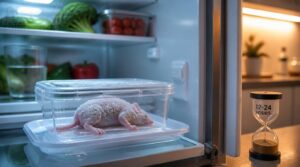
Refrigerator thawing is always the safest way to defrost frozen-thawed prey. Place prey in a container and set it on the bottom shelf for 12–24 hours before your feeding session. For best results, stock up on quality frozen feeder mice for ball pythons so you always have a thaw-ready meal waiting in the fridge before feeding day.
- Use a clean container with a lid.
- Keep prey on the bottom shelf only.
- Catch any juices that leak during thawing.
- Feed your snake right after it’s fully thawed.
Use a Cold-Water Bath

No time for overnight thawing? A cold-water bath is a faster backup. Seal the frozen prey tightly in a zip-lock bag, then submerge it in cold water under 70°F. Swap the water every 15–20 minutes so it stays consistently cold. Most small prey thaws fully in 30–60 minutes.
Never use warm water. It promotes bacterial growth on the prey’s surface.
Warm Prey to 100–110°F

Once thawed, the prey needs warming before your snake will eat it. Ball pythons sense heat through their labial pits, and cold prey won’t trigger a strike.
The safest approach:
- Seal the prey in a zip-lock bag
- Submerge in 100–110°F warm water
- Hold for 10–15 minutes
- Remove and pat dry before offering
Skip the microwave. It creates dangerous hot spots.
Verify Temperature Before Feeding

After warming, verify surface temperature with an infrared thermometer. Aim for 100-110°F. Your prey thawing method and ambient temperatures both affect the final reading. Prey below 95°F won’t support your snake’s digestion temperature.
| Check | Target |
|---|---|
| Infrared thermometer read | 100-110°F |
| Wrist drop test | Warm, not hot |
| Below 95°F | Rewarm before offering |
| Above 110°F | Burns risk |
Present Prey With Feeding Tongs

Once your prey hits 100-110°F, pick up your feeding tongs and grip the midsection firmly. Hold it headfirst, at the snake’s eye level. Keep your movements slow and steady:
- Present prey headfirst near the snake’s strike zone
- Stay at least 12 inches from the head
- Pause and reoffer if the snake hesitates
- Clean tongs with hot soap after each feeding
Monitor Hunger, Growth, and Digestion

Feeding your baby ball python is only half the job — knowing what to watch for afterward is just as important. Your snake will give you clear signals about hunger, comfort, and health if you know where to look. Here are five key things to track.
Recognize Evening Hunger Cues
Ball pythons are naturally nocturnal, so evening hunger cues usually show up around dusk. Watch for your snake leaving its hide and actively tracking scents along the floor. A snug, well-placed ball python hideout cave gives your snake the security it needs to rest during the day, so it’s more active and alert when dusk rolls around.
Nocturnal feeding matches these natural rhythms well. If your snake stretches forward or follows prey movement closely, it’s ready. A snake staying curled and hidden is almost always saying no.
Feed in Quiet, Dim Conditions
Once your snake gives those evening hunger cues, the setup matters as much as prey size and technique. Keep three things consistent before every meal:
- Dim the lights to near-darkness
- Silence the room: TV off, voices low
- Remove other pets and foot traffic
Quiet, dim conditions cut feeding refusal and help your snake stick to a consistent nocturnal feeding schedule.
Avoid Handling for 24–48 Hours
Your snake needs complete rest after a frozen-thawed meal. Leave it alone for 24-48 hours or risk regurgitation. That directly damages the esophagus and creates feeding aversion, meaning it may refuse prey at the next session.
| Time After Feeding | Handle? |
|---|---|
| 0–24 hours | No |
| 24–48 hours | Use caution |
Always stick to this rule, regardless of prey size, feeding frequency, or technique.
Weigh Your Snake Weekly
When you weigh your snake weekly, always pick the same day and use a gram-accurate scale. Log these four things for solid body weight monitoring:
- Date and hatchling weight in grams
- Whether the snake accepted prey
- Prey weight offered
- Any refusals, sheds, or regurgitations
Weight tracking done consistently over several weeks turns raw numbers into a real growth monitoring picture.
Track Shedding and Body Condition
Shedding tells you a lot. Baby ball pythons shed every 4-6 weeks in year one. A clean, one-piece shed signals proper hydration and humidity levels.
| Shed Sign | Meaning | Action |
|---|---|---|
| Cloudy eyes | Pre-shed phase | Boost humidity |
| One-piece shed | Healthy condition | Log date |
| Retained shed | Low humidity | Check enclosure |
Log each shed date alongside your weekly weight data to spot growth trends.
Troubleshoot Feeding Refusal and Prevent Mistakes

Feeding refusal is one of the most common frustrations for new ball python owners, but it’s almost always fixable once you know where to look. Most problems trace back to a handful of specific causes — and most mistakes are just as easy to avoid once you’re aware of them. Here’s what to check and correct when your snake won’t eat.
Check Enclosure Temperatures First
Before blaming your baby ball python for refusing food, check the temperatures first.
The warm side ambient should sit between 88-92°F, and the basking spot surface needs to hit right around 100°F. Use a temperature gun for accuracy. Stick-on thermometers can easily mislead you.
If either reading is off, your snake’s metabolism stalls, digestion slows, and hunger signals simply disappear.
Retry After an Appropriate Interval
Once temperatures check out, don’t rush back the next day. Remove any uneaten prey right away and give your baby ball python 5 full days before trying again. Pushing too soon only adds stress.
For hatchlings refusing after their first shed, offer food every 5-6 days for up to two weeks. If nothing changes by then, call a reptile vet.
Avoid Overfeeding and Underfeeding
Both mistakes are easy to make. Overfeeding causes unhealthy weight gain; underfeeding leaves hatchlings too thin.
Watch for these signs your feeding schedule is off:
- Visible fat rolls mean prey size is too large
- Exposed spine or ribs signal underfeeding
- Hatchling feeding frequency stays at every 5-7 days
- Prey must never exceed your snake’s widest body point
- A 10% weight drop needs attention fast
Skip Calcium and D3 Supplements
Whole prey is already nutritionally complete. Bones supply calcium, and organs deliver vitamin D3 naturally.
That means calcium powder and vitamin D3 supplements don’t belong in a healthy feeding schedule. Over-supplementing D3 is genuinely dangerous, causing hypercalcemia that harms the kidneys and liver.
Over-supplementing D3 causes hypercalcemia, making extra vitamins more dangerous than skipping them
Stick to correctly sized prey from a reputable source, and your snake gets everything it needs without any extras.
Call a Reptile Veterinarian
When feeding refusal stretches past three weeks, or you spot regurgitation, digestive issues, or early signs of mouth rot, call a reptile veterinarian right away. Don’t wait.
Not every vet treats reptiles, so call ahead and confirm their experience. The Association of Reptile and Amphibian Veterinarians offers a free "Find A Vet" tool to locate a qualified specialist nearby.
Frequently Asked Questions (FAQs)
What is the recommended feeding schedule for baby ball pythons?
Slow and steady wins the race. Your feeding schedule starts at every 5–7 days for hatchlings, then shifts to every 7–10 days around month three. Adjust feeding frequency as your snake grows and gains weight.
For a full breakdown of portions and timing as your snake grows, this hatchling mouse sizing and feeding schedule guide covers everything from thawing prep to weight-based adjustments.
How long after feeding a baby ball python can you handle it?
Wait 48 to 72 hours after your baby ball python eats before you pick it up. Handling too soon causes stress and can trigger regurgitation, which delays the next feeding and slows the snake’s recovery.
What can I feed my baby ball python?
Yes, baby ball pythons can be picky divas. Feed frozen-thawed prey like pinky or hopper mice, sized to your snake’s girth. Match prey size carefully, and follow a consistent feeding schedule for healthy growth.
If your hatchling still turns up its nose after a few weeks, a guide to what baby corn snakes eat can help you troubleshoot feeding problems.
Should I feed inside or outside the enclosure?
Feed inside the enclosure. Babies feel secure in familiar surroundings, eat more reliably, and you avoid stressful transfers that cause feeding refusal. Use feeding tongs and a consistent routine, and always prioritize feeding safety during prey presentation.
Can I feed my ball python while its shedding?
You can, but it’s best to wait. Most ball pythons refuse prey while shedding, and feeding during shed raises regurgitation risk. Resume your normal schedule 1–2 days after the shed finishes.
How long can a baby ball python safely fast?
A baby ball python can safely fast about 1–2 weeks, matching its normal feeding interval. Beyond that, monitor weight and body condition closely, since younger growth stages tolerate fasting behavior far less than adults do.
How many prey items should I offer per session?
Some keepers believe multiple small prey items equal one big meal. They don’t. Offer exactly one prey item per session, sized to 10–15% of body weight. Multiple items cause regurgitation and obesity, so stick to one per feeding.
Should I use a separate feeding tub or container?
You can, but it’s optional. Many keepers feed inside the enclosure, which reduces handling stress. If you use a separate feeding tub, choose a clear, BPA-free container and clean it after every meal.
Conclusion
The thermostat you set tonight is really a promise. It says you’ll show up with the right prey, on the right schedule, every single week.
This ball python feeding guide for babies only works when you apply it with patience and consistency. Skip shortcuts. Weigh weekly. Trust the routine.
Do that, and your hatchling grows into a calm, healthy adult who eats like clockwork. That’s the keeper’s promise, kept.