This site is supported by our readers. We may earn a commission, at no cost to you, if you purchase through links.

You glance over at your ball python and catch it opening its mouth in a slow, dramatic stretch — then it closes up and goes about its business like nothing happened. Completely normal, or cause for concern?
Ball python yawning is one of those behaviors that looks alarming the first time you see it, but usually signals something mundane: a jaw reset, a sensory check, or simple post-meal relief. The tricky part is that open-mouth breathing — a genuine red flag — can look deceptively similar to an innocent yawn if you don’t know what separates them.
Knowing the difference could mean catching a respiratory infection early, or saving yourself an unnecessary vet visit. Both outcomes matter.
Table Of Contents
- Key Takeaways
- What is a Ball Python Yawn?
- Is Ball Python Yawning Normal?
- Why Ball Pythons Yawn
- Yawning Versus Breathing Problems
- Health Issues Linked to Yawning
- Check Your Ball Python’s Habitat
- When to Call a Reptile Vet
- Frequently Asked Questions (FAQs)
- Do snakes yawn when they are comfortable?
- Do ball pythons yawn when stressed?
- Why is my ball python yawning?
- How can you tell if a ball python is yawning?
- Is my ball python stressed?
- Are ball pythons aggressive?
- Why is my ball python hiding all the time?
- Does a ball python have a relaxed S shape?
- What does it mean when a ball python yawns?
- Why is my ball python opening her mouth?
- Conclusion
Key Takeaways
- A ball python yawn is a brief, silent jaw stretch lasting just a second or two, driven by normal needs like jaw realignment, muscle stretching, air scenting, or feeding prep.
- The key difference between a harmless yawn and a health problem is duration and sound — open-mouth breathing that lingers, wheezes, or comes with mucus is a red flag, not a reset.
- Yawning linked to illness often points to respiratory infection, mouth rot, or serious conditions like Inclusion Body Disease, especially when paired with lethargy, nasal discharge, or food refusal.
- Your snake’s enclosure — humidity, temperature gradient, cleanliness, and stress triggers — directly affects how often and why it yawns, making habitat checks your first line of defense.
What is a Ball Python Yawn?

If you’ve ever watched your ball python open its mouth wide and stretch its jaw slowly, you probably wondered whether something was wrong. That behavior is actually a yawn — and it looks a little different from what you might expect. Here’s what to look for when identifying a true ball python yawn.
Knowing the difference matters, since mouth gaping paired with wheezing or stargazing can signal something far more serious than a simple yawn.
Wide Mouth Opening
A ball python yawn involves a wide mouth opening that can look startling the first time you see it. The jaw stretches dramatically, exposing the full gape in one smooth motion.
Unlike human yawning, this behavior reflects jaw mobility mechanics — flexible bones without a fused chin allow an impressive incisor distance far beyond what any clinical mobility assessment would flag as normal.
Slow Jaw Stretch
What you’re actually watching during a ball python yawn is a slow jaw stretch — a deliberate, controlled movement that works through the full range of the jaw’s flexibility.
The motion follows a natural stretching tempo: gradual opening, a brief pause at peak extension, then a smooth return. This tension release resets the muscles and helps maintain long-term jaw flexibility without any strain.
Normal Body Posture
During a yawn, the rest of your snake’s body tells just as much as the jaw. Resting coil distribution stays loose, and ventral scale contact spreads evenly across the floor.
Watch for these signs of healthy posture:
- Head level with the spine
- Neck straight, no kinking
- Coils relaxed, not bunched
- Natural body silhouette, elongated
Neck alignment norms stay undisturbed throughout.
Brief Behavior Pattern
The whole sequence wraps up fast — jaw stretch duration rarely exceeds a second or two. Python regius body language stays consistent throughout: relaxed posture, no sudden coiling or defensive posturing.
Brief yawning sequence, repeated naturally across days, is simply normal movement patterns at work. If it looks unhurried and calm, you’re watching natural behaviors, not a warning sign.
Is Ball Python Yawning Normal?
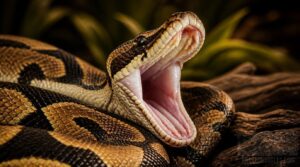
Yes, ball python yawning is usually completely normal — and pretty common once you know what to look for. There are actually several everyday situations where a yawn is just your snake doing its thing, not sending you an alarm signal. Here are the most typical ones you’ll notice.
Occasional Yawning
Seeing your ball python yawn once in a while is completely normal. Occasional yawning isn’t a red flag — it’s just part of natural Python regius behavior.
This reflex may help with equalizing ear pressure during various physiological changes.
Watch for these calm, healthy signs:
- The yawn lasts only a few moments
- Your snake resumes normal movement afterward
- No wheezing or clicking sounds follow
- Body posture stays relaxed throughout
- It happens infrequently, not repeatedly
After Resting
Right after waking up, your ball python may stretch its jaw wide open — and that’s perfectly fine. This post-rest yawning follows a simple rhythm: brief stretch, then stillness, then calm.
The jaw closes quickly, muscle tone relaxes, and your snake returns to its normal resting posture within moments. No open-mouth breathing follows. It’s a reset, not a warning.
Before Feeding
Watch your ball python closely at feeding time — that wide jaw stretch isn’t random. Scent-driven yawning is a recognized part of the feeding sequence:
- Prey scent detection triggers anticipatory mouth movements before any strike
- The jaw opens briefly as a feeding posture cue
- The snake refocuses toward food immediately after
This body language signals readiness, not clear signs of illness.
Watch for active evening exploration and tongue-flicking, which are healthy behavioral cues covered in detail within these ball python cage setup and care tips.
After Eating
After your ball python swallows its prey whole, a brief yawn often follows soon after. This is jaw relaxation — the mouth quietly resetting after an extreme stretch. During digestion downtime, your snake shifts into a calm resting posture and may yawn once as part of that swallowing process. This post-meal settling is completely normal and not a sign of illness.
| Behavior | Normal After Eating | Reason to Monitor |
|---|---|---|
| Mouth opening | One brief, quiet yawn | Repeated gaping with no pause |
| Body posture | Calm coil, still and settled | Wobbling or constant repositioning |
| After the yawn | Mouth closes, snake rests | Open-mouth breathing continues |
During Exploration
Snakes don’t just explore — they read the air.
- Slow jaw stretch before entering new substrate
- Mouth opens briefly near scented hides
- Relaxed body posture, no signs of distress
During exploration, sensory arousal drives yawning. The snake opens its mouth to help Jacobson’s organ detect chemical cues. Brief, calm yawns followed by normal movement are healthy investigative behavior.
Why Ball Pythons Yawn

Ball pythons yawn for several reasons, and most of them are completely routine. Understanding what’s behind each one helps you tell the difference between a snake that’s simply going about its day and one that might need your attention. Here are the main reasons your ball python opens wide.
Jaw Realignment
A ball python’s jaw isn’t fused like yours — it’s held together by flexible ligaments that shift during feeding. Jaw realignment after a yawn is basically the snake resetting its jaws back to their normal resting position, restoring condylar positioning so the bite contact sits evenly again.
Think of it as a natural recalibration. That wide, slow stretch isn’t random — it’s functional.
Muscle Stretching
That wide stretch does more than reset bones — it’s muscle maintenance too. The yawn pulls jaw muscles through their full range of motion, boosting blood flow and relieving tightness built up during long rest periods.
- Increased blood flow to jaw muscles
- Reduced post-rest stiffness
- Maintained ligament flexibility
- Sharper alertness after inactivity
- Long-term musculoskeletal health support
Air Scenting
There’s another reason your ball python opens its mouth wide — and it has nothing to do with bones or muscles. That gaping motion helps funnel air toward the Jacobson’s organ, a sensory structure on the roof of the mouth that "reads" chemical signals in the environment.
Think of it as your snake tasting the air to map its surroundings.
Your ball python opens wide not to yawn, but to taste the invisible map of its world
Feeding Preparation
That pre-feeding yawn isn’t random. Your ball python is physically preparing its jaw to swallow its prey whole — loosening ligaments before a meal the way you might stretch before a workout.
Here’s what helps guarantee a smooth feeding response:
- Thaw prey fully so no cold centers disrupt the strike
- Use feeding tongs to present prey naturally
- Sanitize feeding tools and minimize nearby distractions beforehand
Post-Meal Reset
After swallowing prey whole, your ball python has just done something physically demanding — and its jaw knows it. A post-meal yawn helps reset the jaw to its normal resting position after that extreme stretch.
You’ll likely notice your snake settle quietly, moving very little. That stillness isn’t worrying — digestion needs energy, and your python is directing it inward rather than outward.
Yawning Versus Breathing Problems
Not every wide-open mouth means something is wrong, but some signs are worth paying closer attention to. Knowing the difference between a harmless yawn and a breathing problem can make a real difference for your snake’s health.
Watch for these five red flags that go beyond a normal stretch.
Open-Mouth Breathing

A yawn ends in seconds. Open-mouth breathing doesn’t.
If your ball python keeps its mouth open between those brief stretches, that’s a different signal entirely. Airway stability is compromised when a snake breathes this way — air routes through the mouth because the respiratory tract is struggling.
Watch for oral dryness or visible saliva alongside the open mouth, as both suggest respiratory distress worth taking seriously.
Wheezing or Clicking

Sound tells a story. When your ball python yawns silently, that’s normal. When you hear a high-pitched whistle or click during breathing, airways are narrowing — airflow turbulence creates that sound mechanically, like air forced through a pinched straw.
Monophonic wheezing often surfaces on exhalation. That’s your clearest signal: a respiratory infection is likely squeezing those airways shut.
Mucus or Bubbles
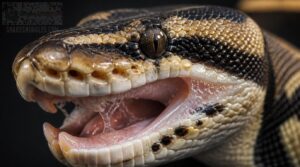
Look closely at your ball python’s mouth. Stringy or bubbly saliva signals real trouble — mucus shouldn’t foam.
Watch for:
- Frothy secretions near the throat
- White, thick mucus clinging to the jaw
- Bubbles that reappear after wiping
- Open-mouthed breathing with visible slime
Mucus color and texture both matter here. Thicker secretions trap air, creating foam — a clear respiratory infection warning sign.
Raised Head Posture

A brief yawn ends fast — the head drops back down within seconds.
But persistent head elevation after the mouth closes is a different story. When the neck stays extended and the cervical area remains lifted long after yawning stops, that sustained posture often signals difficulty breathing, not a harmless stretch.
Nasal Discharge
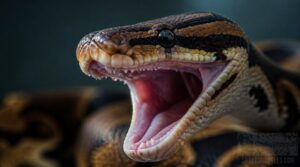
Mucus around the nostrils — especially thick, discolored discharge — pairs with yawning as a red flag worth watching closely.
- Clear and watery may suggest allergies or early infection
- Yellow or green signals bacterial respiratory infection
- One-sided discharge often points to a localized irritant
- Persistent clear discharge after trauma warrants urgent veterinary attention
Discharge alongside open-mouthed breathing means a respiratory problem, not a stretch.
Health Issues Linked to Yawning
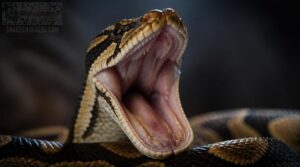
Sometimes yawning isn’t just stretching — it’s your ball python’s way of signaling that something’s off. A few health conditions can trigger frequent or unusual yawning, and knowing what to watch for makes all the difference. Here are the key issues worth understanding.
Respiratory Infection
Yawning that won’t stop — especially alongside open-mouthed breathing — often signals a respiratory infection. Airway inflammation forces your snake to hold its mouth open just to move air through narrowed passages.
Lung involvement escalates this quickly, turning labored ventilation into serious respiratory decline.
| Symptom | What It Signals |
|---|---|
| Open-mouth breathing | Swollen or blocked airway |
| Wheezing or clicking | Narrowed air passages |
| Frothy mucus | Fluid accumulation in airways |
| Raised head posture | Repositioning for easier airflow |
| Nasal discharge | Upper respiratory irritation |
High microbial load from a dirty enclosure speeds this decline. If these signs of illness last more than two days, contact a reptile vet.
Mouth Rot
Respiratory infections can sometimes open the door to something worse. When bacteria enter through a small mouth wound — often invisible at first — mouth rot can take hold. Stress weakens your snake’s immune defenses, letting bacteria multiply and cause necrotic tissue damage in the oral cavity.
You may notice pus, swelling, or your snake rubbing its mouth on objects. A vet will clean the infection and prescribe antibiotic injections.
Regurgitation Warning Signs
Mouth rot isn’t always the end of the problem. Sometimes a snake that’s been unwell will start bringing food back up — regurgitation — which can look a lot like yawning because the mouth opens wide and stringy mucus appears around the jaw.
If it happens after a meal, wait at least two weeks before offering food again. Repeated regurgitation is a clear sign something’s wrong.
Inclusion Body Disease
Inclusion Body Disease (IBD) is one of the most serious diagnoses a ball python can receive. Caused by reptarenaviruses, it targets epithelial cells across the respiratory tract, oral cavity, and beyond — meaning the damage spreads wide.
What makes IBD especially grim is that there’s no cure. Watch for stargazing, disorientation, and lethargy alongside open-mouthed breathing. Those signs together demand immediate veterinary attention.
Secondary Infections
IBD rarely travels alone. When your ball python’s immune system crashes, it opens the door to opportunistic pathogen growth — bacteria and fungi that wouldn’t normally cause problems suddenly can.
Microbial balance disruption lets secondary mouth rot or respiratory infections layer on top of the primary illness, making recovery harder. Even antibiotic treatment carries risk, sometimes worsening the imbalance it’s trying to fix.
Check Your Ball Python’s Habitat
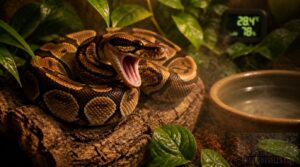
Sometimes the fix isn’t medical — it’s environmental. Your ball python’s habitat plays a bigger role in its health than most people realize, and a few small adjustments can make a real difference. Here’s what to check inside the enclosure.
Humidity Levels
Relative humidity in a ball python’s enclosure matters more than most owners expect. Aim for 60–80% during the day and 80–100% at night.
A calibrated hygrometer is your best tool here — uncalibrated sensors can mislead you by 10–15%. Seasonal fluctuations affect indoor moisture, so check readings more often in winter. Low humidity stresses airways; excess moisture risks mold growth on substrate and hides.
Temperature Gradient
Ball pythons can’t generate their own body heat, so your enclosure needs a warm side and a cool side — usually 88–92°F on the warm end and 75–80°F on the cool end.
This thermal regulation lets them move between microhabitats to control their own temperature. Without that gradient, thermoregulation breaks down, and stress-related yawning becomes more likely.
Clean Enclosure
A dirty enclosure is one of the fastest ways to compromise your snake’s immune system. Waste buildup breeds bacteria that trigger respiratory stress — the same kind that causes excessive yawning.
Choose tanks with smooth, non-porous surfaces and sealed door designs that don’t trap grime. Sloped interiors help liquids drain off instead of pooling. Spot-clean daily, deep-clean weekly.
Fresh Water Access
Your ball python’s water dish does more than quench thirst — it’s a quiet health checkpoint.
Keep an eye on:
- Dish placement away from heat sources
- Water cleanliness — replace, don’t top off
- Refill frequency during warmer months
Evaporation happens fast in warm enclosures, so check daily. Cloudy or contaminated water can stress your snake and mask early illness signs.
Stress Triggers
Stress is quieter than sickness, but it shows up in behavior just the same. Frequent handling, loud disturbances, sudden layout changes, or strong odors near the enclosure can all trigger yawning and hiding.
Even irregular lighting disrupts your snake’s sense of safety. When stress builds, feeding stops — and that’s your first real warning sign to slow down and reassess the environment.
When to Call a Reptile Vet

Some yawning is perfectly normal, but there are clear moments when it’s time to stop guessing and get a professional involved. Knowing those moments can make a real difference for your snake’s health. Here’s what should prompt you to pick up the phone and call a reptile vet.
Frequent Repeated Yawning
One or two yawns? Perfectly fine. But frequent repeated yawning — several times within an hour — is a different signal entirely.
Watch for:
- Yawning paired with restlessness or circling
- Yawning after recent environmental changes
- Yawning alongside disrupted sleep patterns
When yawning clusters without an obvious trigger like feeding or exploration, that pattern warrants a vet call.
Symptoms Lasting Days
Frequent yawning is one thing, but when symptoms stretch across multiple days, the concern level rises sharply.
Open-mouth breathing, excessive yawning, or behavioral decline that doesn’t clear up within a day or two signals something your snake can’t shake on its own. Track how long you’ve been observing it — duration matters as much as the symptom itself.
Refusing Food
Food refusal that outlasts a missed meal or two deserves attention. If your python shows jaw grip issues, turns away repeatedly, or won’t complete a strike, pair that with your symptom timeline.
Thawing temperature errors and prey scent mismatch explain many refusals — but when illness is already present, skipping meals signals your vet visit can’t wait.
Lethargy or Disorientation
Missing meals is one concern — but a python that barely moves or seems lost in its own enclosure sits on a different part of the consciousness spectrum entirely.
Watch for:
- Altered mental status — glassy eyes, no response to touch
- Slow, disorganized movements when stimulated
- Disorientation, like circling or "stargazing"
These signal your vet call can’t wait another day.
Preparing Health Notes
When you finally call the vet, what you say matters. Before that call, jot down timestamp and behavior details — when yawning happened, how often, and what your python was doing beforehand.
| What to Log | Why It Matters |
|---|---|
| Date and time | Tracks pattern timing |
| Yawn frequency | Separates normal from concerning |
| Feeding context | Links behavior to meals |
| Humidity and temperature | Flags husbandry triggers |
| Additional symptoms | Guides veterinary diagnosis |
Your notes become your snake’s voice.
Frequently Asked Questions (FAQs)
Do snakes yawn when they are comfortable?
Yes, snakes do yawn comfortably. Relaxed jaw movements after basking or post-rest stretching signal a content snake. A slow, unhurried spread with calm breathing and stable enclosure signals means everything’s fine.
Do ball pythons yawn when stressed?
Stress can absolutely trigger yawning in ball pythons. Handling stress responses, sudden moves, loud noises, or routine changes may cause it. Give your snake environmental acclimation time and adequate hides to feel secure.
Why is my ball python yawning?
Think of it like a morning stretch — your snake is realigning its jawbone flexibility, boosting muscle blood flow, or activating its Jacobson’s organ to scent the air. Most yawning is completely normal.
How can you tell if a ball python is yawning?
A ball python yawn is a quick, wide jaw drop lasting just a second or two. The head tilts slightly upward, the tongue may flick out, and the snake calmly returns to rest.
Is my ball python stressed?
A calm snake can still be quietly struggling. Frequent handling, sudden enclosure changes, or a missing hide can push your python toward stress — often long before any visible warning sign appears to alert you.
Are ball pythons aggressive?
No, ball pythons aren’t aggressive by nature. What looks like aggression is usually defensive behavior — a stress response to feeling threatened. With calm, consistent handling, most become quite relaxed companions.
Why is my ball python hiding all the time?
Like a cat retreating under the bed, your ball python hides because it feels safest tucked away. New environment adjustment, improper temperatures, shedding cycles, or digestion energy conservation after meals are the most common reasons.
Does a ball python have a relaxed S shape?
Yes, a relaxed ball python naturally holds a gentle S-shaped curve as it moves. The coils stay loose, with visible gaps between curves, and muscle tone remains even rather than rigid or tightly pressed.
What does it mean when a ball python yawns?
That slow, wide-mouthed stretch isn’t alarming. Your snake is likely realigning its flexible jawbones, boosting muscle blood flow, sampling the air through its Jacobson’s organ, or simply preparing its jaw for swallowing prey.
Why is my ball python opening her mouth?
When your ball python opens her mouth, she’s likely jaw stretching or scenting. It could also be stress or feeding prep. Watch for wheezing or mucus — those signal illness, not normal behavior.
Conclusion
Picture a tiny snake sommelier — sniffing the air, resetting its jaw, tasting the world one slow stretch at a time. A ball python yawn is rarely a crisis. It’s biology doing quiet, routine work.
What matters is learning to read the difference: brief and relaxed means nothing to worry about; persistent, labored, or paired with mucus means something’s wrong. Trust your observations, keep the habitat dialed in, and your snake will tell you the rest.
- https://www.wilbanksreptiles.com/blogs/ball-pythons/common-ball-python-health-issues-and-how-to-prevent-them
- https://treeoflifeexotics.vet/education-resource-center/for-clients/snakes/respiratory-infections-in-snakes
- https://www.reptiles.swelluk.com/help-guides/how-long-can-a-snake-live-with-a-respiratory-tract-infection