This site is supported by our readers. We may earn a commission, at no cost to you, if you purchase through links.

A sick snake doesn’t need much. Or so it seems. The truth is that sick snake housing done wrong can turn a manageable respiratory infection into something far more serious, faster than most owners expect.
Reptiles are masters of concealment. By the time your ball python stops eating or your corn snake spends days soaking in the water bowl, the illness has usually been progressing for a while. The enclosure you set up right now becomes either a recovery room or an obstacle.
Getting the setup right isn’t complicated, but the details matter more than you’d think.
Table Of Contents
- Key Takeaways
- Set Up a Safe Hospital Enclosure for Your Sick Snake
- Maintain Species-Appropriate Temperature and Humidity
- Minimize Lighting, Handling, and Stress During Recovery
- Clean, Disinfect, and Isolate The Sick Snake’s Enclosure
- Monitor Recovery and Contact a Reptile Veterinarian When Needed
- Frequently Asked Questions (FAQs)
- How to tell if a snake is unwell?
- What is the most common cause of death in snakes?
- What should you put in a snake habitat?
- How to take care of a sick snake?
- Do you have to keep a snake in an enclosure?
- How do I create a safe home for my scaly snake?
- How do you care for a snake enclosure?
- How long should a snake enclosure be?
- What is snake Haus?
- How do I keep snakes out of my house?
- Conclusion
Key Takeaways
- Switch your sick snake to paper towel substrate immediately — it dries fast, shows waste clearly, and won’t irritate already-compromised skin the way loose particulate will.
- Temperature isn’t just comfort; it’s medicine — a proper warm-to-cool gradient lets your snake self-regulate its immune response without any help from you.
- Disinfection only works in the right order: scrub out all organic matter first, then apply a reptile-safe solution (diluted bleach 1:10, F10SC, or chlorhexidine), let it sit for 10 minutes, rinse thoroughly, and dry completely.
- Open-mouth breathing, continued appetite loss after several days, or any rapid decline means stop waiting and call a reptile vet — some conditions escalate faster than careful husbandry alone can reverse.
Set Up a Safe Hospital Enclosure for Your Sick Snake
When your snake is under the weather, the first step is getting its housing right. A good hospital enclosure setup doesn’t require anything fancy, just a few key elements that prioritize security, cleanliness, and your snake’s comfort. Here’s what you’ll need to pull it together.
Before gathering supplies, brushing up on snake cage design fundamentals will help you adapt any enclosure to meet a sick snake’s specific needs.
Enclosure Size and Security
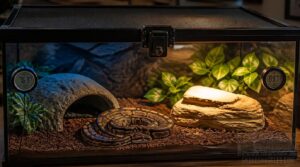
A sick snake needs a secure enclosure sized to allow full extension while keeping warm and cool zones within reach. Too much floor space forces a weakened animal to travel farther than it should.
Inspect every seam, corner, and lid for gaps; grip strength declines during illness, raising escape risk. Escapeproof lids with a backup latch prevent single-point failures.
Substrate, Hides, and Water
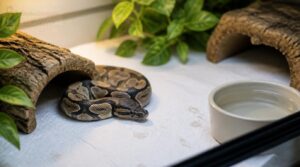
Once the enclosure is escape-proof, swap any particulate substrate for paper towel or newsprint. It dries fast, shows waste clearly, and won’t abrade already-irritated skin.
For more on balancing cleanliness with comfort, snake enclosure substrate and housing reviews cover how different setups hold up when your snake needs a low-stress recovery space.
Give your snake one snug hide per thermal zone; an oversized hide goes unused. Keep hides dry. Damp hollows become pathogen traps.
Change the water bowl daily and choose a smooth-sided dish to reduce biofilm buildup.
Maintain Species-Appropriate Temperature and Humidity
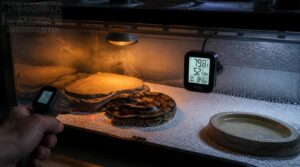
Temperature and humidity aren’t just comfort settings for a sick snake — they’re active parts of the treatment plan. Getting these two factors right means your snake can thermoregulate, support immune function, and shed cleanly without added stress.
For a sick snake, temperature and humidity are not comfort settings — they are medicine
Here are the two areas to nail down first: thermal gradient setup and humidity and ventilation.
Thermal Gradient Setup
The temperature gradient is one of the most powerful recovery tools you can offer a convalescing snake. It’s exactly how they’ll thermoregulate without your help.
For practical guidance on dialing in the right warmth zones, this snake basking spot temperature guide walks you through exactly what a recovering snake needs to self-regulate effectively.
- Push undertank heaters or a basking spot to one end
- Warm beach on one side, cool retreat on the other
- Use a dedicated thermostat to regulate heat output
- Confirm each zone with a separate probe
Humidity and Ventilation
Just as your thermal gradient gives a sick snake control over heat, humidity and ventilation give it control over hydration and shedding. Place a hygrometer near the resting zone, not beside the water bowl, for accurate, species-appropriate readings.
For a complete setup walkthrough—from thermometer placement to seasonal adjustments—this beginner’s guide to snake housing walks you through every monitoring step in plain language.
If you’re seeing condensation on the walls, ventilation’s too weak. Stagnant, wet conditions delay recovery, so improve airflow before adding more moisture.
Minimize Lighting, Handling, and Stress During Recovery

Recovery thrives in a stress-free environment, which starts with dimming things down. Keep lighting low and indirect; bright hotspots trigger alertness when your snake needs rest. Stick to your normal light schedule only for observation, and keep darkness periods consistent.
Place your quarantine enclosure in a quiet, low-traffic area, away from other pets. Vibrations and visual stimuli from passing animals can push a recovering snake into defensive mode. Make sure it has accessible hiding spots at both ends of the temperature gradient so it can self-regulate without feeling exposed.
Limit visits to necessary checks, moving slowly and predictably. Watch for post-visit agitation; if your snake seems restless after every interaction, the handling itself is likely the stressor.
Clean, Disinfect, and Isolate The Sick Snake’s Enclosure
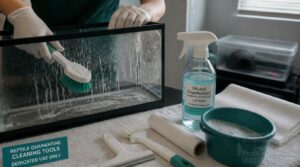
Three rules govern effective disinfection of reptile equipment: remove organic matter first, disinfect second, dry completely third. Feces, shed skin, and uneaten food all inactivate disinfectants, so skipping the scrub makes your effort pointless.
Stick to reptile-safe options: diluted bleach (1:10), F10SC, or chlorhexidine. Let the solution stay wet for at least 10 minutes, then rinse thoroughly. Phenol-based cleaners like Lysol and anything ammonia-based aren’t safe for reptiles.
Your quarantine enclosure should stay in a separate room if possible. Use dedicated cleaning tools for that space only as part of your biosecurity measures, and wash your hands before and after every interaction. For tougher pathogens like crypto, your reptile veterinarian can advise on sterile environment setup using steam or hydrogen peroxide. For a broader overview, refer to these reptile-safe disinfectant options to compare dilution rates and pathogen coverage for each product.
Monitor Recovery and Contact a Reptile Veterinarian When Needed
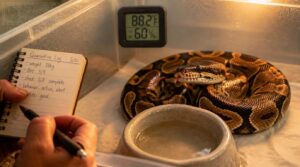
How do you know when your snake is turning a corner? Watch for consistent behavioral changes: returning appetite, active exploration, and normal muscle tone all signal genuine progress. If your snake still isn’t eating after several days, shows open-mouth breathing (a telltale sign of respiratory infection), or seems weaker despite stable conditions, those are your cues to act.
Daily health monitoring throughout the quarantine period doesn’t need to be complicated. Note activity level, breathing pattern, waste output, and water intake each day. A simple log makes trends far easier to spot, and catching a downward shift early can genuinely save a life.
When in doubt, call your reptile veterinarian. Neurological signs, severe dehydration, or any rapid decline means don’t wait.
Frequently Asked Questions (FAQs)
How to tell if a snake is unwell?
Behavioral shifts, labored breathing, retained shed, scale rot, or cheesy oral discharge are all warning signs your snake needs veterinary attention soon.
What is the most common cause of death in snakes?
It often goes invisible until it’s too late to reverse course. Bacterial septicemia tops the list, frequently triggered by a respiratory infection, poor enclosure sanitation, or untreated wounds that slowly escalate into fatal systemic collapse.
What should you put in a snake habitat?
Your snake needs a temperature gradient, two hiding spots, a water bowl large enough for soaking, and substrate. Add digital thermometers and a hygrometer to monitor conditions accurately.
How to take care of a sick snake?
Careful, calm, and consistent care carries your reptile through recovery. Prioritize quarantine protocols and a stress-free environment with a proper temperature gradient. Watch closely for behavioral changes, maintain humidity control, and contact your vet promptly.
Gentle, confident handling also matters during recovery, and our guide to reptile handling for kids shows how even young keepers can help without adding stress.
Do you have to keep a snake in an enclosure?
Yes, always. Even during illness, your snake needs secure, controlled housing to stay safe, regulate temperature, and prevent escape into places you’ll never find them.
How do I create a safe home for my scaly snake?
Florence Nightingale knew that clean, controlled spaces save lives. Your sick snake housing needs a proper thermal gradient (70–95°F), humidity control methods at 50–70%, one hide, fresh water, simple substrate, and a calm stress-free environment.
How do you care for a snake enclosure?
Maintain a thermal gradient with warm and cool sides, keep humidity species-appropriate, provide fresh water, use clean substrate, and minimize disturbances. When something’s off, your snake’s behavior will tell you first.
How long should a snake enclosure be?
Aim for at least twice your snake’s body length. This preserves room for a proper thermal gradient, a hide, and a water bowl without cramping movement or forcing contact with heat sources.
What is snake Haus?
Forget retirement homes for people. Snake Haus is a nonprofit snake rescue in Snohomish, Washington, where two veterinarians care for sick, injured, and abandoned snakes, with a soft spot for giants like boas and pythons.
How do I keep snakes out of my house?
Seal gaps around your foundation, doors, and windows. Remove rodents, trim vegetation, and eliminate standing water that draws prey animals close to your home.
Conclusion
A single wrong degree can undo weeks of careful, deliberate healing. That’s barely an exaggeration.
Proper sick snake housing is genuinely that sensitive, and every detail you get right now directly determines how fast your snake bounces back. Temperature, cleanliness, quiet, and enough space to rest without stress, these aren’t optional extras. They’re the whole game.
You’ve already done the hard part by choosing to learn this. Now stay consistent and let your snake recover.