This site is supported by our readers. We may earn a commission, at no cost to you, if you purchase through links.

A 5°C error is all it takes to turn a healthy snake into a sick one. Too cold, and it stops digesting its meal. Too dry, and it struggles through every shed.
Most keepers buy a tank, drop in a heat lamp, and hope. You can do better. Your snake doesn’t just need a cage. It needs a thermal gradient of 10 to 15°C, humidity held between 40 and 60%, and a hide on each side. That’s the gap between a snake that survives and one that thrives.
This snake environment setup guide walks you through five steps, from species research to weekly latch checks. Start building.
Table Of Contents
- Key Takeaways
- Plan Your Snake’s Species-Specific Habitat
- Choose and Secure The Right Snake Enclosure
- Add Safe Substrate, Hides, Water, and Enrichment
- Set and Test Temperature, Humidity, and Lighting
- Maintain and Troubleshoot Your Snake’s Habitat
- Frequently Asked Questions (FAQs)
- How to set up a snake habitat?
- What 7 scents do snakes hate?
- What is the ideal environment for a snake?
- What should I put at the bottom of my snakes cage?
- How do you build a snake home?
- How do you care for a snake enclosure?
- How do I create a safe home for my scaly snake?
- What is a safe substrate for a snake?
- How do you set a heat pad for a snake?
- How do you keep a snake warm in a terrarium?
- Conclusion
Key Takeaways
- Build a thermal gradient with a warm side at 28–32°C and a cool side at 22–26°C, and put a hide on each side, so your snake can regulate its own body temperature.
- Hold humidity at 40–60% (check your species’ exact range), and treat fogged glass as a ventilation problem, not a sign you need more moisture.
- Pick an escape-proof enclosure sized to your snake’s adult length, with locking latches and a safe substrate like cypress mulch or paper, and skip pine, cedar, and sand.
- Verify everything with probes and hygrometers at both ends for six weeks, then keep up daily spot-cleaning, daily logs, and weekly latch checks so small problems don’t turn into sick animals.
Plan Your Snake’s Species-Specific Habitat
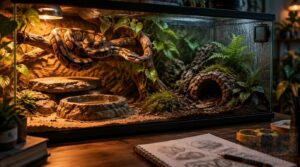
Every snake you’ll ever keep arrives with a blueprint written by evolution, and your job is to read it. Start with species specific needs. A ball python from West African savanna edges doesn’t live like a corn snake from North American woodlands. Do you know your animal’s native temperature range, humidity band, and activity pattern?
Before you buy a heat mat or thermostat, check this ideal temperature and humidity guide for snake terrariums to dial in the exact ranges your species needs.
Thriving snakes get a habitat built on data. Merely surviving snakes get guesswork.
Habitat design begins with research. Note whether your species is nocturnal or diurnal, ground-dwelling, arboreal, or a burrower. Plan for temperature gradients of 10 to 15°C and humidity control that allows daily swings of 10 to 20%.
Then measure your room’s space, noise, light, and airflow. Those numbers will drive enclosure selection.
Choose and Secure The Right Snake Enclosure
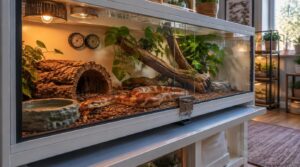
Those numbers you just collected? Now they earn their keep. Enclosure selection starts with your snake’s adult length and habits, not the size it is today.
Choosing the Right Enclosure Type comes down to matching the build to the animal. Terrestrial species need floor space, so go horizontal. Arboreal species need height and anchored branches. A secure footprint of at least 1.5x your snake’s length is a solid baseline for small colubrids.
Snakes test every seam. Prioritize enclosure security:
Because escape attempts often start with small gaps and loose lids, this guide to preventing snake escape behavior walks through sealing common weak points and easing the stress behind them.
- Locking latches or tamper-proof hinges
- Rubber gasket seals that hold humidity steady
- Front-opening doors that limit handling stress
- Removable bottom tray for fast cleaning
Vivarium material matters too. Smooth, sealed surfaces clean easily, while exposed wood rots in humidity. Strong escape prevention keeps your snake safe and your setup stable.
Add Safe Substrate, Hides, Water, and Enrichment
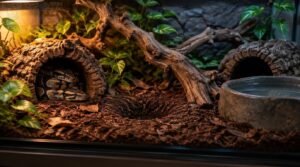
Your secure enclosure is a blank box until you fill it. Now build a naturalistic environment that lets your snake thrive instead of merely surviving.
Start with substrate choices. Go inert and non-abrading, and skip pine and cedar, since their oils irritate respiratory tracts. Pack 2 to 4 inches so your snake can burrow, and keep it dry enough to block mold. Spot-clean spills immediately and replace it weekly.
Add two hiding spots for snakes, one warm and one cool, each snug with a small entrance. Water bowl placement matters: set a heavy dish on the cool side, wide enough for soaking, and change it daily.
Since even nocturnal snakes may benefit from low-intensity UVB, this carpet python care guide is a handy place to check lighting, temperatures, and enclosure setup.
Finish with cork bark and driftwood, plan monthly enrichment rotation to keep curiosity high.
Set and Test Temperature, Humidity, and Lighting
Your snake doesn’t just need a warm box, it needs precise, measurable conditions. Get heat, moisture, and light right, and you’ll build a habitat where your snake thrives instead of merely surviving. Here are the three steps, in the order you’ll set them up.
Build a Safe Temperature Gradient
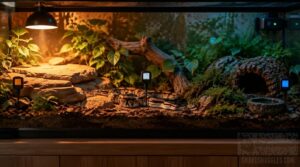
Picture a sunlit rock beside a shaded crevice. Your snake needs that same choice, not one flat temperature.
Build thermal gradient zones: a warm side at 28–32°C and a cool side at 22–26°C. Those temperature gradients drive natural thermal regulation.
Place probes at both ends and the middle, using smart technology for monitoring temperature. Alarm above 33°C or below 20°C.
Balance Humidity and Ventilation
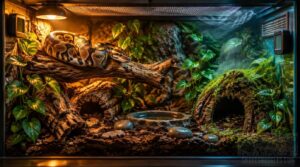
Balancing humidity and ventilation is where you separate a snake that thrives from one that merely survives. Aim for humidity levels of 40–60% for many species, and check your species’ exact range first.
Put hygrometers in both the warm and cool zones. Add a damp-moss hide, keep a dry zone, and provide proper ventilation. Condensation on the walls? Vent more.
Set a Consistent Light Cycle

Always run a fixed 12:12 light-dark cycle. Your lighting cycles drive thermoregulation and feeding, so keep start times within 15 minutes. Use a programmable timer that ramps up over 15 to 30 minutes.
Add UVB only when your species needs it, since UVB benefits vary. Keep nights completely dark.
Then verify. Run temperature monitoring and humidity monitoring for six weeks.
Maintain and Troubleshoot Your Snake’s Habitat
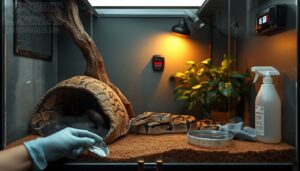
Fogged glass, a sour smell behind the hide, and a half-shed snake rubbing against the décor. That’s neglect, and it builds quietly. Habitat maintenance isn’t a weekend chore. It’s how you thrive instead of merely survive.
Neglect builds quietly behind fogged glass, so habitat maintenance isn’t a weekend chore; it’s how your snake thrives instead of merely surviving
Build cleaning routines you’ll actually follow: spot-clean waste daily, scrub the water dish often, and disinfect fully on a schedule, rinsing until no residue remains. Log temperature monitoring and humidity monitoring daily. Fogged glass usually signals airflow trouble, not a need for more humidity.
Ask yourself what’s at stake:
- The dread of finding a stuck shed you could have prevented
- The pride of watching your snake eat, shed, and explore freely
- The relief of an escape prevention checklist that holds
Inspect every latch weekly.
Frequently Asked Questions (FAQs)
How to set up a snake habitat?
Start with your species, because it dictates enclosure size, substrate safety, and humidity regulation. Build a thermal gradient with warm and cool sides, add hides and climbing structures, and don’t guess, verify with two thermometers.
What 7 scents do snakes hate?
Snakes hate clove, cinnamon, peppermint, citrus, garlic, onion, and vinegar. Keep dilutions at or below 1%, and watch stress indicators. Good reptile husbandry means testing small areas first, never drenching enclosures, since stress reduction matters.
If your snake still seems tense after you’ve backed off, this guide to safe snake handling dos and don’ts can help you rebuild trust gradually.
What is the ideal environment for a snake?
Your ideal snake habitat matches your snake’s species-specific needs, not guesswork.
Set enclosure size at 5x its length, temperature gradients from 22 to 32°C, and humidity control near 40–60%.
Add two hides and fresh water.
What should I put at the bottom of my snakes cage?
Your substrate options matter. Pick paper bedding or cypress mulch for solid substrate moisture retention, keep substrate depth around two inches, and don’t use sand. Strong substrate maintenance builds a naturalistic habitat where it thrives.
How do you build a snake home?
Build a snake home around enclosure size first: give your snake at least twice its length in floor space. Lock the lid.
Then layer in temperature gradients, humidity control, deep substrate, hides, and climbing structures.
How do you care for a snake enclosure?
Consistency keeps your snake thriving. Check temperature gradients and remove waste daily, spot-clean weekly, deep-clean every two to four months with diluted bleach.
Rotate hiding spots, verify humidity control, and confirm enclosure size allows thermoregulation.
How do I create a safe home for my scaly snake?
Your snake’s home is its entire universe, so make it perfect. Choose an enclosure at least twice its adult length, with escape prevention.
Research species specific needs, then craft a naturalistic habitat with temperature gradients.
What is a safe substrate for a snake?
Your safest picks among reptile substrate types are paper towels, aspen, coconut husk, and cypress mulch. Match them to species-specific needs, keep substrate depth around two inches for burrowers, and skip pine, sand, and gravel.
How do you set a heat pad for a snake?
Place your heat pad under one end, covering a quarter to a third of the floor, so your snake gets a temperature gradient for thermoregulation.
Always use a thermostat and cap it at exactly 32°C.
How do you keep a snake warm in a terrarium?
Warmth is the quiet heartbeat of your terrarium.
Build temperature gradients with a thermostat-controlled heat panel: basking spots near 88°F, cool zone at 75-80°F. Probe at snake level, match enclosure size, and watch thermoregulation closely.
Conclusion
Picture it: your snake stretches along a warm slate, tongue flicking, then glides into a cool, damp hide and settles. That’s a habitat working exactly as designed.
You now have the full snake environment setup guide, from species research to weekly checks. Build the thermal gradient, hold humidity steady, and test everything before your snake moves in. Then keep checking. Small corrections today prevent sick animals tomorrow.
Your snake won’t thank you. It’ll simply thrive.