This site is supported by our readers. We may earn a commission, at no cost to you, if you purchase through links.
Your ball python coils into a tight knot the moment you reach into the enclosure—and you’re not sure if that’s normal or a warning. It’s one of those moments that catches new owners off guard, because ball pythons are masters at hiding their discomfort until it boils over into something more obvious.
These snakes evolved in the grasslands of West Africa, where staying still and signaling danger subtly kept them alive. Reading those signals now falls on you. Knowing the key ball python defensive behavior signs means you can back off before a hiss turns into a strike—and build real trust with your snake over time.
Table Of Contents
- Key Signs of Ball Python Defensive Behavior
- Ball Curling: Stress or Normal Behavior?
- Warning Signs Before a Strike
- Chemical and Vocal Defensive Signals
- Environmental Triggers for Defensive Behavior
- Distinguishing Stress From Health Issues
- Top 9 Products for Ball Python Owners
- 1. Designer Ball Python Morph Breeding Guide
- 2. New Keeper’s Guide to Ball Pythons
- 3. Ball Python Manual CompanionHouse Guide
- 4. Ball Python Care Guide for Beginners
- 5. Ball Python Care Handbook
- 6. Ball Python Keeper Handbook
- 7. Ball Python Care Logbook
- 8. Quilax White Snake Climbing Toy
- 9. Horsmiyala DIY Snake Climbing Ring Set
- Frequently Asked Questions (FAQs)
- How to tell if a ball python is defensive?
- How to tell if a ball python is relaxed?
- How to tame a feisty ball python?
- What are signs of stress in a snake?
- How often do snake owners get bit?
- Which smell do snakes hate?
- What are signs of overfeeding a ball python?
- How often should you soak a ball python?
- Where do snakes go in October?
- What smells do ball pythons hate?
- Conclusion
Key Signs of Ball Python Defensive Behavior
Ball pythons don’t exactly raise their hand when something’s wrong — they show you instead. Learning to read their body language is one of the most useful skills you’ll develop as an owner.
Once you understand their signals, pairing that knowledge with the right ball python feeding routine and prey selection makes a real difference in keeping them healthy and stress-free.
Here are the seven key defensive behaviors worth knowing before your next handling session.
Curling Into a Tight Ball
tight defensive ball curl is one of nature’s cleaner examples of survival instinct. head tucking mechanics kick in fast — the head disappears beneath overlapping coils in seconds, protected from all angles. coil tension dynamics turn the body rock‑hard, nearly impossible to unroll.
This defensive ball curl is a clear stress signal, not quirky behavior. Respect it.
Providing tight hides reduce stress([https://d0ct0rjaysrept0l0gy.com/pages/beginner-s-guide-to-understanding-ball-python-behavior) helps ball pythons stay calm.
Hissing and Audible Warning Sounds
When your ball python hisses, that’s Glottis Airflow Mechanics in action—air pushed through the glottis, vibrating tissue, creating a sharp acoustic warning. Stress-Induced Breath Patterns often follow, with heavier breathing and Post‑Hiss Recovery Breathing pauses.
This defense mechanism is a clear stress signal. Acoustic Volume Variation can mean more intense discomfort, so respect hissing as a boundary in Ball Python Behavior.
Musking as a Chemical Deterrent
If hissing is the vocal alarm, musking is the chemical one. Near the base of the tail, paired cloacal glands — part of the snake’s gland anatomy — release a thick, fatty‑acid‑rich secretion that functions as an olfactory deterrent, overwhelming any predator’s senses. This stress signal is rooted in reptile behavior refined over millennia.
Understanding musking helps you adjust your ball python care and cleaning protocols accordingly. Recognizing the defensive ball curl can also indicate heightened stress levels.
Defensive Striking
When musking isn’t enough, a ball python may escalate to a defensive strike. Juveniles can reach strike velocities of 2.5 meters per second — faster than you’d expect. Key stress signals and handling techniques to remember:
- Neck tension forms a coiled S‑shape just before launch
- Prey mimicry triggers activate when you wiggle fingers nearby
- Juvenile strike differences mean younger snakes strike faster
- Hissing paired with body language warns you before contact
- Post‑strike retreat into a tight ball follows immediately
S-Curve and Head-Weaving Postures
Spotting the S-curve early can save you from an unexpected defensive strike. Your python coils its neck into a tight spring-like shape, storing energy for rapid forward propulsion — that’s body language doing real work.
Head-weaving follows, swaying 45 to 90 degrees as a stress signal. Juveniles sustain this weaving longer than adults.
Remove the stimulus, and relaxation phases begin within 30 seconds.
Jerky Head Movements
Jerky head movements are one of the clearest stress signals your ball python sends before a defensive strike. When your hand approaches from above, pit organ sensitivity triggers a Heat Detection Response — the snake jerks its head back sharply.
These Prey Tracking Jerks and Stress-Induced Twitches reflect pure body language. Handling Angle Effects matter too; approaching from the side reduces these defensive reactions considerably.
Tense Muscles and Rapid Breathing
Feeling your ball python stiffen the moment your hand appears is one of the most direct stress signals you’ll encounter.
Stress‑Induced Muscle Hardness turns a normally soft, pliable body rigid — that’s Hand Approach Reaction in action.
Watch for Chest Expansion Rate changes, Rib Flank Tension, and Breathing Rhythm Changes, all core Defense Mechanisms your snake uses through Body Language before a Defensive Strike.
Ball Curling: Stress or Normal Behavior?
Ball curling is one of those behaviors that can mean very different things depending on the situation. Not every curl is a cry for help — but some definitely are.
Here’s how to tell the difference between a python that’s just relaxing and one that’s quietly telling you to back off.
Difference Between Defensive and Resting Curl
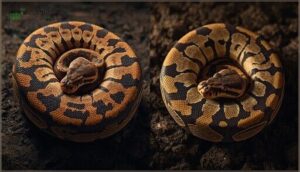
Not every curl means your snake is upset. A resting curl is loose, with the head visible and muscles soft enough to reshape gently. A defensive ball curl is a different story — ultra-compact, rigid, and head completely hidden.
- Head Position: Tucked deep inside vs. resting openly on coils
- Body Tightness: Firm, resistant sphere vs. relaxed, pliable coil
- Tail Placement: Locked in tight vs. loosely draped
- Breathing Rate: Rapid stress breathing vs. slow, steady rhythm
When Curling Indicates Fear
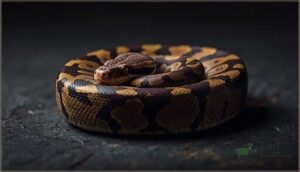
Fear is the main driver when your ball python’s head is tucked securely inside tight coils — that’s a defensive ball curl, not just nap time. Muscle tension indicators like a rigid, resistant body confirm stress signals are active, with fear hormone release elevating heart rate internally.
Younger snakes show stronger age-related responses, curling faster from handling trigger sensitivity than calmer adults.
Recognizing Relaxed Versus Defensive Postures
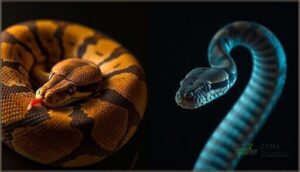
The difference often comes down to muscle tone. A relaxed ball python glides loosely over your hands, head resting low — classic Body Language that signals comfort.
Stress Signals flip that picture fast: Muscle Tension Cues tighten the coils, Head Position Indicators lift high, Tongue Flicking Patterns accelerate, Breathing Rate Signals become visible, and Movement Speed Traits turn jerky.
Hissing or a Defensive Strike follows if you miss those early Snake Body Language warnings.
Warning Signs Before a Strike
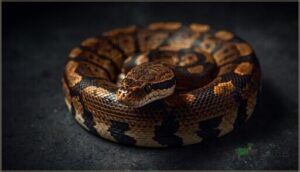
Most ball pythons give you fair warning before they ever think about striking. Learning to read those signals can make the difference between a calm interaction and a startled snake.
Here are the key body language cues to watch for.
S-Shaped Neck Posture
The S-shaped neck is one of the clearest pre-strike visual cues your ball python sends. When neck elevation timing matters, that raised, coiled posture means one thing: back off.
Watch for these stress signals:
- Head locked forward, not drifting
- Body tension distribution shifting toward the front third
- Intense, rapid tongue-flicking
- Defensive strike readiness if you hold your approach angle
Posture relaxation triggers? Simply pause and step back.
Rapid or Jerky Head Movements
Once your ball python moves past the S-curve posture, watch for rapid or jerky head movements — a clear visual threat assessment signal.
Head twitch timing matters here: quick, erratic shifts paired with muscle tension indicators and faster tongue‑flicking mean stress hormone release is already driving defensive strike readiness.
Slow your handling speed immediately, using calm, deliberate body language to avoid escalating further.
Sudden Freezing or Stiffness
After jerky head movements, watch for sudden freezing or stiffness — your snake’s last warning before a defensive strike.
An overhead movement response, unfamiliar scent, or noise-induced stiffness can trigger this instantly.
Brief freezes last 2–5 minutes; prolonged stiffness beyond 20 minutes signals serious stress.
Dim the light — the light dimmer effect genuinely helps.
Support the full body and wait before resuming reptile handling and safety practices.
Chemical and Vocal Defensive Signals

Beyond body language, ball pythons have two more tools in their defensive kit — ones that involve scent and sound.
These signals are easy to miss if you don’t know what to look for, but once you do, they tell you a lot. Here’s what each one means and what usually sets them off.
Musking Explained
Musking is your snake’s chemical alarm system. Ball pythons carry paired cloacal scent glands at the tail base, and when stressed, tail muscles contract and squeeze out a foul liquid — think rotten eggs meets motor oil.
Release triggers include sudden handling, new environments, or improper temperatures. Fresh musk lingers for hours, so it’s a clear reptile body language signal worth taking seriously.
Hissing: When and Why It Happens
When your ball python hisses, it’s forcing air through a small opening called the glottis — basically a pressure valve for stress. That sound is body language made audible.
Cold hands, strong scents, and warm-side handling all act as temperature triggers or hand scent influences that escalate defensive behavior.
Morph personality variance matters too — some individuals hiss constantly, others rarely.
Either way, it means back off, not bite.
Frequency and Triggers of These Behaviors
Defensive behavior isn’t random—it’s triggered by patterns in your snake’s environment and routine. You’ll see hissing or musking most often when these four factors aren’t dialed in:
- Handling schedule is too frequent or unpredictable.
- Hide placement leaves the snake exposed.
- Temperature swings or light variability cause stress.
- Prey timing disrupts natural body language and feeding rhythms.
Environmental Triggers for Defensive Behavior

Most defensive behavior in ball pythons doesn’t come out of nowhere — something in their environment is usually to blame.
Your snake can’t tell you what’s wrong, but the setup around them often tells the whole story.
Here are the most common environmental triggers worth checking.
Handling and Overstimulation
Even the most docile python has a breaking point — and handling is often where you’ll find it. Session Duration Limits matter more than most new owners realize.
| Stress Signal | What It Means |
|---|---|
| Rapid breathing | Overstimulation threshold reached |
| Tight ball curl | Return to enclosure immediately |
| Fast Tongue Flicking Indicators | Snake scanning for escape |
| Hissing or Musking | Defensive Behavior escalating |
| Head weaving | Pre-strike warning |
Keep sessions under 20 minutes.
Inadequate Hiding Spots
A hide that’s too big offers almost no security. Ball pythons instinctively seek snug hide size — walls touching their coiled body — because that physical contact is what triggers calm.
Without proper hide placement balance on both the warm and cool sides, your snake faces a tough choice: stay comfortable or stay hidden. That tradeoff alone drives defensive behavior. Cover and clutter help, but adequately sized, well‑placed hides are non‑negotiable for reptile environmental needs.
Improper Temperature or Humidity
Temperature and humidity are the invisible levers controlling your ball python’s mood.
A cool side chill below 75°F triggers tense muscles and defensive hissing, while heat stress above 92°F causes head‑weaving and musking.
Low humidity dehydration under 55% irritates mucous membranes, increasing striking frequency. High humidity bacterial growth above 80% breeds respiratory discomfort.
Maintaining a proper temperature gradient and balanced humidity levels is non‑negotiable for stress management and reduction.
New or Unfamiliar Environments
Moving your ball python to a new enclosure is like dropping someone into a foreign city with no map. Layout Exploration begins immediately — expect glass surfing, hissing, or musking as the snake processes unfamiliar scents during Scent Familiarization.
Visual Acclimation and Noise Adaptation take days. Stress Management and Reduction by maintaining your Temperature Gradient, covering three sides, and delaying Handling Adjustment for at least five to seven days.
Distinguishing Stress From Health Issues

Sometimes a defensive snake and a sick snake look a lot alike — and mixing them up can cost your python’s valuable care time.
Knowing the difference between stress behavior and actual illness symptoms is one of the most useful skills you can build as an owner.
Here’s what to watch for across three key areas.
Defensive Behaviors Vs. Illness Symptoms
Telling defensive behavior apart from illness comes down to watching a few key things: muscle tone, breathing patterns, eye clarity, and scale condition. A snake showing stress stays tense and reactive — hissing, weaving, coiling tight. Illness looks different: limp muscles, labored breathing at rest, cloudy eyes, or damaged scales.
Stress makes a snake reactive; illness makes it limp
Behavior duration matters too. Defensive behavior fades; illness symptoms linger.
Appetite Loss and Defensive Behavior
Appetite loss and defensive behavior often show up as a pair. Chronic stress triggers hormone appetite suppression — corticosterone floods the system, killing the feeding response before prey even hits the enclosure.
Watch for these connected signals:
- Hissing or weaving when the enclosure opens
- Mock striking behavior instead of a controlled feed strike
- Hiding frequency increase during normal active hours
- Temperature‑induced refusal when gradients are off
Track weight stability monitoring weekly to confirm your snake is holding condition despite skipped meals.
When to Seek Veterinary Advice
Sometimes stress isn’t just stress — it’s a symptom.
If your ball python shows any of the signs below alongside defensive behavior, skip the wait-and-see approach and call a reptile vet.
| Warning Sign | Why It Matters |
|---|---|
| Respiratory distress or wheezing | May signal active infection |
| Stargazing symptom or disorientation | Possible neurological disease |
| Regurgitation episodes | Points to digestive or parasitic illness |
| Skin lesions with flinching | Could be scale rot or abscess |
| Weight loss with defensive posturing | Suggests systemic illness |
Top 9 Products for Ball Python Owners
Having the right resources makes a real difference when you’re learning to read and respond to your ball python’s behavior. Whether you’re just starting out or fine-tuning your setup, the right books and accessories can fill in the gaps fast.
Here are nine products worth having in your corner.
1. Designer Ball Python Morph Breeding Guide

If you’re serious about understanding ball pythons beyond basic care, the Designer Ball Python Morph Breeding Guide is worth your time. At just $14, it covers the genetics behind morphs — explaining how simple recessive traits like albino differ from co-dominant ones like pastel.
You’ll learn breeding ratios, enclosure setup basics, and what combinations produce which offspring. It’s focused specifically on ball pythons, so every detail applies directly to what you’re keeping.
| Best For | Ball python keepers who already have the basics down and want to level up into morph breeding and genetics. |
|---|---|
| Product Type | Guide/Book |
| Ball Python Focus | Yes |
| Experience Level | Intermediate/Advanced |
| Language | English |
| Price Range | $14.00 |
| Care Coverage | Behavior/Genetics/Health |
| Additional Features |
|
- Breaks down complex genetics (recessive vs. co-dominant morphs) in a way that actually makes sense
- Covers breeding ratios and offspring combinations, so you’re not just guessing
- At $14, it’s a steal for the depth of info you’re getting
- Not great if you’re brand new to reptiles — you’ll want some experience first
- Only covers ball pythons, so don’t expect it to help with your other scaly pets
- How much you get out of it depends on how well you put the info into practice
2. New Keeper’s Guide to Ball Pythons

If you’re brand new to snake keeping — maybe you never planned on owning one — the New Keeper’s Guide to Ball Pythons was written with you in mind. What makes it stand out is the perspective: a woman who didn’t set out to keep snakes either.
That shared starting point makes the information feel less overwhelming. At $21.99, it walks you through the basics of ball python care in a way that’s honest, relatable, and genuinely practical for beginners.
| Best For | Anyone brand new to snake keeping — especially if you stumbled into it and never saw yourself as a "snake person." |
|---|---|
| Product Type | Guide/Book |
| Ball Python Focus | Yes |
| Experience Level | Beginner |
| Language | English |
| Price Range | $21.99 |
| Care Coverage | Basic Care/Handling |
| Additional Features |
|
- Written from a relatable, been-there perspective that makes the learning curve feel a lot less steep
- Covers the basics of ball python care in plain, practical language — no confusing jargon
- At $21.99, it’s a solid investment for getting your new pet’s care right from day one
- Experienced keepers probably won’t find much here they don’t already know
- Only covers ball pythons, so it won’t help if you’re curious about other species
- The price might give budget-conscious buyers a moment’s pause
3. Ball Python Manual CompanionHouse Guide
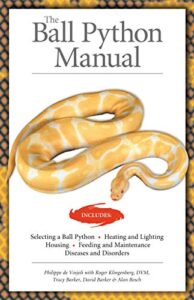
The Ball Python Manual by Philippe de Vosjoli and his co-authors has been around since the late 1990s — and it’s held up well.
At 88 pages, it doesn’t overwhelm you, but it covers the essentials: selecting a healthy snake, setting up proper housing, feeding schedules, and recognizing common health problems.
One genuinely useful section links defensive behaviors like persistent balling directly to husbandry mistakes, helping you fix the environment before stress gets worse.
It’s available through major retailers in print or ebook format.
| Best For | Beginners who are just getting into ball python ownership and want a straightforward, no-fluff guide to get started on the right foot. |
|---|---|
| Product Type | Guide/Book |
| Ball Python Focus | Yes |
| Experience Level | Beginner |
| Language | English |
| Price Range | Not Listed |
| Care Coverage | Housing/Feeding/Health |
| Additional Features |
|
- Written by respected herpetologists, so the advice is solid and trustworthy
- Covers all the basics in one slim volume — housing, feeding, health, and even morphs
- Short enough to read in an afternoon without feeling like a textbook
- Skips some important topics like shedding and shed phases entirely
- Experienced keepers will probably find it too surface-level for their needs
- At 88 pages, there’s only so much depth it can offer on any single topic
4. Ball Python Care Guide for Beginners

If you’re just starting out, the Ball Python Care Guide for Beginners covers exactly what you need without burying you in technical detail. At 109 pages and $13.99, it walks through enclosure setup, temperature gradients, feeding schedules, and safe handling — all organized so you can find answers fast.
It explains that warm-side temps should sit around 88–92°F and that humidity should climb to 65–70% during shedding.
Clear, practical, and genuinely beginner-friendly.
| Best For | Anyone just getting into ball pythons who wants a clear, no-nonsense guide without feeling overwhelmed. |
|---|---|
| Product Type | Guide/Book |
| Ball Python Focus | Yes |
| Experience Level | Beginner/Intermediate |
| Language | English |
| Price Range | $13.99 |
| Care Coverage | Housing/Feeding/Behavior |
| Additional Features |
|
- Covers all the essentials — housing, feeding, handling, and health — in one tidy package
- At $13.99 and 109 pages, it’s an easy, affordable read you can get through in a sitting or two
- Written with beginners in mind, so you’re not wading through dense technical language
- Won’t satisfy experienced keepers looking for deeper or more specialized knowledge
- 109 pages means some topics are likely touched on rather than fully explored
- Published April 2025, so it may not reflect the very latest research or care recommendations
5. Ball Python Care Handbook

Ever wish you had a field guide that spoke your language, not just the snake’s? The Ball Python Care Handbook does exactly that.
It’s thorough but not overwhelming, walking you step by step through enclosure choices, temperature gradients, and feeding routines. You’ll find practical checklists for habitat equipment, clear advice on spotting illness, and tips for handling even the most skittish python.
This handbook is especially helpful for new keepers who want confidence, not confusion, when caring for their first ball python.
| Best For | New ball python owners who want clear, no-fluff guidance on setting up a proper habitat and keeping their snake healthy from day one. |
|---|---|
| Product Type | Guide/Book |
| Ball Python Focus | Yes |
| Experience Level | Beginner/Intermediate |
| Language | English |
| Price Range | Not Listed |
| Care Coverage | Habitat/Feeding/Handling |
| Additional Features |
|
- Covers all the essentials in one place — enclosures, temperatures, feeding, shedding, and health checks
- Written in plain language that’s easy to follow without a reptile science degree
- Includes handling and bonding tips, which is something a lot of care guides skip
- Focuses only on ball pythons, so it won’t help if you keep other snake species
- At 105 pages, it may feel too surface-level for seasoned keepers looking for deep dives
- Assumes you already have some basic reptile knowledge, so total beginners might hit a few confusing spots
6. Ball Python Keeper Handbook

Think of this one as your troubleshooting partner. The Ball Python Keeper Handbook is 90 pages of focused, practical guidance — no fluff, no deep genetics chapters, just the day-to-day stuff that actually matters.
It walks you through housing, feeding, behavior, and health in a clear, linear order. You’ll learn to read defensive signals, understand why your snake balls up or hisses, and fix the real causes.
At $15.00, it’s an easy investment for any keeper who wants fewer guessing games.
| Best For | New snake owners and hobbyist keepers who want a clear, no-nonsense guide to keeping their ball python healthy and happy. |
|---|---|
| Product Type | Guide/Book |
| Ball Python Focus | Yes |
| Experience Level | Beginner/Intermediate |
| Language | English |
| Price Range | $15.00 |
| Care Coverage | Tank/Feeding/Breeding |
| Additional Features |
|
- Covers all the everyday essentials — housing, feeding, handling, and health — in one easy read
- Helps you understand your snake’s behavior so you’re not guessing why it’s balled up or refusing food
- At $15, it’s a low-risk investment that can save you a lot of stress and vet visits
- 90 pages keeps things accessible, but advanced keepers may find it too surface-level for deep dives
- Doesn’t cover every edge case, so you may still need extra resources for complex health or genetics questions
- The physical size is fine for a shelf, but it’s not the most portable reference to toss in a bag
7. Ball Python Care Logbook

Memory is short — your snake’s history doesn’t have to be. 120-page logbook gives you dedicated sections for weight tracking, feeding records, shed notes, and routine care checklists, all in one compact 6×9 paperback.
When your ball python suddenly refuses food or shows defensive behavior, flipping back through consistent records helps you connect the dots quickly.
It’s especially useful at vet visits, where a clear medical history makes a real worth every page, and every page.
| Best For | Ball python owners of any experience level who want a simple, organized way to track their snake’s health, feeding, and care history over time. |
|---|---|
| Product Type | Logbook |
| Ball Python Focus | Yes |
| Experience Level | All Levels |
| Language | English |
| Price Range | Not Listed |
| Care Coverage | Health/Expense Tracking |
| Additional Features |
|
- Covers all the essentials in one place — feeding logs, weight tracking, shed records, and vet-ready medical history
- Compact 6×9 size makes it easy to store and bring to appointments
- Works for beginners and seasoned keepers alike, with daily, weekly, and monthly tracking sheets
- 120 pages may run out faster than expected for dedicated long-term record-keepers
- No guidance or care tips included — it’s a logbook, not a care guide
- A physical book won’t suit everyone, especially if you prefer managing records on your phone or computer
8. Quilax White Snake Climbing Toy
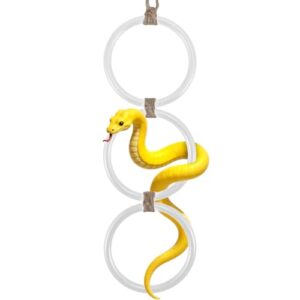
Good records keep your snake’s history straight — but good enrichment keeps your snake mentally healthy in the first place. The Quilax White Snake Climbing Toy gives ball pythons something to actually do inside their enclosure.
Its three interconnected rings let your snake work through natural climbing movements, which promotes muscle development and cuts down on restless, stress-driven behavior. Setup takes under two minutes with included suction cups, and the smooth, food-grade resin surface won’t snag scales.
| Best For | Reptile owners who want to give their corn snake, ball python, or similar climbing species a more active and engaging habitat. |
|---|---|
| Product Type | Tank Accessory |
| Ball Python Focus | Yes |
| Experience Level | All Levels |
| Language | English |
| Price Range | Not Listed |
| Care Coverage | Physical Enrichment |
| Additional Features |
|
- Durable PP material with a textured surface that mimics a natural environment, giving your snake something real to explore
- Easy to install and clean — no complicated setup, and maintenance is simple
- Enhances the look of your tank while actually serving a purpose beyond decoration
- May be too small for larger ball pythons, so check the 17.1×3.5 inch dimensions against your snake’s size before buying
- Made of plastic, which won’t appeal to keepers who prefer natural materials in their enclosures
- Needs zip ties or extra hardware for a truly secure fit — suction cups alone might not cut it
9. Horsmiyala DIY Snake Climbing Ring Set

If you want more flexibility than a fixed toy allows, the Horsmiyala DIY Snake Climbing Ring Set is worth a look. At $6.99, it comes with three interlocking rings and hemp ropes you can configure seven different ways — so the layout grows with your snake’s confidence.
Each ring opens 3.75 inches wide, which fits ball pythons comfortably. The ABS plastic resists humidity and won’t roughen scales. Assembly takes under five minutes, and you can rearrange it whenever your snake seems bored with the current setup.
| Best For | Snake owners who want an affordable, customizable enrichment toy for ball pythons or corn snakes that enjoy climbing and exploring. |
|---|---|
| Product Type | Guide/Book |
| Ball Python Focus | Yes |
| Experience Level | Beginner/Intermediate |
| Language | English |
| Price Range | Not Listed |
| Care Coverage | Breeding/Diet/Temperament |
| Additional Features |
|
- Super affordable at $6.99 and easy to put together in just a few minutes
- Seven different configurations keep things fresh when your snake gets bored
- ABS plastic holds up well in humid tank environments without roughing up scales
- May be too big for younger or smaller snakes
- Hemp ropes need regular cleaning to stay hygienic
- Requires some assembly and occasional rearranging to stay effective
Frequently Asked Questions (FAQs)
How to tell if a ball python is defensive?
You can tell a ball python is defensive by watching for tight balling, tense muscles, hissing, or an S-curved neck. These signals mean it feels threatened and needs space.
How to tell if a ball python is relaxed?
Like a cat stretched out in a sunbeam, a relaxed ball python moves slowly, breathes quietly, and lets its body drape loosely —
no tight coils, no stiffness, just calm and unhurried.
How to tame a feisty ball python?
Start with short, calm sessions — about 10 to 15 minutes — a few times a week. Approach from the side, move slowly, and always support the snake’s body. Trust builds with consistency.
What are signs of stress in a snake?
Stress in snakes shows up as tight curling, hissing, musking, rapid breathing, escape attempts, and refusal to eat.
Watch for tense muscles, jerky head movements, or frequent hiding — these all signal your snake feels unsafe.
How often do snake owners get bit?
Ironically, most owners get bitten rarely — often just once or twice over years of handling.
Calm species like ball pythons bite least frequently, usually only when mishandled or startled during feeding.
Which smell do snakes hate?
Snakes hate the smell of cinnamon oil, clove oil, and vinegar most. These scents overwhelm their Jacobson’s organ, making treated areas uncomfortable to cross.
What are signs of overfeeding a ball python?
Overfeeding shows up as a rounder, sausage-like body, stretched scales, persistent meal bulges beyond 48 hours, sluggish movement, and infrequent bowel movements — your snake basically becomes a slow, overstuffed couch potato.
How often should you soak a ball python?
Most healthy ball pythons don’t need routine soaking.
If humidity and water access are correct, an occasional soak for stuck shed or mild dehydration — lasting 15–20 minutes — is all that’s usually needed.
Where do snakes go in October?
In October, most wild snakes head underground — into rock crevices, animal burrows, or old foundations — to brumate through winter.
Captive ball pythons stay in their enclosures, simply tucking deeper into warm hides as room temperatures dip.
What smells do ball pythons hate?
Ball pythons strongly dislike garlic, vinegar, cinnamon, citrus oils, and mothball fumes.
These scents overwhelm their sensitive vomeronasal organ, triggering immediate avoidance or stress responses.
Keep these smells well away from their enclosure.
Conclusion
Patience, practice, and paying close attention—these are the real tools of a confident ball python keeper.
Every hiss, tight coil, or sudden freeze is your snake speaking its own language, and now you know how to listen.
Recognizing ball python defensive behavior signs isn’t about fear—it’s about respect.
Back off when needed, improve the environment, and handle consistently.
Over time, that knotted-up snake will uncurl in your hands, and that shift means everything.