This site is supported by our readers. We may earn a commission, at no cost to you, if you purchase through links.
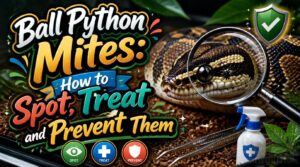
Your ball python was feeding normally last week. Now it’s soaking for hours, rubbing against the glass, and you notice tiny black specks clustered near its eyes. Those aren’t debris.
Ball python mites reproduce fast. A single female deposits dozens of eggs deep in enclosure cracks, and the full life cycle wraps up in under three weeks. By the time you spot the signs, the infestation is often already well established.
The steps you take now determine how quickly your snake recovers. Identifying mites early, treating correctly, and cleaning the enclosure thoroughly are what matter most.
Table Of Contents
- Key Takeaways
- How to Spot Mites on a Ball Python
- How Ball Python Mites Spread and Reproduce
- How to Treat Ball Python Mites Safely
- How to Clean The Enclosure After Mites
- How to Prevent Ball Python Mites
- Frequently Asked Questions (FAQs)
- How do I get rid of mites on my ball python?
- How can I tell if my ball python has mites?
- Can snake mites transfer to humans?
- How long does it take to get rid of mites on a snake?
- Can ball python mites bite humans?
- How long do mites survive without a host?
- Do snake mites transmit diseases to pythons?
- Can mites infest other household pets?
- Which bedding makes mites harder to detect?
- Conclusion
Key Takeaways
- Check for tiny moving black or red specks, ash-like debris, repeated rubbing, long soaks, eye swelling, poor sheds, pale color, or loss of appetite.
- Isolate an affected ball python immediately in a separate enclosure with paper towels and dedicated tools, then contact a qualified reptile veterinarian for a safe treatment plan.
- Treat the snake and enclosure on a repeated schedule because eggs can hatch after visible mites are gone, and continue monitoring through quarantine to prevent a rebound.
- Remove and discard all substrate, scrub and disinfect the enclosure, seams, bowls, and nonporous hides, then prevent future infestations with strict quarantine and hand hygiene.
How to Spot Mites on a Ball Python
Snake mites are small, but the changes they cause are often easy to notice once you know where to look. Check your ball python closely and watch for changes in its skin, eyes, and behavior. These are the main signs that may point to a mite problem.
For prevention tips, see this guide to preventing mites in ball python enclosures.
Tiny Black or Red Dots
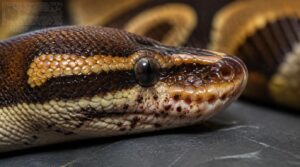
Look closely at the scales for tiny black dots that resemble pepper flecks, especially around the eyes, nostrils, chin, vent, and beneath raised scales. Fed mites may look dark brown or jet black.
Red or black dots can also crawl across pale skin, where reddish mites stand out clearly. Wipe the snake with white paper towel. Transferred specks support infestation.
Ash-Like Mite Droppings
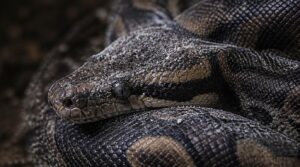
Beyond the moving dots, mites leave ash-like droppings across your snake’s scales. These grayish-white specks resemble fine dust and appear most heavily around the head, cloaca, and between scale gaps. The material is mite fecal matter containing digested blood proteins. On darker snakes, the contrast makes them easy to spot. Droppings can persist for days, even after the mites die.
For a thorough response, snake mite identification and treatment guidance recommends repeating betadine baths every other day for one week during an active infestation.
Rubbing and Prolonged Soaking
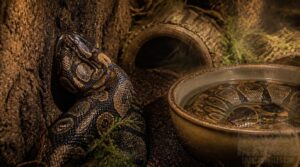
When mites irritate your ball python, its behavior tells the story. You’ll notice your snake rubbing against enclosure walls repeatedly, trying to dislodge crawling irritants with nowhere else to go.
Prolonged soaking is the other red flag. Mites drive snakes into their water bowls for relief. Keep water around 80°F (27°C) and watch for sessions stretching past 30 minutes daily.
Eye Swelling and Skin Irritation
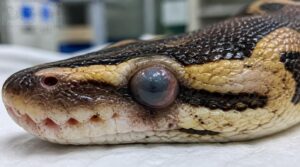
Swelling around the eyes is a serious sign to watch for. Periorbital edema makes your ball python’s face look puffy, red, or watery, a direct result of cutaneous irritation from mite activity.
The skin around the eyes is thin and vulnerable, so even minor inflammation becomes visible fast. If eye swelling appears alongside facial swelling, seek urgent veterinary evaluation immediately.
Shedding Problems and Anemia Signs
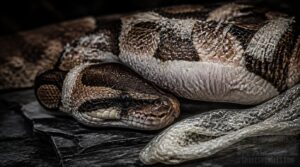
Two red flags often appear together: patchy, incomplete sheds and washed-out body color. Mites damage the skin’s lubricating layer, so your snake sheds in ragged pieces rather than one clean sheath.
Severe infestations cause enough blood loss to trigger anemia, leaving your python pale, lethargic, and off food.
Recovery shows when shedding completes cleanly and appetite returns.
How Ball Python Mites Spread and Reproduce
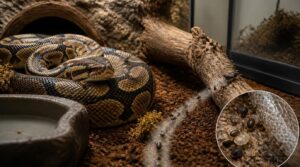
Understanding how mites spread is just as important as knowing how to treat them. These tiny parasites don’t appear out of nowhere — they hitch rides, hide in enclosures, and multiply faster than most keepers expect. Here’s a look at the most common ways mites find their way to your ball python.
Choosing a mite-resistant ball python substrate also limits hiding spots and makes infestations easier to spot early.
Common Ophionyssus Snake Mites
Ophionyssus natricis is the species behind most ball python infestations, while Ophionyssus acertinus targets lizards. Both are tiny, around 0.6 to 1.3 mm, and feed on blood.
These mites follow a predictable pattern:
- Feed on blood, then leave the host
- Deposit eggs in cracks and crevices
- Complete their life cycle in 13 to 19 days
- Can bite and irritate humans
New Reptiles Without Quarantine
When a new ball python enters your collection without quarantine, it can bring mites before you see any signs. A wild caught ball python carries added risk. Incubation periods can hide illness for weeks.
Keep arrivals in a separate room when possible. Shared airspace, hands, clothing, water items, and hides can create a biosecurity breach. Use dedicated equipment for 30 to 60 days, arrange veterinary consultation, then begin enclosure cleaning and substrate replacement if concerns arise.
Contaminated Enclosures and Supplies
Contaminated enclosures and supplies can restart an infestation after treatment. Mites hide in substrate bags, water bowls, cork bark, seams, and shared tongs.
- Replace substrate and use paper towels during treatment.
- Remove porous hides, disinfect secondhand supplies with 3% bleach, then rinse and dry fully.
- Give each quarantine setup separate bowls and tools.
Clean water bowls daily. Tiny black specks or bloody smears signal contamination.
Poor Hygiene and Overcrowding
Poor hygiene gives mites places to hide, while overcrowding turns one case into a collection-wide problem.
Keep substrate clean and dry, remove waste daily, and maintain steady humidity at 50 to 60 percent. Perform enclosure cleaning monthly.
Practice handling hygiene between snakes, separate tools, and prioritize quarantining new reptiles.
Strong cage sanitation and environmental decontamination limit spread and reinfestation risk.
Snake Mite Life Cycle Stages
Mites don’t slow down between generations. Eggs hatch in as little as 24 hours under warm, humid conditions.
The larval stage is brief, with six-legged larvae seeking a host within hours of emerging. Protonymphs then feed on host blood to advance. After deutonymph development, lasting up to 14 days, adults emerge and begin actively reproducing, cycling the infestation forward continuously.
How to Treat Ball Python Mites Safely
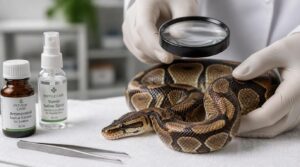
Discovering mites on your ball python can feel alarming, but acting quickly and correctly makes all the difference. Treatment isn’t a single step — it’s a process that requires isolating your snake, getting the right veterinary guidance, and following through even after the visible mites are gone. Here’s what that process looks like, step by step.
Treating ball python mites requires swift isolation, veterinary guidance, and persistent follow-through beyond the last visible mite
Isolate The Infested Ball Python
The first step is containment. Move your ball python to a separate quarantine enclosure immediately, ideally in a different room from your other reptiles.
Use paper towels as substrate for easy inspection. Keep humidity at 50-60% and maintain normal temperatures.
Isolation runs 2-3 months minimum to outlast every stage of the mite life cycle, including any eggs waiting to hatch.
Seek Reptile Veterinarian Guidance
Once isolated, your snake needs veterinary consultation right away. Not every vet treats snakes, so seek a qualified reptile veterinarian and verify credentials. The Association of Reptile and Amphibian Veterinarians has a locator tool to find a reptile vet.
Bring a fresh fecal sample. Your vet will guide your quarantine protocol, discuss care, and plan ectoparasite control. Schedule checkups twice yearly.
Vet-Approved Topical Treatments
Your vet may recommend Nix solution or Natural Chemistry Reptile Mite Spray as starting points. Apply Nix until the snake is damp, carefully avoiding the eyes, nose, and mouth. ProventAMite is another vet-approved option.
Prescription-strength treatments, including pyrethroid-based formulations, need professional oversight. Contact time matters. Allow roughly ten to fifteen minutes of full exposure before rinsing for the best results.
Avoid Toxic Insecticide Exposure
Even approved products can harm your python or household pets when used carelessly. Read labels carefully, follow dosage instructions, use proper ventilation, and wear protective gear during veterinary insecticide application.
Never use pyrethroid, Carbaryl Powder, or ivermectin without direct veterinary direction. Ivermectin toxicity can be fatal. Store securely away, always avoid treated surfaces, and prevent acaricide resistance through proper use.
Repeat Treatment After Eggs Hatch
Mite eggs can hatch within 24 to 48 hours, so follow-up treatments matter. Treat on day 1, day 8, and day 15 to interrupt the mite life cycle before feeding protonymphs reproduce.
- Bathe and treat as prescribed
- Replace substrate with paper towels
- Remove water bowls for 24 hours
- Check daily for moving mites
Continue monitoring for 30 days after visible mites disappear. This prevents reinfestation.
How to Clean The Enclosure After Mites
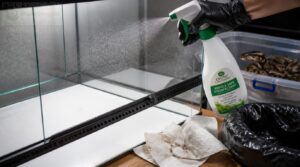
Treating your ball python is only half the job. Mites and their eggs can remain in the enclosure, hiding where you can’t easily see them. Use the following steps to reset the habitat and reduce the chance of another outbreak.
Remove and Replace Substrate
Remove all loose substrate before treatment. Seal it in a plastic garbage bag immediately, carry it straight outdoors, and place it in outside trash. Don’t compost it or reopen the bag indoors.
Replace it with white paper towels. Paper makes mites, droppings, and debris easy to see. Change it after each 7-day treatment cycle. Keep paper for three weeks, and until you see no mites for 14 straight days.
Wash Enclosure and Accessories
With the substrate gone, begin enclosure sanitation with hot water and detergent. Scrub seams and crevices, including tracks and vents. Clean heating equipment safely after unplugging it.
For complete habitat sanitation, disinfect nonporous items separately during disinfection of the terrarium. Rinse thoroughly after cleaning, then air-dry the enclosure completely. This helps substrate replacement and cross-contamination prevention between animals and supplies.
Disinfect Hides and Water Bowls
During enclosure sanitation, disinfect hides and bowls before substrate replacement.
- Terrarium disinfection: use 3% bleach solution, 2 tablespoons per quart.
- Soak plastic hides 10 minutes, rinse distilled water 5 minutes, then air-dry 24 hours.
- Hide material cleaning: hot-water clean ceramic hides, 130°F soapy water, 15 minutes.
- Commercial disinfectants suit nonporous items. Keep bowls out 24 hours, replace after 48, monitor.
Clean Cracks and Cage Seams
Clean cracks and cage seams before reassembly. Pull out all accessories, then brush dry debris from joints with a soft brush or dedicated toothbrush. Use cotton swabs in narrow corners.
Rinse each seam with clean water, then wipe with a lint-free cloth until no greasy film remains. Disinfect as directed, rinse well, and let every gap dry completely. Sanitize tools afterward to protect substrate hygiene.
Monitor for Surviving Mites
Watch for rebound activity after treatment. Check sticky traps under the enclosure daily for the first week, then at set intervals. Record mite counts, visual inspection findings, and cleaning dates.
Check your snake for tiny black dots, skin redness, excessive scratching, soaking in water, or incomplete shed. Eggs can hatch later, so new mites after post-treatment cleaning mean you may need retreatment.
How to Prevent Ball Python Mites
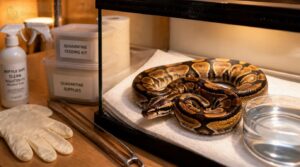
Mites are far easier to prevent than to treat once they spread through a collection. Simple routines can protect your ball python and reduce the chance of bringing mites home. Start with these five prevention steps.
Quarantine New Reptiles
Keep new reptiles in a separate isolation room for 30 to 60 days, and longer when their history is unknown. Use dedicated bowls, hides, tongs, and disposable or disinfectable supplies.
Perform daily visual inspection and record appetite, stool, behavior, and weight. Arrange fecal testing and veterinary checks when needed. Complete enclosure sanitation and substrate replacement before the isolation period ends.
Wash Hands Between Reptiles
Quarantine works when your hands don’t become the bridge between animals. Wash hands with soap and running water before and after reptile handling, after touching habitat surfaces, tank water, food, waste, or equipment.
If soap and water aren’t available, use sanitizer with at least 60% alcohol, then wash as soon as possible. Use dedicated cleaning equipment to strengthen cross-contamination prevention.
Spot Clean The Enclosure Daily
Your hands can carry mites, but waste and damp debris help them persist. Perform a daily spot clean, ideally morning and evening. Remove feces, urates, shed skin, uneaten food, and nearby soiled substrate with gloves and paper towels.
Refresh the water bowl daily, especially after soaking or defecation. Check hides for debris, damp moss, and black specks. This brief visual inspection helps you catch mites, irritation, or mold early.
Deep Clean The Enclosure Monthly
Daily spot cleaning experiences visible waste, but monthly Enclosure cleaning reaches hidden mite sites.
Remove hides, then Replace All Substrate. Start Substrate replacement by bagging old bedding. Wash All Accessories, Scrub Enclosure Seams, and Sanitize Tank Surfaces. Complete Disinfection of Terrarium at label contact time. Dry Before Reassembly.
This Habitat sanitation helps with your Quarantine Protocol and blocks repeat mite contamination.
Disinfect Secondhand Reptile Supplies
Secondhand hides, bowls, and decor can carry mite eggs you can’t see. Before placing any used item in your enclosure, scrub it with hot soapy water, then soak it in a bleach solution of 1/3 cup per gallon.
Wear rubber gloves and goggles during this process. Rinse every surface with clean water and let items air dry completely before use.
Frequently Asked Questions (FAQs)
How do I get rid of mites on my ball python?
Separate, soak, scrub: isolate your snake, use veterinarian-guided Betadine Bath treatment or Nix solution application, and reserve Pyrethroid insecticide for professional direction. Complete substrate replacement and enclosure deep cleaning, then repeat treatment after eggs hatch.
How can I tell if my ball python has mites?
Look for tiny black dots moving near the eyes, mouth, and vent, plus ashlike dust under scales. Rubbing, soaking, difficulty shedding, weight loss, and skin irritation may follow, especially where poor hygiene allows mites to thrive.
Can snake mites transfer to humans?
Yes. Snake mites can bite people after contact with infested reptiles or cages, causing itchy red bumps or small blisters. They don’t usually live on humans or spread person-to-person. Treat the snake, enclosure, crosscontamination, wash hands, and quarantine newcomers.
How long does it take to get rid of mites on a snake?
Treatment Duration is usually 14 to 21 days, but confirmed eradication can take 2 to 3 months. Repeat treatment weekly, maintain enclosure cleaning, and use regular monitoring. Continue quarantine until no mites appear for 30 consecutive days.
Can ball python mites bite humans?
Some snake mites can bite people, causing itchy bumps or blisters. Risk rises with infested cages, poor hygiene, and cross-contamination. Public health guidance: wash hands, avoid affected reptiles, and seek medical advice if symptoms persist.
How long do mites survive without a host?
As a rule of thumb, survival lasts days to weeks: humidity, cool temperatures, and enclosure microclimates extend it. Ophionyssus natricis eggs may hatch off-host. For Ball Python Mites, enclosure sanitation, humidity control, desiccants interrupt life cycles effectively.
Do snake mites transmit diseases to pythons?
Ophionyssus natricis may carry pathogens, but proven disease transmission to pythons is uncommon. Hematophagous mites can cause dermatitis, eye inflammation, and anemia, weakening immunity and raising secondary infection or septicemia risk. Zoonotic risk is low.
Can mites infest other household pets?
Like a medieval lantern, mites reveal cross-contamination: dogs and cats may face irritation from contaminated bedding, though host switching is uncommon. Quarantine reptiles, sanitize habitats, watch overlapping symptoms, and seek veterinary advice, including zoonotic-risk guidance.
Which bedding makes mites harder to detect?
Dark, moisture-holding bedding makes mites hardest to see. Coconut husk, Eco Earth, cypress mulch, sphagnum moss, and ReptiChip camouflage black specks in fibers and debris.
Use paper, maintain sanitation, avoid moisture buildup, and quarantine newcomers.
Conclusion
Picture your ball python resting in a clean enclosure, with clear eyes, smooth scales, and fresh water nearby. That outcome depends on early action.
Treat ball python mites as a health problem, not a minor nuisance. Isolate your snake, follow reptile veterinarian advice, and repeat cleaning and treatment on schedule. Careful quarantine protects every reptile in your home.
When you remove both visible mites and their hidden eggs, you give your snake a healthy home.