This site is supported by our readers. We may earn a commission, at no cost to you, if you purchase through links.

A king snake fed two days ago will still eat its cagemate. Not out of hunger, but because ophiophagous predatory instincts don’t switch off between meals. This is the fundamental reality that makes the question of whether king snakes can cohabitate safely one of the most misunderstood topics in reptile keeping.
King snakes evolved as solitary hunters with individual home ranges, and their instinct to detect, pursue, and constrict other snakes operates on chemical cues alone. Your snake doesn’t distinguish a wild prey item from a tankmate.
Understanding what’s happening inside that enclosure changes everything about how you house them.
Table Of Contents
- Key Takeaways
- Can King Snakes Cohabitate? Usually, No
- Why King Snake Cohabitation is Risky
- Can King Snakes Share Temporarily?
- Warning Signs Require Immediate Separation
- Safer Alternatives to King Snake Cohabitation
- Frequently Asked Questions (FAQs)
- Do king snakes get stressed when housed together?
- Can hatchling or juvenile king snakes be safely cohabitated?
- What size enclosure does a king snake need?
- How often should king snakes be fed?
- What humidity levels do king snakes require?
- Can king snakes recognize their owners over time?
- How long do king snakes typically live in captivity?
- Conclusion
Key Takeaways
- King snakes are hardwired ophiophagous predators that will target a cagemate as prey regardless of when they last fed, making cohabitation genuinely dangerous rather than just inconvenient.
- Even a 20% size difference between housed king snakes can shift the dynamic from neutral to predatory, and this gap widens silently as growth rates diverge over time.
- The only scenario where brief contact is ever appropriate is supervised breeding introduction — but both snakes must be returned to separate enclosures immediately after mating ends, with a 7–10 day health monitoring period following.
- Warning signs like persistent stalking, hissing, strike posturing, food refusal, or scale damage demand immediate separation, since king snakes can escalate from calm to predatory in seconds.
Can King Snakes Cohabitate? Usually, No
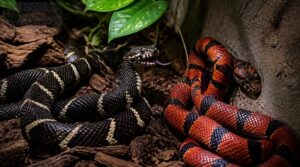
King snakes are naturally solitary animals, and housing two together isn’t as simple as doubling the space. Their hardwired instinct to hunt and eat other snakes — yes, even their own kind — makes cohabitation genuinely dangerous, not just inconvenient. Here’s what you need to know before considering shared housing.
Understanding how big California kingsnakes actually get puts their predatory capability in sharper perspective — a four-foot snake is more than capable of overpowering a similarly sized tankmate.
Solitary Natural Behavior
King snakes are solitary by nature, maintaining individual home ranges they almost never share. They rely on scent marking to define territory, deter rivals, and forage independently along routes chosen for cover.
What you won’t find in the wild is peaceful coexistence. Once mating ends, each snake returns to its own range, and that pattern doesn’t disappear in your enclosure. This solitary behavior reflects a deeply ingrained pattern, and research suggests that natural behaviour and wellbeing are conceptually independent, meaning a snake’s instinct to be alone isn’t just preference — it’s tied to its overall welfare.
Snake-Eating Instincts
That solitary instinct comes with something far more alarming: king snakes are ophiophagous predators, meaning they actively hunt and consume other snakes. They detect prey through chemical cues processed by the tongue and Jacobson’s organ, targeting a cagemate the same way they’d target any meal.
Contact triggers rapid constriction, coils tightening until suffocation, and jaw flexibility then allows head-first swallowing.
Individual Housing Recommendation
Given those instincts, herpetologists consistently recommend individual housing for every king snake you keep.
Each snake needs its own minimum 36 x 18 x 12 inch enclosure, with hides placed on both the warm and cool ends, a water dish large enough for soaking, and substrate like cypress mulch or aspen bedding, partially replaced every one to two weeks.
Why King Snake Cohabitation is Risky
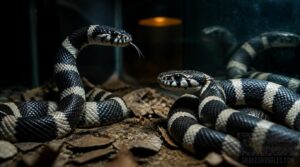
King snakes don’t just dislike sharing space—they’re hardwired to see a cagemate as a meal. Several factors make cohabitation genuinely dangerous, and even experienced keepers have lost snakes to situations that seemed controlled. Here’s what you’re actually up against.
Cannibalism Risk
Cannibalism isn’t a rare edge case with king snakes; it’s a genuine, documented threat. Even well-fed individuals may strike at a cagemate, driven by their ophiophagous instincts. Stress, scent marking from previous enclosure occupants, and irregular feeding schedules can all heighten predatory responses. If your snake feels threatened or hungry, a nearby cagemate quickly becomes a target, not a companion.
Even a well-fed king snake may treat its cagemate as a meal, not a companion
Size Differences Increase Danger
Even a 20% size difference can flip your enclosure’s relationship from neutral to predatory. The larger snake’s grip covers more surface area, making escape nearly impossible for the smaller one.
Feeding becomes dangerous too, since the larger snake can steal meals or intimidate a cagemate. Growth rates compound this over time, quietly turning a manageable pairing into a hazardous one.
Territorial and Breeding Aggression
Male king snakes treat breeding season like a combat test. Five key behaviors signal escalating aggression:
Before these aggressive displays peak, it helps to adjust feeding schedules and recognize breeding readiness cues so you can anticipate and manage male behavior safely.
- Scent-marking enclosure boundaries repeatedly
- Sustained combat posturing between males
- Striking at cagemates without provocation
- Refusing food when a rival is nearby
- Cannibalism triggers from close, persistent contact
Separate both males immediately during breeding season, as their territorial instincts override even a calm, well-fed snake.
Resource Competition and Stress
Sharing space forces king snakes to compete for every resource, from basking zones to hiding spots. When resource scarcity increases, stress indicators like restless pacing and food refusal follow quickly.
A dominant snake will monopolize warm areas, leaving the other exposed to suboptimal temperatures daily. Separate feeding stations and adequate enclosure size reduce friction, but won’t eliminate the root tension.
Hidden Injuries
Hidden harm can develop after territorial aggression, even when scales look intact. Check daily for:
- bruising, swelling, tenderness, and deep-breath or shoulder pain suggesting internal contusions;
- confusion, dizziness, headaches, food refusal, or hiding, then track concussion-like stress signs;
- limping or guarded movement, requiring MRI/CT for hairline fractures and rest for strains.
Prevent injuries through gradual introduction, separate feeding, and isolation.
Can King Snakes Share Temporarily?
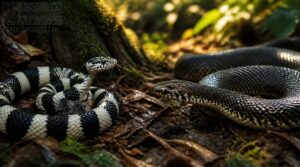
The short answer is: only under very specific, tightly controlled conditions. Temporary sharing during breeding is the one situation where most experienced keepers allow brief contact — but even then, the rules are strict and the risks don’t disappear. Here’s what responsible temporary cohabitation actually looks like, and where the hard limits are.
Supervised Breeding Introductions
Breeding introductions are the only scenario where brief cohabitation makes sense, and they still demand constant supervision.
Match snakes by size, age, and temperament, and confirm a 30-day quarantine first. Use scent exchange with swapped bedding before any direct contact to ease territorial aggression.
| Phase | What to Do | Red Flags |
|---|---|---|
| Pre-intro | Swap bedding; confirm quarantine | Feeding refusal, stress posturing |
| During intro | Neutral enclosure, one keeper present | Biting, constriction, persistent following |
| Post-intro | Return to separate housing | Scale damage, appetite loss |
Watch for breeding readiness signs like increased activity. Log every session’s duration and behavior carefully.
Separate Before and After Mating
King snakes are solitary reptiles by nature, so separating them before and after mating isn’t optional. Return each snake to its own enclosure immediately after copulation ends.
During breeding season, even calm individuals can shift into aggressive, territorial mode without warning. Monitor appetite and behavior for 7-10 days as part of your post-mating health check. That reset period protects both snakes.
Never Leave Them Unattended
Even a brief supervised introduction can turn dangerous fast without your full attention. Watch both snakes continuously for posturing, hissing, or striking. Keep a secure enclosure lid ready for instant separation, and have a first aid kit accessible nearby.
A calm snake can shift into predatory mode in seconds, so your emergency response plan needs to be immediately within reach.
Same-Sex Pairing Risks
Same-sex pairings carry real risks when two males fail to establish a dominance hierarchy and default instead to territorial aggression and repeated confrontation. Mating signal confusion makes this worse, since misread cues trigger escalating exchanges that end in injury and chronic stress.
During breeding season, hormonal defense escalation intensifies synchronized strikes, persistent chasing, and escape attempts in confined spaces.
Different Species Remain Unsafe
Pairing two different species introduces a separate and serious category of risk. Cross-species predation is a real possibility, since king snakes treat unfamiliar snakes as prey regardless of genus or size.
Incompatible temperature and humidity requirements create chronic stress for at least one animal. Disease transmission between species can spread quickly and remain undetected until serious damage is done.
Warning Signs Require Immediate Separation
King snakes don’t send polite warnings before things go wrong — their signals are physical, fast, and easy to miss if you’re not watching closely. Knowing what to look for can be the difference between a close call and a serious injury. These are the key warning signs that mean it’s time to separate immediately.
Biting or Constriction

A bite isn’t just a warning. It’s a verdict. King snakes deliver rapid strikes with recurved fangs, and bite pressure can exceed 2.5 times the snake’s body weight, causing real puncture wounds and bruising.
If constriction follows, separate them immediately. Coils restrict thoracic expansion fast, and a cagemate doesn’t survive sustained pressure the way prey in the wild doesn’t either.
Stalking and Persistent Following
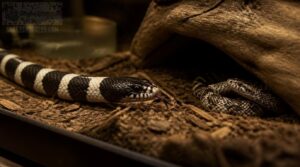
Watch for one snake tracking the other’s movements obsessively. This isn’t curiosity. It’s predatory mapping, and it deserves your immediate attention.
- Pacing along the cagemate’s body or tail
- Repeated proximity without retreat or disengagement
- Mirroring movement persistently across the enclosure
These patterns signal predatory intent, not socialization. Separate them before contact escalates. A snake following persistently isn’t adapting; it’s targeting.
Hissing, Striking, or Posturing

When a king snake raises its upper body, flattens its neck, or sways its head side to side, it’s actively figuring out striking range, not adjusting position. A hiss isn’t just sound; it’s a controlled exhale that intensifies as the threat closes in. Posturing paired with hissing means the snake has moved past discomfort. Separate them immediately. Waiting risks a strike.
Food Refusal or Hiding

When a cohabitated snake stops eating, stress is almost always the reason. Food refusal paired with excessive hiding tells you the snake no longer feels secure in the enclosure. Watch for:
- Skipping two or more consecutive meals
- Retreating to hides before or after feeding attempts
- Ignoring prey even when briefly separated from its cagemate
These patterns signal chronic stress. Separate the snakes.
Injuries and Scale Damage
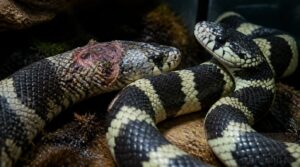
Physical wounds tell the clearest story. Scale ridge abrasions and bite marks may not bleed heavily, but they expose deep tissue to bacterial infection and really slow healing for up to 2 to 4 weeks.
Darkened, crusty patches or matte-finish scales signal thermal or friction injury. Separate the snakes immediately, since continued cohabitation only compounds damage with every new interaction.
Safer Alternatives to King Snake Cohabitation
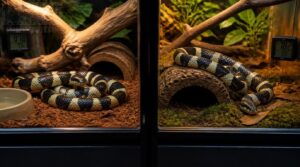
If cohabitation isn’t the right fit for your king snakes, that doesn’t mean your care options are limited. There are practical, proven ways to meet their needs while keeping every snake safe. Here’s what to focus on instead.
Separate Secure Enclosures
One snake, one enclosure. Separate secure enclosures eliminate resource management conflicts and injury risk entirely.
- Enclosure security and escape prevention: Lids must latch firmly with no gaps a snake can pry open.
- Dedicated zones: Each individual enclosure needs its own warm and cool areas.
- Individual ventilation: Reduces humidity buildup, mold, and respiratory risk.
- Clear labeling: Record each snake’s name and last feed date.
Proper Heat and Hides
Proper heat and hides make each enclosure secure. Create thermal gradient: 88–92°F warm, 72–78°F cool, using a thermostatted mat.
| Thermal Gradient Setup | Hide Placement Guide | Temperature Monitoring Routine |
|---|---|---|
| Warm hide | Cool hide | Check twice daily |
| Substrate Safety Tips | Four hiding places | Heat-source adjustment |
Use cypress mulch or paper substrate. Keep hides away from hot spot, inspect weekly and log highs.
Quarantine New King Snakes
Once your enclosures are set up, quarantine is your next safeguard. Before introducing any new king snake to your collection, isolate it for 4 to 6 weeks in a separate space. Use dedicated equipment, paper towel substrate, and a stable thermal gradient.
Weigh your snake weekly, watch for mites, and record eating behavior. Healthy baselines now prevent serious problems later.
Prevent Accidental Contact
Quarantine is just one layer of prevention. Accidental contact stays preventable when your daily routine is deliberate:
- Keep one snake out at a time during handling or cleaning.
- Use dedicated handling tools for each snake, and wash hands first before switching.
- Maintain physical barriers between separate enclosures so no escape route connects them.
Latch every lid before moving to another.
Enrichment Without Shared Housing
With contact prevented, your focus shifts to making each enclosure its own world.
A foraging substrate mix of sand and moss, a climbing structures setup using driftwood, and a weekly enrichment toys rotation keep your snake active and curious.
Scent trail games with safe herbal cues add sensory interest.
These individual enclosure improvements support stress reduction without shared housing risk.
Frequently Asked Questions (FAQs)
Do king snakes get stressed when housed together?
Like two wolves forced into one small den, yes. Shared housing triggers stress fast, surfacing as hiding patterns, feeding refusal, excess tongue flicking, and aggression signs that rarely settle on their own over time.
Can hatchling or juvenile king snakes be safely cohabitated?
No, hatchling and juvenile king snakes can’t be safely housed together. Aggression, feeding competition, and cannibalism risk make even brief cohabitation dangerous, and most herpetologists strongly recommend individual housing from day one.
What size enclosure does a king snake need?
Space is the first gift you give a king snake. A single adult needs at least 4 by 2 feet of floor space, 2 to 4 inches of substrate, and a warm side at 85°F.
How often should king snakes be fed?
Feed juveniles every 5 to 7 days, scaling prey to roughly 10–15% of body weight as they grow. Adults do well on meals every 7 to 14 days, adjusted for size, metabolism, and season.
Keep feeding simple with compact, lightweight tools and frozen-thawed prey from this selection of reptile snake food supplies to stay on schedule.
What humidity levels do king snakes require?
King snakes do best at 40 to 60 percent humidity. Use a digital hygrometer to track levels daily, and add a moss-filled humid hide during shedding cycles to prevent incomplete molts.
Can king snakes recognize their owners over time?
Familiarity breeds trust. Your king snake identifies you mainly through scent and movement, using its Jacobson’s organ to process olfactory cues from your skin. Frequent, gentle handling and a consistent routine strengthen that recognition over time.
How long do king snakes typically live in captivity?
With proper care, your king snake can live 15 to 20 years, though some reach 25 or beyond. Enclosure stability, low stress, and regular veterinary checkups are the biggest drivers of a long, healthy life.
Conclusion
Keeping two king snakes in the same enclosure is like walking a tightrope over an open flame: every moment carries genuine risk. Whether king snakes can cohabitate safely is a question biology answers without hesitation. They simply can’t.
Separate enclosures aren’t just a precaution, they’re the baseline that every responsible keeper owes their animals. Watch for stalking or biting, respond without delay, and give each snake the solitary space its ancient instincts have always demanded.