This site is supported by our readers. We may earn a commission, at no cost to you, if you purchase through links.

A ball python hatches smaller than your forearm and can outlive your dog, your cat, and a decade beyond that. The record stands at nearly 50 years in captivity. Wild individuals rarely reach ten. That gap isn’t luck; it’s husbandry.
Ball python size and lifespan are directly tied to the decisions you make every week: feeding schedules, enclosure temperatures, how closely you watch the scale. Miss the juvenile window and you permanently cap their growth. Neglect the basics long enough and a potential 25-year companion becomes a 12-year casualty.
Understanding what drives both puts you in control.
Table Of Contents
- Key Takeaways
- Ball Python Size by Age and Growth Stage
- How Long Do Ball Pythons Live?
- How Fast Ball Pythons Grow and Reach Maturity
- How Care, Genetics, and Health Affect Size and Lifespan
- How to Estimate Age and Track Healthy Growth
- Frequently Asked Questions (FAQs)
- Are ball pythons difficult pets?
- What are the common causes of death in ball pythons?
- How much is a full grown ball python worth?
- Will a ball python bite hurt?
- Do ball pythons stop eating when fully grown?
- Can overfeeding shorten a ball pythons lifespan?
- How does stress affect ball python longevity?
- Do morphs influence size or lifespan differences?
- What weight indicates a healthy adult ball python?
- How often should adult ball pythons be fed?
- Conclusion
Key Takeaways
- Captive ball pythons typically live 20–30 years, with verified records near 50, while wild snakes rarely make it past 10 — the gap comes down to husbandry, not luck.
- Growth is stage-dependent: hatchlings start at 10–17 grams and roughly double weight in the first weeks, but the 9–24 month juvenile window is critical, since inconsistent feeding or heat then permanently caps adult size.
- Genetics set the ceiling (males plateau around 3.3–4.3 feet, females 4–5 feet, rarely over 5 feet), but only consistent care — 88–90°F basking temps, 60–70% humidity, and regular weigh-ins — determines whether your snake reaches it.
- The biggest lifespan killers are preventable: improper temperatures, low humidity, malnutrition, chronic stress, and overfeeding that leads to fatty liver disease, so monthly weight tracking and annual vet checkups are essential.
Ball Python Size by Age and Growth Stage
Ball pythons don’t stay hatchling-sized for long, and knowing what to expect at each stage helps you stay ahead of their needs. Size varies a lot depending on age, sex, and development—and those differences matter for housing, feeding, and health decisions. Here’s how they measure up from hatching through full adulthood.
Since their growth rate ties closely to how long they’ll be with you, checking out this guide on ball python lifespan helps you plan for every stage.
Hatchlings and Juveniles
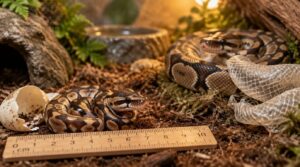
Hatchlings emerge weighing 10-17 grams and measuring 12-18 inches long, small but primed for aggressive change. Your first shed usually arrives within two weeks of hatching.
Ball python growth rate during the critical 9-24 month juvenile window pushes 1-2 grams weekly under ideal temperatures. Most juveniles hit 14-22 inches by six to nine months. Inconsistent feeding stunts that trajectory permanently.
Adult Males and Females

Once that juvenile window closes, sex dimorphism separates the sexes fast. Your males plateau near 3.3 to 4.3 feet and hit sexual maturity between two and three years.
Females consistently outgrow them, settling comfortably between four and five feet. That size gap isn’t accidental. Females carry more body mass for egg production, and that bulk directly forms the foundation of their reproductive longevity.
Maximum Adult Size

Most balls cap out at five feet and five pounds, but outliers do exist. Females can occasionally push six feet; males rarely breach 4.5. Genetics set the ceiling, but your husbandry determines whether your snake actually reaches it. Overfeeding inflates girth without adding healthy length. Track growth monthly, and you’ll spot the plateau arriving right around year three or four.
To see how your snake compares at each stage, check this ball python growth rate chart and adjust feeding before girth outpaces length.
If you want a fuller breakdown of what influences those growth timelines, the guide to ball python growth stages covers it month by month.
How Long Do Ball Pythons Live?

Ball pythons aren’t short-term pets — lifespan varies drastically depending on whether they’re wild or captive. In the right hands, these snakes can outlive your dog, your car, and maybe even your mortgage. Here’s what you need to know about how long they actually last.
Ball pythons aren’t short-term pets — a well-cared-for captive can outlive your dog, your car, and maybe even your mortgage
Captive Lifespan
How long do ball pythons live in captivity? Most reach 20 to 30 years, a lifespan that reflects your commitment to reptile husbandry as much as genetics.
Ball Python Average Lifespan in captivity depends on nutrition, stable temperatures, humidity, and low stress. These are the real snake longevity factors. Skip any one consistently, and you’re trimming years off their life.
Even with a 20–30 year potential lifespan, many keepers overlook how handling habits matter — our guide on whether ball pythons like to cuddle explains why respecting their temperament reduces stress and supports longevity.
Wild Lifespan
In the wild, the ball python average lifespan drops to 6 to 10 years. Snake longevity factors stack hard:
- Predation from raptors and large snakes
- Seasonal food gaps slowing recovery
- Habitat loss increasing temperature stress
- Disease spreading in dense populations
Ball pythons live in the wild for half what yours achieves in captivity. Captivity vs wild survival isn’t even close.
Longevity Records
When researchers dig into zoological records, the numbers genuinely surprise most people. The longest reliably documented ball python lifespan in captivity hits 47 to 50 years, usually from private collections with careful care logs.
Verified claims demand a documented hatch date plus continuous vet records spanning decades. Without that paper trail, you’re guessing, and guessing doesn’t hold up in herpetology.
How Fast Ball Pythons Grow and Reach Maturity

A hatchling ball python can weigh as little as 10 grams at emergence, and balloon to nearly 800 grams within its first year. That kind of trajectory is only possible if you get the basics right.
The ball python growth rate hinges on two things: consistent heat and a reliable snake feeding schedule. Keep basking temps at 88-90°F and feed juveniles every 5-7 days. That’s your formula. Don’t forget humidity alongside heat—hatchlings need a steady 60-70%, and a solid reptile misting system for ball pythons keeps those levels consistent without daily guesswork.
Four milestones every keeper should know:
- Weeks 1-8: Hatchling size and weight double on steady feedings.
- 6-12 months: Rapid juvenile growth rates push length and girth; upgrade your prey.
- 1-2 years: Growth slows; your snake is approaching adult size.
- 2-4 years: Sexual maturity arrives; males generally get there 3-6 months ahead of females.
How Care, Genetics, and Health Affect Size and Lifespan

Consider two ball pythons from the same clutch. One hits 4 feet in two years; the other stalls at 3 feet. Same genetics, different husbandry decisions. That gap tells you everything about ball python size and lifespan.
Three factors decide your snake’s ceiling: 1. Genetic potential sets the upper limit before you touch a thermostat or fill a water bowl. 2. Husbandry decisions like basking temps, feeding schedules, and humidity either free up or cap that potential. 3. Snake metabolic health deteriorates fast when parasites, infections, or metabolic bone disease go untreated. Your choices compound. Chronic stress can compress a 25-year captive lifespan into just 12. Preventive veterinary care and consistent enclosure conditions aren’t optional extras; they’re the architecture of a long, healthy animal.
How to Estimate Age and Track Healthy Growth

You can’t read a ball python’s birth certificate, but their body tells the story. Combine length, girth, and weight data over time and you’ll build a reliable picture of age and health.
Start here:
- Measure length and girth every 1-3 months and plot both on a growth chart; deviations signal feeding issues before symptoms appear.
- Weigh monthly with a digital scale to separate true growth from fat gain, a critical distinction as ball python growth rate slows past age two.
- Book an annual health screening with a reptile vet to cross-reference your data against physical condition scores.
Age estimation techniques like logging first shed timing and breeding season onset sharpen your overall grasp of ball python size and lifespan milestones.
Frequently Asked Questions (FAQs)
Are ball pythons difficult pets?
No. Ball pythons rank among the easiest snakes you’ll keep. Master basic ball python care: stable heat, humidity, correct enclosure size, and simple feeding strategies. Their calm temperament and decades-long lifespan reward consistent, low-effort husbandry.
What are the common causes of death in ball pythons?
A thermostat is a lifeline. Most ball pythons die from improper temperatures, low humidity, malnutrition, fatty liver disease from overfeeding, and infections. Reptile husbandry failures, not age, cut Lifespan short. Master Common Health Issues early.
How much is a full grown ball python worth?
Wondering what your full grown ball python is worth? Most common adults sell for $50–$200. Rare morphs fetch $500–$1,000+, and top-tier breeder-quality genetics can command several thousand dollars.
Will a ball python bite hurt?
You’re picturing fangs, but ball pythons only have small, curved teeth. Yes, a bite stings, but it’s mild to moderate pain with minor punctures. Their docile temperament makes bites rare.
Do ball pythons stop eating when fully grown?
Picture a furnace idling, not shutting off. Fully grown ball pythons keep eating, though adults may fast for months during breeding season or winter, then resume normal feeding schedules once conditions improve.
Can overfeeding shorten a ball pythons lifespan?
Yes. Overfeeding shortens lifespan. Ask any vet: snake obesity drives fatty liver disease, digestive strain, and organ stress, trimming a potential 40-plus-year Long Lifespan down to 20 or Monitor Body Weight trends.
How does stress affect ball python longevity?
Chronic stress quietly steals years. It triggers snake immune system suppression, disrupts appetite, and drains energy reserves, leaving your python vulnerable to infections. Prioritize stress reduction: stable routines, proper heat gradients, and gentle handling.
Do morphs influence size or lifespan differences?
Short answer: mostly no. Morph development rarely changes adult length beyond normal genetic range, and no solid evidence links color genes to lifespan. But morph-specific health risks matter: Spider’s neurological wobble can indirectly shorten life.
What weight indicates a healthy adult ball python?
A healthy adult ball python should weigh 600–1,000 g for males and 900–1,400 g for females. Don’t chase a single number. Check body condition: rounded back, visible spine means underweight. Over 1,500 g, watch for obesity.
How often should adult ball pythons be fed?
Think of feeding as a metronome, not a countdown clock. Feed your adult ball python every 7 to 14 days, adjusting by body condition. If she’s gaining weight, stretch intervals; if she’s thin, tighten them.
Conclusion
Picture the same snake at two ages: a palm-sized hatchling, then a thick-bodied adult draped over your forearm decades later. That arc isn’t chance. Ball python size and lifespan are built from weekly choices: steady heat, consistent meals, honest weigh-ins. Miss the juvenile window and growth never returns. Nail the fundamentals and you’re not keeping a pet; you’re raising a companion that may outlast your car, your couch, and possibly your mortgage. Feed the future you want.