This site is supported by our readers. We may earn a commission, at no cost to you, if you purchase through links.

That slender brown snake coiled by your garden hose is probably harmless. Most of the common household snake types you’ll encounter, from garter snakes to rat snakes, want nothing to do with you, and a handful of them even eat the rodents and slugs damaging your yard.
The catch is that a few venomous neighbors, like copperheads and cottonmouths, can share the same habitat, and telling them apart comes down to details you can learn in minutes: pupil shape, head structure, scale texture. Here’s how to identify each species, understand what draws snakes to your property, and keep the dangerous ones out.
Table Of Contents
- Key Takeaways
- Common Non-Venomous Snakes Around Homes
- Venomous Snakes Found Near Homes
- Identifying Household Snakes and Lookalikes
- Why Snakes Enter Homes and Yards
- Preventing and Removing Household Snakes
- Frequently Asked Questions (FAQs)
- What is the most common house snake?
- What are the 10 most popular snakes?
- What are the common types of snakes found in houses?
- What’s the most common snake to have as a pet?
- What do snakes eat in residential areas?
- How long do household snakes typically live?
- Can snakes climb walls or enter attics?
- Are baby snakes more dangerous than adults?
- Do snakes travel in pairs or groups?
- What time of day are snakes most active?
- Conclusion
Key Takeaways
- Most snakes around homes—garter, rat, corn, milk, kingsnakes, bullsnakes—are harmless and even help by eating rodents, slugs, and other pests.
- Venomous lookalikes (copperheads, cottonmouths, rattlesnakes) can be told apart in seconds by checking head shape, vertical pupils, keeled scales, color banding, and heat-sensing pits.
- Snakes enter yards because of food, water, and shelter, so the highest-leverage prevention is rodent control, sealing gaps, and clearing woodpiles and debris near your foundation.
- If a snake gets inside, don’t grab it—confine the room, keep pets away, and call a professional removal service, especially since baby pit vipers are as venomous as adults.
Common Non-Venomous Snakes Around Homes

Most snakes you’ll find near your home are completely harmless to humans. Knowing which species you’re dealing with makes all the difference between unnecessary panic and a calm, informed response. Here are the five non-venomous snakes most commonly spotted around residential properties.
If any of them pique your curiosity, our guide to popular snake species list breaks down what makes each one unique. You can even learn to read a snake’s scale patterns—like keeled versus smooth scales—to identify which harmless visitor is in your yard. A good snake identification field guide book fits right in your pocket, so you can confirm a species on the spot without second-guessing.
Garter Snakes
Most garter snakes you’ll spot in your yard are completely harmless. Their distinct dorsal stripes and slender heads make snake identification fairly easy. As a nonvenomous species, garters hunt slugs, insects, and amphibians, quietly managing garden pests.
They’re shy. If you see one, let it go. Simple habitat modification, like clearing wood piles and debris, keeps them from settling in.
Rat Snakes
are larger than garter snakes and more likely to enter your home. They’re nonvenomous constrictors that hunt rodents, quietly controlling rodent populations near structures.
For snake identification, look for:
- Smooth scales and an elongated head
- Round pupils
- Gray or blotched brown coloring
- Adults reaching 3–6 feet
Their snake behavior includes climbing into attics and sheds while following prey.
Corn Snakes and Milk Snakes
Two nonvenomous snakes you’re quite likely to encounter near your home are corn snakes and milk snakes. Both follow rodents into basements and crawl spaces, much like rat snakes do.
Since corn snakes are so often mistaken for venomous copperheads, a quick look at this corn snake vs. copperhead comparison can save you a lot of second-guessing. Their calm temperament also makes them popular pets, so a guide to maintaining consistent heat for corn snakes is handy if you decide to keep one instead of shooing it outside. A reptile heat mat thermostat keeps the warm side of the enclosure at a steady, safe temperature without any guesswork.
| Snake | Key Identifier |
|---|---|
| Corn Snake | Red-orange blotches with black borders |
| Milk Snake | Tri-color banding: black, red, and white |
Snake identification matters here since milk snakes closely resemble coral snakes in their coloring and banding pattern. Neither species bites unprovoked; if you spot one indoors, calmly guide it outside.
Kingsnakes
are the most useful household snake type you’ll encounter. They eat venomous snakes, rodents, and lizards, making them natural pest controllers in your yard. You’ll find them in woodpiles, rock gardens, and sheds. Their dark backgrounds with yellow or white banding vary by species, so snake identification takes a second look, but they’re nonvenomous and safe to leave alone.
Bullsnakes and Gopher Snakes
Size alone can startle you when a bullsnake or gopher snake crosses your path. These nonvenomous snakes reach 3–5 feet, with bold dark blotches on yellow-brown scales.
Gopher snakes look nearly identical and share the same rodent-heavy diet. Both species hiss and coil defensively, but they won’t bite unless you handle them. They’re actively controlling the rodents near your home.
Venomous Snakes Found Near Homes
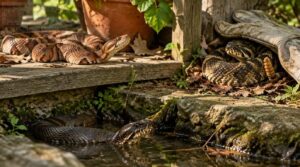
Most snakes near your home are harmless, but a few species genuinely warrant your attention. Three venomous snakes regularly turn up in residential areas across the U.S., and knowing how to identify each one matters. Here’s what to look for with copperheads, cottonmouths, and rattlesnakes.
If you’d rather keep a harmless species as a pet instead, our guide to corn snake morph temperament differences explains what the research actually shows.
Copperheads
are the venomous snake you’re most likely to meet in a southeastern yard. Their hourglass-shaped crossbands make snake identification reliable. Watch for:
- Narrow neck widening to a triangular head
- Elliptical pupils in daylight
- Copper-orange body with distinct banding
Venomous snake safety here is practical. Remove woodpiles and leaf debris sitting close to your foundation to meaningfully cut your risk.
Cottonmouths
Ask any swamp-dwelling angler about the "water moccasin" and you’ll hear a story. Cottonmouths, the only semi-aquatic pit viper in the Southeast, deliver hemotoxic venom that damages tissue and requires prompt care.
| Feature | What You’ll See |
|---|---|
| Head | Broad, chestnut-colored |
| Mouth | White cotton display |
| Habitat | Slow water, logs |
| Activity | Peaks 75–85°F |
Practice Venomous snake safety: clear brush, control rodents, and never handle one. Snake Identification matters most near ponds and sheds, where these Venomous species ambush prey.
Rattlesnakes
Think of a rattlesnake like a car alarm: it doesn’t want a fight, it wants space.
A rattlesnake is like a car alarm: it doesn’t want a fight, just space
Snake identification starts with a triangular head, vertical pupils, and heat-sensing pits near the eyes. These venomous species shelter under porches, sheds, and rocky debris near your home.
Snake bite risks peak when people try to handle one. Rely on professional snake removal instead.
Identifying Household Snakes and Lookalikes
Most snake identification mistakes happen in seconds, before anyone stops to look closely. Your best tool isn’t a field guide; it’s a calm, systematic scan of a few key physical features.
Check these four details before drawing any conclusion:
- Head and pupil shape: Venomous species usually show a triangular head and vertical pupils; round pupils point to a harmless snake.
- Scale texture: Garter Snakes and Rat Snakes carry smooth scales; venomous pit vipers feel noticeably rough and keeled.
- Color patterns: Copperheads display distinct hourglass crossbands, while many lookalikes show irregular blotches instead.
- Heat-sensing pits: Small visible pits between the eye and nostril confirm a pit viper. Since several harmless Texas snakes can look similar at a glance, this guide to snake species in Texas helps you tell venomous pit vipers from the rest, so you can admire them from a safe distance.
Snake Identification gets easier once you slow down and look systematically rather than react.
Why Snakes Enter Homes and Yards

If your yard feels like a snake magnet, it usually is one. Snakes don’t wander in by accident; they follow food, water, and shelter, and your property may offer all three.
Rodent populations are the biggest draw. A single bird feeder spilling seed or a compost pile can support mice, and mice support snakes. Pet food left outdoors works the same way, feeding rodents and amphibians that snakes hunt. Switching to a no waste bird seed feeder cuts down on spilled seed, so rodents have less to eat beneath your feeders.
Shelter matters just as much. Woodpiles, dense shrubbery, tall grass, and debris near your foundation create travel corridors and hiding spots. Sun-warmed foundations and walkways become basking routes, especially at dusk.
Then there’s access. Gaps under doors, crawl space vents, and cracked foundations let snakes slip indoors, particularly during spring breeding movement and fall temperature shifts. Sealing entry points and consistent yard maintenance address the root causes, not just the symptoms.
Preventing and Removing Household Snakes
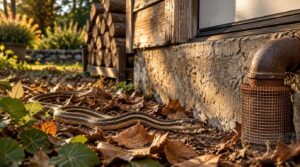
Snake prevention starts with the basics you already know from the last section: cut off food, water, and shelter. Rodent control is your highest-leverage move, since a mouse problem becomes a snake problem within weeks.
Here’s your priority order:
- Seal entry points with weatherstripping, 1/4-inch mesh vent screens, and copper mesh around pipes.
- Clear debris, woodpiles, and dense groundcover within 3–5 feet of your foundation.
- Install snakeproof fencing, hardware cloth buried 6 inches deep, around gardens or play areas.
If a snake gets inside anyway, don’t grab it. Confine it in a room, keep pets away, and call snake removal services. Professionals handle venomous species safely and relocate non-venomous ones humanely. You’ve got this.
Frequently Asked Questions (FAQs)
What is the most common house snake?
Like a quiet guest slipping through an open door, the garter snake claims the title of most common house snake. You’ll find these harmless, nonvenomous snakes in basements and yards, seeking shelter or rodents.
What are the 10 most popular snakes?
Chances are, you’ll meet these ten: garter snakes, rat snakes, corn snakes, milk snakes, kingsnakes, bullsnakes, gopher snakes, plus three venomous snakes you should recognize: copperheads, cottonmouths, and rattlesnakes.
What are the common types of snakes found in houses?
Most household snake types you’ll actually encounter inside are harmless. Garter snakes, rat snakes, and corn snakes top the list. Venomous species like copperheads and rattlesnakes appear far less often but still demand immediate caution.
What’s the most common snake to have as a pet?
Corn snakes are the bread and butter of the reptile hobby. Their low care level and reliably gentle temperament make them the most popular beginner-friendly pet snake, and you’ll find them in pet stores everywhere.
What do snakes eat in residential areas?
Most backyard snakes eat rodent populations, earthworms, insects, frogs, bird eggs, and small birds. That wide variety of food makes them effective natural pest controllers, quietly driving the pest predator cycle right outside your door.
How long do household snakes typically live?
Captive snakes far outlive their wild counterparts. If you’re keeping a garter snake, expect up to 12 years; rat snakes reach 20, and kingsnakes will often hit Wild individuals rarely survive past a decade.
Can snakes climb walls or enter attics?
Yes, some snakes can climb rough surfaces like brick and stucco using their ventral scales. Rat snakes are particularly skilled climbers and regularly slip into attics through soffit vents, gable vents, or damaged roof gaps.
Even smooth surfaces aren’t always safe from them, so it helps to understand whether snakes can climb glass and how to block their grip.
Are baby snakes more dangerous than adults?
Baby pit vipers carry venom just as potent as an adult’s, but they inject less of it per bite. That said, they’re more likely to bite defensively when startled. Always treat any bite as urgent.
Do snakes travel in pairs or groups?
Most snakes are solitary by nature. If you spot two or more together, it almost always means they’re sharing a den, prey-rich area, or a breeding site, and not actually traveling as a coordinated group.
What time of day are snakes most active?
If you’ve assumed snakes hunt all day, check the evidence: most are crepuscular, meaning dawn and dusk. You’ll see peak movement between 75–85°F, with activity shifting after rain or during seasonal snake activity.
Conclusion
The garden air feels calmer when you know what you’re looking at and what to do next, and you’ll handle each encounter with calm assurance.
So study the cues, identify confidently, and act only when necessary.
Your yard becomes safer as you understand common household snake types and how to deter them without fear.
With clear steps and steady hands, you’ll protect both your family and wildlife, and enjoy the outdoors again, your space restored and respected.