Skip to Content

Boa Constrictor Morphs and Genetics: What You Need to Know (2026)

This site is supported by our readers. We may earn a commission, at no cost to you, if you purchase through links.
boa constrictor morphs and genetics

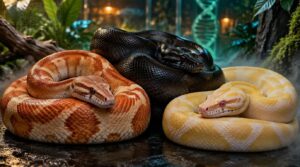
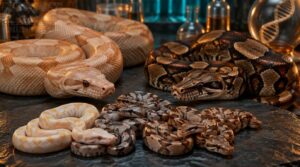
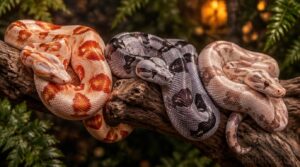
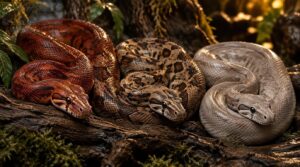
Walk into any serious boa constrictor collection and you’ll notice something immediately: no two animals look quite alike. One snake blazes orange and gold where another sits in cool silver-gray, and a third carries a dorsal pattern that looks hand-drawn. That visual diversity didn’t emerge by accident—it’s the direct result of selective breeding built on a surprisingly deep foundation of Mendelian genetics, codominance, and polygenic trait interactions.

Understanding boa constrictor morphs and genetics means learning to read an animal the way a geneticist would: as a physical expression of allele combinations, inheritance pathways, and occasionally, carefully managed mutations. Master that framework, and every breeding decision becomes deliberate rather than hopeful.

Table Of Contents

Key Takeaways

  • Every morph you see in a captive collection traces back to specific, heritable mutations—dominant, recessive, or codominant—that follow predictable Mendelian rules, so understanding inheritance patterns turns guesswork into deliberate breeding decisions.
  • Designer combos like Sharp Snow or Eclipse stack multiple gene mutations for dramatic visual results, but each added recessive gene multiplies breeding difficulty and can introduce serious health risks like neurological wobble or structural defects.
  • Ethical breeding requires cycling between line breeding and outcrossing, maintaining at least three generations of pedigree records, and screening for recessive defect carriers before any pairing—because chasing rare color at the cost of animal health is a long-term liability.
  • When evaluating a morph to buy, genetic lineage and documented bloodline verification matter more than price or appearance, since a five-generation pedigree reveals breeding potential and inherited health risks that no visual inspection can confirm.

What Are Boa Constrictor Morphs?

what are boa constrictor morphs

Not every boa you see in a collection looks the same — and that’s not an accident. Morphs are the result of specific genetic mutations, selectively bred over generations to produce traits you’d never find in the wild. Here’s what separates them from natural boa populations, and why it matters.

These visual differences are purely cosmetic — if you’re wondering whether a striking pattern comes with a personality shift, boa constrictor morphs and their temperament traits break down exactly what changes and what stays the same.

Defining Morphs Vs. Natural Locality Variations

Not all visual differences in boa constrictors mean the same thing genetically. A boa constrictor morph is a captive-bred variant carrying specific mutations that alter pigmentation or pattern in predictable, heritable ways.

Locality variations, by contrast, emerge from thousands of years of geographic isolation and natural selection—think the olive tones of a Hog Island boa versus the bold saddles of a Colombian. One comes from a breeder’s deliberate plan; the other, from nature’s long game. These variations are often driven by natural selection and speciation.

The Role of Selective Breeding

Selective breeding is the engine behind every morph you see in captive collections today. By pairing boas that carry desirable mutations, breeders gradually increase the frequency of those genetic variants across generations — a process called breeding cycle optimization. Line breeding concentrates related individuals to fix specific traits, while outcrossing introduces fresh genetics to protect genetic diversity.

That balance matters more than most beginners expect. Selecting aggressively for one trait can quietly compromise others — reduced fertility, weaker immune response, or structural health issues. Ethical breeding practices treat these tradeoffs seriously, using pedigree records and, increasingly, genomic selection tools to make smarter, data-driven decisions rather than chasing aesthetics alone.

How Morphs Differ From Wild-Type Boas

Once selective breeding locks in a mutation, the gap between morph and wild-type becomes hard to ignore. Wildtype coloration follows geography — brown or gray bases, reddish saddles, symmetrical patterning shaped by natural selection.

Morphs break that blueprint entirely. Color contrast differences and pattern symmetry variance can be dramatic: albinos show white bodies with red eyes, while motley morphs replace natural saddles with circular markings.

Basic Genetics: Understanding Boa Inheritance Patterns

Before you can breed morphs with any real intention, you need to understand what’s actually happening at the genetic level. Boa inheritance follows a handful of consistent patterns—and once you recognize them, predicting outcomes becomes a lot more logical. Here’s what you need to know about each one.

Genotype Vs. Phenotype Explained

genotype vs. phenotype explained

Think of your boa’s genotype as a hidden blueprint — the complete DNA instructions locked away in every cell, invisible to the naked eye. The phenotype is what actually shows up: color, pattern, body markings. These two concepts sit at the core of every breeding decision you’ll make.

Your genotype stays fixed throughout your boa’s life. Its phenotype, however, isn’t always locked in. Gene-environment interaction and phenotypic plasticity mean temperature, nutrition, and developmental conditions can subtly shift how traits express visually.

  1. Genotype determination requires DNA analysis — you can’t confirm hidden recessive alleles by sight alone.
  2. Allele expression depends on pairing: heterozygous animals carry one wild-type and one mutant allele.
  3. Allelic masking occurs when one allele suppresses another’s visible effect.
  4. Mendelian inheritance governs predictable ratios when breeding recessive-to-recessive combinations.
  5. Epigenetic modification can alter phenotypic expression without changing the underlying DNA sequence.

That’s why two boas with identical color can carry completely different genetics underneath.

Dominant Trait Expression

dominant trait expression

One copy is all it takes. With dominant trait expression, your boa visually shows the mutation even as a heterozygote — no second allele required. That’s what separates dominant genetics from recessives and makes them far easier to track across generations.

Cross Type Trait Visible? Breeding Outcome
Het × Wild-Type Yes, 50% offspring Predictable ratios
Het × Het Yes, 75% offspring Watch for lethal homos
Homo × Wild-Type Yes, 100% offspring All carry dominant allele

Penetrance variability and expressivity variation mean not every dominant animal looks identical — modifier genes quietly adjust intensity without changing the underlying genotype.

Recessive Trait Expression

recessive trait expression

Recessive trait expression is the slow game of boa genetics. A recessive gene stays hidden until your boa inherits two copies — one from each parent. That’s homozygous recessive territory, where genotype finally matches phenotype. Carriers look wild-type but silently pass the allele on. A het × het pairing gives you just a 25% chance of a visual morph.

  • Traits can skip entire generations undetected
  • Carriers show zero visual difference from wild-type boas
  • Albino and Leopard both follow this exact inheritance model
  • Proving recessive genetics in offspring can take four to five years

Incomplete Dominance in Boa Morphs

incomplete dominance in boa morphs

Incomplete dominance sits between wild-type and super forms—your heterozygous boa shows a blended phenotype distinct from both parents. A het × het pairing produces 25% normals, 50% intermediates, and 25% supers. Motley and Hypo both follow this model.

Identifying heterozygous morphs visually can be tricky, since pedigree records often matter more than appearance alone.

Polygenic Traits and Multiple Gene Interactions

polygenic traits and multiple gene interactions

Most traits in boa constrictors don’t sort neatly into dominant, recessive, or incomplete dominance categories — polygenic inheritance involves dozens of loci each contributing small, additive effects to characteristics like color saturation and body size. Epistasis further complicates this: one gene’s expression can suppress or elevate another’s. Environmental factors like humidity and nutrition also shift how genetic potential is realized.

  1. Additive allelic effects accumulate across loci
  2. Epistasis modifies individual gene contributions
  3. Phenotype shows continuous variation, not fixed categories
  4. Environmental context shapes trait expression
  5. Gene networks influence multiple downstream traits

These interactions make polygenic outcomes probabilistic rather than binary.

Selective breeding helps shift those probabilities, as explored in this overview of factors shaping boa constrictor temperament.

popular boa constrictor morph types

Boa morphs span a wide spectrum, from simple single-gene mutations to visually striking combinations that take years of careful breeding to produce.

Each type has its own genetic mechanism, distinct appearance, and practical implications for anyone working with these animals. Here’s a breakdown of the most recognized morph categories you’ll encounter.

Albino Morphs (T+ and T-)

Albino boas are built on a single mechanism: the suppression of melanin through tyrosinase pathway mutations. Two distinct lineages exist—T+ (tyrosinase positive) and T− (tyrosinase negative)—and they behave quite differently.

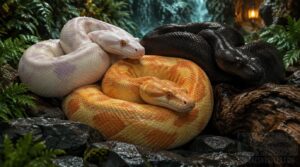
T+ albinos retain partial tyrosinase function, producing warmer yellows and brownish accents with darker, often black-pupiled eyes. T− animals, being fully amelanistic, display purer whites and lavender tones, with red to pink eyes from complete pigment loss.

Don’t cross these lineages expecting visual albinos—their alleles are incompatible for expression. Track lineage carefully before any breeding project.

Anerythristic (Anery) Morphs

Strip red pigment from a boa entirely, and you get the Anerythristic genetic mutation in action. Anery boas display a silver-gray body with lavender tails at birth.

Anery visual traits to know:

  1. Grayscale body with chrome-like sheen
  2. Lavender tail fading to brown with age
  3. Dark, reflective eyes
  4. Pattern intact, color palette shifted cool

As a recessive gene, both parents must carry it for visual expression.

Hypomelanistic (Hypo) Morphs

Where Anery pulls color out entirely, Hypo Color Reduction works more subtly — dialing down black and brown pigment rather than eliminating it. The result is a boa with softer contrast, warmer tan or caramel tones, and noticeably brighter saddles.

Key Hypo Visual Traits to recognize:

  • Reduced melanin along the dorsal, creating a faded, pastel-like finish
  • Lighter eye coloration reflecting overall melanin synthesis reduction
  • Tan-to-creamy base tones with softened Hypo Pattern Softening along lateral blotches

Motley and Pattern Mutations

Where Hypo softens pigment, Motley rewrites the pattern entirely. This codominant mutation replaces bold saddles with evenly spaced dorsal circles running down the midline, while side pattern reduces to faint dashes or disappears.

Breed two Motley boas together and the Super Motley emerges — a near-patternless animal that represents the full expression of this inheritance pattern.

IMG and Melanin-Enhancing Morphs

If Motley reshapes the pattern, IMG reshapes the animal itself over time. IMG stands for Increasing Melanin Gene — and it does exactly that. Hatchlings look almost ordinary, but across successive sheds, melanin pigmentation deepens progressively, darkening dorsal surfaces until some adults appear nearly black.

  • Ventral and cloacal regions darken earliest
  • Each molt reveals deeper contrast along scale margins
  • Hypo IMG contrast preserves bright ventrals against intensifying dorsal black
  • Temperature directly influences how stark the darkening appears

Leopard, Aztec, and Aberrant Pattern Morphs

Where IMG builds pigment over time, Leopard, Aztec, and Aberrant morphs reshape the pattern itself—permanently, from hatching.

Leopard pattern genetics produce bold, irregular rosettes with high lateral contrast, inherited as a dominant or co-dominant trait depending on lineage. Aztec boas display tight, geometric saddles resembling interlocking mosaic fragments. Aberrant pattern variability goes further, generating unpredictable broken bands that differ even between siblings—a collector’s gamble, and often a rewarding one.

Sterling and Patternless Morphs

Think of Sterling as the boa world’s blank canvas—its patternless gene strips away saddles entirely, leaving a clean, uniform body in pale cream to warm caramel tones. That simplicity isn’t accidental; Sterling coloration is governed by recessive inheritance, meaning both parents must carry the allele for visual offspring to appear.

Genetic screening and solid lineage tracking are non-negotiable here—without them, you’re basically guessing at genotype rather than managing it.

Dominant and Codominant Boa Morphs

dominant and codominant boa morphs

Not every boa morph works the same way under the hood—some don’t need two copies of a gene to show up visually. Dominant and codominant morphs follow their own rules, and understanding them changes how you approach every breeding decision. Here’s a closer look at the key players in this category.

Arabesque Morphs

The Arabesque boa, introduced through selective breeding as a dominant genetic trait, expresses intricate, scrolling linework across the dorsal surface — even a single copy produces visible pattern shifts. When you cross Arabesque with hypo or anerythristic backgrounds, those sweeping lines grow sharper and more defined.

Tracking lineage across multiple generations helps confirm pattern inheritance stability and ensures your breeding program produces consistent, high-quality results.

IMG (Azabache) and Scoria

Few boa morphs command attention the way the Azabache Scoria combo does. Peter Kahl confirmed IMG’s codominant inheritance in 2007, meaning a single copy produces visible darkening—melanin contrast breeding begins working immediately.

What makes IMG genuinely distinctive is its progressive development: pigmentation intensifies over roughly five years. Scoria amplifies that density further, though genetic testing verification helps confirm genotype versus phenotype when visual assessment alone isn’t enough.

Inca Morphs

Inca morphs stand apart because they don’t need a "super" form to deliver results. Classified as dominant in inheritance, a single copy expresses the signature chainlink saddle pattern clearly — no guesswork, no waiting for homozygous offspring. That consistency makes lineage tracking straightforward.

Where breeders get creative is pairing Inca with color mutations like Albino or Hypo, building designer morph combinations that push visual balance and market value simultaneously.

How Dominant Genes Affect Breeding Outcomes

Dominant genes work like a fast pass in boa breeding. When you pair a dominant carrier with a wild-type, 50% of offspring express the trait visually — no waiting on hidden recessives or possible-het guesswork. Breed two carriers together, and 25% may present homozygous effects, though most boa dominant traits don’t produce distinct super forms like codominants do.

This speed advantage shapes smarter selective breeding strategies, letting you establish designer lines faster than recessive projects allow.

Recessive Boa Morphs and Breeding Strategies

recessive boa morphs and breeding strategies

Recessive morphs don’t show their hand right away — that’s what makes working with them both challenging and rewarding. Unlike dominant traits, you won’t see results in the first generation, and confirming what’s hiding in your animals can take four to five years of careful breeding.

Here’s what you need to understand about the most significant recessive morphs and how to plan your breeding projects around them.

Blood Boa Genetics

The Blood boa operates on incomplete dominant inheritance, producing three distinct phenotypes depending on zygosity. Heterozygous individuals show enhanced red-orange tones with some retained dorsal pattern, while homozygous Blood boas display near-solid, deeply saturated coloration with minimal saddle markings.

Pair Blood with Hypo, and melanin reduction amplifies that color shift further. Add Motley, and you get broken patterning alongside intensified pigmentation — a combination worth tracking across multiple clutches.

Leopard and Sterling Genetics

Leopard follows incomplete dominance, producing variable spotting based on copy count. Single-copy animals show irregular dorsal markings; two copies sharpen contrast dramatically.

Sterling reduces melanin uniformly, creating elevated scale brightness with a near-metallic quality.

When both traits appear together, Leopard Sterling offspring often display crisper spots against a lighter ground color—making careful lineage documentation critical for predicting phenotype outcomes.

Breeding for Recessive Traits

Recessive traits don’t reveal themselves until an animal inherits two copies of the same recessive gene—making heterozygous carriers the invisible backbone of any serious breeding program. Pairing two carriers gives you 25% visual offspring, a reliable Mendelian probability, but triple-het pairings drop that to 12.5%.

Carrier testing and pedigree planning help you work smarter, managing inbreeding risk before it quietly undermines your line’s long-term health.

Using Punnett Squares to Predict Outcomes

Punnett squares turn genetic guesswork into a reliable map. Set up the grid with each parent’s alleles along the axes—say, het albino × het albino—and the four interior cells reveal your outcome ratios instantly: 25% visual albino, 50% heterozygous carriers, 25% normal. Those aren’t estimates; they’re Mendelian probabilities backed by how alleles segregate during reproduction.

Understanding genotype versus phenotype is what makes that grid meaningful.

Designer Morphs and Genetic Combinations

designer morphs and genetic combinations

Single morphs are impressive on their own, but combining them is where boa genetics gets genuinely interesting. Stacking two or more traits can produce visuals that no wild boa ever wore. Here are the key combinations worth understanding.

Fire Boa as a Genetic Enhancer

The Fire boa functions less like a standalone morph and more like a volume knob for color. It’s a codominant genetic enhancer that intensifies red pigmentation, sharpens scale contrast, and deepens eye coloration across nearly any combination you build around it.

Pair Fire with hypo or albino traits and you get lighter body tones with retained red brilliance—a striking visual balance that commands premium market pricing.

Eclipse (Leopard + Colombian Motley)

The Eclipse boa is what happens when Leopard meets Colombian Motley—two distinct genetic influences producing something far more dramatic than either achieves alone. The result is a mostly black or near-black animal with a grainy, textured pattern and sharp dorsal boundaries. Age darkening progresses steadily, with juveniles appearing lighter before full pigment expression sets in.

Temperament traits remain stable, making the Eclipse a genuinely rewarding designer morph to work with.

Sharp Snow and Multi-Gene Combos

Stacking two recessive mutations into one animal is where Sharp Snow earns its reputation. Combining Sharp Albino and Anerythristic genetics, it produces boas with pale yellow-gray tones and dramatically reduced black pigmentation—a direct result of epistatic gene effects suppressing melanin at multiple pathways.

  1. Add Hypomelanistic for Sharp Snow Glow brightness
  2. Integrate Caramel for Paradigm-level contrast
  3. Track lineage to prevent genetic dilution across generations

Creating Unique Visual Combinations

Building a truly striking boa starts with understanding how layered color palettes interact across gene combinations. When you pair Hypo’s reduced melanin with Motley’s pattern fusion techniques, the result isn’t just additive—it’s life-altering.

Texture contrast sharpens under macro photography, and responsive lighting reveals scale gradients invisible in flat light. Composition rules—like positioning the head at one-third—frame that phenotypic variation beautifully.

Selective breeding with intention turns genetic mutations into visual masterpieces.

Ethical Breeding Practices and Genetic Health

ethical breeding practices and genetic health

Breeding boa morphs well isn’t just about chasing rare color combinations—it’s about understanding the long-term consequences of every pairing you make. Cutting corners with genetics can produce animals that suffer for it, and that’s a responsibility no serious keeper should take lightly.

Every pairing you make carries consequences—ethical breeders chase health, not just rare color combinations

Here’s what ethical breeding actually looks like in practice.

Line Breeding Vs. Outcrossing

Line breeding concentrates traits by pairing relatives across generations, boosting lineage predictability — but rising inbreeding coefficients quietly increase the risk of recessive defects surfacing in your animals.

Outcrossing introduces unrelated genetics, delivering a genetic refresh that reduces inbreeding depression and restores vigor.

Ethical breeding means cycling both strategies deliberately, using genetic pedigree records to time each outcross before homozygosity compromises your collection’s long-term health.

Maintaining Genetic Diversity

Genetic diversity isn’t a bonus — it’s the foundation your breeding program stands or falls on. Rotate breeding group composition each season so no single sire dominates allele frequencies across your collection. Track individual lineages using genetic line tracking records, and schedule deliberate outcrossing strategies before inbreeding depression quietly erodes vitality in your animals.

  1. Rotate breeders across groups annually
  2. Monitor allele frequency shifts each generation
  3. Introduce unrelated founders periodically
  4. Maintain pedigree records for every animal
  5. Set diversity thresholds that trigger outcrossing decisions

Avoiding Genetic Defects

Some morph combinations aren’t just risky — they’re predictably damaging. Super Motley boas rarely survive beyond two years, and Super Aztec individuals frequently develop neurological wobble alongside infertility. Kahl and Sharp Albino lines produced through early inbreeding develop bug-eye deformities, while certain hypo pairings cause musculature defects.

  • Screen all breeders for recessive defect carriers before pairing
  • Conduct genetic testing to identify inclusion body disease risk
  • Track pedigrees to enforce inbreeding limits across generations
  • Avoid repeating pairings that previously produced birth defects
  • Use carrier screening before committing to multi-gene combinations

Responsible Morph Production

Avoiding defects is step one — but responsible morph production means building a system around prevention. Screen every breeder for recessive carriers, document at least three generations of lineage, and outcross every third generation to preserve genetic diversity. Disclose known welfare risks to buyers.

Facilities that prioritize structured pedigree records consistently show healthier, more heterozygous collections over time.

Selecting and Purchasing Boa Morphs

selecting and purchasing boa morphs

Buying a boa constrictor morph isn’t just about picking the prettiest snake in the room. The right decision comes down to knowing your breeder, understanding what drives the price, and verifying the genetics behind the animal. Here’s what to look for before you commit.

Researching Reputable Breeders

Finding a reputable boa breeder takes more than a quick Google search.

Look for breeders who provide veterinary health documentation, disclose full lineage, and welcome facility visits or video walkthroughs. Request references from past buyers, confirm they follow proper quarantine protocols, and verify they offer genuine post-purchase support.

Serious breeders don’t hide their practices—they’re transparent because they’re proud of them.

Understanding Morph Pricing Factors

Once you know a breeder is trustworthy, the next question hits fast: *why does this boa cost that much?

*

Pricing follows a clear logic. Rarity multiplier is the biggest driver—each additional recessive gene in a combo multiplies breeding difficulty and market value. A standard boa runs $100–$150. A three-gene designer morph can exceed $10,000.

  • Breeder premium adds 15–40% for reputation and proven lineage
  • Market demand pushes popular morphs higher through active buyer competition
  • Health guarantees and genetic documentation add 5–20% to the asking price
  • Females usually cost 25–50% more than males of the same morph

Evaluating Genetic Lineage

Price reveals today’s market value. Genetic lineage reveals long-term breeding potential.

Start with bloodline verification — trace both paternal and maternal lines through selective breeding records. Breeder reputation anchors pedigree accuracy: five-generation records, transfer papers, and registration certificates. Genetic testing confirms specific morph alleles and heterozygous status. A health passport ties breeding history to inherited risk profiles, supporting smarter genetic monitoring and reliable inheritance patterns.

Lineage Factor What It Confirms
Bloodline Verification Paternal and maternal lines traced to known captive lineages
Pedigree Accuracy Five-generation records with dates, origins, and breeder contacts
Genetic Testing Confirmed morph alleles, haplotypes, and heterozygous status
Health Passport Lineage-linked health history and congenital risk flags
Breeder Reputation Club-verified chain of custody from breeder to buyer

Temperament Considerations Across Morphs

Temperament isn’t hardwired to color genetics — it’s shaped by lineage, handling history, and environment. Captive-bred Colombian morphs from calm founder lines generally show lower stress responses and settle faster with consistent handling. Early socialization within the first few weeks reduces flight response noticeably.

Enclosures with secure hides lower defensive posturing, while predictable feeding schedules decrease nippy behavior. Avoid Scoria and Super Motley combinations — both carry neurological risks that complicate welfare and handling alike.

Prioritize these when evaluating temperament:

  1. Multi-generation handling records from the breeder
  2. Stable enclosure design with proper hides and thermal gradients
  3. Consistent early handling starting within the first month

Essential Care for Boa Morphs

essential care for boa morphs

Getting the genetics right is only half the job — keeping your boa healthy is where long-term success actually lives. Whether you’re housing a standard albino or a rare designer combo, the core care requirements stay consistent across morphs. Here’s what you need to cover.

Housing and Enclosure Requirements

Your boa’s enclosure is its entire world—get the dimensions wrong and everything else suffers. Adults over eight feet need a minimum 8’x4′ floor space, while juveniles can start in a 2’x1.5′ setup.

Maintain four inches of substrate depth for humidity retention, place hides on both warm and cool ends, and include climbing branches for vertical enrichment. Secure latching mechanisms are non-negotiable.

Temperature and Humidity Control

Getting temperature and humidity right is the difference between a thriving boa and a sick one.

Aim for a thermal gradient of 78–82°F on the cool end and 88–92°F in the basking zone, using radiant heat panels regulated by a calibrated thermostat.

Keep ambient humidity between 55–75%, nudging it toward 80% during shedding to prevent retained eye caps.

Feeding Guidelines by Size

Feeding a boa correctly comes down to one principle: match prey to body size.

  1. Neonates: 5–15g prey every 5–7 days
  2. Small juveniles: 15–40g every 7–10 days
  3. Subadults: 80–150g every 10–14 days
  4. Adults: 150–250g every 14–21 days
  5. Large adults: same range, every 21–28 days

Overfeeding slows metabolism and strains organ health long-term.

Health Monitoring and Common Issues

Health problems rarely announce themselves loudly — a small change in breathing or skin condition can signal something serious before it escalates.

  1. Respiratory infections: Wheezing, open-mouth breathing, or discharge require immediate attention.
  2. IBD and neurological wobble: Scoria and Super Motley morphs carry known neurological risks.
  3. Skin infections and parasites: Loose scales or crusting demand a 60–90 day quarantine protocol.
  4. Weight and shedding: Track body condition regularly; boost humidity to 80% during shed cycles.

Frequently Asked Questions (FAQs)

Can boa morphs interbreed with other snake species?

No, boa morphs can’t interbreed with other snake species. Chromosomal incompatibilities and deep evolutionary divergence make viable offspring biologically impossible — attempts with pythons or colubrids produce no healthy, fertile results.

Do morphs have shorter lifespans than wild-type boas?

Most morphs live just as long as wild-types — 20 to 30 years — when care is consistent. Genetic defects from poor breeding, not the morph itself, are what actually shortens lifespan.

Are certain morphs more prone to specific diseases?

Not every morph carries added risk, but some do. Certain mutations—like Super Motley or Scoria—correlate with neurological wobble, while albino lines can develop eye complications tied directly to inherited melanin deficiency.

How do morph genetics affect feeding response behavior?

The link between genetics and feeding behavior is real but nuanced. Husbandry factors—prey size, temperature, humidity—drive feeding response far more consistently than morph-specific phenotypic traits under controlled conditions.

Owning a boa constrictor comes with real legal weight. CITES documentation, subspecies status, and regional permit rules can all determine whether your animal is legally yours to keep, move, or sell.

How long do boa constrictors typically live in captivity?

Captive boa constrictors commonly live 20 to 30 years, with well-cared-for individuals often reaching 25 to Notable cases have exceeded 40 years under ideal husbandry and consistent veterinary oversight.

At what age do boa constrictors reach sexual maturity?

Boa constrictors commonly reach sexual maturity between 2 and 4 years in captivity. Males mature roughly 6–12 months earlier than females, who need to hit a breeding weight of 3,000–5,000g before they’re ready.

How are boa constrictor sexes accurately identified?

Sex your boa using cloacal probing or hemipenes palpation. Males probe 4–8 subcaudal scales deep; females only 2– Palpation feels for firm hemipene nodules just past the vent.

What litter sizes can boa constrictors produce?

Litters commonly range from 10 to 65 live young, with most births averaging around 20 to 25 neonates. Female condition, temperature, and seasonal timing all directly influence how many viable offspring you can expect.

How should new boa acquisitions be properly quarantined?

Quarantine is the single most important barrier between a new arrival and your entire collection. Isolate immediately for 60–90 days in a dedicated enclosure with paper towel substrate and minimal furnishings.

Conclusion

Genetics can feel like an insurmountable barrier—until you approach it as a system with predictable, learnable rules. Mastering boa constrictor morphs and genetics means learning to read every animal as a physical expression of allele combinations, not just visual appeal.

Dominant, recessive, codominant—these aren’t just vocabulary; they’re the decisions you make before a pairing ever happens. The collection you eventually build will be a direct reflection of how precisely you understood the science.

Avatar for Mutasim Sweileh

Mutasim Sweileh

Mutasim is a passionate author in the snake pet niche, with a deep love for these scaly companions. With years of firsthand experience and extensive knowledge in snake care, Mutasim dedicates his time to sharing valuable insights and tips on SnakeSnuggles.com. His warm and engaging writing style aims to bridge the gap between snake enthusiasts and their beloved pets, providing guidance on creating a nurturing environment, fostering bonds, and ensuring the well-being of these fascinating creatures. Join Mutasim on a journey of snake snuggles and discover the joys of snake companionship.