This site is supported by our readers. We may earn a commission, at no cost to you, if you purchase through links.
No other state comes close. Arizona claims 21 documented venomous snake species, more than anywhere else in the country, and that number includes 13 kinds of rattlesnakes alone. Hike a rocky wash near Tucson at dusk, and you’re walking through prime territory for diamondbacks, sidewinders, and the occasional coral snake tucked under a creosote bush.
Here’s the thing most people get wrong: poisonous snakes in Arizona don’t exist, not technically. You’d have to eat one to get poisoned. What you’re dealing with are venomous snakes, and knowing that difference matters when you’re deciding how close is too close.
This guide breaks down exactly what to look for, where these snakes prefer to hide, and what to do if you cross paths with one.
Table Of Contents
- Key Takeaways
- Poisonous Snakes in Arizona: Quick Facts
- Rattlesnake Species Found in Arizona
- Arizona Coral Snake and Rear-Fanged Species
- How to Identify Venomous Arizona Snakes
- Arizona Snake Safety and Bite Response
- Frequently Asked Questions (FAQs)
- What is the best way to identify a venomous snake?
- Are there any venomous snakes that live in urban areas?
- What is the best way to avoid being bitten by a venomous snake?
- Are there any venomous snakes in Arizona that are endangered?
- What are the long-term effects of a venomous snake bite?
- How many people die from snakebites in Arizona yearly?
- Are baby rattlesnakes more dangerous than adult ones?
- What time of year are snakebites most common?
- Can rattlesnakes bite underwater or while swimming?
- Do snake repellents actually keep rattlesnakes away?
- Conclusion
Key Takeaways
- Arizona has 21 venomous snake species, more than any other state, including 13 types of rattlesnakes, so you’re wise to learn the basics before you hit the trail.
- There’s no such thing as a "poisonous" snake here since venom gets injected through a bite, while poison only harms you if you eat or touch it.
- You can spot trouble by checking for a triangular head, a rattle, and bold banding, but always pair those clues with the habitat you’re standing in, since harmless mimics like the Arizona Milk Snake can fool you.
- Bites are rare and rarely fatal in Arizona, so if one happens, call emergency services right away, keep the limb still, and skip the tourniquet while you wait for help.
Poisonous Snakes in Arizona: Quick Facts
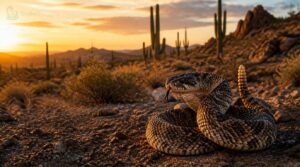
If you spend any time outdoors in Arizona, you’ll want to know which snakes actually pose a threat. Not every snake you cross paths with is dangerous, but some absolutely are, and knowing the difference matters. Here’s what you need to know before we get into specifics.
For a closer look at how these reptiles deliver their bite, this guide to Arizona’s venomous snakes breaks down which species top the list and why.
Venomous Versus Poisonous
Poisonous snake" is actually a myth here. Venom is injected, through a bite, while poison harms you if eaten or touched. That’s Toxin Delivery Methods 101.
Arizona’s venomous snakes rely on fangs, not skin contact, to deliver toxins. So when you’re worried about snake bite prevention, you’re dealing with venomous snakes Arizona wide, including its Pit Vipers. Understanding this venomous versus poisonous distinction can help you better assess real risks when exploring Arizona’s wilderness.
Arizona Venomous Snake Diversity
Once you know venom from poison, the next question is: how many snakes are we talking about? Arizona hosts 21 documented venomous species, more than any other state.
That includes:
- 13 rattlesnake species
- The Arizona coral snake
- Rear-fanged colubrids like the Lyre snake
- Mildly venomous night snakes
That rattlesnake variety alone makes snake identification Arizona-wide a real skill worth building.
Most Commonly Encountered Species
With 21 species roaming the state, you’re most likely to cross paths with just a few. The Western Diamondback Rattlesnake tops that list, found in desert scrub statewide. Mojave and Sidewinder Rattlesnakes follow closely behind.
The Arizona Coral Snake shows up rarely. You might also spot a harmless Blackneck Garter Snake near water, easily mistaken for something more dangerous.
Highest-Risk Habitats
Where you hike matters as much as when. Rocky wash shelters and desert flats hide the highest concentrations, especially once monsoon season hits. Snakes den under ledges and creosote by day, then move at dawn and dusk.
Elevated trails between 2,000 and 4,000 feet stay active into fall. Off-road routes and campsites near washes carry the same risk.
Rattlesnake Species Found in Arizona
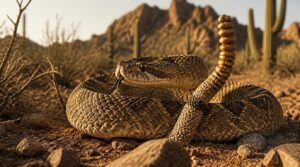
Arizona is home to 13 rattlesnake species, and that’s more than any other state. You’ll find them in low desert flats, rocky foothills, and even up in the pines. Here’s a look at the ones you’re most likely to run into.
Western Diamondback Rattlesnake
That diamond pattern on its back isn’t just for show, it’s your first clue you’ve met Arizona’s most encountered venomous snake. The Western Diamondback Rattlesnake grows 4 to 5 feet, sometimes topping 6, with tan to brown scales and dark diamonds edged in white.
Look for black and white rings near the rattle, a dead giveaway. Like all pit vipers, it senses heat through pits between eye and nostril, helping it strike rodents with precision.
Its venom is hemotoxic, damaging tissue and blocking clotting, so bites need fast medical care.
Three habitat notes worth knowing:
For a closer look at how these color and pattern differences hold up across different terrain, this Mojave rattlesnake vs Western diamondback identification guide breaks down the key visual cues side by side.
- Rocky outcrops and brushy scrubland
- Desert flats with rodent activity
- Areas from California to Arkansas
Give it room. It’d rather rattle than strike.
Mojave and Sidewinder Rattlesnakes
If one Arizona rattlesnake earns extra caution, it’s the Mojave Rattlesnake. Its neurotoxic venom outranks most others in potency, causing vision trouble and breathing issues. It shares desert range with the Sidewinder Rattlesnake, known for sideways, looping movement across loose sand.
Watching unusual snake movement patterns like the sidewinder’s lateral looping gait makes it easy to see why this desert species stands out even among rattlesnakes.
Sidewinders stay compact, under 30 inches, with hornlike scales above each eye, built for heat survival where shade is scarce.
Tiger and Speckled Rattlesnakes
Small but mighty, the Tiger Rattlesnake carries high toxicity risk despite its size, with 35 to 52 crossbands and a dark cheek stripe aiding crossband identification.
Speckled Rattlesnake habitat favors rocky outcrops and sandy regions statewide.
Both demand respect: Tiger Rattlesnake venom ranks among the deadliest, so proper venomous snake identification and snake safety precautions matter for anyone exploring Arizona wildlife.
Mountain-Dwelling Rattlesnakes
Not every rattlesnake sticks to the hot lowlands. Arizona Black Rattlesnake, Grand Canyon Rattlesnake, and Northern Blacktail favor elevations above 4,000 feet, using rocky crevices for shelter and ambush.
- Cool-rock basking in spring and fall
- Pine-oak forest cover
- Canyon rim territory
- Ambush hunting from crevices
- Potent venom despite cooler climate
Speckled and Twin-Spotted Rattlesnakes share similar rocky habits nearby.
Rare and Localized Rattlesnakes
Not all Arizona rattlesnakes spread far and wide. Arizona Ridge-Nosed, Twin-Spotted, and Banded Rock Rattlesnake stick to isolated canyon pockets, often with unique color morphs and small home ranges. Southwestern Speckled Rattlesnake shares this pattern too.
Habitat fragmentation threatens these populations, which is why ongoing conservation surveys matter for tracking rare, localized rattlesnakes before numbers quietly slip away.
Arizona Coral Snake and Rear-Fanged Species
Not every dangerous snake in Arizona is a rattlesnake, and not every snake with warning colors is dangerous at all. Some species carry venom in the back of their mouths instead of hollow fangs up front, which changes how risky they actually are.
Here’s a closer look at these lesser-known species and the harmless lookalikes you might confuse them with.
Arizona Coral Snake
Don’t let its small size fool you. The Arizona coral snake packs a strongly neurotoxic venom, second only to mambas worldwide. Bites can cause:
Don’t let its small size fool you: the Arizona coral snake’s neurotoxic venom ranks second only to mambas worldwide
- Drooping eyelids
- Slurred speech
- Muscle weakness
- Breathing trouble
- Paralysis
Antivenom exists and works best given quickly at a hospital. Fatalities are rare with prompt care, but delays raise serious risks.
Coral Snake Color Patterns
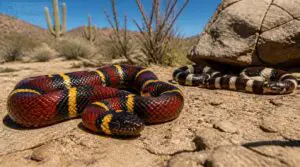
That danger comes wrapped in a warning label, and it’s one you can actually read. Coral snakes wear three colors, red, black, and yellow, in bands circling the whole body. This color sequence consistency runs head to tail, though band width varies by species.
Knowing the exact sequence matters most when distinguishing true coral snakes from their look-alikes, a task made easier by studying snakes commonly mistaken for coral snakes across North and South America.
| Trait | Detail |
|---|---|
| Colors | Red, black, yellow |
| Pattern | Repeats full body |
Some show sharp edges, others soften.
Harmless Coral Snake Mimics
Not every banded snake means business. The Arizona Milk Snake copies that red-yellow-black look but shuffles the sequence, a case of snake mimicry at work.
Spotting fakes:
- Irregular band widths
- Extra brown or gray tones
- Rounded snout shape
- Slow, deliberate movement
Mimics vary by region and coil defensively like true corals, sharing habitat and reducing bites from spooked hikers.
Sonoran Lyresnake
Mimicry aside, some snakes give themselves away with a single glance at the head. The Sonoran Lyresnake shows a V-shaped marking between its eyes, clearer in youngsters and fainter in southeastern Arizona adults. A dark bar crosses the snout.
Rear-fanged and rarely seen, this nocturnal hunter favors rocky desert canyons, feeding quietly after dark.
Mildly Venomous Night Snakes
Another rear-fanged hunter worth knowing is the Night Snake, a small, slender species averaging just 10 to 20 inches. It’s mildly venomous, with low venom yield causing only minor swelling.
You’ll spot muted brown or tan coloring built for desert camouflage. These nocturnal snakes Arizona hosts hunt lizards after dusk.
Don’t handle them, wash any bite, and seek evaluation.
How to Identify Venomous Arizona Snakes
Knowing a snake’s name matters less than knowing what to look for in the moment. You can spot most venomous species in Arizona by checking a handful of physical clues and habits. Here’s what to watch for in the field.
Rattles, Markings, and Body Shape
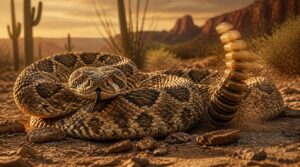
You can spot venomous snakes by three clues: rattle, head shape, and body build. Rattlesnakes have triangular heads wider than their necks, with stout midsections and hollow fangs for venom delivery.
Gopher snakes complicate identification by mimicking this exact profile, so a quick look at rattlesnake vs. gopher snake side-by-side differences can prevent a costly misread in the field.
Rattle segments grow with each shed, though they break off, so counting them won’t tell you a snake’s age. Watch for tail vibration signals warning you to back away.
Color and Pattern Differences
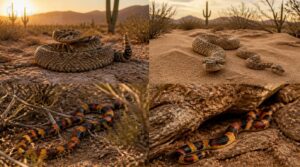
Color tells you a lot, but never trust it alone. A Western Diamondback Rattlesnake wears tan to brown with dark diamonds, while the Sidewinder Rattlesnake blends sandy and pale for desert cover.
Coral snake banding runs red, yellow, black in strict order. The Arizona Coral Snake keeps that sequence clean, but the harmless Arizona Milk Snake scrambles it, so band order matters more than color alone.
Desert Versus Mountain Habitats

If you know the ground, you can guess the snake. Low desert flats with sandy soil and sparse cover suit the Sidewinder Rattlesnake and Western Diamondback.
Rocky, wooded elevations favor the Arizona Black Rattlesnake, which needs cooler terrain. Mojave Rattlesnakes stick to open arid flats. Water sources stay scarce below, more reliable up high.
Seasonal Activity Patterns
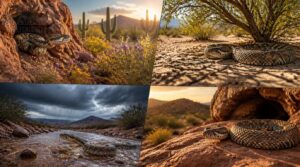
Timing matters as much as terrain. Snakes wake up in spring once days warm past 60-70°F, then hit peak movement near 85-95°F.
- Spring: emergence, mating
- Summer heat: shade-seeking
- Monsoon: wash activity
- Autumn: shelter seeking
- Winter: mild-day basking
Monsoon rains pull snakes toward washes. Come autumn, they retreat to crevices as Arizona ecosystems cool.
Identification Mistakes to Avoid
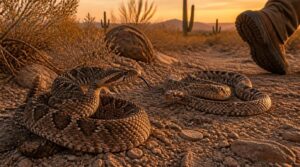
A quick glance can fool you fast. Skip color pattern confusion, since harmless mimics copy venomous banding. Head shape myths mislead too, as round heads don’t mean safe. Scale texture errors happen from a distance. Don’t trust rattle misinterpretation or size assumptions either. Coral snake mimicry fools plenty of hikers. When in doubt, back away, don’t handle it.
Arizona Snake Safety and Bite Response
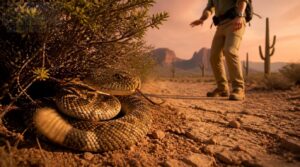
Knowing a snake by sight only gets you so far out here. What really keeps you safe is knowing how to act, both before you cross paths with one and after. Here’s what to do at every stage, from a hike gone sideways to a bite that needs real help fast.
Preventing Outdoor Snake Encounters
Most bites happen when boots and eyes aren’t paying attention. Wear high-top boots and long pants, stick to marked trails, and scan where hands and feet land.
- Carry a flashlight for night precautions
- Use a walking stick to probe blind spots
- Hike in groups and keep kids close
Good snake safety gear and steady group hiking rules cut your odds of a surprise encounter fast.
Handling Residential Snake Sightings
A trail is one thing, your backyard is another. If you spot a snake near the house, back away slowly and call a licensed wildlife handler instead of grabbing a broom yourself.
Clear clutter, seal crawl space gaps, and keep kids and pets indoors until the Western Diamondback or Mojave rattlesnake is safely relocated.
Safe Viewing Distance
Once that rattlesnake leaves your yard, the same rules apply outdoors. Keep a minimum 3-foot buffer, widening to 6 feet if it’s coiled or rattling.
- Rocky canyons demand 8 feet for reaction time
- Trekking poles help maintain distance
- Never corner a snake or block its escape
Give it space, and it’ll usually move along.
Immediate Snakebite First Aid
Even with all that space kept, a bite can still happen. Call emergency services right away and stay put.
Remove tight items like rings or watches before swelling starts. Keep the bitten limb still and clean the bite gently with soap and water.
Skip tourniquets or cutting. Just monitor signs until help arrives, since antivenom treatment works best given early.
When to Seek Emergency Care
Watching for symptoms doesn’t stop once help is called. Progressive swelling past the bite site, trouble breathing, or numbness means neurotoxic venom is spreading fast.
Call 911 immediately if you notice:
- Swollen tongue or throat tightening
- Loss of consciousness
- Rapid heart rate or bleeding gums
- Severe vomiting
- Symptoms in children, seniors, or those with heart conditions
Antivenom treatment works best within hours, so don’t wait.
Frequently Asked Questions (FAQs)
What is the best way to identify a venomous snake?
Could one glance really save you from a bite? Not quite. Tail rattle detection, a triangular head, and bold blotchy bands offer strong clues, but pairing them with habitat context always beats judging venomous snakes Arizona by a single trait.
Are there any venomous snakes that live in urban areas?
Yes. Western Diamondbacks and Mojave rattlesnakes adapt well to suburban edges, arroyo banks, golf courses, and canals where rodents gather.
This urban habitat adaptation means residential snake removal calls spike during warm months when snakes actively hunt near homes.
What is the best way to avoid being bitten by a venomous snake?
Like walking a tightrope, avoiding a bite takes steady awareness. Stick to marked trails, wear sturdy boots, use a trekking pole to probe ahead, keep a 6-foot buffer, and never handle or provoke any snake you meet.
Are there any venomous snakes in Arizona that are endangered?
The New Mexican ridge-nosed rattlesnake holds threatened status here. Its Sonoran population struggles with habitat fragmentation and a small range.
Conservation monitoring tracks canyon and mountain populations closely, since climate pressures keep squeezing these already limited, high-elevation habitats.
What are the long-term effects of a venomous snake bite?
A bite’s damage doesn’t end at the ER door. Long-term risks include tissue necrosis, kidney damage, bleeding disorders, and paralysis from neurotoxic venom. Survivors often face lasting nerve pain, scarring, and psychological trauma requiring ongoing care and antivenom-informed treatment.
How many people die from snakebites in Arizona yearly?
Deaths are rare. Out of roughly 102 bites reported annually, Arizona saw zero fatalities from 2010 to 2022, thanks to fast antivenom treatment and better emergency response reaching even remote desert areas quickly.
Are baby rattlesnakes more dangerous than adult ones?
Size lies. Adults actually pack bigger venom glands and deliver more toxin per strike, so a grown Western Diamondback poses greater risk than any juvenile despite the old myth claiming otherwise.
What time of year are snakebites most common?
You’ll see the most snakebites during peak summer months, especially July and August, when warm weather drives snake activity. Arizona logs an average of 102 snake bites yearly, with rising temperatures closely tied to higher encounter rates.
Since different snakes dominate different regions, it helps to learn how milk snake species vary by region and know which ones share your local habitat.
Can rattlesnakes bite underwater or while swimming?
Yes. Rattlesnakes swim well and can strike while submerged if threatened. Water dilutes venom slightly but fangs still deliver it. If bitten in water, get out immediately and seek emergency care, just like any snakebite.
For a closer look at how long rattlesnakes actually spend in the water and what drives them there, rattlesnake swimming behavior and water encounter risks breaks down the surprising range of situations that can keep them submerged.
Do snake repellents actually keep rattlesnakes away?
Not really. Repellent effectiveness analysis shows little consistent deterrence, since rattlesnake species in Arizona ignore treated zones when food’s nearby.
Physical barrier benefits and habitat modification impact outperform chemical deterrent limitations and unreliable electronic devices for real outdoor safety.
Conclusion
Funny enough, the same rattle that warns you off is the same trait that’s kept these snakes alive for millions of years. Fear and survival, tangled together in one sound.
Technically speaking, poisonous snakes in Arizona don’t exist, but the venomous ones deserve every ounce of your respect. Learn their patterns, give them space, and the desert stops feeling dangerous. It starts feeling like home ground you understand.