This site is supported by our readers. We may earn a commission, at no cost to you, if you purchase through links.
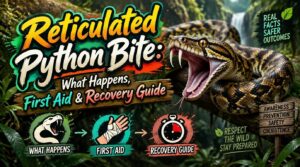
A reticulated python bite starts with six rows of backward-hooking teeth closing around your arm at 200 psi. The strike takes less than a second. The grip, though, can last minutes, and every second you pull away, those recurved teeth tear deeper into your skin.
Most bites come from captive animals, usually during feeding responses or handling mistakes. The puncture wounds heal. The infection risk, nerve damage, and tendon injuries are what send people to the hospital.
Know exactly what to do in the first sixty seconds, and you protect your hands, your tendons, and your recovery. Here’s the full picture, from strike to surgery to prevention.
Table Of Contents
- Key Takeaways
- What Happens When a Reticulated Python Bites You?
- How Dangerous is a Reticulated Python Bite?
- Immediate First Aid for a Reticulated Python Bite
- Medical Treatment and Recovery After a Reticulated Python Bite
- How to Prevent Reticulated Python Bites
- Frequently Asked Questions (FAQs)
- How many humans have reticulated pythons killed?
- How painful is a python bite?
- Which snake bite has no antivenom?
- What is the most aggressive type of python?
- What happens when a reticulated python bites you?
- How aggressive are reticulated pythons?
- Is reticulated python venomous?
- Which snake has the most painful bite?
- What should I do if my python bites me?
- How strong is a reticulated pythons bite force?
- Conclusion
Key Takeaways
- A reticulated python’s bite is nonvenomous but dangerous: around 100 backward-hooking teeth in six rows leave deep puncture wounds that tear tissue if you pull away, and the real risks are infection, nerve damage, and tendon injury rather than venom.
- To free yourself, unwind the snake tail-first or use rubbing alcohol or mouthwash near its mouth—never yank the head—then stop the bleeding with firm pressure, rinse the wound for several minutes, remove tight jewelry, cover it with a sterile dressing, and see a doctor the same day.
- Medical care should include a neurovascular exam to check for tendon ruptures and nerve damage, tetanus prophylaxis if your booster is over five years old, possible antibiotics, and sometimes surgery with months of hand therapy for recovery.
- Most bites come from captive snakes during feeding responses or handling mistakes, so prevention means secure locked enclosures, never reaching in blind, locating the head before handling, and avoiding contact when the snake is in feeding mode.
What Happens When a Reticulated Python Bites You?

A reticulated python bite starts with a fast, jarring strike. You feel immediate stabbing pain as dozens of sharp curved teeth puncture your skin, leaving a semicircular row of wounds. These snakes are nonvenomous, but the teeth are built to grip, so they drag and tear as the snake holds on.
The good news is that, unlike venomous snakes, a python bite won’t poison you—our guide to whether ball pythons are poisonous explains what actually causes the pain.
A reticulated python’s nonvenomous bite still brings stabbing pain, as dozens of sharp curved teeth puncture skin and tear while gripping
That hold matters. A python often stays latched, tightening and twisting, which deepens the injury. Prolonged contact can bruise tissue, damage nerves, or even rupture tendons, especially on your hands and forearms.
The real danger comes later. Bacteria from the snake’s mouth travel into deep tissue through the punctures, so your infection risk is significant even if the wound looks minor. Quick, proper wound care limits complications. Attacks are rare, but you need to know exactly what to do when one happens.
How Dangerous is a Reticulated Python Bite?

A reticulated python bite isn’t venomous, but it’s not harmless either. The danger comes from two sources: the recurved teeth and the snake’s constricting power. Here’s what makes each one a real threat to you.
Teeth and Wound Patterns
A reticulated python’s mouth holds around 100 sharp curved teeth in six rows. You won’t see them until the strike, because the serpentine dentition stays sheathed in the gums.
For comparison, our guide to how many teeth ball pythons have breaks down their similar six-row setup in detail.
Expect a semicircular pattern of puncture wounds:
- Multiple rows of deep punctures
- Lacerations if you pull away
- Embedded teeth fragments left in tissue
Don’t yank the head free. The teeth hook backward like fishhooks, and forceful removal tears tendon and nerve tissue. Despite the intimidating reticulated python bite force of roughly 200 psi, these teeth cannot penetrate rubber boots, though the backward curve makes the grip remarkably secure.
Constriction During Attacks
The bite is only the beginning. Constriction during attacks follows fast. Once the teeth anchor you, the snake throws coils around your body and squeezes.
Constrictor prey capture relies on muscle, not venom. Constrictor physiology lets pressure climb as it re-coils. Coils over your chest block breathing within seconds.
Fight the grip early, before constriction pressure limits your airway and causes internal damage.
Recognizing the early signs of constriction injuries and scale damage helps you adjust your hold before real harm occurs.
Immediate First Aid for a Reticulated Python Bite
Those recurved teeth and crushing coils leave you with two jobs: stop the attack, then treat the wound. Get the snake off you first. Unwind it tail-first, or pour a little rubbing alcohol or mouthwash toward its mouth. It should release. Don’t pull against the grip; you’ll tear more tissue.
Once you’re free, start emergency first aid. Press clean gauze firmly on the wound and hold steady pressure until bleeding slows. That’s hemostasis, and it’s your first real win.
Next, rinse the wound under running water for several minutes. Then remove rings, watches, or tight sleeves near the bite. Swelling comes fast.
Cover everything with a sterile, non-adherent dressing. Don’t glue deep punctures shut; let them drain. Photograph the wound, note the time, and get medical evaluation the same day.
Medical Treatment and Recovery After a Reticulated Python Bite

You’ve washed the wound and stopped the bleeding. Now comes the part that determines how well you heal. Medical treatment breaks down into three stages, and each one matters.
Nerve and Tendon Assessment
A python bite can wreck more than skin. Insist on a structured neurovascular exam early, before swelling hides the damage.
The clinician should map sensory loss by dermatome, compare both hands, and test active versus passive motion on every finger. Failure to extend or flex a digit suggests tendon rupture. Document joint angles precisely. Once the acute exam is done, gentle grip work with a hand therapy exercise putty kit helps track strength gains against those baseline joint measurements.
Ultrasound confirms soft tissue laceration. Baseline records make motor function recovery measurable.
Infection and Tetanus Prevention
After any python bite, infection risk is real. Bacteria from the mouth sit deep in puncture wounds, so clean thoroughly and seek care within hours.
Expect tetanus prophylaxis if your booster is over five years old. Doctors start antibiotic therapy when swelling spreads or pus appears.
Good wound care, kept dry and inspected daily, prevents a serious snake bite infection.
Surgery and Rehabilitation
A python keeper once lost grip strength for months after a bite severed a finger tendon. That’s the stakes.
Surgical intervention comes first. Surgeons debride dead tissue, close contaminated wounds with delayed primary closure, and perform tendon repairs when bites hit your hands. Expect immobilization, then rehabilitation exercises and physical therapy. Recovery takes months. Hand therapy restores motion. Report numbness or weakness immediately; deficits sometimes need revision surgery.
A hand grip strengthener kit can help rebuild strength gradually once your surgeon clears you for therapy.
How to Prevent Reticulated Python Bites

Picture six meters of muscle coiled in shadow, heat-sensing lips tasting the air. You want that animal calm, not startled. Bite prevention starts before you ever open the door.
Follow these rules every single time:
- Use secure enclosures with secondary locks; check latches before and after every access.
- Never reach in blind. Locate the head first, keep your hands clear of the strike zone.
- Follow trained handling protocols: hook first, support the full body, no sudden movements.
Don’t handle during feeding response or after disruptions; a hungry python misidentifies warmth as prey. Wear protective gear when moving large animals. Never tease, corner, or crowd one. Respect distance, and the defensive bite never happens.
Frequently Asked Questions (FAQs)
How many humans have reticulated pythons killed?
Fewer than 10 confirmed deaths globally in several decades. Most cases involve large adults over 4 m constricting for hours in rural Southeast Asia. You face far greater risk from a defensive bite than fatal constriction.
How painful is a python bite?
Like a hundred hot needles, a reticulated python bite stings sharply at every puncture. It’s nonvenomous, but recurved teeth tear skin, so expect bleeding, swelling, and soreness. Pain management starts immediately.
Which snake bite has no antivenom?
Here’s the key fact: no antivenom exists for a Reticulated Python bite. Pythons are nonvenomous constrictors, so snake bite treatment relies on wound care, tetanus prevention, and infection control, not antivenom.
What is the most aggressive type of python?
Which python should you fear most? The reticulated python. It’s widely cited as the most aggressive python species, striking unpredictably compared to docile Burmese pythons. African rock pythons rank close behind, actively attacking large prey.
What happens when a reticulated python bites you?
A row of curved needles clamps your arm, then rakes backward. A reticulated python bite leaves deep puncture wounds in a semicircular pattern. Expect pain, bleeding, and infection risk; start snake bite first aid immediately.
How aggressive are reticulated pythons?
Reticulated pythons aren’t naturally aggressive. Their bites are defensive mode responses to fear, startle, or breeding-season competition.
Captive-bred animals stay calmer than wild-caught ones.
Practice proper snake handling safety: move slowly, read body language, and you’ll avoid a reticulated python bite.
Is reticulated python venomous?
No, they’re not venomous. Reticulated pythons are constrictors that lack venom glands and fangs. They seize prey with curved teeth and suffocate it with muscle. A reticulated python bite causes punctures and bleeding, so infection, not venom, is your real concern.
Which snake has the most painful bite?
You might assume the biggest snake wins, but pain depends on venom, not size. The saw-scaled viper delivers the most painful bite: intense burning, rapid swelling, blistering, and tissue death. Seek snake bite treatment immediately.
What should I do if my python bites me?
A python bite feels like a row of fishhooks clamping down. Stay calm, unwrap the snake tail-first, then run the wound under water. Clean with soap, bandage, hold it up, and get medical care.
How strong is a reticulated pythons bite force?
A large reticulated python delivers roughly 1000–1500 psi, thanks to powerful maxillary muscle strength. Its recurved teeth puncture skin easily, but the real danger comes later, when constriction crushes with far greater force.
Conclusion
A keeper in Florida reached into a cage with feeding-scented hands and took a reticulated python bite that cost him two tendons. He followed every protocol after, and he kept full use of his hand.
That’s the lesson. The strike is fast, but your response is what shapes the outcome. Stay calm, unhook the teeth, clean the wounds, and get evaluated. Respect the animal, prepare your handling routine, and a bite stays a scare, not a surgery.