This site is supported by our readers. We may earn a commission, at no cost to you, if you purchase through links.

Feeding a snake the wrong prey does more than leave it hungry. It leads to regurgitation, nutrient deficiencies, and health problems that are difficult to reverse. What you feed your snake shapes its long-term health from the first meal.
The types of snake food available are more varied than most keepers expect. Mice and rats cover the majority of species, but some snakes need fish, frogs, birds, or even other reptiles. Species, age, and body size all determine what belongs in the feeding tub.
Choosing the right prey type isn’t complicated once you know the options.
Table Of Contents
- Key Takeaways
- Rodents and Other Mammal Prey
- Birds, Eggs, and Reptile Prey
- Fish, Amphibians, and Invertebrates
- Live, Frozen-Thawed, and Pre-Killed Food
- Commercial Snake Foods and Safe Selection
- Frequently Asked Questions (FAQs)
- How should snake food be stored safely?
- What signs indicate a snake’s food intolerance?
- Can snakes eat food with added supplements?
- How do you transition a snake to new food?
- Are there eco-friendly options for snake food?
- How often should I feed my pet snake?
- What prey size is safe for my snake?
- Can snakes go weeks without eating normally?
- How do I reduce my snakes cage aggression?
- Should I feed my snake in a separate container?
- Conclusion
Key Takeaways
- Matching prey size to your snake’s widest body point isn’t just good practice — it’s the difference between smooth digestion and a regurgitation problem that’s hard to undo.
- Frozen-thawed prey is the smarter default for almost every snake: it keeps you and your snake safe, holds its nutritional value well, and removes the real risk of injury that live prey brings.
- Snake diets go well beyond mice and rats — depending on your species, the right food might be fish, frogs, eggs, lizards, chicks, or even other snakes, so knowing your animal matters before you shop.
- Whole prey already delivers what most snakes need (bone, organ, muscle, and tissue nutrients in one meal), which means supplements should be a targeted fix based on vet guidance, not a routine habit.
Rodents and Other Mammal Prey

Rodents are the backbone of most captive snake diets, and for good reason — they’re nutritious, widely available, and accepted by the majority of species kept as pets.
From black rat snakes to king snakes, the types of snakes that eat rodents span a surprisingly diverse range of species, all sharing that same protein-rich dietary foundation.
The type and size of rodent you offer matters more than most new keepers expect.
Here’s what you need to know about the main mammal prey options and how to match them to your snake.
Mice for Smaller Snakes
Mice serve as the foundation of most small snake diets. Prey size matching helps prevent regurgitation and aids smooth digestion. Start hatchlings on pinky mice every 5-7 days, then advance through sizes as they grow: Once you’ve settled on the right prey size, our guide on how to feed a snake at night covers the full feeding routine, including how long to wait before handling your snake after a meal.
- Pinkies (6-8g) for hatchlings
- Juvenile mice (9-12g) for small juveniles
- Subadult mice (12-18g) for growing snakes
- Weaned mice (18-25g) for subadults
Understanding prey to predator size ratio is essential, as the prey should match the snake’s widest body section to prevent choking and digestive injury. Use frozen-thawed prey for safety.
Rats for Larger Snakes
When a snake outgrows a mouse, it’s time to step up to rats. Rat size guidelines follow the same basic rule: prey girth should match one to two times your snake’s widest body section. Too small causes regurgitation. Too large risks jaw strain.
| Rat Size | Snake Life Stage |
|---|---|
| Fuzzy rat | Young juvenile |
| Small rat | Subadult |
| Medium rat | Young adult |
| Large rat | Adult |
| Jumbo rat | Large adult |
Use frozen-thawed rats. Thaw overnight in the fridge, warm to room temperature, then offer every 10-14 days.
Rabbits for Large Constrictors
Rats work for most snakes, but large boas and pythons eventually need something bigger.
Whole domestic rabbits are the standard choice, offered in thawed form with fur intact for digestive benefit. Match prey to one-third to one-half of your snake’s girth. Rabbit runs 9 to 14 percent protein and up to 25 percent fat, making it a dense, calorie-rich meal.
Age-Appropriate Feeder Sizes
Prey size scales with your snake’s growth, so what worked at hatchling stage won’t work at six months.
Newborn pinkies fit tiny hatchlings, measuring roughly 10 to 14 mm. Small adult mice (25 to 40 mm) suit mid-sized juveniles.
Match prey girth to the widest point of your snake’s body, never forcing anything wider than its jaw can open comfortably.
Whole-Prey Nutritional Benefits
Whole prey is one of the most complete forms of whole prey reptile food you can offer. Frozen rodents and wholeprey blends deliver muscle protein, calcium from bone, and organ vitamins A and B complex, covering your snake’s essential nutritional requirements in a single meal.
For a deeper look at how feeding schedules and prey selection support long-term health, corn snake care and feeding essentials walks through everything from hatchling nutrition to adult meal sizing.
The digestive process benefits too, as connective tissue and fur support healthy gut motility.
Birds, Eggs, and Reptile Prey

Not every snake is built for a diet of mice and rats. Depending on the species, your snake may thrive on birds, eggs, lizards, or even other snakes. Here’s a closer look at the prey types that fall into this category and which snakes they’re best suited for.
Chicks and Quail
Chicks and quail are two reliable whole prey choices for arboreal and mid-sized snakes.
- Match prey size selection to your snake’s body girth
- Quail mature in 6 to 8 weeks; chicks take a bit longer
- Frozen prey eliminates live-bite injury and infection risk
- Clean brooder setups help prevent disease transmission
- Quail offer lean protein; chicks run slightly higher in fat
Bird and Reptile Eggs
Eggs are one of the more specialized food sources in snake keeping. Egg-eating snakes consume bird and reptile eggs as their primary diet. Bird eggs have porous shells packed with protein-rich yolk and albumen, making them a nutritionally complete whole prey option.
Prey size still matters here. Quail eggs suit small-mouthed species well. Larger snakes handle chicken eggs without issue.
Lizards as Specialized Prey
Lizards are specialized prey for certain snake species, particularly those found in rocky, desert, or scrubland habitats.
Snakes that hunt lizards rely on fast pursuit bursts and forked tongue scent detection to track them down.
Consumed whole, lizards deliver calcium and protein.
Size varies widely, so match prey length to your snake’s girth before feeding.
Snakes That Eat Snakes
Some snakes specialize in hunting other snakes. Ophiophagous species like king cobras and kingsnakes use venom immunity or constriction to overpower and swallow prey whole, always matched to their girth.
- King cobras consume whole constrictors
- Kingsnakes resist certain snake venoms
- Prey must match the hunter’s girth
- Diet shifts seasonally when snakes are scarce
- Found across Asia, Africa, and North America
Species-Specific Feeding Needs
Every snake has a feeding profile shaped by its species, size, and metabolic rate. Arboreal hunters often prefer avian prey like chicks, while ground-dwellers lean toward rodents or eggs.
Juvenile feeding schedules demand smaller, more frequent meals. Prey size to girth ratio drives every selection you make. Matching food to your snake’s specific biology keeps digestion smooth and appetite consistent.
Fish, Amphibians, and Invertebrates

Not every snake is built for a diet of mice and rats. Some species thrive on fish, amphibians, and invertebrates — and knowing which options are safe makes all the difference. Here’s what you need to know about feeding these alternative prey types.
Safe Feeder Fish
Not all fish are safe for your snake. Thiaminase content and mercury levels are the key factors, making amberjack and ayu popular choices.
Size matters too: aim for 1 to 2 percent of body weight per meal. Quarantine new feeders for one to two weeks and inspect each fish for white spots or faded coloration before feeding.
Frogs and Other Amphibians
Beyond fish, frogs and toads work well for aquatic and semi-aquatic snake species. Match prey size to snake girth to prevent regurgitation.
Key feeding guidelines:
- Use captive-bred frogs to reduce parasite risk
- Gut-load feeders 24 hours before offering
- Skip wild-caught toads; their skin toxins can harm your snake
- Offer whole prey only
- Frozen-thawed frogs are safer than live prey
Earthworms and Slugs
Smaller snakes, like garter snakes, eat earthworms and slugs. Both are live prey options with real nutritional value.
| Feeder | Benefit |
|---|---|
| Earthworm | Soft body, high protein |
| Slug | Moisture-rich, easily digested |
| Captive-bred | Low parasite risk |
| Whole prey | Full nutrient profile |
| Wild-caught | Higher health risks |
Store worms in moist soil. Feed juveniles once or twice weekly. Avoid wild-caught slugs due to health risks.
Crickets, Roaches, and Worms
For snakes that take invertebrates, crickets and roaches are practical options that stimulate natural feeding responses through live movement.
- Crickets: available from small nymphs to 15mm adults
- Dubia roaches: high protein content, minimal odor
- Mealworms: soft bodies, easy to digest
- Superworms: bulk feeders for larger species
- Silkworms: gentle option for juveniles
Offer all insects at room temperature to maintain appetite.
Gut-Loading Feeder Insects
Gut-loading feeder insects means feeding them nutrient-rich foods 24 to 48 hours before offering them to your snake. Greens like collard or kale supply calcium and vitamins, while carrots and squash add beta-carotene.
Keep insects in clean, well-ventilated tubs and remove any dead ones promptly. That’s why insect hygiene matters as much as diet — spoiled feeders can transfer harmful bacteria directly to your snake.
Live, Frozen-Thawed, and Pre-Killed Food
How you offer food matters just as much as what you offer. Each method — live, frozen-thawed, or pre-killed — comes with its own set of tradeoffs around safety, convenience, and how your snake responds. Here’s what you need to know about each option.
Frozen-Thawed Prey Benefits

Frozen rodents are simply the safer, smarter choice for your snake. Thawed prey helps your snake in several key ways:
- Nutritional value retention stays high when properly thawed
- Hydration support comes from balanced moisture during digestion
- Scent texture realism helps trigger natural feeding responses
- Bacterial load reduction occurs under refrigerator thawing conditions
- Proper thawing removes cold spots and aids ingestion
Live Prey Injury Risks

Live prey fights back. A cornered mouse can bite and scratch, breaking your snake’s skin on contact. Oversized prey is worse. A snake opening its mouth too wide risks jaw dislocation, and any wound can develop into a bacterial mouth infection.
Use feeding tongs and a separate container to reduce cage aggression and prevent prey from triggering repeated chase responses.
Pre-Killed Prey Options

Pre-killed prey has one clear pre-killed safety advantage: no fighting back, no bite wounds. Your snake gets the same nutritional value from whole prey without the injury risk.
Thawed prey includes frozen pinkies for hatchlings and larger frozen rodents for adult snakes. Select the right size based on your snake’s mid-body girth. Good feeder size selection prevents regurgitation.
Feeding frequency stays consistent with pre-killed prey: once every 5 to 7 days for smaller species, and much less often for larger constrictors.
Safe Thawing and Warming
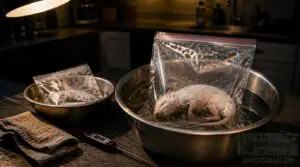
How you thaw frozen food matters more than most keepers expect. Three methods work reliably:
- Refrigerator thawing keeps prey at or below 40°F overnight
- Cold water method uses a sealed bag, changed every 30 minutes
- Warm water bath raises thawed prey to room temperature before feeding
Once warmed, place the prey in a feeding tub and check for even heat.
Hygienic Prey Handling

Every surface you touch during a feeding session is a potential transfer point for bacteria. That’s why surface disinfection with quaternary ammonium cleaners comes before prey handling, not after.
Change gloves between prey types, and check your refrigerator temperature logs daily. Prey stored at 4C to 8C stays safe.
Separate your clean and dirty work zones and never let them overlap.
Commercial Snake Foods and Safe Selection
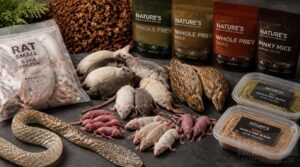
Commercial snake foods have come a long way from simple frozen mice at the pet store. Today, you’ll find a surprising range of options — from whole-prey blends to pellets — each suited to different species and keeper preferences. Here’s what’s worth knowing before you pick one.
Whole-Prey Sausage Blends
Whole-prey sausage blends combine ground meat, organs, and cartilage into a single portion, designed for reptile diet convenience without sacrificing nutritional balance.
- Calcium and phosphorus ratios support growing bones
- Organ meats deliver iron and vitamin A
- Smaller portions suit juvenile or small-mouthed snakes
Warm to room temperature before offering. Don’t refreeze once thawed to preserve texture and nutrients.
Freeze-Dried Prey Limitations
Freeze-dried prey offers convenience, but nutrient degradation is a real drawback. Digestive enzyme activity drops during processing, slowing digestion compared to frozen prey or thawed rodents. Some B vitamins deplete over time, and sealed packaging only limits lipid oxidation risk, not eliminates it. Fiber is absent entirely.
Use it occasionally, not as your snake’s primary food source.
Pellets and Gel Diets
Unlike freeze-dried options, pellets and gel diets offer feeding convenience with balanced reptile nutrition.
- Pellets supply calibrated protein, fat, and vitamins
- Gel diets mimic prey moisture content
- Both support digestive health and dietary variety
- Store in cool, dry conditions to prevent spoilage
- Use reptile feeding tools to serve gel formats
These work best as supplements in a whole-prey reptile diet.
Matching Food to Species
Pellets and gel diets work best as supplements, but your snake’s species-specific diet determines the real foundation.
A corn snake thrives on mice matched to its girth. A garter snake needs fish or frogs. Prey size to snake girth ratio guides every feeding choice. As your snake grows, apply ontogenetic diet shifts by adjusting both prey type and size.
Foods Snakes Should Avoid
Snakes are obligate carnivores, which means their digestion is built entirely around animal protein. Fruits, vegetables, grains, and plant matter have no place in their diet. They lack the enzymes to process plant material.
Snakes are obligate carnivores — their bodies run entirely on animal protein, with no enzymes for anything else
Skip cooked meats too. Snakes need whole raw prey. Processed foods, contaminated prey, and additives can cause illness fast.
When in doubt, keep it simple and raw.
Frequently Asked Questions (FAQs)
How should snake food be stored safely?
Good freezer storage means keeping prey at or below -18°C. Use vacuum sealed bags and add labeling dates to every package. Thaw prey in the fridge, and prevent cross contamination by storing reptile food separately.
What signs indicate a snake’s food intolerance?
Food intolerance in snakes shows up as repeated regurgitation, appetite decline, loose or mucus-filled stool, and abdominal bloating. Persistent symptoms lasting beyond one to two weeks need veterinary attention fast.
Can snakes eat food with added supplements?
Yes, snakes can eat prey with added supplements. Calcium dusting and gut loading are the two accepted methods. Overdoing it causes metabolic imbalances, so only supplement when a vet confirms a specific nutritional gap.
A whole prey diet already covers most of what your snake needs. Each rodent, fish, or bird item delivers bone, organ, and tissue nutrients that closely match a wild diet. That’s why vitamin supplementation is rarely required for healthy captive snakes.
When supplementation is needed, calcium dusting is the most common approach. Lightly coat the prey with calcium powder right before you offer it. For insectivorous species, gut loading works differently: feed the insects a nutrient-rich diet 24 to 48 hours before offering them to your snake, so the prey itself carries the added nutrition by the time your snake eats.
Vitamin D3 affects how well your snake absorbs calcium. If your enclosure has limited UVB exposure, a D3-inclusive dietary supplement dusted onto prey can help fill that gap. Even so, fat-soluble vitamins accumulate in the body over time, and excess amounts cause toxicity.
Treat any supplement as a targeted fix, not a routine addition. Supplement safety monitoring through regular vet checkups is the only reliable way to know whether your snake actually needs anything extra. Most don’t.
How do you transition a snake to new food?
Slow and steady wins the race. Start the diet change with prey one size smaller. Use the Scent Transfer Method: rub new prey on familiar food. Keep your Feeding Consistency Routine steady throughout.
Are there eco-friendly options for snake food?
Eco-friendly options do exist.
Frozen prey from ethical sources reduces live animal waste and handling. Choosing locally produced feeder rodents cuts transport emissions. Sustainably farmed insects like crickets offer a smaller-footprint alternative for compact species.
How often should I feed my pet snake?
Ironically, snakes don’t share your hunger schedule. Hatchlings eat every 5-7 days, juveniles every 7-10 days, and adults every 10-21 days. Always monitor body condition to adjust your feeding schedule as needed.
For species like the rainbow boa, our rainbow boa care guide breaks down feeding intervals by age so you’re never guessing at the next meal.
If you’re still fine-tuning what to offer at each stage, this guide to top-rated corn snake food brands breaks down options by life stage so you can match nutrition to your snake’s needs.
African house snakes, one of the best snakes for a 20-gallon tank, tend toward the lighter end of that adult feeding window, making them especially manageable for beginners.
What prey size is safe for my snake?
Match prey width to your snake’s girth at its thickest point. A good rule: prey should weigh about 10 percent of body weight. If digestion leaves a visible lump, size down.
For growing juveniles especially, a juvenile snake feeding schedule by age and size takes the guesswork out of how often and how much to offer.
Can snakes go weeks without eating normally?
Don’t confuse fasting with starvation.
Snakes routinely go weeks without eating, slowing their metabolism by up to two-thirds to conserve energy. Larger species like ball pythons outlast small colubrids.
Watch for sudden weight loss or lethargy.
How do I reduce my snakes cage aggression?
Give your snake multiple hiding spots, maintain a stable temperature gradient, and use hook training before handling. Consistent routines help your snake distinguish feeding time from handling time, reducing defensive strikes over weeks.
Should I feed my snake in a separate container?
Imagine inviting a live rodent into your carefully decorated living room. Your snake’s enclosure deserves the same respect. A separate feeding tub prevents substrate ingestion, reduces stress, and makes post-meal digestion easier to monitor safely.
Conclusion
Feed your snake the wrong prey long enough, and you’ll spend more time at the vet than anywhere else.
The types of snake food available reach far beyond frozen mice alone.
Correct prey size protects digestion and prevents regurgitation.
Frozen-thawed prey eliminates the injury risk.
Every feeding decision you make shapes your snake’s health over the years.
Know your species, know the prey, and your snake won’t just survive the next feeding.
It will thrive.