This site is supported by our readers. We may earn a commission, at no cost to you, if you purchase through links.

The moment your snakes disengage, the clock starts ticking. Most breeders watch the pairing, celebrate, and walk away, but the first hour after copulation matters as much as the breeding itself. Females can retain sperm, injuries hide under scales until they fester, and stress from cohabitation can tank an appetite for weeks.
Knowing what to do after snakes breed separates a healthy clutch from a costly vet bill. It’s not complicated, but it demands attention: separation, documentation, and careful monitoring over the following days and weeks.
Get these early steps right and you’ll set the stage for healthy eggs, a smooth recovery, and breeders ready to go again next season.
Table Of Contents
- Key Takeaways
- What Should You Do After Snakes Breed?
- How Do You Monitor Post-Breeding Health?
- How Do You Support Post-Breeding Recovery?
- How Should You Manage Snake Eggs?
- How Do You Manage Hatchlings and Recovery?
- Frequently Asked Questions (FAQs)
- How often should breeding pairs be separated?
- Can snakes breed multiple times per year?
- What signs indicate a snake needs recovery?
- How long before reintroducing snakes after breeding?
- Should lighting schedules change during post-breeding recovery?
- How soon can you handle snakes again safely?
- Can you feed the male and female together?
- What causes infertile or slug eggs in clutches?
- How do you tell males and females apart post-breeding?
- Should you clean the enclosure right after breeding?
- Conclusion
Key Takeaways
- Separate breeding pairs into secure, escape-proof enclosures within an hour of mating, then check both snakes for injuries and log weights, dates, and behavior right away.
- Keep handling to a minimum and watch closely for warning signs like reduced appetite, weight loss over 5%, or straining without laying eggs, since egg binding can turn deadly within 24-48 hours.
- Rebuild proper temperature, humidity, and hydration in each enclosure to support recovery, and remember males typically bounce back in 1-3 weeks while females may need 6-16 weeks before eating normally again.
- Handle eggs carefully without rotating them, maintain species-specific incubation temperature and humidity, and hold off on rebreeding until your snake’s weight and body condition return to baseline, usually 6-12 weeks later.
What Should You Do After Snakes Breed?
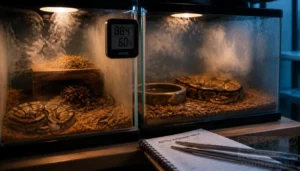
The moment breeding ends, your snakes’ bodies enter a stress response that mishandling can turn dangerous fast. What you do in the next few hours sets the tone for weeks of recovery, so guesswork isn’t an option here. Here are the five steps you need to take right away.
Start by approaching from the side and supporting its full body, then check our milk snake care sheet for a printable post-breeding recovery checklist.
Separate The Breeding Pair
Get that pair apart fast. Move each snake into a secure, solid-walled enclosure within one hour, escape-proof lids locked tight.
Mating triggers female aggression and territorial spikes, while males need quiet to recover. Match substrate and temps in both setups to ease stress.
Check lids daily; gnaw marks mean trouble brewing.
Record Dates, Weights, and Behavior
Once separated, grab a notebook. Mating date logging matters, note pairing time, courtship signs, and IDs.
Start weekly weight tracking in grams, flag shifts over 5%.
Add daily behavior observation notes: appetite, hiding, gaping.
- Missed feeding cues
- Sudden weight drops
- Restless pacing
- Labored breathing
- Skipped basking
Use a data entry template for consistent health trend analysis and body condition scoring.
Inspect Both Snakes for Injuries
With weights logged, run hands over both snakes for a physical check. Focus on the jaw line, scales, vent, and eyes for cuts, swelling, or discharge.
| Body Area | What to Check | Warning Sign |
|---|---|---|
| Jaw/Mouth | Lacerations | Swelling |
| Scales | Missing/torn | Damage |
| Vent | Redness | Discharge |
Limping means call your vet.
Minimize Handling and Disturbances
Once the physical check is done, back off. Both snakes need quiet observation now, not curiosity visits. Cap handling sessions to 1-2 minutes, only when necessary. Check during their active period, wear soft gloves, move slow. Keep the enclosure location stable. Daily observation from outside the glass beats hands-on contact for reducing stress right now.
Confirm Species-Specific Reproductive Timing
Since every species runs on its own internal clock, know what you’re working with before you assume anything’s wrong. Ball pythons and corn snakes don’t share reproductive timing, and mixing up incubation windows or expected lay dates leads to false alarms.
Photoperiod triggers, temperature cues, and hormone surges shape each breeding season, so check species timing cues before panicking over a quiet snake.
How Do You Monitor Post-Breeding Health?
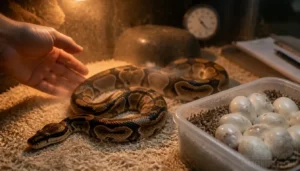
Breeding takes a physical toll on both snakes, and the days after mating are when problems like to surface. Your job now is close observation, not guesswork, since small changes can signal big trouble fast. Here’s exactly what to watch for and when it means picking up the phone.
If you’re unsure what counts as normal versus worrying, this detailed corn snake breeding timeline walks through each post-mating stage so you know what to expect.
Track Appetite and Activity Changes
Watch the food bowl, not the clock. Appetite indicator signs show up first: slower strikes, longer pauses between attempts, less interest in prey scent. Expect reduced feeding for 1 to 3 weeks post-oviposition.
Track daily observation of activity, too, since feeding response patterns usually return gradually over 2 to 6 weeks, with females often lagging behind males.
Weigh Both Snakes Weekly
Grab the scale before you grab breakfast, same time daily builds a real weight baseline. Track three things:
- Grams lost per week
- Feeding response
- Shed timing
Scale precision matters here (0.1g small, 1g larger snakes). Weekly weighins catch weight loss patterns before they become emergencies, since body mass restoration happens gradually, not overnight, during postbreeding care.
Watch for Egg Binding
A gravid female who strains without producing eggs is in real trouble, and every hour counts.
When a gravid female strains without laying, every passing hour raises the danger
Egg binding signs include abdominal swelling, restlessness, and that telltale "walking like a penguin" gait.
Binding detection methods: gentle palpation, egg candling history, and tracking weight loss over 5% in 24 hours.
If she’s not laying within 24-48 hours, call your vet immediately.
Check Breathing and Hydration
Breathing tells you more than you’d think. Do a Respiratory Rate Check, six to twelve breaths per minute at rest.
Follow with a Nasal Passage Inspection and check Mucous Membrane Color, pink and moist means good oxygen delivery.
For hydration status, try a simple Hydration Level Test: skin tenting signals dehydration.
Keep water bowls positioned in cooler zones.
Know When to Call Veterinarian
Some signs mean don’t wait, call your reptile veterinarian now. Bluish gums, collapse, or inability to rise are Emergency Signs demanding same day help.
Repeated vomiting, diarrhea past 24 hours, or anorexia are Digestive Issues needing attention. Sudden behavior changes, excessive sleeping, or straining (pain indicators of possible egg binding) all warrant prompt veterinary intervention before complications like respiratory infections set in.
How Do You Support Post-Breeding Recovery?
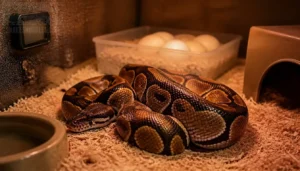
Monitoring tells you something’s wrong, but recovery is where you actually fix it. Your snake’s body needs the right conditions and the right care to rebuild what breeding took out of it. Here’s what that support looks like in practice.
Maintain Species-Appropriate Temperatures
Once the pair separates, thermal regulation becomes your recovery tool. Rebuild the temperature gradient with a warm end at 88-92°F and cool end near 82-86°F, spanning 10-15 inches for real choice. Verify thermostat calibration weekly. This matters because most animals rely on a defined climatic comfort zone to regulate body temperature and recover normally after stress.
- Check digital thermometer placement
- Confirm night time cooling (drop 5-10°F)
- Log daily readings
- Watch basking behavior
Stabilize Humidity and Ventilation
Temperature isn’t the only gradient recovering snakes need, get humidity control wrong and you invite respiratory infections. Target 50-70% RH with a calibrated hygrometer, checking twice daily. Balance substrate moisture without soaking bedding, and run screen vents opposite heat sources for airflow. Inspect vents monthly. RH stability prevents dehydration and mold, both silent threats during vulnerable recovery weeks.
Provide Fresh Water Continuously
Get humidity locked in, then turn to the bowl itself. Dehydration risk climbs fast post-breeding, so keep fresh water constantly available in a heavy dish placed in the enclosure’s cool zone.
An automatic refill system paired with daily hydration monitoring catches drinking drop-offs early, a red flag for illness. Keep water temperature-controlled near ambient, and scrub dishes regularly to maintain water quality.
Adjust Feeding by Sex
Males and females don’t recover the same way, so their plates shouldn’t look the same either. Males need higher protein intake and can resume feeding within 1-3 weeks.
Females require calcium-dusted, protein-rich meals but wait longer, often 6-16 weeks depending on species, before their appetite fully returns.
Monitor Returning Body Condition
Watch the body, not just the scale, because numbers alone lie. Run a Body Condition Score (1-5), plus Spine Visibility and Muscle Tone checks weekly.
- BCS rating (1=emaciated, 5=obese)
- Weekly weight, flag 5%+ shifts
- Spine and fat pad fullness
- Posture and coiling ease
- Shed quality and skin hydration
Weight stabilization confirms reproductive health before rebreeding.
How Should You Manage Snake Eggs?
Once your female shows those telltale abdominal contractions, the clock starts ticking on egg management. You’ve got a narrow window to get conditions right before viability drops. Here’s exactly what you need to set up, step by step.
Prepare a Secure Lay Box
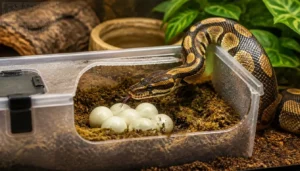
A lay box is cheap insurance against cracked eggs and panicked scrambling. Use a 12x6x4 inch tub with a snug lid, removable section for checks.
Layer peat moss or sphagnum 2-3 inches deep, moistened to a squeeze test, never vermiculite alone. Label it, seat it level, and lock that lid, since escapes ruin everything.
Collect Eggs Without Turning

Once eggs hit the lay box, every move matters. Use the Gloved Finger Lift, sliding under each egg and lifting straight up, never rolling it, for true Orientation Preservation.
- Cracked shells
- Failed embryos
- Ruined clutch quality
- Wasted months of effort
Practice Single Egg Collection, gentle Egg Surface Clean, and Incubator Tray Slots placement to protect egg viability and egg sanitation before development begins.
Set Species-Specific Incubation Conditions

Every species has its own comfort zone, and guessing gets embryos killed.
Set incubation temperature to 82-88°F, adjusting per species, with humidity locked at 75-85% using calibrated hygrometers. Keep temperature gradients minimal across the incubation medium, whether vermiculite or perlite.
Incubator calibration isn’t optional, drift of even one degree shifts hatch timing and viability fast.
Monitor Egg Development Safely
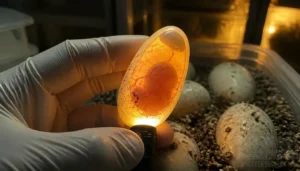
Think of candling as your window into the shell without cracking it open.
Shine a gentle light through weekly, checking veining, embryo movement, and air cell position.
Candling frequency matters most between days 7-14. Track:
- Vein darkening
- Embryo shifts
- Air cell size
Log every check. Compare against species benchmarks to catch clutch viability issues before day 18.
Address Mold or Failed Eggs
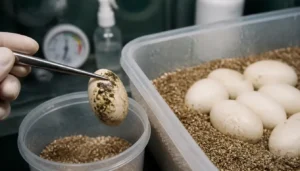
Fuzzy green, black, or white patches on the shell mean mold, and speed matters.
| Sign | Action | Timeframe |
|---|---|---|
| Mold, foul odor | Isolate egg | Immediately |
| Viable, discolored | Clean, reseal | Same day |
| Failed, collapsed | Discard, sanitize | Within 24 hrs |
Follow your mold removal protocol: gloves, mask, 70% alcohol. Raise humidity control slightly, log clutch viability notes for future incubation temperature adjustments.
How Do You Manage Hatchlings and Recovery?
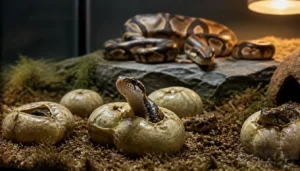
The eggs have hatched, but your job isn’t done yet—now comes the delicate work of getting these hatchlings off to a strong start.
At the same time, your breeding pair still needs weeks of careful monitoring before they’re truly back to normal.
Here’s what to watch for at every stage, starting with the moment those hatchlings break free of their shells.
Wait for Complete Shell Emergence
Once slits appear, resist any urge to help. Avoid handling during emergence, since opaque or cracked shells signal unfinished development, not distress.
Track ambient temperature and humidity closely, as swings dry out membranes fast.
Record emergence date and time per clutch. Full exit, active movement, that’s your green light forward.
Set Up Individual Enclosures
Once hatchlings clear their shells, split them up fast. Group housing invites stress and stunted growth.
- 7-liter enclosures with paper towel substrate
- Warm side 84-88°F, cool side 78-82°F
- Humidity 40-60%, hygrometer at snake level
- Secure, locking lids, hatchlings squeeze through gaps easily
Individual setups let you track appetite and weight without guesswork clouding the picture.
Monitor The First Shed
That first shed, usually 24-72 hours post-hatch, tells you plenty. Watch for dulling, cloudy skin before it slips.
| Sign | Normal | Concern |
|---|---|---|
| Timing | 24-72 hrs | Past 96 hrs |
| Completeness | One piece | Retained caps |
| Humidity | 40-60% | Cracked skin |
Check eye caps and tail tips. Log the date, watch cycles, reduce handling stress.
Offer Appropriately Sized First Meals
Once that shed’s done, feed within 5-7 days. Match prey width to the snake’s widest point, sized near 10% of expected adult weight, think pinkie to fuzzy depending on species.
Feed every 5-7 days on schedule. Track appetite weekly, then adjust portions based on body condition, not the calendar alone.
For a closer look at how these intervals shift as your snake grows, this juvenile boa constrictor feeding schedule guide breaks down age-specific timing and portion cues.
Confirm Recovery Before Rebreeding
Rushing back into breeding cuts recovery short and stresses your snake’s body before it’s ready. Confirm prebreeding weight is restored, feeding readiness signs are steady, and body condition scores hit baseline, roughly 6-12 weeks post-breeding.
- Weight at 90%+ of prebreeding baseline
- Consistent appetite for 3+ feedings
- No lingering lethargy or hiding
- Vet checkup clearing internal health
Skipping this risks egg binding or worse.
Frequently Asked Questions (FAQs)
How often should breeding pairs be separated?
Picture two exhausted athletes needing separate corners after a match. Pull pairs apart within 24 to 48 hours post-mating, or sooner if multiple copulations happened. Species timing varies, some need 2 to 3 weeks before safe reunion.
Can snakes breed multiple times per year?
Yes, many species can breed multiple times yearly, especially with sperm storage capability. But annual breeding stays safest, letting energy reserves rebuild fully between clutches and protecting egg production quality during breeding recovery.
What signs indicate a snake needs recovery?
Watch for feeding refusal, lethargy, wheezing, sunken eyes, or weight loss over 5%. Females may show swelling, restlessness (egg binding). These behavioral and physical symptoms flag post-breeding stress, so start recovery care and reduce handling immediately.
How long before reintroducing snakes after breeding?
Give snakes a 4 to 6 week cooldown in separate enclosures before reintroduction. Species-specific rest periods vary, cooler-breeding species often need longer.
Confirm stable weight, normal appetite, and calm behavior first, since rushing reunions risks injury and unnecessary stress.
Should lighting schedules change during post-breeding recovery?
Sudden light changes rank among the most overlooked recovery stressors. Keep the same photoperiod, shifting gradually over days, not hours. Consistent UVB exposure and stable schedules support digestion, shedding, and appetite far better than any abrupt overhaul.
How soon can you handle snakes again safely?
Hold off for at least 48 hours before any handling. Start with gentle 5-10 minute sessions, watching closely for stress signals like hissing or excessive movement, then adjust handling frequency based on calm behavior during recovery.
Can you feed the male and female together?
No. Feed them separately using tongs and individual stations. Co-feeding risks bites, prey competition, and jealousy, especially with males refusing food post-breeding. Separate feeding cuts stress, prevents injury, and helps proper recovery for both snakes.
What causes infertile or slug eggs in clutches?
Not every clutch that looks fertile actually is. Hormonal imbalances, poor sperm quality, nutritional deficiencies, environmental stress, or genetic factors can all trigger infertile eggs or slugs, especially when calcium metabolism and humidity levels weren’t dialed in beforehand.
How do you tell males and females apart post-breeding?
Check external vent inspection and tail base shape: males run thicker at the base, females stay slender unless gravid.
Look for gravid belly swelling, courtship-driven weight shifts, and lingering behavioral courtship signals like restlessness during breeding recovery.
Should you clean the enclosure right after breeding?
Resist the urge to deep clean. Spot clean only feces or shed remains, keep humidity and temperature stable, and wait 1 to 2 weeks before disturbing substrate deeply, reducing stress during this fragile recovery window.
Conclusion
Test this theory yourself: skip the post-breeding checklist once, and you’ll trade a healthy clutch for a costly vet bill.
What to do after snakes breed isn’t glamorous work. It’s separation, weighing, watching, and patience, repeated for weeks until eggs hatch or appetites return. Breeders who master this rhythm see fewer failed clutches and stronger hatchlings every season.
Your snakes can’t tell you something’s wrong. Your logbook, your scale, and your steady attention catch trouble before it becomes tragedy.