This site is supported by our readers. We may earn a commission, at no cost to you, if you purchase through links.

A $20 snake can turn into a $900 setup faster than you’d think. That’s the gap between the animal itself and everything it needs to thrive: tanks, heat sources, lighting, substrate, hides. Corn snakes earn their reputation as budget-friendly pets, but the enclosure and gear often cost more than the snake.
Your best corn snake setup cost depends on choices you make early, tub versus glass, basic bedding versus bioactive soil, budget morph versus designer Palmetto. Skimp in the wrong spot and you’ll pay for it later in vet bills or replaced equipment.
Below, you’ll find real price ranges for every piece, from hatchling tanks to lifetime ownership totals, so you can budget with confidence instead of guessing.
Table Of Contents
- Key Takeaways
- Corn Snake Purchase Price by Morph
- Best Corn Snake Enclosure Options and Costs
- Essential Corn Snake Setup Equipment Costs
- Substrate, Hides, and Habitat Supply Costs
- Total Corn Snake Setup and Care Budget
- Frequently Asked Questions (FAQs)
- How much is a corn snake set up?
- What is the best setup for a corn snake?
- What snake is worth $100,000?
- Is it cheaper to buy or build a reptile enclosure?
- How much does a corn snake set up cost?
- Are corn snakes cheap?
- How much does a corn snake tank cost?
- How much does corn snake substrate cost?
- How much does it cost to care for a corn snake?
- How do I choose a corn snake tank?
- Conclusion
Key Takeaways
- A quality initial corn snake setup typically costs between $250 and $600, since buying reliable gear once beats repeatedly replacing cheap equipment that fails.
- Morph choice drives price the most, ranging from $20-$150 for Normals and Amels up to $650-$2,000 for designer Palmetto and Scaleless corns.
- Essential equipment like a thermostat, heat source, UVB lighting, and a timer together cost roughly $70-$385 and are critical for your snake’s safety and health.
- Total lifetime ownership over 10 years lands between $1,500 and $4,000, factoring in monthly feeding ($5-$20), annual maintenance ($80-$130), and emergency vet funds ($600-$1,000 in year one).
Corn Snake Purchase Price by Morph
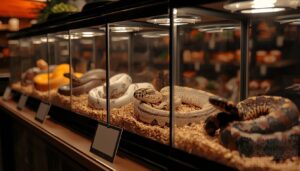
Your first big decision is which morph fits your budget. Prices swing wildly depending on color, pattern, and rarity. Here’s what you’ll actually pay across the most popular options.
If you’re just starting out, this guide to picking the best beginner ball python morphs breaks down which patterns give you the most bang for your buck.
Normal and Amel Corns
Two morphs anchor the corn snake market: Normals and Amels, both budget-friendly starting points.
- Normal corns: $20-$150, deep orange with black-edged saddles
- Amel corns: $20-$150, lemon-taffy hue from reduced melanin pigment
- Amel eye coloration runs paler, almost glassy
- Saddle pattern contrast is sharper in Normals
- Both share codominant genetic inheritance patterns
Your total corn snake setup cost stays low here before enclosure and heating equipment enter the picture.
Okeetee and Tessera Morphs
Okeetee isn’t a separate gene, it’s a line-bred pattern with thick red-bordered saddles, priced $40-$600. Tessera is a dominant trait, so pairing carriers passes it to 50% of offspring, creating mosaicked side patterns.
Combined Okeetee Tessera morphs push toward the top of that range. Expect bold borders, less red, and tricky hatchling ID until sheds mature. Rarity drives your setup cost higher here. You can find high-quality Okeetee Tessera snakes through specialized breeders.
Palmetto and Scaleless Prices
Now you’re in designer morph territory. Palmetto and Scaleless corns run $650-$2,000, with scaleless coats adding a 15-40% premium over standard Palmetto pricing.
Females cost more due to breeding value. Verified lineage adds 10-25%. Buying two or more together can shave 5-15% off per-animal cost. Availability stays limited, so budget for deposits and patience.
Hatchling Versus Adult Costs
Buying young saves cash upfront but costs more over time. Hatchlings run 40-60% less than adults, often $150-$400 versus $500-$1,500+.
You’ll upgrade enclosures every 6-12 months and cover extra vet checkups early on. Feeding stays frequent too—5-10 mice monthly versus an adult’s 2-4—so factor those recurring costs before assuming hatchlings are the budget choice.
Breeding Female Price Premiums
Ready to breed? Females carry a real premium, especially if she’s already proven herself. Reproductive success rates matter most—a female with strong clutch history sells for more than an unproven one.
Lineage value impact and documented genetics push prices higher too. Commercial breeder needs and foundation stock demand mean top pedigreed females with rare morphs can command genetic trait premiums well above standard market rates.
Best Corn Snake Enclosure Options and Costs
Your snake’s home costs almost as much as the snake itself, and picking the right one matters. You’ve got options ranging from cheap plastic tubs to premium wooden vivariums, each with its own price tag and perks. Here’s what you’ll actually pay for each setup.
Budget Plastic Tub Setups
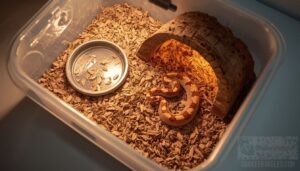
Plastic tubs are the cheapest way into corn snake keeping, running $5 to $15 per tub.
Even in a budget tub setup, corn snakes benefit from thoughtful lighting choices, so it’s worth reading up on whether pet snakes actually need UVB light before you buy.
- Hatchling tubs: 6-12 quarts, 4-6" tall
- Snap-on lids control humidity
- Aspen bedding pairs well for moisture control
- Heat mats cover half the tub for gradient
Add sealant, water dish, and hides—your initial setup cost stays low while you plan the hatchling move.
Glass Tank Price Ranges
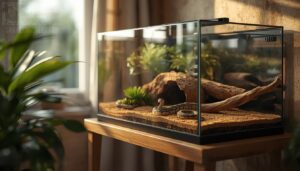
Glass tanks run $60-$120 for a standard 20-gallon, though 40-gallon options climb to $250.
Glass thickness impact matters: 1/4" or 3/8" panels add 20-60% to cost. Low iron benefits include clearer viewing, at 10-30% premium.
Tank stand costs add $50-$300. Bundled kit value often saves 10-30%. Shipping large tanks can run $25-$150 for your terrarium setup.
PVC Vivarium Upgrade Costs
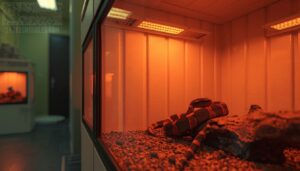
PVC vivariums are the step up from glass, and your wallet will feel it: $150 to $600 for mid-sized units, sometimes topping $700 with 1-inch reinforced panels.
- DIY kits save 20-40%
- Custom dimension fees add 20-40%
- Integrated lighting packages run $40-120
Thicker PVC resists warping and holds heat better. Ventilation upgrades add $40-90, keeping air fresh in your complete corn snake setup.
Juvenile Tank Size Needs
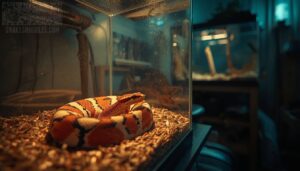
Your hatchling won’t need much room at first — just a 10-gallon tank or 20×12 inch enclosure works fine up to 8 months.
Once your snake hits a year old, plan a habitat shift to a 40-gallon breeder or 36×18 setup. Housing multiple hatchlings? Give each 2 square feet of floor space, plus vertical climbing room as they approach 18 months.
Adult Floor Space Requirements
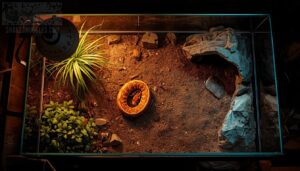
Full-grown corn snakes need real room to stretch — at least 24 by 12 inches of floor space, though 24×18 suits a 4-foot adult better.
- Rectangular beats square, cutting cramped corners
- Keep 2-3 inch pathways clear
- Plan thermal gradients across the footprint
- Secure plants to back walls
This layout also improves humidity distribution and gives your snake room to fully stretch during shed cycles.
Essential Corn Snake Setup Equipment Costs
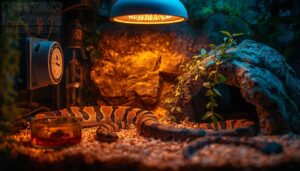
Your enclosure is only half the job. Corn snakes need the right gear to stay warm, hydrated, and healthy inside it. Here’s what you’ll need to buy and roughly what it’ll cost you.
Thermostat and Heat Control
Skip a thermostat and you’re gambling with your snake’s life. A quality unit like the Inkbird ITC-308 runs $25–$100 and prevents overheating through PID control, cutting overshoot compared to basic on-off models.
| Sensor Type | Precision |
|---|---|
| Bi-metal | Basic accuracy |
| Thermistor | Sub-0.5°C |
Placement matters, too, away from drafts, near your basking spot.
Heat Mats and Lamps
Your thermostat controls the heat source, but you’ll still choose between mats and lamps.
Undertank heaters cost $20–$50 and warm the substrate directly, creating a steady thermal gradient with lower energy use. Heat lamps run hotter and create a true basking spot but need reflectors and safe clearance from decor. Never skip electrical safety checks on either.
UVB Lighting Options
UVB isn’t optional for corn snakes, even if they’re crepuscular.
Zoo Med bulbs run $15; Arcadia ProT5 kits hit $100. Fluorescent tubes suit most setups; mercury vapor works for larger enclosures.
Place bulbs 12–18 inches above basking zones, replace every 6–12 months, and check output with a UVB meter—visible light doesn’t mean safe exposure.
Thermometers and Hygrometers
Your basking zone and cool side both need daily monitoring, not guesswork. A digital thermometer with thermistor accuracy runs $10–$40, updating readings every 1–2 seconds.
For humidity control, capacitive hygrometers hold within 2% accuracy. Skip infrared guns for ambient readings—they measure surfaces, not air.
Avoid skewed readings by placing sensors away from heat lamps. Data logging models track trends, catching drift before it stresses your snake.
Timers for Light Cycles
Rarely do keepers realize a $10–$15 BN-Link timer does as much for snake health as your heating and lighting setup itself. Mechanical vs digital comes down to needs: mechanical controls one basic cycle, digital allows programming weekly schedules.
A $10-15 timer can do as much for your snake’s health as the entire heating and lighting setup
Preventing light stress means consistent hours daily.
- Steady 12-hour cycles ease your snake’s stress
- Astronomical timer benefits include automatic seasonal adjustment
- Proper electrical safety ratings protect your entire setup cost
Substrate, Hides, and Habitat Supply Costs

Your enclosure is only half the job done. The right substrate, hides, and extras turn a bare tank into a space your snake actually feels safe in. Here’s what you’ll need to budget for, item by item.
Aspen and Basic Bedding
Aspen bedding is your safest budget bet, running $4 to $30 a bag. It’s dust-free, absorbs moisture well, and controls odor by soaking up ammonia before it builds up.
Spot-clean weekly, full swap every two weeks. Buying in bulk cuts your cost per liter, which matters for setup cost if you’re housing more than one snake.
Bioactive Substrate Mixes
If you want a set-it-and-forget-it setup, ABG mix (tree fern fiber, orchid bark, charcoal, coco coir) builds a self-cleaning habitat.
Isopods and springtails handle nutrient cycling, so you skip full substrate replacement for 6-12 months.
- watching your snake thrive without constant intervention
- healthier microbial balance
- reduced odor
- natural drainage
- less weekly maintenance
Expect $30-$80 upfront for quality bioactive components.
Hides and Cork Bark
Your snake needs at least two hides — one warm side, one cool — to feel secure. Cork bark works best: flats, half rounds, or tubes, priced $5-$20 each.
Adding a humid hide on the warm side helps with shedding, and this guide to safe snake hiding places shows how to set one up.
Once your snake has proper hides, you can learn how to calm a nervous snake by reading its body language and giving it space.
Before picking hide sizes, use this guide to measuring enclosure size needs to figure out exact dimensions for your snake’s tank.
It’s sustainably sourced from cork oak trees without harming them. Rinse with lukewarm water, air dry, and skip harsh cleaners.
Rough texture boosts climbing grip, while mixed shapes create microhabitats mimicking natural terrain.
Water Bowls and Misters
Stainless steel bowls resist rust and clean up fast, costing $5-$20. Ceramic works too, but weighs more.
Choose wide, raised-edge designs — they prevent tipping and splash loss. Refill every 24-48 hours with room-temperature water.
Misters boost shedding-time humidity, running 2-4 short bursts daily. Pair yours with a hygrometer to avoid over-humidifying, and wash bowls weekly with mild reptile-safe cleaner.
Plants, Branches, Enrichment
Bare enclosures get boring fast — for snakes and owners alike. Natural Branch Selection matters: pick untreated hardwood or cork, 1-5cm thick, $5-$25. These enable Vertical Climbing Enrichment across levels.
Add Safe Plant Species like pothos or ferns for Microhabitat Humidity Control ($5-$25). Rough bark gives texture based stimulation, turning your snake enclosure’s substrate into a richer, more natural habitat.
Total Corn Snake Setup and Care Budget

You’ve priced out the tank, the tools, and the tiny décor pieces. Now it’s time to add it all up and see what corn snake ownership really costs, from day one through year fifteen. Here’s your full budget breakdown, start to finish.
Initial Setup Cost Range
Three tiers cover most first-time owner expenses. A basic hatchling setup runs $100 to $350. A mid-tier starter kit with glass and better heating averages $200 to $600. Premium builds hit $300 to $900.
- Enclosure
- Substrate
- Heating
- Hides
- Water dish
Your total entry costs usually land between $150 and $800, scaling with quality choices.
Monthly Feeding Expenses
Once your setup’s built, food becomes your main recurring cost. You’ll spend $5 to $20 monthly feeding, with hatchlings on pinky mice averaging $5-10 and adults needing larger prey at $10-20. Buy frozen rodents in bulk to save 10-20%.
Feeding every 7-14 days keeps costs predictable, though refusal episodes and regional pricing can shift totals by a few dollars.
Annual Maintenance Costs
Feeding’s predictable, but upkeep adds more. Expect $80-$130 yearly for cleaning and substrate.
- Substrate renewal: every 1-3 months, $15-$50
- Sanitation products: $20-$60 annually
- Electricity for heat/light: $20-$50 yearly
Routine parasite screening runs $20-$60, separate from your emergency health fund—which you’ll want ready before real vet costs hit.
Vet and Emergency Budget
Parasite screens are routine, but real emergencies cost far more. Budget $40-$200 yearly for checkups with an exotic vet, plus $500-$1,200 for crises like respiratory infections.
| Fund Type | Target Amount | Timeframe |
|---|---|---|
| Emergency savings | $600-$1,000 | First year |
| Monthly contribution | $50-$100 | Ongoing |
| Insurance premium | $20-$150 | Monthly |
Ask about payment plans before you need one.
Lifetime Ownership Cost
Add it all up, and you’re looking at $1,500 to $4,000 over 10 years.
- Morph value and rarity
- Enclosure quality choices
- Feeding cost fluctuations
- Annual vet visits
- Emergency medical bills
Ownership duration impacts your total budget a lot. Plan monthly, save for surprises, and your corn snake stays affordable for its entire lifespan.
Frequently Asked Questions (FAQs)
How much is a corn snake set up?
Getting a corn snake without a budget is like jumping into a pool without checking the water first — chilly surprises await.
Your complete corn snake setup runs $150-$300 initially, covering tank, heating, and hides.
Ongoing costs stay low: $10-$30 monthly for food and maintenance.
What is the best setup for a corn snake?
Your best setup pairs a secure 20-40 gallon enclosure with reliable heat mats, tight-fitting lids, hides on both sides, water dish, and aspen or cypress substrate — costing $150-500 total for proper ventilation, humidity control, and safe temperature gradients.
What snake is worth $100,000?
Rare pied tiger reticulated pythons and complex ball python combos with exotic morphs and clean genetics can reach $100, Auction price drivers like scarcity, proven breeding history, and collector demand push these designer morphs into six-figure territory.
Is it cheaper to buy or build a reptile enclosure?
DIY builds save 20-50% versus pre-made glass vivariums or plastic tubs, but you’ll spend more labor on hardware assembly. Pre-made units offer convenience and comparable long-term durability, so your initial costs depend on time versus savings priorities.
How much does a corn snake set up cost?
Your complete corn snake setup runs $150-$300 initially: tank ($40-$120), heating and thermostat ($45-$150), plus substrate, hides, and water dishes ($15-$65). Skip UVB to save money—it’s optional, not essential, for corn snakes.
Are corn snakes cheap?
Like a garden snake shedding old skin, your budget stays light and manageable. Yes, corn snakes are genuinely affordable pets — expect $20-$60 for common morphs, $150-$400 initial setup, and just $5-$20 monthly feeding costs.
How much does a corn snake tank cost?
Your tank price depends on size and material: plastic tubs run $20-$40 for hatchlings, glass terrariums cost $60-$180, and 40-gallon breeder setups reach $100-$220 with accessories included for growing adults.
How much does corn snake substrate cost?
You’ll pay $50-$80 annually for substrate. Aspen runs $15-$25 per bag, cypress mulch $10-$ Bioactive mixes cost more upfront but need less frequent replacement. Bulk buying saves 10-30%, and good humidity management stretches replacement cycles to 6-18 months.
How much does it cost to care for a corn snake?
Think Ma Bell, but scaly: monthly upkeep runs $20-$60. You’ll budget $5-$20 for feeder mice, $10-$30 for substrate upkeep, and set aside emergency vet funds—routine checkups cost $40-$100 annually.
How do I choose a corn snake tank?
Bigger isn’t always better. Pick your tank based on adult size, about 40 to 75 gallons, prioritizing horizontal space, secure lids, and good ventilation over height, since corn snakes explore along the ground, not upward.
Conclusion
A tortoise wins races by pacing itself, not by cutting corners, and your snake setup works the same way.
Cheap gear cracks, dims, or fails within a year, forcing rebuys that erase any savings. Your best corn snake setup cost lands between $250 and $600 once you buy quality once.
Spend wisely upfront: solid tank, reliable thermostat, proper hides. Your corn snake won’t need much, but what it needs, it needs done right.