This site is supported by our readers. We may earn a commission, at no cost to you, if you purchase through links.

A snake in shed looks sick. Its skin dulls, its belly turns milky, and its eyes cloud to a bluish haze that can last 4 to 7 days. Most owners panic, but that’s normal.
What happens next matters more. A healthy shed peels off in one piece, inside out, with the eye caps and tail tip intact. Low humidity, rough handling, or stress can turn that clean peel into patches of stuck skin and real health problems.
These best shedding practices for pet snakes start with reading the signs correctly, then building a setup that does most of the work for you.
Table Of Contents
- Key Takeaways
- 3 Snake Shedding Aids to Consider
- Recognize Normal Snake Shedding Signs and Timing
- Prepare Species-Appropriate Humidity and Shedding Habitat
- Minimize Handling and Stress During Shedding
- Address Stuck Shed Safely
- Check Shed Skin and Maintain Care Records
- Frequently Asked Questions (FAQs)
- Conclusion
Key Takeaways
- A healthy shed takes two to three weeks, so a dull skin and cloudy blue eyes for 4 to 7 days are normal, and your snake will usually come out of it with one intact, inside-out skin, including eye caps and tail tip.
- You’ll prevent most problem sheds by keeping humidity right for your species (about 50 to 70% for most, higher for tropical types) with a humid hide, a hygrometer at snake height, and steady airflow.
- You should leave your snake alone from the blue-eye phase until 24 to 48 hours after the shed, since stress and handling can tear loose skin and stall the process.
- If skin sticks, soften it with a 15 to 20 minute lukewarm soak instead of pulling, and call a reptile vet for retained eye caps, dark tissue, bleeding, or repeated patchy sheds.
3 Snake Shedding Aids to Consider
The right gear can make shedding easier, but it works best alongside good humidity and habitat care. Below are three products that support a smooth shed, each doing a different job. Here’s what to know before you add any of them to your setup.
If your snake seems a bit cranky as its skin dulls, spotting the signs of an irritable snake during shedding will help you know when to give it extra space.
1. Zilla Reptile Shed-Ease 8oz Bundle 2-Pack
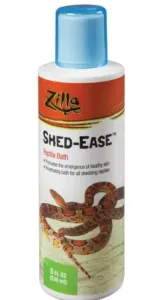
A shed aid can make a stubborn molt easier on your snake, and Zilla’s Shed-Ease bundle is an option. Each pack holds two bottles of 8 fluid ounces, so you’ll have a backup ready. The aloe vera and emollients soften old skin, and a 20-minute soak helps it come off more easily.
Remember the limits, though. It’s for external use only, so keep it away from your snake’s eyes and mouth. It won’t replace proper humidity, nutrition, or veterinary care.
| Best For | Reptile owners whose pets have trouble shedding because of low humidity, poor diet, or illness and who are willing to give them a 20-minute soak. |
|---|---|
| Weight | 1.3 pounds |
| Product Type | Shedding aid solution |
| Primary Purpose | Easier skin shedding |
| Form Factor | 8 oz liquid bottle |
| Model Number | 100111549 |
| Usage Limitation | External use only |
| Additional Features |
|
- Aloe vera and emollients soften old skin so it comes off more easily.
- Adds a healthy luster to the new skin after shedding.
- The 2-pack gives you two 8-ounce bottles, so you have a backup on hand.
- It doesn’t replace proper humidity, nutrition, or veterinary care.
- Results may vary depending on the reptile species and the shedding condition.
- It’s for external use only, so you must keep it away from the eyes and stop your reptile from swallowing it.
2. Zoo Med ReptiSafe Water Conditioner 64 oz
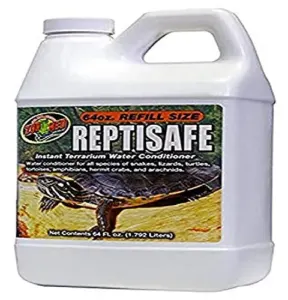
Soaks and drinking water matter just as much as any topical product, so it helps to treat what’s in the bowl. Zoo Med ReptiSafe removes chlorine and chloramines instantly, which are added to tap water and can irritate skin. It also detoxifies ammonia and nitrites, and it stimulates natural slime coat development.
Pairing conditioned water with the right container helps too, and this beginner’s guide to reptile water bowls shows how to choose one.
Treat 5 gallons with 1 teaspoon, then scale down for a snake’s bowl. The 64 oz bottle may leak slightly when you pour, so work over a tray.
| Best For | Reptile and amphibian keepers who want to make tap water safe for water bowls, soaks, drip systems, and aquatic turtle tanks. |
|---|---|
| Weight | 4.8 pounds |
| Product Type | Water conditioner |
| Primary Purpose | Safe enclosure water |
| Form Factor | 64 oz liquid bottle |
| Model Number | WC64 |
| Usage Limitation | External use only |
| Additional Features |
|
- Removes chlorine and chloramines instantly, so tap water is ready to use right away
- Detoxifies ammonia and nitrites, which helps keep enclosure water safer
- Stimulates natural slime coat development, and a little goes a long way at 1 teaspoon per 5 gallons
- The bottle may leak slightly when pouring, so it’s best to pour over a tray
- Not intended for human consumption, so it must be stored and handled with care
- For external terrarium and aquarium use only, so it can’t be used in any other way
3. Zoo Med Repti Fogger Ultrasonic Humidifier
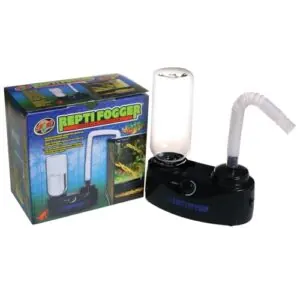
Water in the bowl is only half the story. Humidity in the air matters just as much, and that’s where this fogger helps. Its ultrasonic transducer turns water into cool mist, which a three-foot hose carries into the enclosure. Turn the dial to match your snake’s needs.
Fill the one-liter bottle with distilled or reverse osmosis water, since tap minerals clog the transducer. Pair it with a hygrometer, because the unit can’t sense humidity itself.
| Best For | Keepers of humidity-loving reptiles, amphibians, and invertebrates, such as chameleons, dart frogs, tropical geckos, and hermit crabs, who want adjustable fog for their terrarium. |
|---|---|
| Weight | 3.7 lbs |
| Product Type | Ultrasonic humidifier |
| Primary Purpose | Raises terrarium humidity |
| Form Factor | 1 liter fogger unit |
| Model Number | N/A |
| Usage Limitation | Needs full base |
| Additional Features |
|
- The fog output is adjustable, so you can match it to your animal’s needs.
- The one-liter bottle screws onto a no-spill valve, which makes removing and refilling easy.
- It works with the Zoo Med HygroTherm Humidity and Temperature Controller for more precise control.
- It only runs when the base is full and the safety shut-off float is floating.
- Some units have weak fog output because of a stuck no-spill valve or too little water being released.
- Some buyers report units failing within a week or a month, and the rheostat may not hold up well.
Recognize Normal Snake Shedding Signs and Timing
Before you reach for any product, learn what a normal shed looks like. Knowing the pre-shed signs helps you tell a healthy cycle from a problem.
Once you know what normal looks like, it’s easier to recognize the signs of snake skin shedding problems when they do appear.
Your snake will usually eat less and move less for a week or two beforehand. Expect more hiding, and don’t be surprised by a short temper, since your snake’s vision is getting worse. The skin turns dull, and the belly may look milky.
Then the eyes go cloudy or bluish. This opaque phase lasts about 4 to 7 days. Once the eyes clear, the shed usually follows in another 4 to 7 days. The whole cycle runs roughly two to three weeks.
Juveniles shed every 4 to 6 weeks, while adults shed less often. A healthy shed comes off in one piece, inside out like a sock, with eye caps and tail tip intact. Keeping humidity at 50–70% during this cycle, with tropical species needing 80% or higher, helps prevent incomplete sheds.
Prepare Species-Appropriate Humidity and Shedding Habitat
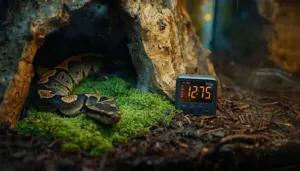
Aim for species-appropriate humidity before your snake’s shedding cycle begins. Corn snakes do well at 40-60%, ball pythons at 50-80%, and boa constrictors at 70-95%. Ball pythons need 60-70% during a shed.
Set up the habitat with these steps:
- Use digital hygrometers at snake height, since analog gauges can misreport humidity levels by 10-15%.
- Make your substrate choice match the species: cypress mulch or coconut fiber for ball pythons, aspen for corn snakes.
- Place a humid hide on the cool side, filled with damp sphagnum moss.
- Replace the moss every 2-3 days to prevent mold.
- Check the glass, since condensation means too much moisture, so add airflow.
Keep ventilation steady, because stagnant, soggy air can easily lead to respiratory infections.
A digital hygrometer thermometer combo lets you watch humidity and temperature together, so you can spot stale, damp air before it becomes a problem.
Minimize Handling and Stress During Shedding
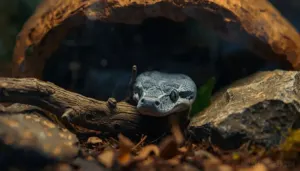
You’ll do your snake the most good by leaving it alone once the eyes turn cloudy and blue. Skip handling through the blue phase and the shed itself, because loose skin tears easily. Expect it to hide more, and let it.
Keep the enclosure calm. Hold steady temperatures and humidity, remove waste promptly, and keep the room quiet. Offer a secure hiding place and a rough rock or branch for rubbing.
If you must handle it for a health check, move slowly, support the whole body, and let it glide through your hands. Never hold it by the head.
Once the shed finishes, wait 24 to 48 hours before normal handling, and check the eye caps and tail tip first.
Address Stuck Shed Safely
Even with good care, your snake may sometimes hold onto a patch of old skin. Don’t pull on it, because rushing can tear the new skin underneath. The two points below cover safe steps for retained skin and the signs that mean it’s time to call your vet.
Safe Steps for Retained Skin
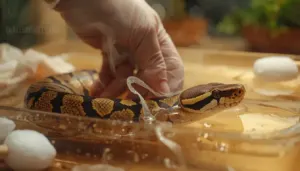
Pulling a stuck shed off a dry snake is like peeling a sunburn, so start by softening it. Set your snake in a shallow container of lukewarm water, 85 to 90°F, for 15 to 20 minutes.
Then work slowly with a damp cloth or cotton bud, moving head to tail. Check the eye caps, tail tip, and vent, and stop if anything resists.
When Retained Shed Needs Veterinary Care
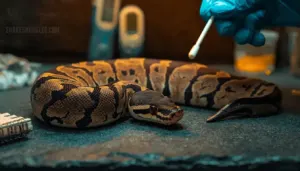
Picture a ball python that sheds in patches for the third cycle running, with a dull, sunken-looking eye and a dark, swollen tail tip. That snake needs a vet, not another soak.
Call a reptile vet if you see tissue turning dark, bleeding, pus, or retained eye caps. Don’t pull the skin. Bring your shed dates, appetite notes, and enclosure readings.
Check Shed Skin and Maintain Care Records
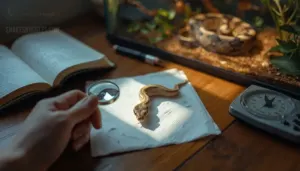
A shed skin is a free health report, and most keepers toss it before reading it.
Your snake’s discarded skin quietly reveals how healthy it is, yet owners usually throw it away without a glance
Once your snake finishes shedding, spread the skin out gently on a paper towel. A healthy shed comes off in one piece, with the eye caps and tail tip intact. Flaking or patchy pieces can point to dehydration or infection. Once the skin is fully dry and checked, you can preserve it flat in a reptile shed skin display frame to keep a visual record of each shed.
Then run through this quick routine:
- Count the intact eye caps, which should look like two clear, tiny lenses.
- Check the tail tip for a complete taper.
- Look for cracks, wounds, or odd spots.
- Record the date, completeness, and humidity.
Add feeding, weight, and vet visits to the same log. Over time, patterns show up fast, and you’ll catch trouble early.
Call your vet if any eye caps are missing from the shed.
Frequently Asked Questions (FAQs)
Should I feed my snake during shedding?
Usually not. Most healthy snakes refuse food before a shed, so don’t force it. Keep your normal schedule, offer prey if you like, then remove it. Try again once the shed is complete.
Why does my snake shed more often than usual?
Juveniles can shed every 2 to 3 weeks, while adults manage only 3 to 4 times a year. If yours isn’t a youngster, check for snake mites, humidity swings, high temperatures, or nutritional gaps.
What signs indicate dehydration in snakes?
You might think a snake would simply drink if it were thirsty, but dehydration in snakes creeps in quietly. Watch for sunken eyes, wrinkled skin that tents when pinched, dull scales, and tacky mouth lining.
How does lighting affect a snake’s shedding?
Steady light-dark cycles keep the hormones that drive shedding on schedule. During the blue-eye phase your snake sees poorly, so keep dim, stable lighting and avoid sudden changes that stress it or stall the shed.
Is it normal for snakes to eat their shed?
Yes, it can be normal. Some snakes, like corn snakes and king snakes, eat their shed skin to recover protein and minerals. Plenty of healthy snakes ignore it, so don’t worry either way.
How can I tell my snakes age by shedding?
Each shed is a snake leaving an old self behind, but it won’t tell you how many years that self lasted. Shedding frequency can’t reveal age. Young snakes shed often, adults less, yet feeding, health and species change everything.
Conclusion
Picture a ball python that sheds in one clean, glossy sheet, eye caps and tail tip included. That’s no accident. Someone kept the humidity steady, left the snake alone, and checked the skin afterward.
The best shedding practices for pet snakes come down to that simple rhythm: read the signs, set up the habitat, and step back. If a retained patch won’t budge, call your vet. Then write it down, because tomorrow’s shed gets easier.