This site is supported by our readers. We may earn a commission, at no cost to you, if you purchase through links.

Picture 20 baby snakes, each one a perfect miniature of its mother, sliding out ready to hunt within hours. No eggshells, no incubator, no waiting around. That’s the reality of boa constrictor babies, born live after a 100 to 120 day pregnancy that ends with a burst of independence rarely seen in the reptile world.
These neonates don’t need mom’s help finding food or shelter. They’re wired for survival from the first breath.
So how does birth actually happen, and what do you need to know to raise one right? Let’s start where every boa’s story begins.
Table Of Contents
- Key Takeaways
- How Are Boa Constrictor Babies Born?
- What Do Newborn Boa Constrictors Look Like?
- Baby Boa Constrictor Enclosure Requirements
- How to Feed Baby Boa Constrictors
- Baby Boa Health, Handling, and Growth
- Frequently Asked Questions (FAQs)
- How many babies does a boa constrictor have?
- Has a boa constrictor had 14 babies?
- How does a boa constrictor give birth?
- How do you take care of a baby boa constrictor?
- Can boa constrictors reproduce asexually?
- How long do boa constrictor babies live?
- What are boa constrictor babys defenses?
- Do boa constrictor babies need special care?
- How big are newborn boa constrictors?
- How long do baby boa constrictors live?
- Conclusion
Key Takeaways
- Boa constrictors give birth to 10-65 fully-formed, independent live babies after a 100-120 day pregnancy, with newborns able to hunt within hours of arrival.
- Your baby boa needs a 20-40 gallon enclosure with a warm-to-cool temperature gradient (90-92°F basking, 78-80°F cool zone) and steady humidity between 60-70% to thrive.
- Start feeding every 2-3 hours as a newborn, then space meals out as your snake grows, always choosing prey sized to match its girth and giving it 24-48 hours to digest undisturbed afterward.
- Weekly weigh-ins and watching for warning signs like wheezing, stuck shed, or regurgitation will help you catch health problems early in a pet that can live 20-30 years and grow up to 10 feet long.
How Are Boa Constrictor Babies Born?
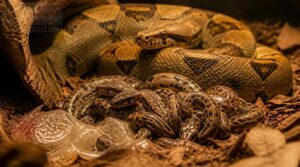
Boa constrictor birth is a lot stranger and more fascinating than most people expect. From surprise virgin births to litters bigger than you’d ever guess, there’s a lot going on before those babies even see daylight. Here’s exactly how it happens, step by step.
Unlike egg-laying snakes, boas give birth to fully formed young, a key difference explained in this guide to boa constrictor reproduction and birth.
Mating and Reproduction
When day length stretches in late spring, male boas get restless, and breeding season kicks off through fall.
Courtship gets physical fast:
- Head bobbing and tongue flicking to size up receptive females
- Male combat, pushing rivals aside for access
- Copulation lasting several minutes, tucked into brushy cover
- Spurs indicating a female’s receptiveness during intromission
This mating process is a form of sexual reproduction in animals, which relies on the joining of parental gametes to produce genetically varied offspring.
Parthenogenesis and Virgin Birth
Here’s a curveball: females sometimes skip males entirely. It’s called parthenogenesis, or virgin birth, asexual reproduction where an unfertilized egg develops on its own.
| Trigger | Effect |
|---|---|
| No males present | Egg activates alone |
| Environmental stress | May prompt development |
| Result | Genetic clone of mom |
| Concern | Lower genetic diversity |
Ronaldo the rainbow boa proved it happens, though offspring viability and maternal health stay uncertain.
Post-Ovulation Shed and Gestation
Whether she mates or goes it alone, the next clue is her post-ovulation shed, arriving 16–20 days after ovulation. It signals gestation has begun.
From there, count on 100–120 days total. Three things happen inside her:
- Yolk transfer fuels growing embryos.
- Hormones shift to support pregnancy.
- Shedding slows, energy redirects to babies.
Live Birth Process
After 100-120 days, birth day arrives, and it’s genuinely wild to watch.
Mom seeks a hidden birth site, tucked and safe. Babies emerge live (ovoviviparous means eggs hatch inside her!), wriggling free of their membrane. Neonates move within hours, hunting hides solo. She may guard them briefly, but these independent neonates don’t need much mothering.
Typical Litter Size
Ten to twenty-five babies? That’s the usual range, though female size effect matters a lot, bigger moms often mean bigger litters.
Maternal age and health play roles too, poorly nourished or stressed females may produce fewer young.
Understanding the ideal breeding age and conditions for ball pythons can help owners avoid these fertility and health risks altogether.
Once born, prep that baby boa enclosure fast, these little ones need space immediately!
What Do Newborn Boa Constrictors Look Like?
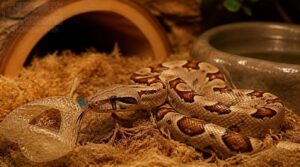
So what actually greets you when a baby boa makes its grand entrance? These little guys are basically tiny, perfect copies of their parents, no awkward baby phase required. Let’s break down exactly what to expect, from size to color to those first big milestones.
Newborn Length and Weight
Fresh out of the egg-like membrane, boa constrictor babies are already surprisingly long! Most measure 14 to 22 inches at birth, weighing 60 to 150 grams depending on litter size and mom’s condition.
- Length: 14-22 inches
- Weight: 60-150 grams
- Doubles in size: 6-12 months
- Weekly gain: 10-20 grams
Genetics and prenatal nutrition drive these numbers, so weigh and measure monthly to track healthy growth.
Colors and Pattern Changes
Here’s something fun: your baby boa’s colors won’t stay put!
Hatchlings start with cooler gray-tan bases and bold, high-contrast markings. Over weeks, color intensity shifts as pigment cells respond to light, diet, and shedding cycles. Juveniles trend toward richer browns and greens. No two boas follow identical timelines, either, thanks to genetics and individual growth rate.
First Shed Timeline
Cloudy eyes are your first clue: within days of birth, that milky look signals shedding is coming.
Most hatchlings shed 3-7 days post-birth, though full readiness often waits for that first meal, kicking off 1-2 weeks later.
The entire cycle runs 5-7 days. Humidity between 60-70% keeps things smooth, no stuck caps.
Natural Hunting Instincts
Born hunters? Pretty much. Baby boas track prey using their Jacobson’s organ, flicking tongues to read scent trails, while facial heat pits sense body warmth within seconds.
They ambush rather than chase, staying motionless near mammal pathways before striking fast. That patience pays off: early feeding success, built on instinct alone, jumpstarts healthy growth from day one.
Early Growth Stages
Growth in these first weeks is almost shocking. Baby boas can double their size within a year, fueled by frequent meals and steady warmth.
- Shed every 1-2 months early on
- Gain 10-20 grams weekly
- Feed every 5-7 days
- Keep humidity 60-70%
- Watch colors sharpen with each shed
Independence starts immediately, growth follows fast right behind it.
Baby Boa Constrictor Enclosure Requirements
So your baby boa hatched—now what kind of home does it actually need? Turns out, getting the enclosure right matters just as much as feeding it. Here’s what you need to know, piece by piece.
Choosing The Right Enclosure
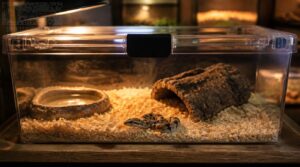
Since your newborn boa is barely longer than a pencil, don’t overdo it. Enclosure size selection matters: a 20–40 gallon tank, or a simple 24x12x12 setup, feels just right. Go with clear plastic or glass for easy monitoring and better escape prevention.
Skip cavernous tanks. They cause stress and make thermal gradient management a real headache!
Temperature Gradient and Heating

Right size sorted, now heat it properly. Your newborn needs a thermal gradient: a basking spot at 90-92°F and a cool zone around 78-80°F.
That range lets your snake thermoregulate naturally, warming up to digest, cooling down to rest. Use an infrared thermometer for accurate readings. Inconsistent heating causes stress and slows growth, so check daily.
Humidity and Shedding Support
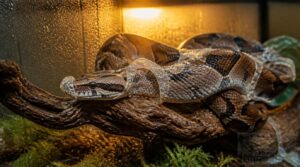
Heat’s only half the equation. Keep humidity at 60-70%, and watch it spike a bit before shedding to loosen old skin.
Mist enclosure walls, not substrate. A digital hygrometer near the basking spot catches swings fast. Readings above 75% mean back off; below 50% means mist more.
Balanced moisture equals clean, complete sheds!
Hides, Substrate, and Water

Now for the fun part: decorating! Your boa needs two hides, one warm, one cool, placed on opposite sides.
- Small hide, 4-6 inches, opaque and snag-free
- Substrate: cypress mulch or reptile carpet, 2-3 cm deep
- Wide, shallow water dish, away from heat, changed daily
Never use cedar or sand!
Monitoring Environmental Conditions

Numbers don’t lie, but only if you check them! Place thermometers at both warm and cool ends for accurate temperature gradient checks, and mount a hygrometer near sleeping zones for reliable humidity level tracking. Keep swings within ±2°F.
Consistent light cycle consistency (12 hours on/off) reduces stress, too. A few minutes daily keeps husbandry honest and your boa thriving.
How to Feed Baby Boa Constrictors
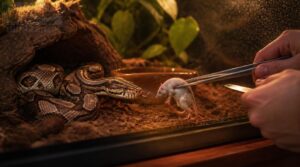
Feeding time is where things get exciting—and a little nerve-wracking—for new boa owners. Get it right, and your baby boa grows strong, healthy, and stress-free. Here’s exactly what you need to know, from how often to feed to keeping mealtime safe.
Feeding Frequency by Age
Ever wonder why baby boas eat like they’re racing a clock? A newborn feeding schedule starts every 2-3 hours, easing to 4-6 daily by two weeks. At a month, expect 3-5 meals, dropping to 2-3 by several months.
This juvenile meal reduction matches slowing growth, so let hunger cues, not the calendar, guide your weekly feeding rhythm!
Choosing Proper Prey Size
Picking prey size isn’t guesswork, it’s basic math. Aim for prey 1 to 1.5 times your snake’s girth, never wider than its widest point.
Quick checks:
- Prey width matches body width
- No struggle during swallowing
- Shape is smooth, no odd angles
- Size scales with growth rate
Too big causes regurgitation. Too small wastes energy. Match size to actual growth, not age alone!
Safely Thawing Frozen Prey
Never microwave, never hot water, never a countertop thaw, that’s the danger zone for bacteria. Use the refrigerator method overnight, or cold water thawing (changed every 30 minutes) for faster results. Match timing to prey size, then feed frozen-thawed rodents immediately.
| Method | Time Needed |
|---|---|
| Refrigerator | 12–24 hrs |
| Cold water | 30–120 min |
| Microwave | Not recommended |
| Room temp | Never use |
| Hot water | Never use |
Post-Feeding Handling Break
Just fed your baby boa? Hands off for 24 to 48 hours. That quiet window lets digestion finish undisturbed, reducing regurgitation risk. Keep temperature and humidity steady, skip handling and training, and watch for settled posture and normal breathing, those are your digestion monitoring cues. Resist checking the midsection! Once digestion completes, resume gentle handling gradually.
Preventing Overfeeding and Obesity
A chubby boa isn’t a happy boa, it’s a health risk waiting to happen. Cap meals at 10% of body weight, space feedings by age, and score body condition weekly.
- Square build, no fat along the spine
- Rounded hips signal overfeeding
- Absent waist means obesity
Log weights, adjust portions, and let growth rate guide your schedule.
Baby Boa Health, Handling, and Growth
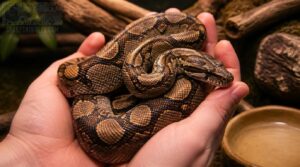
Feeding your baby boa right is only half the job. Now comes the part where you actually get to know your snake—how it grows, how it acts, and what’s normal versus what’s not. Here’s what you need to watch for as your little constrictor settles in and starts to thrive.
Tracking Weight and Meals
Since numbers don’t lie, weigh your snake weekly for honest growth rate monitoring.
| Week | Weight (g) | Meal Notes |
|---|---|---|
| 1 | 62 | Pinky, accepted |
| 2 | 68 | Pinky, first try |
| 3 | 75 | Fuzzy, refused once |
Aim for 5-10% weekly gain. Consistent meal logging alongside weight trends reveals patterns fast, so meal spacing stays predictable.
Common Health Warning Signs
Numbers tell you growth, but your snake’s body tells you health. Watch for:
- Wheezing or mouth breathing (respiratory distress)
- Loss of coordination or "star-gazing" (neurological trouble)
- Regurgitation or loose stools (digestive issues)
- Stuck shed or scale rot (skin problems)
- Tiny moving specks on skin (mite infestation)
Catch these early, call your vet promptly.
Safe Handling Techniques
Vet checks catch problems, but your hands prevent most of them. Support your boa with two hands, near the neck and midsection. Wash hands before and after. Skip handling after feeding or during shedding.
Keep sessions short (5-10 minutes for babies), calm, and quiet. Use a hook for surprise-free lifts. Watch for stress signs like tail thrashing.
When to Contact Veterinarians
Good handling habits catch a lot, but some signs need a reptile veterinarian, fast:
- Open-mouth breathing, wheezing, or gasping
- Bleeding that won’t stop within 5 minutes
- Repeated regurgitation or a swollen belly
- Lethargy after temperature swings or chilling
- Pus-like discharge, spreading sores, or persistent diarrhea
Trust your gut. Weight monitoring helps you catch trouble before it becomes an emergency.
Adult Size and Commitment
That tiny hatchling won’t stay pocket-sized. Boas reach 6-10 feet by age 3-4, living 20-30 years in captivity. That’s a real commitment.
That pocket-sized hatchling will grow into a 6-10 foot companion for the next 20-30 years
| Age | Length | Enclosure |
|---|---|---|
| Newborn | 14-22 in | 20-gal |
| 3 years | 6-8 ft | 6×2 ft |
| Adult | 10-13 ft | 8×3 ft |
Plan vertical space, weight checks, and steady feeding now, you’re raising a decades-long companion!
Frequently Asked Questions (FAQs)
How many babies does a boa constrictor have?
Big broods are the boa’s calling card, with 10 to 65 live young per litter (usually 20 to 40). Bigger, well-fed females birth more babies, wild litters vary more than captive ones.
Has a boa constrictor had 14 babies?
Fourteen babies falls within the normal litter size variation (1–64, averaging 25). Ronaldo, a Brazilian rainbow boa, produced 14 via parthenogenesis, a rare virgin birth showing nutrition and health shape every clutch’s outcome.
How does a boa constrictor give birth?
Forget egg-laying: females keep fertilized eggs inside their bodies, nourished by yolk sacs, through a 100–120 day gestation. Then, tucked into a sheltered burrow, she delivers fully-formed live young, an ovoviviparous process nature perfected long ago.
How do you take care of a baby boa constrictor?
Keep the enclosure warm (82–86°F), humid (60–70%), and escape-proof with soft substrate and hides. Feed appropriately sized prey every 5–7 days, provide fresh water, and handle gently once your neonate settles in.
Can boa constrictors reproduce asexually?
Surprisingly, yes! Through parthenogenesis, females produce clone offspring without mating, an asexual reproduction confirmed in captive boas.
Stress or missing males can trigger this rare virgin birth, yielding female-only litters genetically identical to mom, nature’s curious backup plan.
How long do boa constrictor babies live?
Picture a hatchling no longer than your forearm, someday stretching past 6 feet. That’s the journey ahead: 10 to 12 years usually, sometimes 15-20 with excellent husbandry, steady feeding, and consistent temperatures throughout its life.
What are boa constrictor babys defenses?
No hands, no venom, no size, so what’s left? Camouflage, freezing still, tight defensive coiling, quick escapes to cover, and bluff displays like hissing or head-shaking all work together to keep newborn boas alive.
Do boa constrictor babies need special care?
Yes, absolutely. Neonate care means humidity regulation near 60-70%, a warm-to-cool gradient, proper substrate choice, first shed support, and a steady feeding schedule.
Track growth rate and hydration needs closely, since attentive monitoring prevents stress and catches problems early.
How big are newborn boa constrictors?
At birth, these little snakes stretch about 14 to 22 inches, roughly the length of your forearm. Weighing just 20 to 40 grams, they’re tiny but tough, fully equipped to hunt and survive from day one.
How long do baby boa constrictors live?
With proper husbandry, that snake could be your companion for 20 to 30 years. Wild survival rates are lower, but captive boas benefit from steady feeding, monitored weight, and controlled temperatures, so longevity really hinges on early care quality.
Conclusion
Like tiny coiled springs ready to release, boa constrictor babies burst into the world fully equipped for survival. They don’t need lessons, just the right enclosure, proper prey, and your steady attention.
Nail the temperature gradient, feed responsibly, and watch closely for warning signs. That’s the whole formula.
These snakes grow fast, some reaching eight feet within a few years, so start strong now. Raise them well, and you’ll gain a thriving companion for decades to come.
Since temperament and care needs vary by morph, it helps to compare the best beginner boa constrictor morphs before you bring one home.