This site is supported by our readers. We may earn a commission, at no cost to you, if you purchase through links.
Scroll through any corn snake forum and you’ll find someone swearing their motley is "chiller" than their normal-colored snake. Sounds convincing, right? But here’s the catch: those flashy scales come from mutations in pigment genes, not personality genes. When people search for morphs that change corn snake behavior, they’re often chasing a myth built on coincidence and confirmation bias. Your snake’s boldness, appetite, and defensive streak trace back to individual wiring, environment, and care, not color. Let’s untangle what genetics actually controls, and what’s really shaping the snake in front of you.
Table Of Contents
- Key Takeaways
- Do Corn Snake Morphs Change Behavior?
- How Corn Snake Morph Genetics Work
- What Research Says About Morph Behavior
- Stripe and Motley Behavior Compared
- Temperament and Handling Across Morphs
- Activity and Exploration Across Morphs
- Feeding Behavior Across Corn Snake Morphs
- Health Problems Can Mimic Morph Differences
- Environment Shapes Behavior More Than Morph
- Choose Morphs by Appearance, Not Behavior
- Frequently Asked Questions (FAQs)
- What is the rarest corn snake morph?
- What is the best corn snake morph?
- How to tell what morph your corn snake is?
- How to tell if a corn snake is happy?
- Are certain morphs more prone to health issues?
- Do morphs influence feeding behavior or appetite?
- Which morphs are easiest for beginners to handle?
- Can morph type affect longevity or lifespan?
- Are any morphs linked to unique sensory abilities?
- Can diet affect a corn snakes temperament?
- Conclusion
Key Takeaways
- Morph genetics only control pigment and pattern—there’s no scientific link between color genes and temperament genes in corn snakes.
- Your snake’s personality comes down to individual wiring, handling history, and environment, not the morph it happens to be.
- Enclosure setup (hides, temperature gradients, climbing options, and space) shapes boldness and stress levels far more than any genetic mutation ever could.
- What looks like a "moody" morph is often really stress, poor husbandry, or an underlying health issue getting mistaken for personality.
Do Corn Snake Morphs Change Behavior?
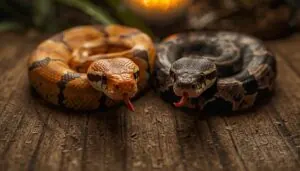
Ever wonder if a snake’s flashy colors say anything about its attitude? Here’s the short answer: genes for looks and genes for behavior aren’t the same thing. Let’s break down what actually shapes how your corn snake acts.
If you’re curious how much morph really matters, this deep dive into corn snake morph temperament differences breaks down what the research actually shows.
No Proven Behavior-Changing Morphs
Ever wonder why your snow morph seems just as feisty as your neighbor’s classic? Genetic uniformity behavior is real: color genes don’t touch temperament genes. Repeatability of behavioral traits across sessions shows:
- No handling response uniformity shift by morph
- Bite risk stays under 3% yearly
- Activity stays morph-independent
- Hissing fades with age, not color
- Environmental factors outweigh genetics
Appearance Versus Personality
Here’s the thing about a snake’s face: we’re wired to read it like we’d read a person’s. Bright colors, clear eyes, that "friendly" snow pattern? Pure appearance myths.
Genetic basis of morphs governs pigment, not personality. Your snake’s temperament comes from individual wiring, not its color palette, no matter how trustworthy it looks.
Individual Behavioral Differences
So if color doesn’t call the shots, what does? Meet the real MVP: temperament consistency within each snake.
Bold snakes probe new objects fast; shy ones retreat. Exploration tendency, threat response, even social curiosity, all stay stable over time, morph be damned.
Your snake’s personality is its own, not its palette’s.
Common Keeper Misconceptions
Old reptile forums love a good myth, don’t they? "Reds are feistier," "Snows are mellow," pure hearsay, not genetics. That color aggression link doesn’t hold up.
Reality check: handling history impact beats morph every time. A snake mishandled young bites more, no matter its pattern. Blame husbandry, not hue, for those defensive displays.
How Corn Snake Morph Genetics Work
Ever wonder why one corn snake glows fire-engine red while its sibling looks like a ghost? The answer’s hiding in its DNA, not its diet. Here’s the genetic rundown that explains every color and pattern you’ll ever see.
Color and Pattern Mutations
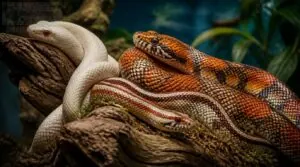
Snap a snake’s colors down to chemistry, and it’s all about pigment gene expression. Melanin reduction creates amelanistic snakes; erythrin production loss strips out red.
Pattern inheritance mechanics shape stripes, motley speckling, or patchwork pattern. Polygenic color blending adds depth, multiple genes tweaking saturation and edge sharpness.
Genetic mutations sculpt appearance only, not personality.
Dominant and Recessive Traits
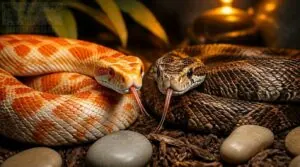
Ever wonder why two snakes from the same clutch look nothing alike? Genetic inheritance basics hold the answer. Dominant genes need just one copy to show; recessive genes need two.
Nowhere is this more striking than in regional variants—explore how green tree python morphs and color genetics vary between Highland and lowland populations shaped by generations of isolation.
Mutations like amelanistic and anerythristic follow these same rules, as you can explore in this guide to corn snake genetic mutations and pigment changes.
Even when both parents carry the right recessive traits, factors like modifier genes and incubation temperature mean outcomes aren’t guaranteed, which is why checking a corn snake morph compatibility chart before pairing is so useful.
- Heterozygous carrier status hides recessive traits
- Homozygous trait visibility reveals them
- Dominant recessive interaction decides the phenotype
That’s Mendelian inheritance driving phenotypic variation, not personality. In fact, dominant and recessive genes interact in predictable patterns that explain why even siblings from the same clutch can display such different morph combinations.
Polygenic Trait Expression
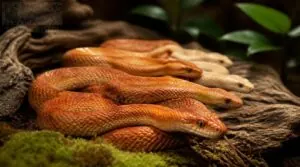
So why do some corn snakes show subtle color shifts instead of a clean on-off trait? Polygenic inheritance patterns are the answer. Multiple quantitative trait loci add up, creating continuous variation in shade and saturation, not distinct categories. Environmental influence balances with genetics too.
But here’s the key: this shapes appearance only, never temperament or behavioral plasticity.
Selective Breeding Effects
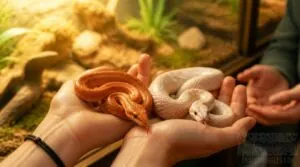
Genetics sets the color palette, but breeding shapes the personality underneath. Breeding for temperament targets calm parents, favoring behavioral trait inheritance over flashy scales.
- Select docile parent snakes
- Track early socialization impact
- Reduce stress through gentle handling acclimation
- Avoid inbreeding for genetic influence balance
- Document temperament variations across lines
Result? Steadier behavioral plasticity, better trait consistency, and snakes bred for handling confidence, not just looks.
What Research Says About Morph Behavior
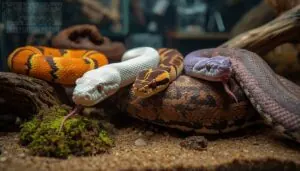
So what does the science actually say about morph and mood? Turns out researchers have looked closer than you’d think, and the findings might surprise you. Here’s what the data really shows.
If you’re weighing which morph fits your setup and temperament preferences, this ball python species and morph guide breaks down what to expect before you commit.
Current Evidence Limitations
Here’s the honest truth: the science on morph behavior is thin. Most studies suffer from small sample bias, single breeders, tiny groups. Add observational bias (keepers expecting quirky Motleys to act quirky) and environmental confounds like enclosure size, and you’ve got a messy picture. Measurement variability across studies makes real comparisons nearly impossible right now.
Behavioral Trait Repeatability
Want to know if your snake’s personality today predicts tomorrow? That’s behavioral trait repeatability in action.
Research shows:
- Boldness persists across handling sessions
- Exploration stays stable across repeated tests
- Activity level holds steady over weeks
Feeding response timing shows partial stability too. Repeatability isn’t about morphs, it’s about the individual snake’s consistent personality traits.
Genetics Versus Individual Variation
So if personality repeats over time, where does it come from? Not the morph gene. Genetic influence shapes color, not character. Behavior comes from countless other genes, plus environmental modulation and phenotypic plasticity working together. Germline inheritance passes down potential, but gene expression variability means two snakes with identical genes can still develop different temperaments entirely.
Captive Population Findings
So what happens when you actually study captive snakes? Temperament consistency holds firm across morphs, tied more to handling history and enrichment than color genes. Individual variation still rules.
Stress indicators like gaping track management, not morph. Bottom line: captive behavior reflects care quality, not pattern or pigment.
Stripe and Motley Behavior Compared
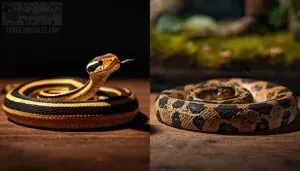
Ever wonder if that bold stripe pattern comes with a bolder personality? Or if Motley’s speckled look means a moodier snake? Let’s line these two up side by side and see what the numbers actually say.
Temperament Study Results
So what happens when researchers actually put Stripe and Motley temperaments to the test? Not much drama, honestly.
Morph Temperament scores land nearly identical to classic corn snakes, with biting frequency variation and handling tolerance showing no meaningful split by pattern gene.
Juvenile defensive patterns fade with age either way, individual risk assessment, not morph, drives the outcome.
Activity Level Comparisons
Ever clock how long a snake stays moving? Researchers did, and Stripe versus Motley showed no real gap.
Activity vs Morph just isn’t a thing here. Enclosure complexity drives movement more than genetics ever could.
Environmental modulation wins again. Give any morph the same setup, and their activity level comparisons land nearly identical.
Exploration and Boldness
So who’s the bold one in the tank? That’s an individual trait, not a morph trait.
Boldness and exploration scores stay stable across weeks, driven by scent-driven movement and shelter influence, not genetics.
Give any snake secure hides and temperature gradients, and behavioral plasticity kicks in.
Environmental modulation shapes exploration rate variance far more than color ever will.
Classic Morph Comparisons
Line up a Classic, an Amelanistic, and a Motley side by side, and you won’t spot a behavior gap. Trait consistency holds firm: exploration tendencies, hiding behaviors, and feeding responsiveness stay similar across the board. Pattern complexity variation doesn’t touch fundamental instincts. Size at maturity matches too, given equal captive care influence.
Genetic influence shapes looks, not who’s brave enough to explore first.
Temperament and Handling Across Morphs
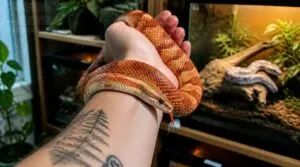
Ever wonder if picking a snazzy morph means gambling on a grumpy snake? Good news: temperament mostly comes down to the individual, not the color pattern. Here’s what actually shapes handling and trust over time.
Docility Across Color Variants
Think a fiery-red Amel is bound to be calmer than a moody gray Anery? Color doesn’t predict temperament. Docility genetics don’t track pigment genes at all.
Individual variation rules here. Handling history, routine, and environment shape personality far more than genetics ever could. Your snake’s confidence comes from consistent, gentle interaction, not its color line.
Defensive Juvenile Behavior
A startled baby corn snake looks downright dramatic! Common defensive displays include:
- Body flattening against surfaces
- Head raising with quick strikes
- Tail flicking as a warning
- Coiling response into tight spirals
This juvenile behavior fades with age. It’s not morph temperament, it’s just youth reacting to a big, scary world.
Biting and Hissing Triggers
What actually makes a corn snake strike? Genetics barely factors in. Defensive strike triggers come from fast hand movements, neck grabs, or sudden shadows, not morph.
| Trigger | Warning Sign | Risk Level |
|---|---|---|
| Fast hands | None | High |
| Neck/tail grip | Hissing | Moderate |
| Cornered feel | Raised head | High |
Biting incidents stay under 3% yearly. Temperament follows handling, not color.
Handling Confidence Over Time
Confidence isn’t instant, it’s built. Early handling in the first 6-12 weeks, paired with consistent calm sessions, shapes a steadier snake by month three to six.
- Predictability lowers stress
- Frequency beats duration
- Regressions happen after long pauses
- Boldness grows gradually
- Trait consistency stays, temperament sharpens
Daily short sessions outperform weekly marathons every time.
Beginner-Friendly Temperament Expectations
So what should a beginner actually expect? Skip the "easiest morph" myth and focus on temperament consistency through routine care. Any beginner morph can suit new keepers since docility depends on handling, not color.
Juvenile defensiveness fades with patience. Individual variation means results vary snake to snake, but calm enclosure impact and steady handling confidence build gentle, predictable temperament over time.
Activity and Exploration Across Morphs
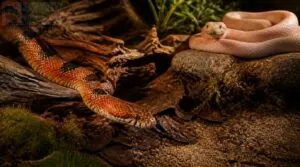
Ever wonder if your snake’s color says anything about how it moves through its day? Turns out, activity and exploration come down to instinct, not ink. Here’s what actually drives your corn snake’s daily rhythm.
Dawn and Dusk Activity
Ever notice your snake perking up right at sunrise? That’s crepuscular timing at work, not morph genetics.
Whether classic, Stripe, or Motley, activity peaks when temps hit 22-28°C and light dims to 50-200 lux. Seasons shift the window too, widening 30 minutes each end come spring.
Genetics? Barely a factor here.
Climbing and Burrowing Behavior
Timing’s genetic, but where your snake explores? That’s pure setup.
Give it textured branches and it’ll climb. Toss in loose substrate, 2-4 inches deep, and it’ll burrow near heat sources. Neither behavior traces back to morph, it’s enclosure complexity calling the shots. Vertical exploration and burrowing both fade or flourish based on hides, gradients, and enrichment, not pigment genes.
Boldness Between Individuals
Set two same-morph snakes side by side and you’ll spot it fast: one bolts for open space, one hangs back. That’s individual temperament, not genetics.
Bold ones explore quicker, engage enrichment faster, and settle into handling sooner. Shy ones need more time. Morph boldness scores don’t exist, only handling history, enrichment, and personality shape it.
Seasonal Activity Patterns
Why do your snake’s rhythms shift with the calendar? Blame the sun, not the scales, genetic influence stays flat while environmental modulation drives the show.
- Dawn activity peaks near lights-on
- Dusk bursts before lights-off
- Spring/fall favor crepuscular movement patterns
- Basking temperature thresholds sit at 75-85°F
- Seasonal humidity effects boost foraging
Temperament stability holds strong. Behavioral plasticity and light cycle responses shape activity, not morph genetics.
Feeding Behavior Across Corn Snake Morphs
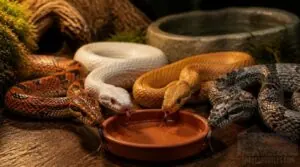
Ever wonder if a Snow morph eats differently than a classic? Good news—your snake’s appetite has nothing to do with its color. Here’s what actually shapes feeding behavior, morph by morph.
Appetite Differences Explained
A snake’s appetite runs on hormones, not color genes. Ghrelin and leptin drive hunger regardless of morph, and growth rate differences usually trace back to feeding schedule, not genetic variation.
Stress, temperature, or illness can dampen appetite faster than any mutation ever could. So if your amel skips a meal, don’t blame the genes, check the husbandry first.
Prey Response Consistency
Watch your snake feed a few times and a pattern emerges fast: same trajectory, same latency, same strike style. That’s prey response consistency, and it’s shaped by prey cue recognition, not morph.
- Stable trajectories across feedings
- Predictable response latency
- Gentle handling impact
- Environmental stability matters
- Individual variation persists
Genes don’t write this script. Your care routine and each snake’s temperament do.
Seasonal Feeding Slowdowns
Ever notice your snake going quiet on food come November? That’s a seasonal slowdown, not a morph quirk. Cooler temps trigger metabolic rate changes, hunger cues shift, and digestive efficiency drops. Stress suppresses appetite too.
Keep basking spots at 85-90°F, adjust prey size smaller, and stay patient. Environmental stability, not genetics, brings appetite back.
Feeding Problems Versus Genetics
Here’s the truth: a picky eater isn’t proof of bad genetics. Genetic feeding myths mislead keepers into blaming morphs for what’s usually husbandry.
Real culprits behind feeding stress:
- Health vs genetics issues like mouth infections or parasites
- Poor temperature gradients killing appetite
- Individual personality, not morph, driving hesitation
Behavioral plasticity means environment shapes appetite, not pigment mutations.
Health Problems Can Mimic Morph Differences
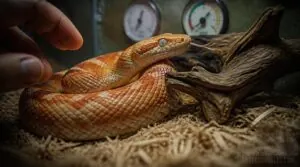
Ever blamed a snake’s grumpy mood on its morph, only to find out something else was going on? Genetics gets the credit (or blame) way too often when the real culprit is hiding in plain sight. Here’s what might actually be behind that "attitude.
Stress and Defensive Reactions
That defensive coil isn’t personality, it’s biology. The fight or flight response floods your snake with stress hormones, redirecting blood to muscles and sharpening reflexes regardless of morph. Genetic influence plays zero role here.
Hissing, tail whipping, freezing after a startle reaction? All universal stress behaviors. Handling stress often stems from enclosure stressors, not temperament stability tied to color genes or morph experience.
Vision and Lighting Considerations
Poor lighting can look like a temperament problem when it’s really a vision issue. Keep a consistent 12-hour photoperiod, use full-spectrum bulbs around 5000-6500K, and avoid glare with diffused, indirect placement. Harsh single-point lights create shadows snakes avoid, mimicking skittishness.
Vision differs little across morphs, but comfort affects every one of them, and stress reactions, not personality, follow.
Separating Health From Temperament
Lighting issues fade once you fix the setup, but other culprits stick around longer. Health vs temperament confusion happens constantly: a snake in pain or fighting off illness looks "moody," when it’s really just uncomfortable.
Watch for stress indicators like prolonged hiding or refusing food. Genetics don’t explain sudden crankiness. Trait repeatability matters here, real temperament stays consistent; illness doesn’t.
If your young snake still seems skittish after you’ve ruled out stress, this guide on how to handle a baby boa constrictor walks through gentle, confidence-building techniques.
When Veterinary Care Helps
So when does a hunch turn into a vet visit? If hiding or appetite loss lasts more than a few days, book that appointment.
Vet health checks, parasite screening, and diagnostic imaging catch what genetics can’t explain. A quick shedding assessment plus preventive care keeps genetic health markers on track, proving morph temperament rarely needs fixing, your snake’s environment usually does.
Environment Shapes Behavior More Than Morph
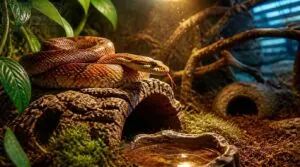
Here’s the truth: your snake’s genes don’t control its mood, but its enclosure sure does. Want a bold, curious snake instead of a nervous one? These five setup essentials make all the difference.
Your snake’s genes don’t control its mood, but its enclosure does
Multiple Secure Hides
Ever wonder why your snake vanishes the second you open the enclosure? It’s not drama, it’s instinct. Multiple secure hides give corn snakes options, cutting stress and defensive strikes.
- One large hide, two smaller ones for size choice
- Nonporous, easy-clean materials
- Warm and cool placement for thermoregulation
This kind of behavioral enrichment shapes calmer snakes, regardless of morph.
Proper Temperature Gradients
Think of your enclosure as two rooms in one: a warm zone for basking and digestion, a cool zone for retreat.
Thermal gradient setup matters more than morph ever will for calm captive behavior.
Keep temps within range, use a reliable thermometer, and match enclosure size to your snake’s length.
Simple, but it works.
Climbing and Enrichment Opportunities
Since corn snakes climb in the wild, your enclosure should let that instinct play out. Add cork bark tubes, secure branches, and rough-textured mats for grip.
- Vertical climbing options
- Secure hide placement at varied heights
- Buried prey for foraging enrichment
- Bark textures for visual sensory cues
This habitat enrichment boosts exploration, not the morph’s genetics, driving calmer captive behavior.
Enclosure Size and Complexity
Cramped tanks breed cranky snakes, no matter the morph. Give your corn snake at least 20 gallons (juvenile) or 40 (adult), with room for a real thermal gradient, multiple hides, and climbing structures.
Environmental complexity drives behavioral plasticity far more than genetics ever could. A snug 36x12x12 setup with layered enrichment beats a spacious but boring box every time. Complexity, not size alone, calms captive behavior.
Consistent Low-Stress Handling
Handling is where genetics steps aside and habit takes over. Calm handling techniques, gentle body support, and a quiet environment build real handling tolerance over weeks, not minutes.
Consistent, low-stress routines shape temperament far more than any morph gene. Speak softly, move slow, and let positive reinforcement do the heavy lifting. That’s behavioral plasticity in action, not genetic influence.
Choose Morphs by Appearance, Not Behavior
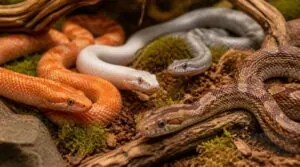
So here’s the fun part—picking your snake based on looks, guilt-free! Genetics decides the colors, not the attitude, so let your eyes do the choosing. Ready to shop smart? Here’s what actually matters once you fall for that perfect pattern.
Set Realistic Temperament Expectations
Snake shopping by pattern? Fine. Just don’t expect a Snow morph to be calmer than a Classic.
Corn snakes trend calm to mildly alert, but individual variation rules. Some tolerate handling fast, others stay skittish for months. Juvenile hissing and quick retreats are normal, not permanent traits.
Gentle, consistent handling routines and low-stress environments matter more than color genetics ever will.
Evaluate Individual Snake Behavior
Forget the morph chart. Your snake’s already telling you who it is, you just have to watch.
- Tongue flicking fast and steady near your hand
- Calm body posture during gentle handling
- Quick exploration of new enclosure objects
- Slow, deliberate movement instead of freezing up
- Consistent boldness across multiple weekly checks
Personality traits stay stable over time. That’s your real guide, not genetics.
Ask Breeders About Handling
Watching one snake tells you a lot, but the breeder holds the backstory.
Ask about handling frequency during those first weeks, and whether parent temperament ran bold or skittish.
Good breeders track stress indicators and keep documentation history on record.
That paper trail beats guesswork, since genetic influence on temperament stays murky at best.
Prioritize Health and Care
That documentation matters, but paperwork won’t feed or hydrate your snake. Prioritize care basics: annual vet checkups, proper temperature gradients, humidity control, and consistent feeding schedules. No morph gets a pass on husbandry.
Genetics doesn’t cause illness here, but neglect mimics behavioral quirks fast. Clean water dishes, regular weigh-ins, and reptile-savvy vets catch problems early, keeping your snake thriving regardless of pattern or color.
Match Appearance With Preference
Health handled, now for the fun part: picking looks you’ll love. Bold morphs like bright ambers suit display tanks; muted Motleys fit into naturalistic setups.
Since temperament stability holds steady across morphs, choose freely. Behavior won’t shift with color, so let personal taste, not imagined personality traits, guide your final pick.
Frequently Asked Questions (FAQs)
What is the rarest corn snake morph?
Funny enough, two collectors once swapped snakes at the same expo, unaware both held rare Palmetto lines. Genetic mutations like Palmetto and Lavender stay scarce, needing complex, verified lineage pairings through careful captive breeding.
What is the best corn snake morph?
There’s no single "best" morph, honestly. It comes down to personal color preference, price, availability, and care history, not temperament. A healthy, well-handled snake of any pattern makes a great pet!
How to tell what morph your corn snake is?
Like Sherlock reading clues, check color, pattern, and eye color. Amelanistic snakes show red eyes and no black pigment. Compare saddles and stripes to verified guides, then confirm hidden genetics through breeder pedigree records.
How to tell if a corn snake is happy?
Watch for a relaxed, smooth stride, curious exploring, and steady tongue flicks. A happy corn snake eats readily, sheds cleanly, breathes calmly, and tolerates gentle handling with minimal hissing or striking, reflecting genuine comfort and trust.
Are certain morphs more prone to health issues?
Yes: lavender kink risk, scaleless skin fragility, snow vision sensitivity, and golden fertility issues show real genetic predispositions.
Mixed morphs carry unknown genetic baggage too, and inbreeding depression can quietly erode genetic fitness across generations.
Do morphs influence feeding behavior or appetite?
Not really. Feeding behavior stays consistent across morphs, driven by hunger hormones and care, not pigment genes. Appetite seasonal shifts and stress-induced eating affect individuals regardless of color, so prey preference and growth rate depend more on husbandry than genetics.
Which morphs are easiest for beginners to handle?
Funny thing: the "beginner morph" isn’t the flashiest one, it’s the plainest. Normals, Amelanistic, and Snow morphs win for docility, predictable handling tolerance, easy enclosure setup, and steady availability, keeping cost low and stress lower.
Can morph type affect longevity or lifespan?
Color has nothing to do with the clock. Husbandry impact longevity far more than genetics ever will, though inbreeding depression from poor breeding can shorten any morph’s lifespan regardless of pattern.
Are any morphs linked to unique sensory abilities?
Picture a Snow corn snake tongue-flicking a mouse scent trail just as fast as a classic. Coat color doesn’t rewire senses: heat detection ranges and chemical sensing abilities stay identical across every morph, genetics included.
Can diet affect a corn snakes temperament?
Diet shapes temperament more than genetics ever could. Wrong prey size, inconsistent feeding schedules, and hunger-induced stress trigger defensiveness, while balanced nutrients and calm post-meal handling keep any snake, regardless of morph, steady and predictable.
Conclusion
Don’t judge a book by its cover, or a snake by its scales. Chasing morphs that change corn snake behavior means chasing a ghost that genetics simply can’t produce. Color mutations paint the scales, nothing more.
If you’re curious how far personality can diverge across a genus despite superficial similarities, comparing egg-eating snake species side by side, as in this guide to toothless pet snake breeds, shows temperament tracks species, not scale pattern.
Your snake’s boldness, its hiss, its curiosity, those trace back to individual wiring, environment, and the hours you invest earning trust. Pick your morph for beauty. Build temperament through patient handling. That’s the real secret worth knowing.