This site is supported by our readers. We may earn a commission, at no cost to you, if you purchase through links.
A reptile that stops eating, hides constantly, or tilts its head away from light isn’t being moody. It’s telling you something is wrong with its eyes. Reptile eye infections can escalate from a faint corneal haze to a vision-destroying ulcer within days, especially when humidity swings, a dirty water bowl, or a single substrate scratch gives bacteria or fungus the opening they need.
The stakes are high. A missed early sign can mean the difference between a simple antibiotic drop and a surgical eye removal.
This guide covers every stage, from root causes and first symptoms to diagnosis, treatment, and prevention.
Table Of Contents
- Key Takeaways
- Reptile Eye Infections: Causes and Risk Factors
- Reptile Eye Infection Symptoms and Emergency Warning Signs
- How Veterinarians Diagnose Reptile Eye Infections
- Reptile Eye Infection Treatment and Safe Supportive Care
- Preventing Eye Infections in Snakes, Lizards, Turtles, and Tortoises
- Frequently Asked Questions (FAQs)
- Do reptiles have ophthalmic disease?
- Do turtles have eye infections?
- Do reptiles have health problems?
- How are eye infections treated in turtles?
- What causes conjunctivitis in lizards & chelonians?
- What causes eye infections in tortoises?
- Can reptiles develop allergies causing eye issues?
- How do I safely administer eye drops?
- Can stress contribute to reptile eye problems?
- Are wild-caught reptiles prone to eye infections?
- Conclusion
Key Takeaways
- Reptile eye infections almost always stem from fixable husbandry failures—dirty water, wrong humidity, poor nutrition, or abrasive substrate—rather than bad luck.
- Behavioral shifts like hiding, refusing food, or tilting away from light are often the earliest warning signs, appearing before visible eye damage becomes obvious.
- Accurate diagnosis requires culture and sensitivity testing, because conditions like vitamin A deficiency and retained eye caps can mimic infection and lead to the wrong treatment.
- Daily spot-cleaning, proper UVB lighting, species-correct humidity, and a 60–90 day quarantine for new animals form the core prevention strategy that keeps infections from ever starting.
Reptile Eye Infections: Causes and Risk Factors
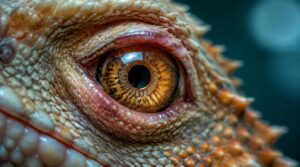
Eye infections in reptiles rarely happen by chance. They usually trace back to a handful of identifiable causes, from bacteria and fungi to husbandry mistakes you can fix today. Below, we’ll walk through the six main risk factors so you know exactly where trouble starts and how to stop it.
Knowing what to look for early makes all the difference, and a closer look at common snake eye problems and their causes can sharpen your ability to catch issues before they escalate.
Common Infectious Pathogens
Most reptile eye infections trace back to a handful of pathogenic microorganisms.
Bacterial eye infections lead the pack: Pseudomonas and Aeromonas thrive in dirty water bowls, while E. coli and Staphylococcus spread through feces and damp substrates. Fungal eye infections, especially Aspergillus, follow persistent humidity.
Viral and parasitic causes are rarer. Your vet may run bacterial cultures to pinpoint the culprit before prescribing treatment.
Ocular Barrier Damage
Those pathogens need a way in, and damaged ocular surface barriers are the open door.
Watch for these four entry points:
- Corneal ulcer from substrate scratches
- Ocular trauma during rough handling
- Retained eye caps trapping debris and moisture
- Chronic irritation from stuck shed or lid problems
Once the surface breaks, bacteria invade fast. Fix the barrier, or infections keep coming back!
Poor Environmental Hygiene
Even a healthy cornea won’t survive a filthy enclosure. Poor hygiene multiplies pathogen exposure every single day.
Dirty bedding, dusty substrates, and soggy spill zones irritate eyes and feed bacteria. Feces left to smear, biofilm in water bowls and filter media, and shared scrub tools all spread contamination.
Step up your enclosure cleaning: spot-clean daily, deep-sanitize weekly, and never reuse soiled décor!
Nutritional And UVB Deficiencies
Hygiene keeps pathogens down, but a weak diet invites trouble from the inside. Hypovitaminosis A thins the ocular surface, so low vitamin A predisposes your reptile to corneal damage.
Meanwhile, failing UVB lighting cuts vitamin D3 synthesis, destabilizing calcium and tear film. The result? Nutritional ophthalmopathy.
Feed species-appropriate variety, dust correctly, and replace UVB bulbs every 6–12 months!
Regular eye checks matter too — if you notice cloudiness or retained eye caps, snake eye problem treatments and causes can help you understand when it’s time to call a vet.
Temperature And Humidity Risks
Humidity control and temperature control make or break your reptile’s eye health. Low humidity causes stuck shed around the eyes; high humidity breeds bacteria and fungus. Keep levels within ±10% of target, and nail your thermal gradient. A digital reptile hygrometer monitor takes the guesswork out of tracking humidity, alerting you before levels drift into dangerous territory.
Temperatures outside the Preferred Ideal Temperature Zone suppress immunity, while overheating dehydrates. Suboptimal husbandry conditions like these invite infection fast!
Since eye problems can also stem from causes like bacterial infection, vitamin-A deficiency, or respiratory illness, watch for signs of eye infections in reptiles such as swelling, discharge, or crusting.
Species-Specific Vulnerabilities
Across all reptile groups, risk doesn’t look the same.
- Bearded dragon eye issues stem from dust, sand, and low humidity.
- Turtle eye infections spike in dirty, contaminated water.
- Gecko and lizard eye infections follow retained shed or spectacle complications.
- Tortoise eye injury builds from periocular debris and damp substrate.
Know your species. Match your care plan.
Reptile Eye Infection Symptoms and Emergency Warning Signs
Catching a reptile eye infection early can mean the difference between a simple treatment and a serious complication.
Symptoms range from mild to severe, and knowing what to look for at each stage keeps you ahead of the problem.
Here’s what to watch for, from the first subtle signs to red flags that need immediate veterinary attention.
Early Eye Symptoms
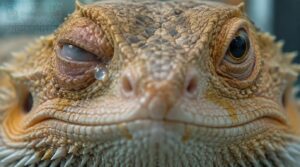
Reptiles don’t blink away pain the way you do. Catching early signs before cloudy eyes or redness around the eyes becomes obvious is everything.
| Early Sign | What to Watch |
|---|---|
| Cloudy eyes | Hazy corneal surface |
| Swollen eyelids | Periocular puffiness |
| Eye discharge | Watery corner tearing |
| Partial eye closing | One eye kept shut |
Early detection before eye discharge worsens gives you real options.
Signs of Infection
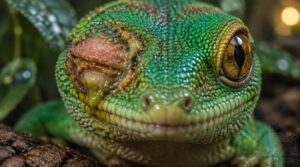
Picture a tiny emerald gecko squinting at you, one eye sealed shut with crusty gunk. That’s not "a little irritation." That’s an infection taking hold. Watch for these red flags:
- Swollen eyelids that won’t open fully
- Cloudy eyes or a milky film
- Yellow-green eye discharge crusting the scales
- Redness around the eyes
- A crater-like dent or ulcer on the cornea
Pus-like discharge means bacteria are winning. Corneal clouding means the infection is digging deeper, threatening vision. Don’t wait this out!
Behavioral Warning Signs

Your reptile’s behavior often spills the beans before its eyes do. Watch for these behavioral red flags:
| Behavior | What It May Mean |
|---|---|
| Hiding, lethargy | Ocular pain limits foraging |
| Refusing food, missed strikes | Poor prey tracking from eye discomfort |
| Head tilt, shade-seeking | Photophobia or unilateral irritation |
Early detection matters. Pair these changes with redness around the eyes or discharge or crusting, and call your exotics vet promptly!
Vision-Threatening Changes
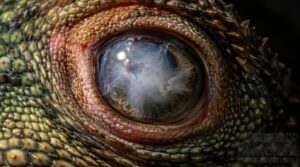
Some changes mean the clock is already ticking. A corneal opacity that turns gray-white suggests corneal ulceration or deep keratitis blocking light.
Watch for uveitis signs: pigment, cloudiness, or fibrin in the anterior chamber.
Elevated pressure and retinal damage cause vision loss quietly.
Ignore these, and you’re risking permanent damage before the infection even looks worse.
Veterinary Emergencies
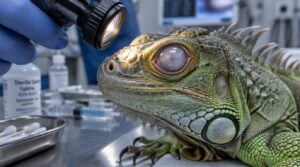
Some eye problems can’t wait until morning. Get to veterinary care now if you see:
- Eyelid swelling with pus or inability to open the eye
- A gray-white cornea, or blood inside the eye
- Lethargy and appetite loss alongside the eye issue
- Breathing effort changes or new skin lesions
Reptiles decompensate fast. Emergency treatment, ocular pathology workup, even surgical intervention may determine prognosis.
How Veterinarians Diagnose Reptile Eye Infections
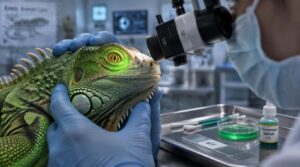
So you’ve spotted something wrong with your reptile’s eye. Now what? Here’s what to expect when your vet gets to work, from the initial eye exam and staining to cultures and microscopy, plus the lookalike conditions that can fool even experienced owners.
Eye Exams and Staining
You can expect your vet to start with a physical examination of the lids, cornea, and conjunctiva before any dye touches the eye. Then comes fluorescein staining, which highlights epithelial defects as bright green uptake. A negative stain doesn’t rule out deeper disease, so your vet builds a differential diagnosis using stain pattern, location, and extent.
Reptile ophthalmology relies on documenting these findings for rechecks.
Cultures and Microscopy
When staining suggests infection, your vet collects a sterile sample from the discharge or corneal surface. Bacterial culture identifies the culprit, and culture and sensitivity testing pinpoints which antibiotics actually work.
Microscopy analysis of that sample reveals pus cells and whether organisms sit inside cells. Ocular cytology also separates true infection from inflammation.
Remember: prior antibiotics can cause false-negative cultures.
Conditions That Mimic Infection
Here’s the catch: not every red, swollen eye is infected. Vitamin A deficiency in turtles causes swelling of the eyelids that looks just like conjunctivitis. Retained eye caps in snakes and geckos mimic infection too. So do foreign bodies, periocular sinusitis, and lipid keratopathy. That’s why your vet builds a differential diagnosis before prescribing anything.
Reptile Eye Infection Treatment and Safe Supportive Care
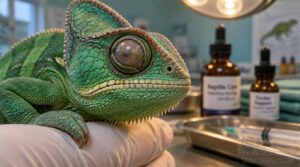
Good news: most reptile eye infections respond well to treatment when you act quickly. Below, we’ll cover prescription medications, when surgery becomes necessary, and the safe at-home support that speeds recovery. Your vet leads the way, but your husbandry makes or breaks the outcome!
Prescription Medications
Your vet won’t guess. They’ll match the drug to the bug.
Topical antibiotics like ciprofloxacin drops or Terramycin ointment handle surface infections. Systemic antibiotics, usually enrofloxacin, tackle deeper disease, but they’re hard on reptile kidneys, so fluids run alongside them. Antifungal treatment means compounded amphotericin B drops or fluconazole.
Remember these rules:
- Reserve ciprofloxacin for severe cases
- Ask about moxifloxacin for deep ulcers
- Never skip fluid support with enrofloxacin
- Expect compounded antifungals, not off-the-shelf bottles
Follow the schedule exactly!
Surgical Treatment
When infection resists medication or necrotic debris blocks healing, your vet may recommend surgery. Surgical drainage removes abscess material, while debridement clears infected tissue so antibiotics can actually reach the problem.
Severe, non-visual eyes may need enucleation. Reptiles require general anesthesia, and recovery depends heavily on proper temperatures, so choose a clinician experienced in reptile ophthalmology.
Don’t delay veterinary care!
Safe At-Home Support
You might think home remedies can cure this, but they can’t. Supportive care only stabilizes your reptile while your vet treats the real cause.
Wipe debris gently with sterile saline, using a fresh applicator per eye. Never force-flush. Prioritize humidity control, spot-clean the enclosure, and quarantine on fresh substrate. Skip human eye drops entirely. Watch closely, because early detection saves eyes!
Preventing Eye Infections in Snakes, Lizards, Turtles, and Tortoises

A leopard gecko kept on damp, soiled substrate can go from mild squinting to a corneal ulcer in a week. Prevention is your best medicine!
From mild squinting to corneal ulcer in a week—damp, dirty substrate is the enemy
Think of prevention as three layers of defense:
- Barrier protection: intact eyes resist pathogens; dusty or abrasive substrates scratch that barrier.
- Microbial control: clean water and dry bedding starve bacteria and fungi before they reach the eye.
- Immune support: proper heat, humidity, and nutrition keep defenses strong.
Practice smart enclosure hygiene: spot-clean daily, replace soak water after each use, and deep-clean monthly to break up biofilm. Provide UVB lighting at species-appropriate proper UVB intensity, and dust feeders or offer vitamin A-rich foods. Quarantine new animals 60 to 90 days. Wash hands between enclosures. These habits make early detection easier, because you’ll notice subtle changes fast. A Solarmeter UVB reptile meter takes the guesswork out of hitting that species-appropriate intensity your gecko’s immune system depends on.
Frequently Asked Questions (FAQs)
Do reptiles have ophthalmic disease?
Up to 40% of captive reptiles develop ocular disease at some point. Your reptile definitely isn’t exempt. Eye Infections in Reptiles cause swelling, cloudy eyes, and discharge. Catch those symptoms early for the best outcome.
Do turtles have eye infections?
Think your turtle’s water tank is protecting their eyes? It’s not. Turtles develop eye infections from poor water quality, vitamin A deficiency, or bacteria, which threatens their ocular health. Watch for swollen lids and discharge.
Do reptiles have health problems?
Beneath that scaly exterior, your reptile is dealing with more than you might realize. They’re vulnerable to respiratory infections, parasites, vitamin deficiencies, and reptile eye infections. Watch for appetite shifts, lethargy, or any unusual appearance.
How are eye infections treated in turtles?
Got a turtle with a swollen, crusty eye? Gently rinse it with sterile saline, then apply vet-prescribed antibiotics twice daily. Improve your water quality, UVB lighting, and diet. Seek veterinary care if it doesn’t improve.
What causes conjunctivitis in lizards & chelonians?
Conjunctivitis in lizards and chelonians most often stems from bacterial conjunctivitis, poor environmental hygiene, or Vitamin A deficiency. Dust, dry air, and pathogenic microorganisms can quickly break down the ocular surface, making infection more likely.
What causes eye infections in tortoises?
Hypovitaminosis A is the leading culprit, weakening ocular tissues fast. Dusty substrates, dirty water, and tortoise eye injury open the door to bacterial conjunctivitis. Poor husbandry overall, including bad humidity, makes every single risk worse.
Can reptiles develop allergies causing eye issues?
Yes, reptiles can develop immune-mediated eye inflammation triggered by dusty bedding, cleaning sprays, or airborne particles. You’ll often notice redness and swelling. Reducing environmental irritants and improving enclosure hygiene usually clears these eye issues up.
How do I safely administer eye drops?
Imagine a bearded dragon flinching and pulling away mid-dose. Gently restrain your reptile and steady its head carefully. Hold the dropper above the eye without touching it, then instill your prescribed topical antibiotic eye drops.
Can stress contribute to reptile eye problems?
Stress really does put your reptile’s eyes at risk. Chronic immune suppression from ongoing stress leaves the ocular surface exposed to infection. Overhandling and poor thermoregulation are classic environmental stressors that really compound this danger.
Are wild-caught reptiles prone to eye infections?
Wild-caught reptiles are far more prone to eye infections than captive-hatched ones. Wild-caught stress immediately compromises immune function, and unknown pathogen transmission history puts you behind long before you’ve even finished setting up their enclosure.
Conclusion
A cloudy eye in a healthy tank rarely stays cloudy. When substrate, humidity, and nutrition stay dialed in, you take away the very conditions that let reptile eye infections take hold. But even careful keepers miss things, so watch every shed, every feeding response, every blink.
Catch changes early. Your reptile can’t tell you its eye hurts. That quiet, half-lidded stare? It’s asking you to look closer.