This site is supported by our readers. We may earn a commission, at no cost to you, if you purchase through links.
A snake doesn’t shiver. It can’t. That one fact changes everything about how you care for one.
Warm-blooded animals generate their own heat — snakes borrow it from their environment. Drop the temperature low enough, and their entire biology starts shutting down. Digestion stalls. Muscles weaken. The immune system backs off. It happens quietly, which is exactly what makes it dangerous.
Below 60°F is the threshold where things turn serious for most pet snakes. But species matters — a ball python and a corn snake don’t share the same tolerance, not even close. Knowing where your snake falls on that spectrum could make all the difference.
Table Of Contents
- Key Takeaways
- Below 60°F is Too Cold
- Ideal Snake Temperature Ranges
- What Happens When Snakes Chill
- When Snakes Become Inactive
- Dangerous Temperatures for Pet Snakes
- Can Snakes Survive 40°F?
- Cold Tolerance by Snake Species
- Brumation and Cold Weather Survival
- Keeping Pet Snakes Warm
- Cold Snake Emergency Steps
- Frequently Asked Questions (FAQs)
- Do snakes come out in 40 degree weather?
- What is the coldest temperature a snake can survive?
- At what temperature do snakes become inactive?
- What happens if a snake gets too cold?
- Can snakes survive freezing temperatures inside their burrows?
- Do different snake species have varying cold tolerances?
- How quickly can snakes warm up after exposure?
- Can snakes sense temperature changes before they occur?
- Do baby snakes handle cold differently than adults?
- Do snakes feel pain when temperatures drop?
- Conclusion
Key Takeaways
- Below 60°F is the critical danger threshold for most pet snakes, triggering digestive shutdown, immune suppression, and cold shock that can escalate quickly.
- Species origin matters enormously — tropical snakes like ball pythons and boas can die near 40°F, while temperate species like garter snakes can survive brief exposure down to 23°F.
- Pet snakes can’t seek warmth on their own, so your enclosure must maintain a proper temperature gradient (warm side 78–90°F, cool side 70–75°F) with a thermostat — not optional.
- If you find your snake cold and unresponsive, rewarm slowly in 2–3°F steps and call a reptile vet immediately — sudden heat is just as dangerous as the cold itself.
Below 60°F is Too Cold
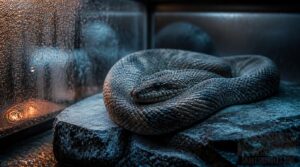
For snakes, 60°F isn’t just a number — it’s a real turning point. Below that, their bodies start struggling in ways that vary quite a bit depending on the species. Here’s what you need to know about that threshold.
Understanding exactly how temperature affects snake physiology helps explain why that 60°F line matters so much for your snake’s digestion, immune function, and overall wellbeing.
General Cold Threshold
Snakes don’t generate their own body heat — every degree of warmth they get comes from their environment. When ambient temperatures drop below 60°F (15.5°C), their metabolic rate slows noticeably. Digestion stalls. Movement becomes sluggish.
That’s the rough threshold where cold stress begins. Your snake isn’t broken — it’s just an ectotherm responding exactly as evolution designed it to.
Species Differences
That 60°F threshold isn’t universal. Tropical species like Burmese pythons hit their danger zone much sooner — some show signs of cold stress approaching 50°F. Temperate species, like garter snakes, handle the chill far better. Their metabolism is built for it.
Species origin matters as much as the temperature itself. Understanding unique biological needs is essential for maintaining their health.
Pet Versus Wild Snakes
Wild snakes can seek warmer ground when temperatures drop. Your pet can’t. That’s the main difference.
Captive-bred snakes depend entirely on you for ectothermic regulation. They’ve lost the instincts for winter survival mechanisms wild snakes rely on.
- Wild snakes find natural shelter to avoid freezing
- Pet snakes lack hunting skills and habitat navigation
- Escape risks expose pets to lethal environmental temperatures
Short Exposure Risks
Even a quick chill matters. Below 60°F, your snake’s metabolism slows fast — digestion stalls, movement dulls, and the immune system takes a hit. That makes even short cold exposure a real concern.
Respiratory infections can set in quickly, especially when moisture is involved. Stress responses fire up too, leaving your snake fatigued and unlikely to eat anytime soon.
Long Exposure Dangers
The longer your snake stays cold, the harder recovery gets. Reptilian metabolism powers down like a slow battery drain — digestion stops, immune responses crash, and thermoregulation becomes impossible to restore quickly.
For ectothermic animals, extended exposure isn’t just discomfort. Tropical species risk fatal tissue damage well before brumation becomes relevant. Cold weather survival depends on how long that chill lasts.
Ideal Snake Temperature Ranges
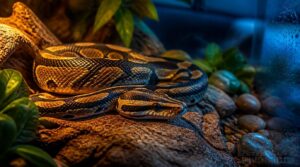
Getting the temperature right in your snake’s enclosure isn’t complicated, but it does require knowing what you’re working with. Snakes need a range of temperatures — not just one — to stay healthy and comfortable. Here’s what each zone in the enclosure should look like.
Warm Side Temperatures
The warm side is the engine room of your snake’s enclosure. Because snakes are ectothermic, they rely entirely on external heat to support reptilian metabolism, digestion, and thermoregulation — none of which function without it.
- 78–88°F — ideal warm zone range
- 88°F basking spot — peak for 1–2 hours daily
- 90°F max — beyond this risks heat stress
- Thermostat-regulated sources — non-negotiable for heat source safety
Cool Side Temperatures
The cool side isn’t an afterthought — it’s half the equation. Your snake needs somewhere to retreat from the heat, and that zone should sit around 70–75°F.
That range keeps the thermal gradient stable without dropping low enough to slow digestion or trigger dormancy. Place a digital thermometer here, away from any lamps, so hidden warming doesn’t skew your readings.
Basking Area Needs
The basking spot is where your snake’s metabolism actually wakes up. Aim for 90–95°F on the surface, measured directly with a thermometer — not guessed from the air above.
Platform stability matters here. A wobbly perch ruins the purpose. Use a sturdy, textured surface your snake can grip, and pair it with UVB lighting to support calcium metabolism naturally.
Night Temperature Drops
Nights cool fast — especially on clear, still nights when radiative cooling pulls heat straight into the sky. Your snake feels every degree of that drop. Most pet snakes handle a gentle dip to 65–70°F overnight, but no lower.
Humid enclosures cool more slowly, which actually helps buffer that swing. Keep a thermometer inside the enclosure, not outside it.
Species-specific Requirements
Every snake has its own thermal fingerprint. A ball python thrives at 88–92°F on the warm side, while a garter snake does just fine at 80°F.
- Tropical species struggle when temperatures dip below 75°F
- Temperate snakes tolerate cooler gradients through seasonal dormancy
- Mismatched enclosure temps quietly stress your snake for weeks
Know your species. Their metabolic processes depend on it.
What Happens When Snakes Chill
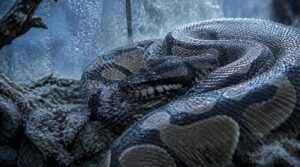
Cold affects snakes fast, and the effects go beyond just slowing them down. Each drop in temperature chips away at something your snake needs to stay healthy. Here’s what’s actually happening inside their bodies when things get too cool.
Slowed Movement
Watch a snake on a cold day and you’ll notice something off — its movements look almost reluctant. That’s motor planning delay at work.
Its nervous system slows signal transmission, so muscle recruitment drops and each action takes longer to begin. Movement vigor falls sharply below 60°F, turning a normally fluid reptile into something that looks like it’s moving through thick mud.
Poor Digestion
Slowed movement is just the start. Cold also shuts down your snake’s ability to process a meal.
Digestive enzymes stop working efficiently when body temperature drops. Food sits in the gut too long, ferments, and can cause bloating or regurgitation. Gut motility falls sharply, so nutrients never fully absorb — even if your snake ate well, it’s practically starving at the cellular level.
A cold snake that just ate is practically starving — chilled enzymes can’t digest what’s already in the gut
Weak Immune Response
Digestion isn’t the only system cold disrupts. As a coldblooded animal, your snake’s immune function tracks directly with body temperature.
When warmth drops too low, infection susceptibility rises. The immune system can’t patrol effectively.
- Slower recovery from illness
- Recurrent infections
- Poor pathogen defense
- Gradual immune dysfunction
Cold snakes get sick more often — and stay sick far longer than you’d expect.
Respiratory Illness Risk
That immune suppression has a direct target: the lungs.
Cold air dries out respiratory surfaces, and mucus function declines fast. Your snake can’t clear irritants or pathogens the way it normally would. Microbial aerosol exposure from damp substrate makes things worse.
Poor humidity control compounds the problem — dried airways plus a suppressed immune response is a bad combination.
Cold Shock Symptoms
Cold shock hits fast. As a coldblooded animal, your snake can’t fight a sudden temperature drop — its body temperature just follows the environment down. You might notice an involuntary stiffening, rapid breathing changes, or peripheral numbness along the tail.
Cognitive disorientation effects show as glassy, unresponsive behavior. At a lowered metabolic rate, even mild cold can push a snake toward animal dormancy quickly.
When Snakes Become Inactive

Once temperatures start falling, snakes don’t just slow down — they follow a very predictable pattern of shutting off. Each degree drop nudges them closer to full stillness, and knowing the key thresholds helps you spot trouble before it starts. Here’s what’s actually happening at each stage.
Activity Below 70°F
Once temps slip under 70°F, snakes pull back. As coldblooded animals, they can’t make their own heat — so metabolic energy expenditure drops fast. Watch for these key shifts:
- Slower prey tracking — tongue flicking slows
- Foraging efficiency loss — hunting bouts shorten
- Hunting strategy shifts — ambush replaces active chasing
- Reduced muscle stiffness only returns when warmth does
The early pull toward brumation.
Lethargy Near 60°F
At 60°F, your snake isn’t just slow — it’s shutting down. Tongue flicking slows to almost nothing, exploratory behavior stops, and muscle function drops sharply. Snakes become coldblooded passengers in their own bodies.
Digestive transit stalls too. Even mild stimulus gets little reaction. This isn’t laziness — it’s the biological edge where brumation begins knocking.
Brumation Triggers
Brumation isn’t flipped on by cold alone. Your snake reads a whole cluster of signals — shrinking daylight hours, dropping temperatures, seasonal humidity shifts, and dwindling food. Hormonal changes prime the slowdown before winter even fully arrives.
Artificial lighting can delay or disrupt this entirely. That’s why captive snakes sometimes skip brumation when their enclosure stays bright year-round.
Reduced Feeding Response
When temperatures dip, your snake’s metabolic hunger signals simply go quiet.
Cool conditions slow gastric motility, making digestion uncomfortable. Eating feels pointless to a snake that can’t process a meal.
Watch for these signs:
- Ignoring prey entirely
- Tasting food, then retreating
- Longer gaps between feedings
- Lingering near warm zones before approaching food
- Refusing meals after recent cold exposure
Basking restores appetite once warmth returns.
Slower Reflexes
Reflexes run on nerve signals, and cold slows those signals down fast.
Below 60°F, nerve conduction speed drops noticeably. Your snake’s muscles simply can’t fire quickly without enough ATP to power them. That delayed prey strike you’re seeing isn’t laziness — it’s impaired synaptic transmission.
Tail flicks slow. Head tracking lags. Recovery returns once warmth does.
Dangerous Temperatures for Pet Snakes
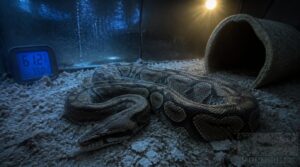
Pet snakes don’t have the option of finding a warmer rock or burrowing underground when things get chilly — they’re entirely at your mercy. The temperature inside their enclosure can mean the difference between a thriving snake and a seriously sick one. Here’s what you need to watch for, depending on your snake’s situation.
Below-safe Enclosure Temperatures
Most pet snakes start struggling around 60°F. Below that, their reptile biology begins to falter in serious ways.
- Digestion slows, then stalls entirely
- Immune suppression raises infection risk
- Brumation-like dormancy can trigger unexpectedly
- Metabolic shutdown threatens survival in prolonged cold
That’s why enclosure gradient maintenance and temperature monitoring matter so much. Don’t ever wait for symptoms — check your thermometer daily.
Tropical Snake Risks
Tropical snakes have almost no cold buffer. A Burmese python can die near 40°F — that’s not a slow decline, it’s a hard cutoff their reptile biology simply wasn’t built to handle.
Ball pythons, green tree pythons, and similar species evolved in warm, humid environments where temperatures rarely dip. Cold hits them fast and hard.
Temperate Snake Tolerance
Temperate species like corn snakes and garter snakes handle cooler temps better than their tropical cousins. But "better" has limits.
Below 65–70°F, even hardy temperate snakes start struggling with digestion and immune function. Diurnal temperature swings in poorly heated enclosures compound the risk fast. They’re tough — not invincible.
Hatchling Vulnerability
Young snakes are in a league of their own regarding cold risk. Their immature immune systems and tiny energy reserves leave almost no buffer against temperature drops. Even a brief dip below 65°F can stall digestion completely.
Precise thermal gradients matter most at this stage — hatchlings can’t compensate the way adults do.
Sick Snake Sensitivity
A sick snake has almost no margin for error. Cold temperatures suppress immune function, turning a manageable infection into something serious fast.
Watch for open-mouth breathing, appetite refusal beyond a week, or abnormal shedding — these worsen quickly when the enclosure runs cool. Even a few degrees below what they need can accelerate decline. Keep things warm and stable, then call a reptile vet.
If she’s been gravid for a while and straining without producing eggs, these signs of egg binding and how it’s treated can help you tell whether she’s stuck.
Can Snakes Survive 40°F?
Forty degrees is where things get genuinely dicey for most snakes. Whether a snake pulls through depends on the species, how long it’s exposed, and whether it has somewhere safe to hide. Here’s what actually determines survival at that temperature.
Brief Exposure Limits
At 40°F, a snake isn’t dead — but it’s on borrowed time. Brief exposure limits matter here. Think of it like an irritant concentration threshold: small doses can be tolerated, but the dose rate matters.
A few key risks during short cold exposure:
- Body temperature drops rapidly
- Muscle function collapses
- Acute toxicity spikes trigger cold shock
Even 30 minutes counts.
Tropical Species Danger
For species like the Burmese python, 40°F isn’t a threshold — it’s a death sentence. These snakes evolved for humid, warm environments and have almost no cold weather adaptation built in.
Their thermal stress limits are razor-thin. Drop below 50°F and organ function deteriorates fast. At 40°F, cold shock can become fatal within hours.
Native Species Resilience
Native North American snakes are built differently. Garter snakes can supercool their body fluids to around 23°F before ice even begins forming in their tissues.
Four traits drive that toughness:
- Genetic diversity buffers against cold stress
- Phenotypic plasticity allows rapid physiological adjustment
- Brumation conserves energy through winter
- Habitat connectivity allows seasonal movement
40°F is uncomfortable — not automatically fatal.
Shelter Makes a Difference
Where a snake shelters matters as much as the temperature itself. Underground hibernacula sit 10–15°F warmer than surface air. Insulated walls cut heat loss by 40 percent, and thermal mats beneath substrate keep warmth steady overnight.
| Shelter Feature | Cold Protection Benefit |
|---|---|
| Underground depth | Stays above freezing |
| Insulated walls | Reduces heat loss up to 40% |
| Thermal mat beneath substrate | Consistent warmth without overheating |
| Dense substrate layers | Creates warm microhabitats |
| Mesh ventilation | Prevents harmful moisture buildup |
Good microhabitat design can mean the difference between safe brumation and fatal cold stress at 40°F.
Freezing Risk Factors
Freezing isn’t just about air temperature — substrate moisture and convection heat loss accelerate it fast. Damp bedding pulls warmth away from a snake’s body far quicker than dry shelter would.
Without a proper frost line buffer, extremities face genuine frostbite risk. Even brief tissue freezing causes damage that can’t be reversed. That’s why your snake’s microenvironment matters as much as the thermometer reading.
Cold Tolerance by Snake Species
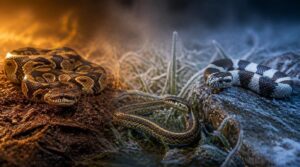
Not every snake experiences the cold the same way. A ball python and a garter snake are working with very different rulebooks when temperatures drop. Here’s how some of the most common species stack up.
Species like boas add another layer of complexity, since boa constrictor growth rates by year vary widely depending on diet, sex, and environment — not just temperature alone.
Ball Pythons
Ball pythons come from the warm savannas of West and Central Africa, so cold is genuinely their enemy. Their bodies expect heat — always.
Below 60°F, muscle function slows dramatically. Drop to 40°F, and you’re in dangerous territory. Unlike wild garter snakes that tough out frost, a ball python has zero cold strategy. It simply shuts down.
Corn Snakes
Corn snakes are tougher than ball pythons when the temperature drops. Native to the southeastern U.S., they’re built for seasonal swings — warm summers, cooler winters.
That instinct to shuttle between warm and cool zones is a form of self-regulation — learn more about why snakes move between temperature gradients and what it tells you about their health.
Below 60°F, their digestion stalls and movement slows. They won’t die immediately, but prolonged cold causes real harm. In captivity, keep them above that threshold year-round.
Boa Constrictors
Boas come from tropical South America — humidity, warmth, stable heat year-round. Unlike corn snakes, they have almost no cold buffer.
Below 50°F, a boa’s muscles seize and digestion halts completely.
5 signs your boa is too cold:
- Refusing food
- Sluggish coiling
- Open-mouth breathing
- Tongue flickering slows
- Body feels cold to touch
Keep them above 75°F always.
Garter Snakes
Boas need coddling. Garter snakes? Not so much.
The Thamnophis genus is built tough. Garter snakes range 700 miles farther north than most North American snakes — some surviving near the Arctic. They can supercool body fluids down to around 23°F before ice forms.
Below 60°F, they brumate. But they’re wired to handle it.
Rattlesnakes
Venomous and surprisingly adaptable, rattlesnakes adapt to cold better than most people would think.
Western diamondbacks emerge from dens at 37°F just to drink. Tennessee timber rattlesnakes still travel about 145 meters across winter — six trips.
- Heat-sensing pits locate prey
- Rattles deter predators
- Ovoviviparous birth fits seasonal timing
- Habitat diversity spans desert to forest
- Strike precision acts as survival strategy
Brumation and Cold Weather Survival
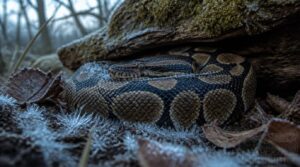
Snakes don’t hibernate the way bears do — they do something a little different called brumation. It’s a fascinating survival strategy, and understanding it helps explain a lot of the strange behavior you might notice in wild or pet snakes during cooler months. Here’s what’s actually happening under the surface.
What Brumation Means
Think of brumation as a snake’s version of pressing pause. It’s not quite the same as mammal hibernation — snakes stay cold-blooded throughout, so their body temperature follows the environment’s lead. Metabolism slows dramatically, heart rate drops, and digestion shuts down entirely.
Some cold-climate vipers take this even further, using cryoprotectant molecules to survive nearly half their body water freezing — a striking adaptation detailed in this guide to how snakes endure arctic conditions.
Reptiles may still wake briefly to drink water. But feeding stops. It’s pure energy conservation mode, triggered by consistently cold temperatures in autumn.
How Metabolism Slows
As temperatures drop, a snake’s enzymatic activity grinds to a halt — enzymes need warmth to function, and cold removes that entirely.
Key changes during brumation include:
- Heart rate drops dramatically
- Digestion stops completely
- Energy conservation takes over
- Breathing slows to near-nothing
It’s ectothermic regulation at its most extreme. The snake isn’t sick — it’s simply matching its biology to the season.
Safe Winter Hiding Places
Finding the right spot is everything. Wild snakes rely on natural hibernacula — rock crevices, abandoned burrows, and leaf litter — to stay just above freezing.
A depth of 12 to 24 inches underground keeps temperatures near 50–60°F. Even a layered leaf pile over one meter tall buffers against sudden cold snaps that could otherwise prove fatal.
Wild Snake Hibernacula
Snakes don’t just pick any hole and hope for the best. A good hibernaculum sits well below the frost line, where temperatures stay stable all winter.
Common overwintering sites include:
- Rock crevices and talus piles
- Abandoned rodent burrows
- Hollow logs or rotting roots
Snowpack overhead adds insulation. Many species share these dens, retaining warmth and moisture through the coldest months.
Spring Emergence Temperatures
Most snakes wait for soil temps above 45–50°F before stirring. Air hitting 60–70°F for several consecutive days is usually the real trigger.
Garter snakes emerge earlier than rat snakes or bull snakes, which need warmer, more sustained heat. Urban areas often see earlier activity. A false spring can pull snakes out too soon — then a cold snap hits.
Keeping Pet Snakes Warm

Keeping your snake warm isn’t complicated, but it does require the right setup. A few key tools work together to maintain the temperatures your snake actually needs. Here’s what you’ll want to have in place.
Heat Mats
A heat mat warms your enclosure floor from below, creating the thermal gradient your snake needs to self-regulate — warm side for digesting, cool side for resting.
Three things matter most:
- Match mat wattage to your enclosure size
- Always pair the mat with a thermostat controller
- Verify surface temps daily with a digital thermometer
Without a thermostat, mats can overheat fast.
Ceramic Heat Emitters
If a heat mat isn’t enough on its own, a ceramic heat emitter fills the gap nicely. It produces infrared heat with zero visible light — so your snake’s nocturnal cycle stays completely undisturbed.
The radiant warmth heats your snake directly, not just the air. Always use a protective guard to prevent burns, and pair it with a thermostat.
Thermostat Safety
A thermostat isn’t optional — it’s the safety net between your ceramic heat emitter and a dangerously overheated enclosure.
Overheat protection features cut power automatically when temperatures spike. Fail-safe modes kick in if a sensor fails, holding a default safe temperature. Sensors stay accurate within 1–2 degrees Celsius, so your snake stays in its sweet spot.
Temperature Gradient Setup
Once your thermostat’s handling the safety side, the gradient does the real work.
Orient it along the longest axis of the enclosure — this gives your snake the most movement between warm and cool zones. Aim for at least 20 cm of gradient length so temperatures shift gradually, not abruptly.
Your snake will find its own sweet spot. That’s thermoregulation doing exactly what it should.
Digital Thermometer Placement
Where you place your thermometer matters as much as having one.
Keeping the probe a few inches from water and heat lamps, as outlined in this beginner’s guide to digital thermometers, helps you avoid skewed readings from the start.
Position probes away from basking spots — direct heat skews readings fast. Instead, measure at mid-body resting height to capture what your snake actually experiences. Check the cool side overnight too. Nocturnal temperature drops are easy to miss but quietly dangerous for digestion and immune health.
Cold Snake Emergency Steps
Finding your snake cold and unresponsive is scary, but staying calm is the first step. Acting quickly — and correctly — can make all the difference. Here’s exactly what to do.
Warm Gradually
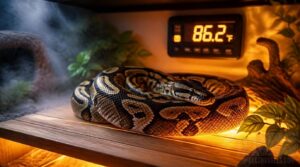
A cold snake is in danger, but panicking won’t help. The goal is a slow, controlled climb back to a safe temperature. Raise enclosure temps in 2–3°F steps every 30–60 minutes, and keep a written log of each change.
- Begin warming near 68°F
- Target 80°F slowly
- Monitor both warm and cool sides
- Watch for natural movement as the snake warms
Avoid Sudden Heat
Blasting your snake with sudden heat causes thermal shock — just as dangerous as cold itself.
| Action | Why It Matters |
|---|---|
| Use a gradient setup | Prevents thermal shock |
| Add a shaded retreat | Lets the snake self-regulate |
| Use a calibrated thermometer | Catches temperature spikes early |
Warm the enclosure slowly. Give your snake space to escape the heat, not just one blazing hot spot.
Check Breathing
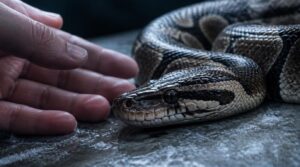
A cold snake may look lifeless. Check breathing before panicking.
Watch for chest rise and fall. Listen near the mouth for airflow. Feel for faint breath on your cheek.
Watch for these warning signs:
- No visible movement
- Gasping or irregular pauses
- Wheezing sounds
- Labored neck muscle use
- Complete stillness over 10 seconds
Any of these means act fast.
Call a Reptile Vet
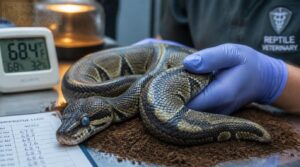
Don’t wait to see if your snake "snaps out of it." Call a reptile vet immediately — not just any clinic.
Ask specifically whether they treat reptiles. A general vet can stabilize with warmth and fluids, but a specialist will run the right diagnostics for an ectotherm. Bring your enclosure temperature logs. That history helps them spot whether chilling caused the problem.
Prevent Future Chilling
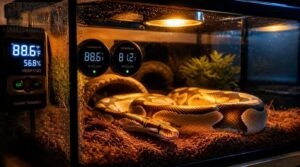
Once your snake is recovering, prevent it from happening again. Set up smart monitoring alerts so you’re notified the moment temperatures drop below safe levels. Add redundant heating systems — if one heater fails, a backup kicks in.
Seal any enclosure gaps and adjust your seasonal heating schedule before winter arrives. Your thermal gradient should always keep every zone above 60°F.
Frequently Asked Questions (FAQs)
Do snakes come out in 40 degree weather?
Rarely. At 40°F, most snakes stay hidden. Cold slows their muscles too much to forage safely. A sunny rock might coax a garter snake out briefly, but most species won’t risk it.
What is the coldest temperature a snake can survive?
Garter snakes can survive brief exposure to around 23°F (−5°C) through supercooling. Tropical species like Burmese pythons may die near 40°F. Most snakes, though, face fatal tissue damage well before temperatures drop that low.
At what temperature do snakes become inactive?
Most snakes become noticeably sluggish once temperatures dip below 60°F. Activity slows further near 50°F, when brumation can set in — especially if the cold persists for several days rather than just overnight.
What happens if a snake gets too cold?
When the cold really bites, digestion shuts down first. Gastric motility drops, enzymatic activity slows, and nutrients stop absorbing properly. Your snake’s immune system weakens too, opening the door to opportunistic infections and respiratory illness.
Can snakes survive freezing temperatures inside their burrows?
Yes, some species can. Garter snakes tolerate brief partial freezing, surviving up to 10 hours with 40% of body water frozen. Tropical species can’t — even 40°F may prove fatal.
Do different snake species have varying cold tolerances?
Think of snakes like trees — some thrive in the tropics, others push into frozen northern climates. Cold tolerance varies widely by species, shaped entirely by evolutionary history and the climate each lineage calls home.
How quickly can snakes warm up after exposure?
Once a snake finds a warm basking spot, its body temperature can rise within minutes. Smaller snakes warm faster. Dark substrates and direct sun make the biggest difference in thermal gain speed.
Can snakes sense temperature changes before they occur?
Picture a rattlesnake sitting motionless in total darkness. Its pit organs detect infrared radiation within 5 seconds — reading approaching body heat before any contact happens. They can’t predict weather, but they sense thermal shifts in real time.
Do baby snakes handle cold differently than adults?
Yes — baby snakes feel the cold faster. Their smaller bodies lose heat quickly, fat reserves are thin, and digestion stalls sooner. Hatchlings need tighter temperature control than adults.
Do snakes feel pain when temperatures drop?
Cold doesn’t trigger classic pain signals in snakes. Their nociceptive pathways slow alongside everything else. What you’re seeing is metabolic discomfort — sluggish nerves, stalled digestion, suppressed immunity. Distress, yes. Sharp pain? The science doesn’t confirm that.
Conclusion
Think of your snake as a traveler crossing a bridge. On one side, warmth means life and movement. On the other, cold brings stillness and risk. Knowing what temperature is too cold for snakes is your map.
If you guide your snake safely, you keep them thriving. Ignore the signs, and the bridge turns slippery fast. Your vigilance is the handrail. So, set the right temperatures, check often, and let your snake cross confidently every day.