This site is supported by our readers. We may earn a commission, at no cost to you, if you purchase through links.

Your ball python stops eating in November, tucks into its hide, and barely moves for weeks. Panic sets in fast, but this is often a normal seasonal shift, not a health crisis. Wild ball pythons in Africa’s dry season slow their metabolism, conserve fat, and wait out lean months, and captive snakes retain that same instinct.
Cool temperatures and shorter days trigger it, but replicating this safely takes precision, not guesswork. Get the gradient wrong or skip health checks, and a natural process turns dangerous.
This ball python brumation guide walks you through preparing your snake, monitoring key signs, and bringing it back to full activity without unnecessary risk.
Table Of Contents
- Key Takeaways
- Ball Python Brumation: What It Really Means
- Should You Brumate Your Ball Python?
- How to Prepare for Seasonal Cooling
- How to Monitor Your Ball Python During Cooling
- How to End Cooling and Resume Normal Care
- Frequently Asked Questions (FAQs)
- Can ball pythons go into brumation?
- How do I know if my snake is brumating?
- Is 80 degrees too cold for a ball python?
- How long can snakes stay in brumation?
- How long do ball pythons brumate for?
- How to brumate ball pythons?
- How to bring a snake out of brumation?
- Do ball pythons brumate?
- Do pythons need brumation?
- How long should a ball python brumation period last?
- Conclusion
Key Takeaways
- Brumation is a normal seasonal slowdown driven by cooling temps and shorter days, not a sign of illness, though true dormancy isn’t biologically required for captive ball pythons the way it is for wild ones.
- Skip brumation entirely for underweight juveniles, snakes with a history of respiratory infection, or those with metabolic bone disease, and get a vet check first if anything looks off.
- Safe cooling means gradual changes only: shift temps by 1-2°F per day toward a 75-80°F cool zone and 88-92°F warm side, trim light to 8-10 hours, and keep humidity around 60-65%.
- Watch weight monthly and call a vet if loss tops 5% of baseline or if you see warning signs like open-mouth breathing, discharge, tremors, or a swollen abdomen; recovery should be just as gradual, with feeding resuming only after temps and shedding normalize.
Ball Python Brumation: What It Really Means
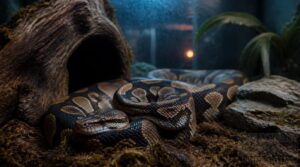
Brumation gets misunderstood more often than almost any other part of ball python care, and that confusion leads to real mistakes.
Before assuming your snake is brumating, it’s worth ruling out illness or stress by reading this guide on why ball pythons stop eating.
Before you touch a thermostat or count a single fasting week, you need a clear picture of what’s actually happening inside your snake.
Here’s what brumation really means, broken down piece by piece.
Brumation Definition and Natural Purpose
Dormancy isn’t laziness, it’s strategy. Brumation is winter dormancy triggered by cooling temperatures and shorter daylight, slowing your snake’s metabolism to conserve fat reserves. Picture the shift:
- Heart rate drops
- Digestion pauses
- Movement quiets
- Hiding increases
This energy conservation aligns activity with scarce resources, mirroring wild seasonal cycling where dry-season prey grows thin. This process is largely driven by seasonal photoperiod shortening, which signals reptiles to begin conserving energy for the leaner months ahead.
Brumation Versus Hibernation
People lump these together, but they’re not the same thing. Your ball python is ectothermic, so brumation tracks ambient temperature directly, while mammalian hibernation runs on internal metabolic shutdown.
Arousal frequency differs too: brumating snakes wake periodically to drink, hibernators stay under longer with rarer arousals.
Rising soil temperatures in early spring usually trigger that first arousal, and this guide on what temperature snakes come out of brumation breaks down the thresholds that typically signal it’s time to stir.
Brain activity and energy reserve depletion stay comparatively mild in brumation.
Wild Dry-Season Activity Changes
Out in the grasslands and forests of central and western Africa, dry season doesn’t just slow your snake’s wild cousins down, it reshapes their entire map. Water sources concentrate wildlife, prey shifts toward shorelines, and predators time hunts to cooler hours. Burrows offer stable microclimates while surface conditions swing wildly, a survival pattern your captive setup should echo.
Captive Fasting Versus Brumation
Not every cool-down is true brumation. Captive fasting shortens feeding windows without triggering deep torpor, keeping respiration steady and activity levels near normal.
Brumation triggers real metabolic slowdown from temperature and photoperiod cues, while fasting simply pauses digestion.
Both need hydration checks and weight monitoring, but only brumation demands a full thermal gradient shift.
Common Brumation Misconceptions
Since brumation gets lumped in with hibernation, hunger strikes, and illness, clearing up the confusion matters. Brumation isn’t hibernation; your snake can still wake to drink. It’s not starvation either, some weight loss is normal, but not below healthy thresholds. And it’s never a substitute for veterinary care when something looks off.
Brumation isn’t hibernation, starvation, or illness—it’s dormancy your snake can still wake from to drink
Should You Brumate Your Ball Python?
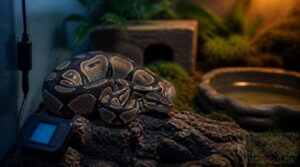
Brumation isn’t a default step in ball python care, and it’s not right for every snake in every situation. Before you adjust a single degree on that thermostat, you need to know who’s a safe candidate and who’s better off skipping the whole process. Here’s what to weigh before you decide.
If you’re maintaining that 88 to 92°F warm side with a mat, this guide to safe heat mats for young snake keepers can help you double-check your setup before brumation planning even starts.
Risks for Pet Ball Pythons
Cooling a captive python isn’t risk-free. Improper zones invite respiratory infections, while low humidity causes retained shed and eye caps.
- Weight loss and muscle mass decline
- Weakened immune function
- Mouth rot from facial wounds
- Dehydration disrupting hydration sources
Monitor weekly. Skipping veterinary guidance during brumation risks complications that outweigh any natural benefit.
Snakes That Should Never Cool
Not every ball python is a candidate for cooling. Vulnerable snake groups include underweight juveniles, animals with prior respiratory infections, and those with metabolic bone disease, all facing amplified cooling health risks.
Juvenile snake care demands extra caution, since young snakes can’t tolerate prolonged fasting.
Novice snake owners should schedule a reptile veterinarian consultation before attempting brumation with any at-risk animal.
Safer Non-Brumation Alternatives
Full brumation isn’t the only path to seasonal authenticity. A gradual temperature reduction of just 2-3°F, paired with year round feeding strategy and weight based health monitoring, mimics natural rhythms safely:
- Slight winter cooling with steady meals
- Two secure hides for thermoregulation
- Weekly weigh-ins tracking body condition
- Alternative breeding timing based on behavior, not brumation
When Veterinary Guidance is Essential
Not every ball python owner needs a reptile veterinarian on speed dial, but some do. Book a prebrumation health check if your snake has any respiratory history, unexplained weight loss, or signs of illness. Veterinary exams should include parasite screening and IBD testing when symptoms appear.
Schedule a postbrumation recovery visit too, especially after extended cooling.
How to Prepare for Seasonal Cooling
Once you’ve decided cooling is right for your snake, success depends on preparation done well before temperatures drop. Rushing this stage sets the stage for stress, illness, or a failed attempt altogether. Here’s what you need to get right before winding down the thermostat.
Health Exam and Weight Baseline
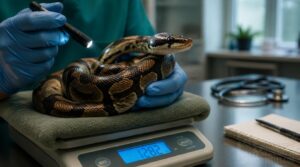
Would you cool a snake you haven’t examined? Don’t. Schedule a veterinary exam first, checking eyes, skin, vent, and mouth, then record baseline weight on a digital scale.
Score body condition on the 1-9 scale, aiming for 4-6. This documentation becomes your reference point for spotting trouble once cooling begins.
Hydration and Digestive Clearance
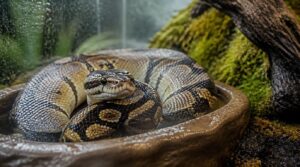
Once the exam confirms readiness, focus shifts to what’s happening inside your snake’s gut. Make sure complete digestive clearance through natural fasting for several weeks. Support hydration with weekly soaks, 15-20 minutes in shallow, warm water.
Watch for:
- Wrinkled skin
- Dented eye caps
- Dry mucous membranes
- Sudden weight shifts
Maintain 60-80% humidity throughout, since low moisture below 50% risks constipation before cooling even starts.
Secure Enclosure and Hide Setup
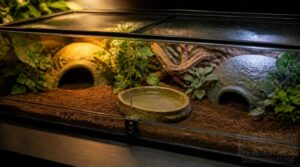
With hydration squared away, turn to the enclosure itself. Lid security prevents escapes during checks. Place two hides, warm and cool ends, sized for full coiling. Balance ventilation against drafts, and use mold-resistant substrate. Sanitize hides regularly.
| Zone | Hide Type | Purpose |
|---|---|---|
| Warm side | Enclosed hide | Thermoregulation |
| Cool side | Enclosed hide | Retreat option |
| Center | Water dish | Hydration access |
Thermostat-Controlled Thermal Gradient
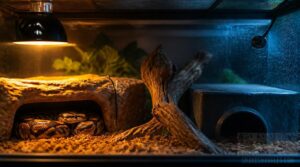
Once hides are set, verify your thermostat-controlled thermal gradient. Maintain a warm basking spot near 88-92°F and a cool zone at 74-80°F, with accurate sensor placement at breathing height.
Choose a reliable heat source, aluminum or ceramic elements work well, and integrate humidity sensor readings. Consider power backup systems to protect the gradient during outages before initiating temperature reduction.
Gradual Photoperiod and Temperature Changes
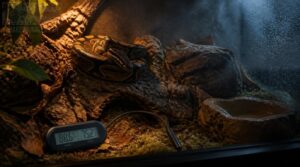
With the gradient set, layer in photoperiod adjustment alongside your temperature reduction. Trim light exposure to 8-10 hours daily, then apply a gradual temperature adjustment of just 1-2°F per day over 7-10 days.
This slow thermal gradient shift and light cycle modulation mimics natural seasonal signal change, giving your snake’s hormones and digestion time to adjust without shock.
How to Monitor Your Ball Python During Cooling

Once the cooling period begins, your job shifts from preparation to careful observation, since brumation only stays safe when you’re tracking your snake’s condition day by day. Small changes in temperature, behavior, or body weight can signal whether things are progressing normally or veering into trouble. Here’s what you’ll want to keep an eye on throughout the process.
Safe Temperature and Humidity Ranges
Numbers don’t lie during brumation. Keep enclosure temperatures at 75-80°F with cool side matching and warm side holding 88-92°F, nights dipping to 70°F safely.
- Monitor humidity at 60-65%, never exceeding 70%
- Use remote-probe digital thermometers at breathing zone height
- Check thermostat accuracy within ±1°F daily
Consistent thermal regulation prevents respiratory stress and helps healthy dormancy throughout cooling.
Daily Behavior and Hydration Checks
Watch how your snake moves through the enclosure each evening, since reduced activity and prolonged hiding are expected, not alarming.
Check the water bowl daily for cleanliness and access. Healthy skin turgor and moist mucous membranes signal proper hydration. Occasional tongue flicking near the water bowl is normal exploratory behavior, while cracked substrate warrants misting to restore moisture.
Weight Tracking and Loss Limits
A digital scale gives you the clearest picture of how brumation is affecting your snake’s fat reserves. Weigh monthly, at the same time each cycle, and expect gradual decline as metabolic slowdown burns stored energy.
Loss beyond 5% of baseline signals trouble. Anything under that range fits normal body condition scaling for a fasting python.
Normal Changes Versus Veterinary Warning Signs
Where’s the line between dormancy and danger? Know these five red flags:
- Open-mouth breathing or wheezing
- Discharge from eyes, nostrils, or mouth
- Regurgitation or a swollen abdomen
- Loss of balance or tremors
- Bloody, foul-smelling waste
Normal cooling brings dull skin, quiet digestion, and calm eyes with intact mucous membrane moisture. Anything beyond that warrants a vet call.
Cooling Duration and Completion Signs
How long is long enough? For most adult ball pythons, an ideal cooling period runs 4-6 weeks, with 3 weeks as the minimum effective cooling and 8 weeks to 4 months for breeding-focused extended cooling duration.
Brumation completion signs include active exploring, tongue flicking, and keen water dish visits, signaling feeding resumption within 3-5 days once temperatures normalize.
How to End Cooling and Resume Normal Care
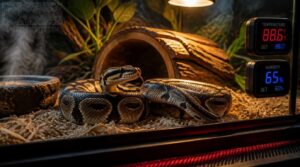
Once your ball python has settled into a stable brumation pattern for several weeks, it’s time to think about bringing things back to normal. Ending cooling isn’t as simple as flipping the thermostat back up overnight; your snake’s body needs a slow, deliberate change to avoid unnecessary stress. Here’s exactly how to guide that recovery, step by step.
Gradual Heat and Light Restoration
Rushing recovery invites shock. Raise ambient temperature by 2-3°F daily over 7-10 days, extend photoperiod 15-30 minutes toward 14-16 hours, and restore basking spots to 100°F across 5-7 days.
This gradual heat and light restoration rebuilds your thermal gradient safely, letting normal temperature cycles and lighting conditions resume without stressing a snake still shaking off dormancy.
Post-Cooling Hydration and Shedding
Once basking temps hit target range, shift focus to hydration. Check skin tent test results and offer electrolyte baths (82-84°F, 75% sports drink/25% water, 30-60 minutes) if tenting persists.
Watch for:
- Dull, cloudy eyes
- Pink belly coloration
- Time spent soaking
- Retained eye caps
Maintain 70-80% humidity, misting daily until the shedding cycle completes cleanly.
When to Offer Food Again
Once shedding finishes cleanly, give the digestive tract time to fully reset before offering prey. Adults may wait up to one month; juveniles need roughly 10 days. Watch for hunger behavior signs, active roaming, tongue flicking, glass pressing.
Feeding snakes separately is especially important if you house multiple animals — safe strategies for feeding multiple snakes together can help you manage meal time without triggering territorial or predatory responses.
Warm side must hold 88-92°F for 24 hours first. Snakes with weight loss need extended recovery before that first meal.
Choosing The First Prey Size
With appetite behaviors confirmed, match prey to body condition rather than pre-brumation habits. Prey width matching means selecting rodents no wider than your snake’s thickest point, sized around 0.75 times width for underweight animals.
Start smaller than you think necessary, pinkies or small fuzzies work well, then progress gradually over 1-2 weeks based on digestion and weight recovery.
Monitoring Recovery and Appetite
Once your snake takes that first meal, watch what happens next rather than assuming recovery is complete. Weigh every 2-3 weeks, expecting steady gains, not sudden jumps.
Three signs confirm true progress:
- Weight climbs after each successful feeding
- Water intake and shedding normalize
- Bowel movements appear 2-3 days post-meal
Sluggish behavior or refused meals beyond 7-10 days warrants veterinary attention.
Frequently Asked Questions (FAQs)
Can ball pythons go into brumation?
Not in the true physiological sense. As a tropical species, your ball python lacks the natural trigger for genuine dormancy. You’ll see dry-season slowdowns and captive fasting instead, so veterinary consultation matters before attempting any deliberate temperature cycling.
How do I know if my snake is brumating?
Watch for reduced activity, extended hiding, and a clear temperature preference toward cooler zones.
Add appetite loss, slower digestion, and stable body condition scoring despite fasting.
Track weight monthly, since healthy brumation shouldn’t cause significant loss or respiratory distress.
Is 80 degrees too cold for a ball python?
Ironically, 80°F feels chilly to us but it’s practically balmy for a ball python. It sits safely within the cool side range, letting your snake thermoregulate freely without stress or digestive slowdown.
How long can snakes stay in brumation?
Under captive cooling protocols, expect 6 to 12 weeks of dormancy, though duration hinges on temperature cycles, humidity levels, and enclosure setup. Wild brumation can stretch longer with seasonal dryness, but health monitoring should always dictate when to end it early.
How long do ball pythons brumate for?
Your snake’s internal calendar can feel maddeningly unpredictable. Expect a brumation duration of six to twelve weeks, with younger snakes often finishing in four to eight thanks to faster metabolic recovery once warmth and normal feeding adjustments resume.
How to brumate ball pythons?
Success hinges on gradual temperature adjustment to 75-80°F over 7-10 days, light cycle reduction to 8-10 hours, pre-fasting weeks ahead, secure hides, and weekly weight checks throughout the entire cooling period.
How to bring a snake out of brumation?
Waking a bear from hibernation too fast can kill it. Your snake needs the same patience: raise temps 1-2°F daily to 78-85°F, restore lighting, offer fresh water, watch for activity, then resume feeding gradually.
Do ball pythons brumate?
Yes, cooler temperatures and shorter daylight trigger this natural dormancy, slowing your snake’s metabolism and appetite. Wild pythons brumate for survival; captive individuals don’t require it, though some keepers replicate the cycle for breeding purposes.
Do pythons need brumation?
About 60-70% of captive-bred pythons never need brumation. It’s not a biological requirement, only a tool: useful for triggering breeding cycles, but risky for underweight or juvenile snakes without careful temperature gradient and weight management oversight.
How long should a ball python brumation period last?
Most healthy ball pythons brumate for 6 to 16 weeks, though the typical window runs 8 to 12 weeks. Weight, age, and how steadily you manage temperature and humidity all influence where your snake lands within that range.
Conclusion
Picture a bear settling into its den, trusting instinct over fear as winter closes in. Your ball python follows that same ancient script, not distress but design.
A careful ball python brumation guide gives you the map instinct alone can’t provide: precise temperatures, vigilant monitoring, patient recovery. Skip a step, and nature’s rhythm turns risky. Follow it, and you’ll watch your snake emerge lean, alert, and ready to thrive, proof that patience and precision protect life.