This site is supported by our readers. We may earn a commission, at no cost to you, if you purchase through links.

Walk into most Petco locations and you’ll find garter snakes tucked near the bottom shelf, priced modestly between $20 and $60, easy to overlook next to flashier ball pythons and geckos. That modest price tag hides some real complexity, though.
Up to 10% of these snakes get mislabeled at point of sale, and 63.1% carry salmonella, so buying a petco garter snake takes more than a quick glance and a checkout scan. Species identification, origin tracing, and proper quarantine protocols all matter here, since what looks like a simple, beginner-friendly reptile purchase actually demands real diligence.
Get the setup right, though, and you’re looking at a companion that can thrive for 15 to 20 years under your care.
Table Of Contents
- Key Takeaways
- Does Petco Sell Garter Snakes?
- How to Choose a Petco Garter Snake
- Petco Garter Snake Habitat Setup
- Feeding and Handling Your Garter Snake
- Health Checks After Buying From Petco
- Frequently Asked Questions (FAQs)
- Does Petco sell garter snakes?
- How much does a pet garter snake cost?
- Where can I buy garter snakes?
- Can I get a garter snake as a pet?
- Can garter snakes be housed together safely?
- What size tank does a garter snake need?
- How long do garter snakes typically live?
- Do garter snakes require special substrate material?
- Are garter snakes suitable for beginner reptile owners?
- Can garter snakes be housed with other snakes?
- Conclusion
Key Takeaways
- Since up to 10% of Petco garter snakes get mislabeled and 63.1% carry salmonella, you’ll want to verify the species yourself and wash your hands thoroughly after every handling session.
- Because roughly 60% of these snakes lack origin documentation, ask staff whether yours is captive-bred or wild-caught, since wild-caught animals tend to carry heavier parasite loads and less predictable temperaments.
- Your snake’s enclosure needs to grow with it, starting around 10-14 gallons for hatchlings and reaching 55-75 gallons for adults, with a basking temperature of 85-88°F and 10-12 hours of low-output UVB daily.
- Quarantining your new snake for at least 30 days, scheduling a fecal exam, and booking a vet visit within two weeks can stretch its lifespan from about 10 years with no care to 15-20 years with consistent attention.
Does Petco Sell Garter Snakes?

Yes, Petco does sell garter snakes, but availability and quality vary more than you’d expect from one store to the next. Since sourcing practices differ by location, knowing what to look for matters before you commit to a purchase. Here’s what you need to know about where to find them, what they’ll cost you, and which species you’re likely to encounter.
Species mislabeling is common enough that it’s worth double-checking identification against a guide to beginner-friendly snake species known for calm temperaments before you bring one home.
In-Store and Online Availability
Since pet store reptile inventory shifts weekly, whether your local Petco has garter snakes depends on region and shipments.
- Regional stock differences vary by store
- Store hold policy lets staff reserve one
- Shipping eligibility covers online-only listings
Online inventory updates in real time, and seasonal availability means spring often brings better selection than winter months.
Typical Prices and Added Costs
Pricing of snakes at Petco usually runs a base price range of $20 to $60, with seasonal discounts knocking off $5 to $15. Add a starter kit ($40-$120), UVB lighting ($20-$50), weekly food ($5-$15), permits ($10-$40), and vet visits (~$90 annually), your true setup cost climbs fast.
| Item | Low | High |
|---|---|---|
| Base snake | $20 | $60 |
| Starter kit | $40 | $120 |
| Weekly food | $5 | $15 |
Species and Subspecies Available
Most Petco locations stock the common garter snake (Thamnophis sirtalis), occasionally the checkered garter snake, with morphs varying by region.
Subspecies labels (like parietalis) reflect locality, not always verified taxonomy.
What you’ll usually find:
- Common garter snake
- Checkered garter snake
- Regional color morphs
- Occasional locale-specific subspecies
Availability shifts by store and season, since supply chains and import rules limit which subspecies reach shelves. In fact, many researchers question the validity of the subspecies rank itself, noting that such labels often reflect classification artifacts rather than distinct evolutionary lineages.
How to Choose a Petco Garter Snake
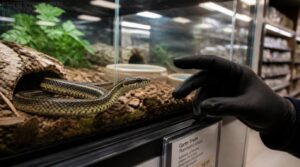
Walking into Petco and picking the first garter snake you see is a gamble you don’t want to take, since mislabeling and undocumented origins are more common than most buyers realize. Before you hand over your money, you need to know what to check and why it matters for the snake’s long-term health. Here’s what to look for, step by step.
Species, Sex, and Label Accuracy
Labels read Thamnophis sirtalis or T. elegans, but up to 10% get misidentified, especially hybrids and subspecies clerks can’t distinguish visually.
Before assuming you’ve got a true garter snake, cross-check its markings against a western hognose snake care sheet to rule out a commonly confused species.
Common-name-only tags leave you guessing on lineage. Verify independently: check saddle patterns, scale counts, and regional markers rather than trusting the tag alone.
Sexing matters too, males stay smaller. Ask staff for a cloacal probe or visual tail-taper check before committing.
Captive-Bred Versus Wild-Caught Origins
Origin matters more than color pattern. Wild-caught specimens carry heavier parasite loads and dodgier temperaments, while captive bred reptiles offer predictable handling and traceable health screening.
- Ask if the snake is F1/F2 generation
- Request origin documentation (60% lack it)
- Prioritize parasite control history
Ethical sourcing and genetic diversity both favor captive breeding, though wild lines preserve broader natural variation.
Healthy Snake Buying Checklist
Before checkout, run your hands over a five-point check: Clear Eyes, Clean Nostrils, smooth skin with no retained shed, and alert, responsive behavior when handled. Confirm the enclosure looks clean and appropriately sized.
Whether you’re eyeing a captive-bred snake or a wild-caught specimen, plan to quarantine new arrivals and schedule fecal screening with a reptile-experienced veterinarian soon after purchase.
Local Garter Snake Ownership Rules
Before you bring that snake home, check your local ordinances, since regulatory oversight gaps mean Petco won’t do it for you.
Many areas enforce a Locking Lid Rule, a Wild-Caught Ban, or require a Size Permit and Health Cert. Some also mandate an Annual Registration Rule through animal control.
Skipping this step risks fines, so verify legal restrictions on exotic pets first.
Petco Garter Snake Habitat Setup
Bringing your garter snake home is only step one, since the enclosure you set up next determines how well it actually thrives. Getting this right means paying attention to size, substrate, temperature, lighting, and water, not just picking a tank that looks nice.
Here’s what you need to get each piece of the setup working together.
Juvenile and Adult Enclosure Sizes

That hatchling won’t stay tiny for long, so plan your enclosure size in stages rather than buying once. Start in a 10-14 gallon tank, move to 20-40 gallons at 18-24 inches, then settle into a 20 gallon tank minimum (55-75 gallons ideal) as adults.
- Hatchlings: 10-14 gallons
- Juveniles (18-24 in): 20-40 gallons
- Subadults: 40 gallons
- Adults: 55-75 gallons
- Upgrade before stunting occurs
Safe Substrates, Hides, and Enrichment

What’s under your snake’s belly matters as much as what’s in its tank. Aspen bedding absorbs waste well, while coconut husk holds humidity without molding. Skip cedar and pine; the oils irritate them.
| Substrate | Best Use |
|---|---|
| Aspen | Odor control |
| Coconut husk | Humidity/burrowing |
| Paper towels | Quarantine setups |
| Reptile carpet | Easy cleaning |
| Sphagnum moss | Moisture retention |
Place two hides, warm and cool ends, plus branches for enrichment.
Temperature Gradient and Thermostat Use

Get the gradient wrong and your snake can’t digest a meal properly. Aim for 85-88°F basking, dropping to 70-75°F on the cool end. Mount a proportional thermostat probe near the basking spot, not the glass, and set a safety cutoff around 93°F. Nighttime dips to 70°F are fine.
Check both ends daily with digital thermometers, since accurate temperature regulation prevents burns and lethargy alike.
UVB Lighting and Daylight Schedule

Once your thermostat’s dialed in, add low-output UVB (2-5%) for 10-12 hours daily, mimicking a natural photoperiod. Position bulbs 12-18 inches above basking spots, unobstructed by glass or décor. A UVB meter confirms proper dosage.
Replace bulbs every 6-12 months since output degrades silently. Adjust seasonally, since shortening winter daylight mirrors your garter snake’s natural rhythm.
Water Bowl and Cleaning Routine

Bowl material matters: stainless steel resists bacteria better than plastic, while ceramic won’t tip.
Size it for full-body soaking, since garters love submerging.
- Cleaner water, fewer infections
- Less algae, less stress
- Healthier skin sheds
- Peace of mind daily
Daily water changes are non-negotiable. Weekly, scrub with reptile-safe soap, rinse thoroughly, and wash your hands after.
Feeding and Handling Your Garter Snake

Getting your garter snake’s habitat right is only half the job, since what and how you feed it, and how you handle it, directly affects its health and trust in you.
A wrong-sized meal or a rushed grab can stress out even a docile snake fast.
Here’s what you need to know to feed and handle your garter snake safely, from prey choices to reading its body language.
Varied Prey and Feeding Schedule
A varied diet keeps garter snakes thriving: rotate earthworms, live feeder fish, and frozen/thawed prey to prevent nutrient gaps. Feed juveniles every other day, adults weekly on rodents or twice weekly on earthworms. Warm thawed prey above room temperature first.
Track feedings in a feeding log since appetite changes often signal health issues before symptoms appear.
Noticing appetite shifts early is especially important if you’re ever tempted to house multiple reptiles together — keeping snakes and lizards in the same enclosure introduces stress and predation risks that can suppress feeding behavior in both animals.
If you notice several skipped meals alongside unusual stillness, check out this guide on how to tell if your snake is hibernating or something more serious before assuming the worst.
Safe Fish and Foods
Not every fish belongs in a garter snake’s bowl. Guppies and silversides make excellent staples, but comet goldfish carry thiaminase, an enzyme that destroys vitamin B1 and causes deficiency over time.
Rotate feeder fish with earthworms for real diet variety.
Since roughly 63.1% of garter snakes carry Salmonella, wash the water dish daily; that’s basic water hygiene, not paranoia.
Prey Size and Safe Thawing
Sixty words is tight, so here’s the gist: match prey to girth, not length, roughly 1-2x body width for adults, 0.5-1x for juveniles. Always use frozen-thawed prey, warmed above room temp, never microwaved. Skip thiaminase-heavy fish like goldfish.
- Prevents regurgitation
- Reduces choking risk
- Limits bacterial buildup
- Promotes steady growth
Juveniles eat every other day; adults, weekly.
Gentle Handling and Stress Signals
Since trust builds one session at a time, watch your snake’s body, not the clock. Relaxed muscle tone and slow tongue-flicks mean you’re doing it right.
| Signal | Meaning |
|---|---|
| Slow flicking | Calm |
| Rapid coiling | Stressed |
| Exploring hands | Trusting |
| Thrashing | Overwhelmed |
| Stillness | Settling |
Wash hands before and after; support the full body, lift smoothly, keep early sessions under 10 minutes.
Bite and Musk Management
Bites rarely happen, but musk is nearly guaranteed early on, expect gagging odor, not danger. Wash bites with soap, cover, watch for infection; see a vet if deep. Post-musk: disinfect surfaces, wash fabric hot.
- Support the body fully
- Avoid grabbing head or tail
- Keep sessions under 10 minutes
- Wash hands after handling
- Use gentle restraint consistently
Health Checks After Buying From Petco

Bringing home a new garter snake from Petco isn’t the finish line, it’s the start of a health watch period, since even captive-bred animals can carry hidden risks.
Given that roughly 60% of Petco snakes come without origin paperwork, you can’t assume yours is parasite-free or disease-free just because it looked fine in the tank.
Here’s what you need to check, screen, and prevent in those critical first weeks.
Quarantine for New Garter Snakes
That new Petco garter snake needs its own space before meeting your existing collection. Quarantine protocol means 30 days minimum, isolated enclosure, separate tools, fresh water on its own heat source.
Daily checks matter: appetite, activity, eye clarity, shedding. Whether it’s a wildcaught specimen or captive-bred snake, illness signs extend quarantine and trigger vet consultation before any shift plan begins.
Parasite Screening and Fecal Exams
Roughly 21% of snakes carry internal parasites, so schedule a fecal exam during quarantine.
Fecal sample collection uses a clean container; labs run concentration methods plus microscopic exam for parasite detection.
Intermittent shedding causes false negatives, which means repeat testing protocols matter, especially for a wildcaught specimen.
Positive results warrant preventive deworming before your Petco garter snake joins your collection.
Salmonella Prevention and Handwashing
Here’s a sobering number: 63.1% of garter snakes carry Salmonella, so hand hygiene isn’t optional. Wash hands before handling and immediately after, using hot, soapy water for 20 seconds, then dry with a paper towel. Skip sanitizer alone; studies link Salmonella detection to skipped handwashing or drying. Remember, there’s no five-second rule for zoonotic infection prevention.
With 63.1% of garter snakes carrying Salmonella, thorough handwashing after handling isn’t optional, it’s essential protection
Children and Vulnerable Household Members
That Salmonella risk hits harder in homes with kids under five, elderly relatives, or immunocompromised owners. Keep enclosures out of reach, supervise all viewing, and teach age-appropriate handling rules early.
- Place tanks on sturdy furniture, away from cribs
- Supervise every viewing session
- Wash hands immediately after contact
- Teach kids never to grab or poke
- Consult a doctor if immunocompromised
Exotic-Vet Checkups and Lifespan
Good hygiene habits protect you, but regular vet checkups protect your snake. Schedule an exotic-vet exam within two weeks of purchase, then annually after that.
| Care Level | Lifespan |
|---|---|
| No vet care | ~10 years |
| Annual exams | 15-20 years |
Senior snakes need biannual visits. That’s real lifespan extension, not guesswork.
Frequently Asked Questions (FAQs)
Does Petco sell garter snakes?
Yes, but availability varies by store, since online listings and inventory tracking shift with seasonal stock. Check your local Petco’s stock online first, call ahead, and confirm shipping policies or in-store pickup before making the trip.
How much does a pet garter snake cost?
In the end, expect to pay 20 to 60 USD for standard garter snakes, with specialty morphs reaching 80 to 150 USD, plus starter kits adding 20 to 40 USD upfront.
Where can I buy garter snakes?
Petco stores and their website both stock garter snakes, but for ethical reptile sourcing, check local pet shops, reptile expos, breeders, rescue adoptions, and online marketplaces too, comparing health guarantees before you buy.
Can I get a garter snake as a pet?
Definitely doable, provided you check legal permit requirements first.
A captive-bred snake offers 6-10 year lifespans, manageable veterinary care for reptiles, and, with proper parasite prevention and Salmonella risk management, makes a genuinely rewarding, low-drama reptile companion.
Can garter snakes be housed together safely?
Cohabitation works only with same sex groups of three or more, matched sizes, and ample space requirements. Watch closely for territorial behavior and stress indicators, since crowding, competition, and mismatched temperature gradients quickly undo any stress reduction benefits.
What size tank does a garter snake need?
Think of it like upgrading from a Victorian gramophone to a proper stereo system. Start juveniles at 5 gallons, move to a 20 gallon long tank minimum for adults, since horizontal length matters more than height for these ground dwellers.
How long do garter snakes typically live?
Wild garter snakes rarely pass 2 to 7 years given predators and harsh conditions, but captive vs wild care changes everything. With steady vet checkups, proper diet, and low stress, longevity in captivity often stretches to 10, even 15, years.
Do garter snakes require special substrate material?
Yes. Aspen bedding and coconut fiber support burrowing at 1-2 inches deep while resisting mold, unlike cedar or pine, which release harmful oils. Paper towels and reptile carpet suit beginners, since easy cleaning prevents bacterial buildup and irritation.
Are garter snakes suitable for beginner reptile owners?
Picture a calm, curious little snake soaking up warmth, easy to feed, easy to hold: that’s the beginner appeal.
Beginner temperament is generally docile, feeding simplicity and space efficiency keep costs and habitat setup manageable, making garter snake care approachable for first-timers.
Can garter snakes be housed with other snakes?
Cohabitation isn’t recommended. Garter snakes display territorial behavior, competing over basking spots and hides, which raises stress, injury risk, and disease transmission.
Feeding competition can cause bites during meals, since size and species compatibility vary.
Single-species, single-snake enclosures work best.
Conclusion
A garter snake is a mirror: it reflects exactly the effort you put into its care. Skip quarantine or ignore that 63.1% salmonella rate, and problems surface fast.
Get the basics right, though, and a petco garter snake rewards you with two decades of quiet, low-maintenance companionship. Check labels, verify origins, wash your hands. That’s the whole formula.
Diligence now buys you years of ease later, and that trade is worth making.