This site is supported by our readers. We may earn a commission, at no cost to you, if you purchase through links.
Snakes hide sickness by nature. In the wild, looking weak invites predators, so a snake with a respiratory infection or an early parasite load will often act completely normal until the illness is well underway.
That’s what makes this species tricky to care for. By the time you notice obvious snake illness symptoms, like wheezing, weight loss, or a swollen mouth, the problem has usually been building for days or weeks.
The good news: your snake does give small, early signals long before things turn serious. You just need to know where to look, from feeding habits to skin texture to the way it holds its head, and what each change actually means.
Table Of Contents
- Key Takeaways
- Early Behavioral Signs Your Snake is Sick
- Physical Snake Illness Symptoms to Check
- Common Snake Diseases and Their Symptoms
- Husbandry Problems That Can Cause Illness
- When Snake Illness Symptoms Need Veterinary Care
- Frequently Asked Questions (FAQs)
- What do snakes do when they are sick?
- What are the symptoms of snake disease?
- What kind of diseases can you get from snakes?
- What are the symptoms of snake parasites?
- What are the signs of illness in snakes?
- How long do symptoms of rsv last?
- How do I know if my snake is ill?
- Can a snake get sick?
- Do snakes have health problems?
- How do you know if a snake has respiratory problems?
- Conclusion
Key Takeaways
- Snakes instinctively mask illness to avoid looking weak, so by the time you spot obvious symptoms like wheezing or weight loss, the problem’s usually been brewing for days or weeks.
- Watch for early behavioral shifts—appetite loss, lethargy, odd posture, excessive hiding, or sudden aggression—since these often show up before physical signs do.
- Most snake illnesses actually trace back to husbandry mistakes, like wrong enclosure temps, poor humidity, damp substrate, overhandling, or bad nutrition.
- Certain symptoms demand a vet visit right away, including prolonged open-mouth breathing, stargazing posture, spreading swelling, or anorexia lasting more than a week or two.
Early Behavioral Signs Your Snake is Sick
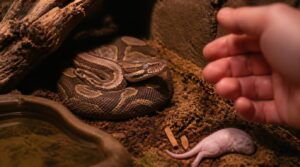
Snakes hide illness well, so behavior often tells you more than looks do. Your snake can’t say it feels off, but its actions will show you first. Watch for these five changes, and you’ll catch trouble early.
Wheezing, open-mouth breathing, or bubbles around the nose can signal a respiratory infection, so preventing snake respiratory infections through proper humidity and temperature is worth learning.
Fungal infections are one common cause of these subtle changes, so it helps to read up on how to prevent common snake fungal diseases before problems start.
If something still seems wrong even after checking these signs, a closer look at snake health and veterinary care basics can help you decide when it’s time to call a vet.
Appetite Loss or Feeding Changes
Hunger is often the first thing to go. Watch for reduced feeding frequency, refusing favorite prey, or failure to finish a meal.
Occasional skipped meals happen. But prolonged anorexia, paired with weight loss, isn’t normal. In many animals, underlying illness or infection is a common driver of sustained appetite loss. Persistent appetite loss warrants veterinary evaluation, especially with no clear cause like shedding or seasonal slowdown.
Lethargy and Reduced Activity
Right alongside loss of appetite, you’ll often notice energy levels drop. A snake resting more than usual, showing less exploration, or ignoring its favorite hide spot has a real activity pattern change worth tracking.
Compare this to its normal routine, not another snake’s. Lethargic behavior during typical active hours, especially prolonged hiding, deserves a vet visit if it persists.
Unusual Head or Body Posture
Posture tells you a lot. A snake propped against the glass with open-mouth breathing needs attention now, not tomorrow.
Watch for stargazing posture, corkscrewing movement, or head tilt too. Test the righting reflex: flip your snake gently. Failure to right itself signals neurological decline and demands immediate veterinary care.
Excessive Hiding or Resting
A neurological check builds on posture. But hiding tells its own story.
Every snake hides sometimes, that’s normal temperature regulation behavior. Prolonged hiding paired with loss of appetite is different. Watch nocturnal activity patterns too. A snake that stops emerging at night, ignores enrichment, and avoids handling is showing stress response indicators. Track it for a week, then call your vet.
Sudden Aggression or Defensiveness
A calm snake that suddenly strikes is telling you something hurts. Rule out environmental stress triggers first: cage rearranging, loud vibrations, temperature swings.
A calm snake that suddenly strikes is telling you something hurts
If none apply, suspect illness induced aggression, often from respiratory infection, mouth pain, or septicemia with belly discoloration. Check for cloudy eyes, weight loss, or regurgitation alongside strikes.
Persistent defensiveness after handling adjustments warrants reptile medicine evaluation, not punishment.
Physical Snake Illness Symptoms to Check
Behavior tells you something’s off, but your snake’s body tells you what. A hands-on check catches problems before they turn serious. Here’s what to look for, starting at the head and working down.
Weight Loss and Dehydration
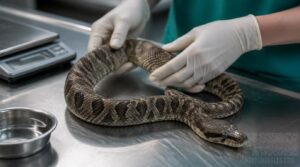
A snake losing weight isn’t always eating too little; it’s often losing water. Track hydration with skin tenting and sunken eyes.
- Weigh weekly on a gram scale.
- Check body condition along the spine.
- Note appetite loss and lethargy.
- Watch for skin lesions.
Fluid loss reverses with treatment; true weight loss doesn’t.
If your ball python’s breathing seems labored rather than just heavier after a meal, this guide on recognizing abnormal breathing patterns in ball pythons can help you tell the difference before it becomes urgent.
Skin, Scale, or Shedding Changes

Your snake’s skin tells a story. Watch for scale discoloration, ulcerated patches, or blister formation, all signs of scale rot or bacterial infection.
Retained shed patches and dysecdysis often mean low humidity. Dry, peeling skin that won’t come off cleanly needs a warm soak and a humidity check, not a rough peel by hand.
Cloudy, Swollen, or Sunken Eyes

A hazy eye isn’t always trouble, but you need to know which kind you’re looking at.
- Milky blue eyes before a shed (normal)
- Persistent opaque caps after shedding ends (retained caps)
- Bluish film with wrinkled skin (dehydration)
- Firm, swollen eye cap (nasolacrimal blockage)
- Cloudy eyes with nasal discharge (infection)
Sunken eyes signal dehydration. When in doubt, call your vet.
Mouth Swelling, Odor, or Discharge
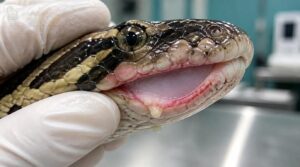
Open your snake’s mouth and check often, mouth rot moves fast. Early signs are mild redness and lip swelling. Left untreated, gums inflame, jaw swelling distorts the face, and stringy saliva or open-mouthed breathing appears.
Discharge often looks white and cheesy, sometimes blood-tinged. The foul odor signals bacterial infection. Your vet confirms diagnosis through culture and swelling stage before treating.
Regurgitation or Abnormal Stool

A snake bringing back a meal isn’t just messy, it’s a red flag. Causes of regurgitation include improper temps and digestive stasis. Watch for chalky stool or undigested prey. Risks: dehydration, weight loss.
- Wrong basking temp
- Handling after feeding
- Intestinal parasites
- Overfeeding frequency
Fecal testing finds parasite-related issues fast. Don’t wait, call your vet.
Common Snake Diseases and Their Symptoms
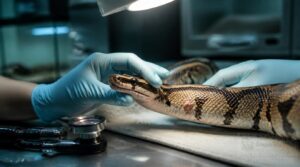
Symptoms alone won’t tell you exactly what’s wrong with your snake. Different diseases share similar warning signs, so knowing the usual suspects helps you narrow things down fast. Here’s what to watch for with each one.
Respiratory Infection Warning Signs
Why do healthy snakes breathe with their mouths shut? Because open mouth breathing signals trouble.
Watch for wheezing sounds, nasal discharge or mucus bubbles at the nostrils, and rapid breathing at rest. Add lethargy posture or abnormal posturing (head raised, neck stretched) and you’ve got respiratory distress.
If you’re unsure whether what you’re seeing is serious, this guide on ball python labored breathing symptoms walks through the warning signs in detail.
Don’t wait, this needs a vet visit now.
Mouth Rot Symptoms
A stuffy nose isn’t the only mouth problem to worry about. Mouth rot starts as red, swollen gums, then progresses to stringy saliva and thick, cottage-cheese pus.
Watch for:
- Swollen, bleeding gums
- Cheesy oral discharge
- Foul mouth odor
- Appetite loss
- Open-mouth breathing
Left untreated, infection spreads to bone and lungs.
Scale Rot and Skin Infections
Mouth issues aren’t the only infections tied to dirty, damp conditions. Scale rot targets belly scales, causing discoloration and blisters that turn pus-filled.
| Stage | Sign |
|---|---|
| Early | Brownish spots |
| Mid | Raised, pink blisters |
| Late | Pus-filled sores |
| Severe | Scale loss |
| Critical | Septicemia risk |
Wet substrate breeds bacteria fast. Vets may run bacterial cultures or biopsies before prescribing antibiotics.
Early warning signs like swelling or cloudiness are worth catching fast, and this guide to reptile eye infections walks you through what to watch for.
Internal and External Parasites
Skin damage isn’t always bacterial. Sometimes it’s parasites doing the work, and they hit your snake from two directions at once.
Internal parasites like roundworms and hookworms live in the gut, stealing nutrients and causing weight loss, regurgitation, and foul-smelling stool. External parasites, mainly mites, cluster around the eyes and cloaca, causing irritation, excessive soaking, and skin abrasions from rubbing.
- Tiny moving specks mean mites are already feeding.
- Weight loss without appetite loss points to worm burden.
- Fecal analysis confirms internal parasites before treatment starts.
Left untreated, parasites open the door to secondary infections.
Viral and Neurological Symptoms
Watch for stargazing behavior, where your snake twists its head skyward and can’t right itself. This points to inclusion body disease, caused by reptarenavirus or nidovirus.
Neurological Tremors, Seizure Episodes, Head Twitching, Muscle Weakness, and Coordination Loss signal rapid neurological decline.
Boas may hide infection for years. Pythons crash fast. Either way, get to a vet immediately.
Husbandry Problems That Can Cause Illness

Most snake illnesses don’t start with a virus or parasite. They start with the enclosure. Here are the husbandry mistakes that make snakes sick, and why each one matters.
Incorrect Enclosure Temperatures
Get the thermal gradient wrong, and every other husbandry effort suffers.
Corn snakes need 83-88°F warm side, 72-78°F cool side; ball pythons need warm-side nights above 80°F. Skipping a thermostat risks burns above 100°F.
Fluctuating room temps cause stress, poor digestion, and regurgitation. Proper temperature control isn’t optional, it’s foundational.
Improper Humidity and Dehydration
While temperature gets the spotlight, humidity imbalance quietly wrecks skin health. Low humidity causes stuck shed and dehydration signs like wrinkled, tight skin. High humidity breeds skin irritation and respiratory risk.
- Use a hygrometer near hides
- Offer a proper water dish
- Make sure enclosure airflow
- Watch weight loss detection
Humidity regulation matters as much as environmental temperature control.
Dirty or Damp Substrate
Damp bedding is a breeding ground. Moisture trapped against skin causes bacterial buildup and mold within 48 hours, raising risks for scale rot, skin lesions, and open-mouthed breathing from inhaled spores.
Damp substrate also shelters mites. Spot-clean daily, replace bedding every 2-3 months, and monitor humidity levels closely. Substrate drying techniques and mold growth prevention keep your snake’s enclosure genuinely healthy, not just tidy-looking.
Chronic Stress and Overhandling
Too much love can make a snake sick. Frequent handling keeps snakes alert instead of resting, refusing food, and lunging when disturbed.
Watch for:
- Reduced resting time
- Staying near enclosure fronts
- Faster startle responses
- Consecutive feeding refusals
- Increased bluff strikes
Chronic stress weakens immunity, masking illness behind hiding behavior. Cut handling frequency, and recovery often follows within days.
Poor Nutrition or Feeding Practices
Feeding mistakes add up quietly. Feeding schedule errors, wrong prey size selection, and rodent-only diets high in fat cause weight loss, obesity, or vitamin mineral deficits like calcium and D3 shortfalls, raising metabolic bone disease risk.
Watch for loss of appetite, sudden body condition changes, or regurgitation. These nutritional disorders and dietary imbalances often mimic illness, so review feeding history before assuming disease.
When Snake Illness Symptoms Need Veterinary Care
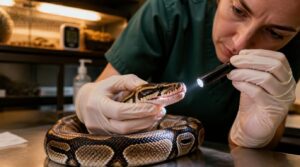
Not every symptom on this list needs the same response. Some signs mean you watch and wait, while others mean you drop everything and call a vet today. Here’s how to tell the difference.
Breathing and Neurological Emergencies
When a snake struggles to breathe, minutes matter. Open-mouth breathing lasting over 30 minutes, wheezing sounds, or gurgling signal respiratory distress needing immediate veterinary evaluation.
Watch for these emergency symptoms:
- Persistent openmouthed breathing or gasping
- Head tremors or stargazing posture
- Sudden collapse or respiratory arrest
Neurological signs paired with labored breathing rarely resolve alone. Don’t wait until morning, go now.
Severe Swelling, Wounds, or Weakness
Bites and injuries carry their own urgency. Swelling that spreads past a joint within hours, dark oozing fluid, or tight, shiny skin signals compartment syndrome risk, needing fasciotomy fast.
| Warning Sign | Action Needed |
|---|---|
| Swelling past wrist/ankle | Antivenom now |
| Pus, worsening redness | Antibiotics, wound care |
| Progressive weakness | Emergency vet visit |
Don’t wait for infection to set in.
Persistent Anorexia or Regurgitation
A snake that skips one meal isn’t an emergency. But anorexia lasting beyond two weeks in adults, or one week in juveniles, needs a vet visit.
Regurgitation within days of feeding often points to gastric parasites or organ trouble. Track weight: losing 5% in ten days signals urgent evaluation, not a wait-and-see approach.
Finding a Reptile Veterinarian
Don’t keep guessing. If appetite loss or regurgitation persists, book a reptile-specialized veterinarian and bring:
- vet directory search results
- credential verification
- species experience match
- previsit documentation for reptile health monitoring and symptom recognition
- clinic equipment check for veterinary care for snakes, which helps with early disease detection
Call first and confirm the doctor sees snakes regularly, not just reptiles on paper.
Diagnostic Tests and Preventive Exams
Once you’re at the vet, expect a workup suited to symptoms. Bloodwork analysis checks organ function; fecal testing screens for parasites; imaging options like X-rays or ultrasound spot GI or reproductive trouble. Swab sampling with PCR testing or bacterial cultures identifies infections. Biopsies may follow suspicious lesions. Even healthy snakes benefit from preventive screening, catching problems before symptoms show.
Frequently Asked Questions (FAQs)
What do snakes do when they are sick?
The quietest snakes often hide the loudest warnings. Watch for appetite loss, lethargic hiding, and reduced activity.
Posture shifts, open-mouth breathing, or limp unresponsiveness signal distress. Any sudden behavioral change from your snake’s normal pattern deserves close attention and prompt evaluation.
What are the symptoms of snake disease?
Disease symptoms fall into two waves. Behavioral changes hit first: appetite loss, lethargy, odd posture.
Then physical signs follow, mouth swelling, skin lesions, respiratory distress, or discharge, all serious disease indicators demanding prompt veterinary evaluation.
What kind of diseases can you get from snakes?
Your snake can pass along more than a scare. Salmonella risk tops the list, but Mycobacterial infection concern, Campylobacter exposure warning, and Aeromonas bacterial threat also count as real zoonotic pathogen spread worth taking seriously.
What are the symptoms of snake parasites?
Watch for visible mites or ticks, refused meals, weight loss despite eating, loose or mucus-filled stool, incomplete sheds, and regurgitation. These signs point to internal or external parasites and warrant a fecal exam soon.
What are the signs of illness in snakes?
A coiled body gone still, eyes dull, breath rasping softly: these are the quiet tells. Appetite loss, lethargy, skin lesions, discharge, or labored breathing all signal trouble and deserve prompt veterinary attention to protect your snake’s health.
How long do symptoms of rsv last?
In healthy adults, RSV runs 1 to 2 weeks, peaking days 3- High-risk or elderly patients face a longer recovery timeline, sometimes 3 to 4 weeks, with lingering cough, fatigue, and prolonged contagious period risks.
How do I know if my snake is ill?
A quiet, still animal isn’t always a calm one. True illness shows through appetite loss, lethargy, weight changes, skin abnormalities, eye irregularities, mouth odor, open-mouth breathing, swollen gums, or discharge.
Persistent shifts mean it’s time for a vet exam.
Can a snake get sick?
Yes, snakes can become seriously ill from poor husbandry, infection, parasites, or stress. Early clues include lethargy, refusing food, weight loss, breathing trouble, or mouth swelling. Seek veterinary evaluation quickly for worsening or emergency symptoms.
Do snakes have health problems?
Snakes absolutely develop health problems: respiratory infections, mouth rot, parasites, and skin disease all strike regularly. Poor husbandry drives most cases, so lethargy, weight loss, or abnormal shedding should always prompt closer attention and prompt veterinary care.
How do you know if a snake has respiratory problems?
The quietest snake can be the sickest one. Watch for open-mouth breathing, wheezing or clicking sounds, thick nasal discharge, and a stretched neck posture. These signal respiratory distress and possible pneumonia, needing urgent vet care.
Conclusion
Your snake won’t send you a telegram when something’s wrong. It speaks in quieter ways: a skipped meal, a held head, a dull patch of skin.
Reading snake illness symptoms early is a skill, not luck, and it comes from watching your snake on ordinary days so you notice the unusual ones. Trust small changes. Act on them fast.
That habit, more than any single fact here, keeps a snake healthy for decades instead of years.