This site is supported by our readers. We may earn a commission, at no cost to you, if you purchase through links.

A ball python that skips three meals in a row usually isn’t sick. It’s telling you something about its setup, its schedule, or its stress levels. I’ve seen owners rush to force-feed a snake that simply needed a warmer basking spot or a quieter room.
Appetite loss ranks among the top reasons reptile owners call my clinic, and most cases never need medication. The fix often lives in the enclosure itself: temperature, humidity, prey size, even the time of day you offer food.
Learning how to make snake eat better starts with reading these signals correctly, not panicking at every skipped meal. Get the fundamentals right, and most snakes return to steady eating on their own.
Table Of Contents
- Key Takeaways
- How to Help Your Snake Eat Better
- Choose The Right Prey and Schedule
- Prepare and Present Prey Safely
- Encourage a Picky Snake to Eat
- Monitor Appetite and Health Problems
- Frequently Asked Questions (FAQs)
- Can snakes eat insects or invertebrates safely?
- How long can snakes survive without food?
- Should I feed my snake during shedding?
- What causes regurgitation after successful feeding attempts?
- Can overfeeding harm my snakes health long-term?
- Why do snakes stop eating during brumation periods?
- Can stress from tank relocation cause appetite loss?
- Is it normal for snakes to skip meals occasionally?
- Why wont my snake eat after shedding?
- Does breeding season affect a snakes appetite?
- Conclusion
Key Takeaways
- Before you worry about tricks or schedules, fix your snake’s environment first, since most appetite problems trace back to temperature, humidity, or stress rather than illness.
- Get your basking spot to 88-92°F, your cool side to 78-80°F, and your humidity to 70-85% on the moist side, because weak gradients stall digestion fast.
- Match prey width to your snake’s head girth (not body length), and remove uneaten prey promptly to avoid regurgitation and enclosure mess.
- Don’t wait past 48 hours of refusal or any regurgitation episode to call a reptile vet, but otherwise trust that occasional skipped meals from shedding, stress, or season are normal and usually resolve with patience.
How to Help Your Snake Eat Better

Before you worry about scent tricks or feeding schedules, look at the enclosure itself. Most appetite problems trace back to something fixable in your snake’s environment, not a stubborn attitude. Here’s where to start.
Temperature gradients, hide placement, and humidity levels all play a bigger role than most owners realize, and our step-by-step guide to training a snake to eat walks through how to check each one.
Check Species-Specific Care Needs
Every species has its own rulebook. Research natural habitat before troubleshooting appetite: garter snakes take fish, ball pythons want rats, queen snakes eat almost nothing but crayfish. Review dietary preferences, verify temperature requirements, and confirm humidity needs against your species’ baseline. Assess behavioral traits too.
In the wild, diet varies widely even among related species, as seen in wild snake feeding ecology studies. Skipping this step means guessing, and guessing rarely fixes a snake that won’t eat.
Correct The Temperature Gradient
Once species needs check out, look at the thermostat. A weak thermal gradient setup stalls digestion fast.
Fix it with:
- Basking spot at 88-92°F
- Cool side at 78-80°F
- Heat source placed overhead, not underneath
Check both zones daily with a digital thermometer. Without this range, your snake can’t display normal thermoregulatory behavior, and appetite suffers.
Maintain Proper Humidity
Temperature isn’t the whole story. Humidity levels swing appetite too, and dehydration symptoms like wrinkled skin or stuck shed can shut feeding down fast.
Build a humidity gradient: cool side moisture control raises RH to 70-85%, warm side stays near 60%. Calibrate hygrometers monthly, and maintain a humid hide to protect hydration status and environmental stability.
Provide Secure Hiding Places
Getting the climate right won’t matter if your snake feels exposed.
Provide at least two hides, warm and cool side, sized so they can coil fully without touching walls. Use PVC caves, clay pots, or cork bark, all secure and single-entrance.
Proper placement reduces stress, helps digestion, and encourages the confidence needed to eat.
Minimize Feeding-Time Stress
Once the habitat’s dialed in, stress often comes down to how feeding day actually feels to your snake.
Keep lighting dim, the room quiet, and handling minimal for 24-48 hours post-meal. Use a secure feeding container, feeding tongs, and scent transfer if needed. A consistent routine matters more than any single fix.
Choose The Right Prey and Schedule
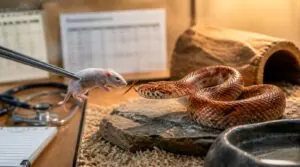
Once your enclosure setup is dialed in, the next piece of the puzzle is what and when you feed. Small details here matter more than most owners realize, from prey type to timing. Let’s walk through the choices that actually move the needle.
If your snake suddenly turns its nose up at meals, rubbing the offered prey with a favorite scent can help, and this guide to handling snake appetite loss covers other proven fixes too.
Frozen-Thawed Versus Live Prey
Frozen-thawed wins on safety: pre-killed prey can’t bite or claw, while live prey sometimes fights back mid-strike. You’ll also cut pathogen risk and parasite exposure since there’s no live animal roaming your enclosure.
Nutritionally, frozen-thawed matches live prey when sourced well. Boost a sluggish feeding response with scent transfer, feeding tongs, and gentle warming, mimicking that natural cue snakes crave.
Select The Correct Prey Size
Most feeding failures trace back to one mistake: guessing prey size instead of measuring it. Match prey width to head girth, not body length, aiming for roughly 1 to 1.5 times your snake’s thickest head point.
Pairing right-sized meals with a species-based schedule also keeps weight in check, as this guide to preventing obesity in pet snakes explains.
Juveniles need smaller prey, scaled up gradually as girth increases. Oversized meals risk regurgitation, so when in doubt, size down.
Follow Species-Specific Feeding Intervals
No two species eat on the same clock, and treating them alike is a common mistake. Juveniles feed every 5-7 days, adults every 7-14 days, adjusted by size and species. Track intervals, refusals, and body condition together.
Feeding schedules matter, but so does a clean enclosure, since leftover waste and damp bedding invite problems, so follow these tips for preventing snake infections alongside your feeding routine.
If a snake goes off food entirely, a guide on how to tell if a snake is dead or just brumating can help you rule out serious problems.
Stress from poor enclosure conditions is a leading cause of refusals, so reviewing essential snake housing requirements for beginners can help you rule out environmental triggers before adjusting feeding schedules.
Seasonal shifts and individual appetite patterns matter too, so let documented results, not the calendar, guide your feeding schedule from now on.
Feed During Active Hours
Dawn and dusk aren’t arbitrary, they’re when your snake’s biology expects a meal. Crepuscular species like corn snakes hunt during these windows naturally, so offer prey in early evening while the enclosure’s still warm from daytime heating.
This timing helps with metabolic peak feeding and proper circadian digestion, boosting acceptance rates while avoiding disruption to your snake’s natural activity rhythm.
Avoid Unnecessary Dietary Supplements
A whole prey diet already delivers complete nutrition, so most snakes don’t need vitamin powders or calcium dust. Supplements without a proven deficiency add unnecessary risk, not benefit.
Rather than reaching for a bottle, rotate prey species and confirm your feeder rodents were properly gut loaded. If you suspect a real gap, get professional guidance before supplementing anything.
Prepare and Present Prey Safely
Even the right prey won’t help if you handle it wrong. How you thaw, warm, and offer that meal matters just as much as what’s on the menu. Here’s exactly how to get it from freezer to feeding time safely.
Thaw Frozen Prey Safely
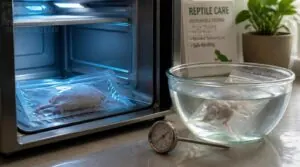
Because bacteria multiply fastest in the 40-140°F Danger Zone, how you thaw matters as much as what you feed.
Safe Thawing Methods:
- Refrigerator: overnight, bottom shelf, leak-proof packaging
- Cold water: under 2 hours, changed every 30 minutes
- Avoid microwave thawing entirely
- Never refreeze thawed prey
- Cook if using cold-water method
Warm Prey Before Offering

Once thawed safely, warm prey in a sealed bag submerged in hot water until the surface reaches 98-104°F, matching your snake’s basking spot of 88-92°F. Check with a thermometer, blot dry, and offer immediately.
Cooling prey loses its lifelike scent and heat signature fast, so don’t let it sit. Never microwave.
Use Long Feeding Tongs
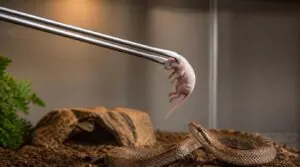
Once your prey hits temperature, your hands stay out of the equation. Tong Length Selection matters: choose 12+ inches to keep bite range safe.
Look for:
- Tip Safety Design with blunt, rounded edges
- Material Durability (rust-resistant metal or plastic)
- Straight-aligned tips for accurate placement
A thorough cleaning routine after each feeding prevents residue buildup and helps appetite stimulation long-term.
Mimic Natural Prey Movement

Tongs in hand, now make it convincing. Move prey in short bursts, then pause, mimicking a fleeing rodent’s stop-start rhythm. Vary speed and direction unpredictably, adding subtle undulations rather than stiff jerks. This triggers feeding response through instinct, not just hunger.
Scent masking on reluctant prey items can boost interest further, encouraging that natural strike you’re aiming for.
Remove Uneaten Prey Promptly
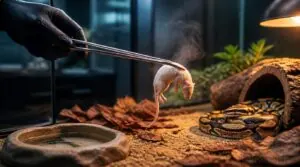
Once feeding time ends, don’t let leftovers linger. Remove uneaten prey promptly, live within 15-30 minutes, pre-killed by next morning, to curb bacterial growth and enclosure mess.
- Prevents impaction risks
- Reduces respiratory irritants
- Helps with stress reduction
- Aids prey freshness assessment
Use feeding tongs and forceps for safe retrieval. Consistent timing sharpens feeding pattern recognition, protecting your snake’s health and your feeding schedule.
Encourage a Picky Snake to Eat
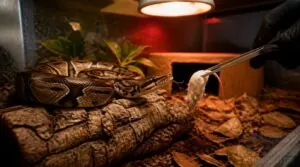
Even with perfect temperatures and clean prep, some snakes still turn their nose up at dinner. Picky eaters usually respond to small changes in how you present the meal, not a whole new diet. Here are five tweaks worth trying before you worry.
Try Species-Appropriate Prey Scents
Some snakes just need a hint of the wild. Rub thawed prey with species-appropriate scents, frog or lizard juice for hognoses, quail or chick for arboreal hunters. Create a short scent trail toward the food to trigger a natural feeding response. Use only food-grade products, and never apply scent directly to enclosure surfaces.
Offer a Private Feeding Setup
When scent alone doesn’t cut it, build your picky eater a private feeding space. Move the snake to a smaller, quiet enclosure with a secure feeding hide, temperature-controlled to 88-91°F, and let it sit undisturbed.
This sanitized feeding area removes competing stimuli. No foot traffic, no sudden shadows, just your snake and its meal.
Limit Handling Around Meals
Your hands might be the problem. Handling too close to mealtime teaches your snake to associate you with food, and that’s how strikes happen.
Keep a strict handling-free feeding zone: no touching 24 hours before, and a full post-feeding rest period of 48 hours after. This stress reduction step prevents stress-induced anorexia and regurgitation risk.
Account for Shedding Cycles
That refusal isn’t stubbornness. It’s biology. A pre-shed appetite drop hits 24-48 hours before the blue phase, so don’t force it.
A snake’s pre-shed appetite drop isn’t stubbornness, it’s biology, so don’t force a meal before the blue phase
Keep humidity at 50-70% for a clean shed, then wait. Once eyes clear, offer prey at 75% normal size for that first post-shed meal, working back to full portions gradually.
Stay Patient and Consistent
Picky eaters test your patience, not your skill. Stick to a consistent feeding schedule, same day, same time, week after week.
- Skip handling for 48 hours post-meal
- Offer prey at dusk, when snakes hunt naturally
- Log every refusal instead of reacting to it
Feeding consistency builds trust. Fasting happens. Stay steady, stay quiet, and let routine do the work.
Monitor Appetite and Health Problems
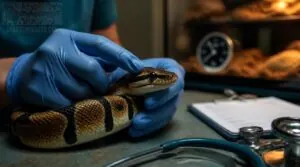
Even with the right setup and feeding routine, you still need to keep watch. A dropped meal or a slow week isn’t always cause for alarm, but patterns matter. Here’s what to track so you catch real problems early.
Track Weight and Body Condition
Numbers tell only part of the story. Weekly weigh-ins on the same scale, same time, empty cage, build a reliable timeline.
Pair that with body condition scoring: feel the spine, check tail taper, note fat deposits. Track girth at midbody consistently. Watch trends, not single readings, since gradual loss over weeks matters more than daily fluctuation.
Record Meals and Refusals
Weight trends only make sense alongside a written history. Keep feeding log entries for every attempt: date, prey type, size, and outcome.
Add refusal notes tracking for patterns, and a quick meal record snapshot covering prey presentation and warming to 98-104°F.
Don’t forget uneaten prey removal timing. Together, these details reveal appetite trends numbers alone can’t show.
Watch Hydration and Digestion
Once your log starts showing a pattern of refusals, it’s time to look past the page and check your snake’s body for physical clues.
Skin should look smooth, never wrinkled or tented. Check the water bowl daily, refill it, and scrub away debris weekly.
Fecal consistency matters too: firm, formed stool signals healthy digestive regularity, while watery or absent stool suggests trouble absorbing nutrients.
Recognize Regurgitation Warning Signs
Throat clearing, head shaking, and sudden lethargy often appear 24-48 hours before a snake brings up a meal. That’s your window to act.
Watch for these red flags:
- Slower tongue flicks and hiding
- Sour-smelling expelled mass with visible prey shape
- Sticky saliva coating the mouth
- Refusal to eat again within days
Contact a Reptile Veterinarian
Don’t wait past 48 hours of refusal or any regurgitation episode. Call a reptile vet, confirm ARAV membership, ask about emergency protocols, and bring feeding logs, weights, and enclosure photos.
| Check | Why It Matters | What to Ask |
|---|---|---|
| Credentials | Species expertise | ARAV member? |
| Emergency access | Urgent care | After-hours line? |
| Diagnostics | Parasite ID | X-ray, endoscopy? |
Frequently Asked Questions (FAQs)
Can snakes eat insects or invertebrates safely?
For most species, no. Rodent-eating snakes need complete nutritional profiles insects can’t match. Garter and ringneck snakes are exceptions, safely eating crickets or worms sized to their gape. Always confirm species-specific needs before offering invertebrate prey.
How long can snakes survive without food?
Hunger is a slow tide, not a sudden storm, for snakes built to endure it. Fasting triggers metabolic slowdown near 70%, letting most species survive 2-6 months. Juveniles fade faster; ignored weight loss signals real danger.
Should I feed my snake during shedding?
Hold off on feeding. Milky eyes during shedding cycles blur vision and raise stress, so prey acceptance often drops. Wait for a stress-free feeding environment post-shed, when appetite and normal feeding schedule return within a day or two.
What causes regurgitation after successful feeding attempts?
Five culprits stand out: overfeeding, air swallowing during rushed strikes, sphincter relaxation, handling stress, and prey too wide for smooth swallowing coordination. Each disrupts digestive enzyme function and proper temperature gradients your snake needs to keep that meal down.
Can overfeeding harm my snakes health long-term?
Yes. Think of it as slowly overfilling a tank past its line. Overfeeding drives metabolic health risks, organ strain, digestive stress, and poor body condition, shortening lifespan and disrupting healthy weight management long-term.
Why do snakes stop eating during brumation periods?
Cooling temperatures trigger metabolic slowdown, cutting energy needs and digestive activity. Reduced activity limits hunting success, while seasonal appetite changes and strong fasting tolerance let your snake safely rely on stored energy reserves throughout brumation periods instead of feeding.
Can stress from tank relocation cause appetite loss?
Your ball python stops eating right after you move its enclosure across the room. That’s classic stress-induced anorexia. Cortisol spikes for 24-72 hours post-relocation, so watch for hiding and reduced tongue flicks before assuming illness.
Is it normal for snakes to skip meals occasionally?
In most cases, it’s completely normal. Fasting duration varies by species, and seasonal appetite dips, shedding refusal, or mild stress-induced anorexia often explain skipped meals, not illness. Watch feeding patterns closely before worrying.
Why wont my snake eat after shedding?
Post-shed pauses are pure biology, not defiance. Shedding cycles trigger stress-induced anorexia, and retained eye caps or low humidity during shed delay appetite recovery. Run a temperature gradient check, wait 2 to 3 days, then retry.
Does breeding season affect a snakes appetite?
Absolutely. Breeding season triggers a real reproductive energy shift: females often eat more to fuel egg production, while males may go off food, driven by hormonal appetite influence and mating priorities rather than illness.
Conclusion
Somewhere, a snake owner is Googling emergency vet numbers because their python skipped lunch. Take a breath. Your snake isn’t staging a hunger strike, it’s waiting on you to fix the setup.
Learning how to make snake eat better means trading panic for observation: check temps, humidity, and stress before you check your phone. Correct the habitat, and appetite usually follows on its own. Patience beats force-feeding every single time.